AI Agent Business Models Split Four Ways
OpenClaw, Hermes, Genspark, and Manus show four different AI agent business models, from open source to SaaS to M&A.
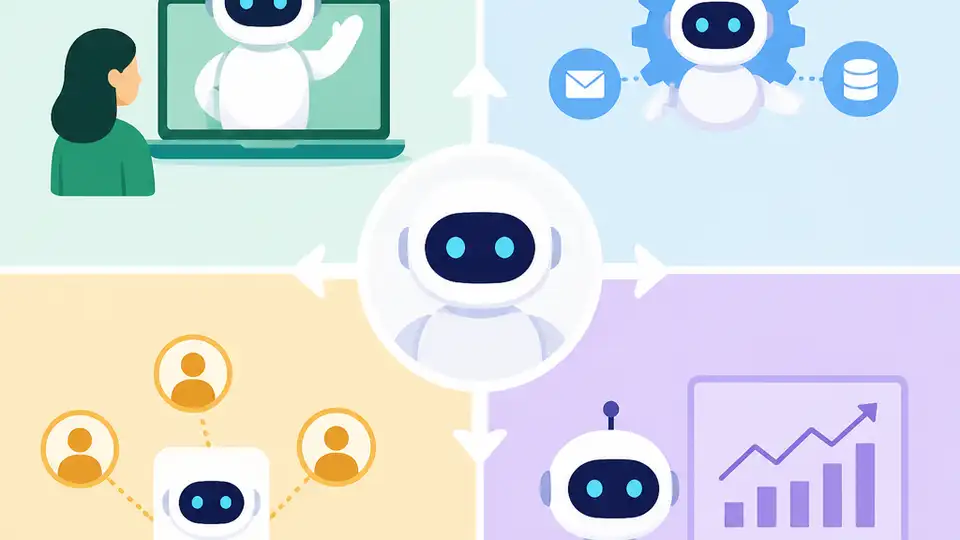
AI agents are splitting into four business models: open source, token distribution, SaaS, and acquisition.
The loudest AI agent names in 2026 are not fighting the same battle. OpenClaw has more than 370,000 GitHub stars, Hermes Agent passed 140,000 stars in under three months, Genspark says it crossed $200 million in annualized revenue, and Manus was acquired in a deal reported above $2 billion before regulators stepped in. That mix tells you more about the agent market than any single launch video ever could.
| Project | Key number | Business model signal |
|---|---|---|
| OpenClaw | 370,000+ GitHub stars | Open-source infrastructure |
| Hermes Agent | 224B tokens in one day | Research-lab distribution |
| Genspark | $200M+ annualized revenue | Subscription SaaS |
| Manus | $75M raised, $125M annualized revenue | Acquisition-driven growth |
Four agents, four very different bets
Get the latest AI news in your inbox
Weekly picks of model releases, tools, and deep dives — no spam, unsubscribe anytime.
No spam. Unsubscribe at any time.
The interesting part of this story is that none of these projects is trying to win in the same way. OpenClaw is betting that open-source distribution can build the deepest developer footprint. Hermes Agent is using model usage and inference volume as the flywheel. Genspark is acting like a classic software company with seats, revenue, and retention. Manus tried to turn speed and cross-border growth into an acquisition outcome.
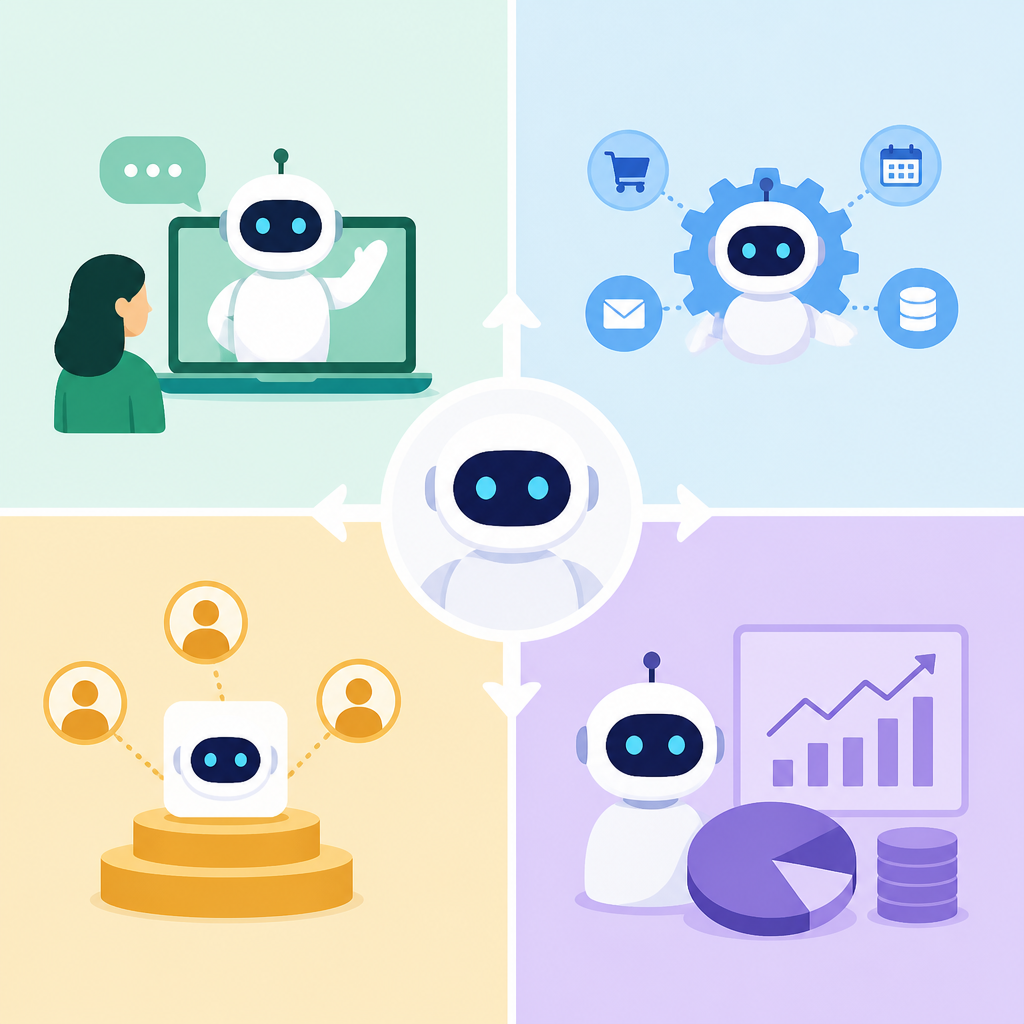
That matters because people keep describing “the agent market” like it is one market. It is not. It is a pile of adjacent markets with different economics, different users, and different political risks. OpenClaw can be free and still matter because it pulls developers into an ecosystem. Hermes can be free and still matter because it drives token usage for the lab behind it. Genspark can charge monthly subscriptions because it solves a work problem people will pay to offload. Manus can raise capital fast and still run into a wall when regulators decide the company is a national-security issue instead of a product.
- OpenClaw: MIT-licensed, local-first, and connected to more than 50 messaging platforms.
- Hermes Agent: released on February 25, 2026 and built around reflection plus reusable skill files.
- Genspark: pivoted from personalized search to Super Agent in April 2025.
- Manus: launched on March 6, 2025 and went viral within 72 hours.
Open source and token volume are their own businesses
OpenClaw is the cleanest example of open-source-as-infrastructure. It launched as Clawdbot, got renamed twice after pressure from Anthropic, then came back as OpenClaw and hit 100,000 GitHub stars within 48 hours. That kind of velocity does not look like a normal software launch. It looks like a community deciding that a tool is useful enough to become part of its daily workflow.
The economics are stranger than the popularity numbers. Peter Steinberger ran 100 agents continuously for 30 days and produced a $1.3 million OpenAI token bill, a figure that tells you how expensive agent-heavy workloads still are. OpenClaw has no subscription plan and no obvious direct revenue stream. Its value is distribution, developer mindshare, and ecosystem gravity. Steinberger later joined OpenAI to lead personal agents research, while the project moved to an independent foundation with OpenAI as a sponsor.
"Open source is a way to get adoption and feedback at a scale that proprietary products can't match." — Peter Steinberger
Nous Research is using the same logic from the model side rather than the infrastructure side. Hermes Agent is not sold as a subscription product. It exists to drive usage of Nous’s models and inference stack, while also showing what an agent can do when reflection and memory are baked into the workflow. After tasks with five or more tool calls, Hermes creates reusable skill files so it does not repeat the same discovery path later. That is a practical design choice, not a marketing trick.
The token numbers back up the attention. Hermes hit 224 billion tokens in a single day on OpenRouter, more than OpenClaw’s 186 billion that day. It also became the top open-source agent by daily token volume. For a research lab, that is a very different kind of win from revenue. It is proof that the system is being used at scale.
- OpenClaw: 370,000+ GitHub stars by late May 2026.
- Hermes Agent: 224 billion tokens in one day versus OpenClaw’s 186 billion.
- OpenClaw cost test: $1.3 million in OpenAI tokens for 100 agents over 30 days.
- Hermes growth: 140,000 GitHub stars in under three months.
Genspark is the clearest SaaS story in the group
Genspark looks the most familiar to anyone who has watched software companies grow the old-fashioned way. It was founded in 2023 by Eric Jing and Kay Zhu, pivoted from personalized search to Super Agent in April 2025, and then pushed into real subscription economics. By April 2026, the company had extended its Series B to $385 million and said it had passed $200 million in annualized revenue.
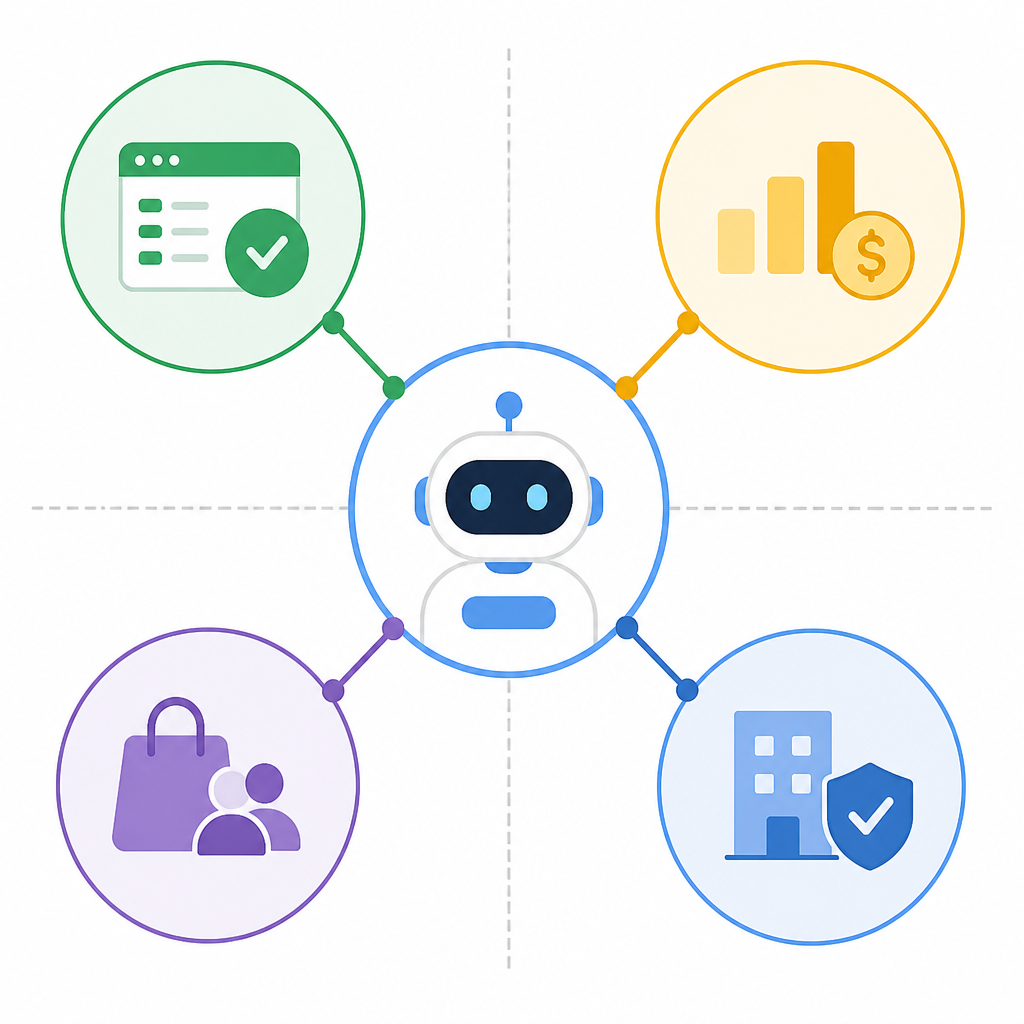
That is a very different signal from GitHub stars or token counts. The company reportedly had more than 2 million monthly active users and about 100,000 paying seats at $30 per user per month, according to Sacra. It also routes work across more than 70 models from OpenAI, Anthropic, and others. That mix of orchestration and seat-based billing is the closest thing here to a normal SaaS business.
Even then, Genspark is not a simple clone of older software categories. It is selling a workspace that can assemble tasks across multiple models, which means its product value depends on how well it hides the complexity of model choice from users. If it works, the user sees output. If it fails, the user sees a pile of agent confusion and model switching. That is why the product design matters as much as the revenue number.
Manus showed what happens when growth meets geopolitics
Manus is the cautionary case. Built by Butterfly Effect, founded in 2022 in Wuhan by Xiao Hong, it launched on March 6, 2025 and went viral within 72 hours. The company raised $75 million in April 2025 led by Benchmark, with backing from Tencent and HongShan. By December 2025, it said it had reached $125 million in annualized revenue.
Then the exit path broke. Meta reportedly agreed to buy Manus in late December 2025 for more than $2 billion, with a condition that no Chinese ownership would remain. China’s National Development and Reform Commission blocked the deal on April 27, 2026 and ordered it unwound. Reuters later reported that Manus’s co-founder was trying to raise about $1 billion to back out of the acquisition. That sequence makes one point very clearly: in agent startups, the cap table can be less important than the passport.
- Manus launch: March 6, 2025.
- Manus funding: $75 million in April 2025.
- Manus revenue claim: $125 million annualized by December 2025.
- Reported Meta deal: more than $2 billion, later blocked by Chinese regulators.
The market is not picking one winner yet
The cleanest takeaway is that AI agents are already useful, but their business models are still pulling in different directions. OpenClaw shows how open-source infrastructure can build reach. Hermes shows how a research lab can turn agent usage into model demand. Genspark shows that seat-based SaaS can work when the product saves enough time. Manus shows that acquisition-led growth can be derailed by politics long after the product has found users.
For builders, the practical question is not which agent got the most press. It is which metric your company is actually trying to own. Stars, tokens, seats, and M&A multiples do not reward the same product decisions. If you are building in this space, decide early whether you want community adoption, model usage, recurring revenue, or strategic acquisition interest. Trying to optimize for all four at once will usually produce a product that is confusing, expensive, and hard to price.
My bet is that the next 12 months will reward the companies that pick one of those paths and commit to it, while the rest keep getting compared to benchmarks they were never built to hit. The real question is which of these business models can survive once agent workloads get cheaper and regulators get stricter. That answer will matter more than the next viral demo.
// Related Articles
- [IND]
OpenAI’s IPO filing turns hype into scrutiny
- [IND]
Skatteetaten proves public sector AI should be judged by outcomes
- [IND]
OpenAI’s IPO filing puts AI’s biggest test on Wall Street
- [IND]
OpenAI’s latest moves now center on pricing, safety, and scale
- [IND]
RISC-V mini PCs are worth buying now, but only as a bet on the future
- [IND]
Fedora 44 RISC-V widens Linux board support