AI agents use blockchain as a trust layer
I break down how AI agents use blockchain for identity, payments, coordination, and audit trails, plus a copy-ready safety template.

This breaks down how AI agents use blockchain and gives you a safety template to copy.
I've been building around AI agents for a while now, and honestly, the part that kept bothering me was how casually people handed them power. The demo would look great: natural language in, wallet actions out, maybe a tidy little “autonomous” badge on top. Then I’d ask the obvious question: what stops this thing from draining a treasury, spamming a contract, or making one bad call and turning it into an on-chain mess? Usually, the answer was a shrug and a promise that the model would “behave.” That was never enough for me.
Blockchain changes the conversation, but not in the fluffy way people like to pitch it. It doesn’t magically make AI agents smart. It gives them a trust layer: identity, permissions, settlement, and a record you can actually inspect later. That’s the useful part. The annoying part is that it also exposes every bad assumption in your agent design. If you wire this wrong, you don’t get a harmless error. You get an irreversible transaction. So when I read Toshendra Kumar Sharma’s write-up on Blockchain Council, I saw the same pattern I keep running into in real systems: most of the intelligence belongs off-chain, and blockchain is there to constrain, verify, and settle what the agent is allowed to do.
That’s the frame I’m using here. Not “AI agents on blockchain” as a buzz phrase. I’m talking about the actual architecture choices that keep these systems from becoming expensive chaos.
Blockchain is not the brain, it’s the referee
Get the latest AI news in your inbox
Weekly picks of model releases, tools, and deep dives — no spam, unsubscribe anytime.
No spam. Unsubscribe at any time.
“Blockchain gives autonomous software agents a trusted environment for identity, payments, coordination, smart contract execution, and auditability.”
What this actually means is that blockchain is not where the agent thinks. It’s where the agent proves what it did, who it is, and whether it had permission to do it. That distinction matters because a lot of teams try to cram reasoning, memory, custody, and execution into one box. That’s how you end up with a brittle agent and a security review that goes nowhere.
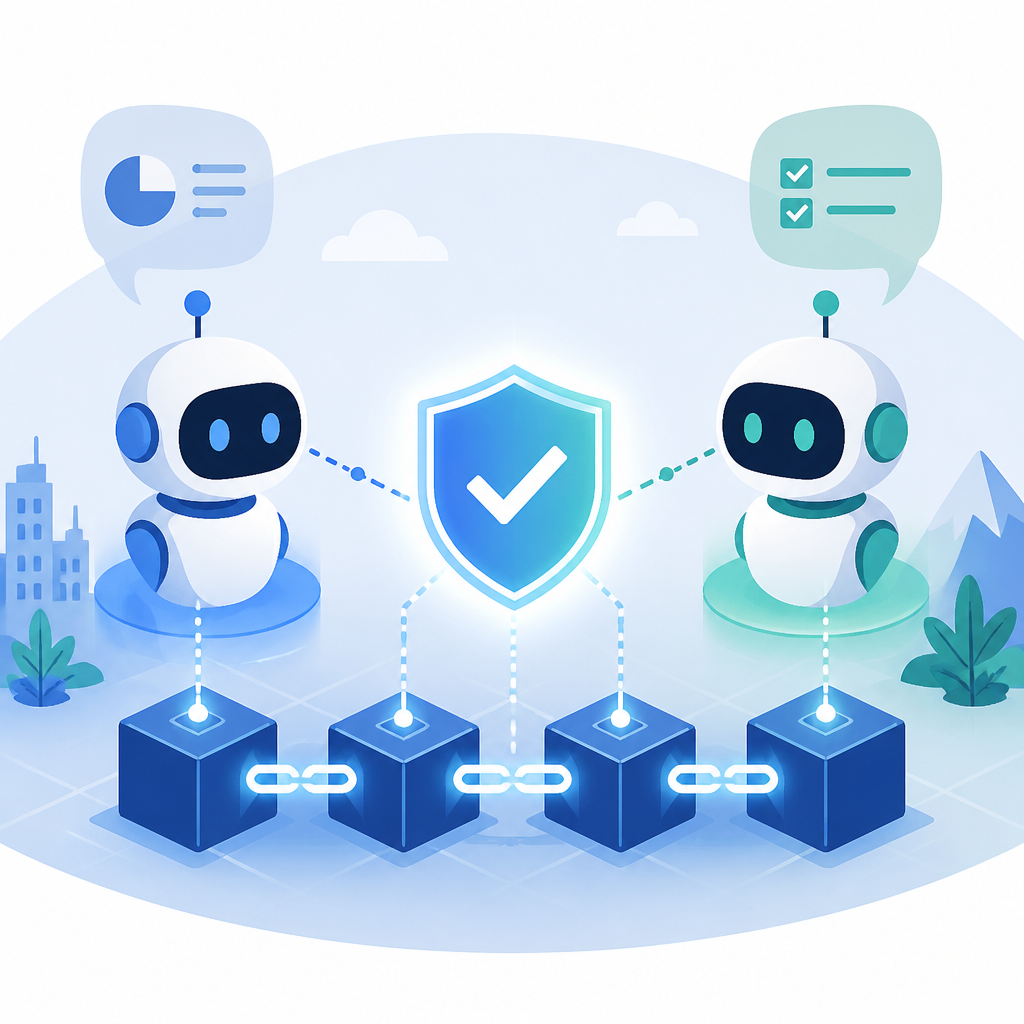
I keep seeing developers treat the chain like a database with extra ceremony. That misses the point. The chain is better thought of as a rules engine with receipts. The agent can decide off-chain, but the chain is where the decision gets committed, checked, and recorded. If you need a mental model, think “LLM outside, policy inside.”
The Blockchain Council article makes this explicit when it describes agents perceiving inputs, reasoning over goals, and taking actions with limited or no human supervision. That’s fine, but the real engineering question is where each of those steps lives. Reasoning belongs off-chain because it’s expensive and flexible. Settlement belongs on-chain because it’s deterministic and auditable. Identity and permissions belong on-chain or in a system tightly anchored to it, because custody without control is just a future incident report.
I ran into this when I prototyped a wallet agent that could rebalance a token portfolio. The first version had too much freedom. It could inspect balances, choose routes, and submit swaps. It worked right up until I simulated a bad market condition and realized the agent could still follow a “reasonable” path straight into a loss. The fix was not better prompting. The fix was moving authority into a contract with hard caps, whitelists, and explicit approval thresholds.
How to apply it: split your architecture into three layers. First, off-chain reasoning for planning and tool selection. Second, on-chain enforcement for permissions and settlement. Third, an audit layer that stores prompts, policy decisions, and transaction hashes. If you can’t explain where each layer begins and ends, the design is already too loose.
- Keep model inference off-chain unless you have a very specific reason not to.
- Put spend limits, role checks, and execution rules in smart contracts.
- Store signed actions and hashes so you can reconstruct the trail later.
Smart contracts are where agents stop improvising
“Once a transaction is confirmed, the outcome is recorded on-chain and can be independently verified.”
That line sounds obvious, but it’s the reason smart contracts matter here. Agents are good at adapting. Smart contracts are good at refusing creativity. You need both.
The article’s DeFi examples are the easiest way to see this. An agent can monitor liquidity pools, lending protocols, and token prices, then rebalance assets or move liquidity when conditions change. That’s useful because markets move faster than a human ops team. But the contract is what stops the agent from freelancing beyond the rules you set. It can rebalance only within a target range. It can adjust collateral only within a budget. It can trigger a function only after the expected off-chain event is verified.
I like this pattern because it removes the false comfort of “the model will know what to do.” No, it won’t. It will do something plausible. Your contract decides whether plausible is allowed.
The other thing the article gets right is deterministic settlement. On-chain execution is not about being clever. It’s about making the final state unambiguous. That matters for trading, treasury ops, and anything where a transaction can’t be casually rolled back. If you’ve ever debugged a bot that “mostly worked” until it hit a volatile market, you know why this matters.
How to apply it: define the agent’s action space before you let it touch a wallet. Don’t give it raw transaction freedom. Give it a narrow menu of callable functions, each with bounded parameters. Then simulate every call before broadcast. If the simulation fails, the agent should not get a second bite at the same action without human review.
- Whitelist contracts and function selectors.
- Cap amounts per action, per day, and per counterparty.
- Use preflight simulation for every state-changing transaction.
Autonomous payments are useful, and also dangerous
“Circle has demonstrated patterns where agents can hold USDC and make autonomous payments.”
That’s the part that gets everyone excited, because once an agent can hold stablecoins, it can pay for APIs, data, compute, subscriptions, or another agent’s work without someone manually clicking approve. I get why that’s appealing. It turns software from a recommendation engine into an economic actor.
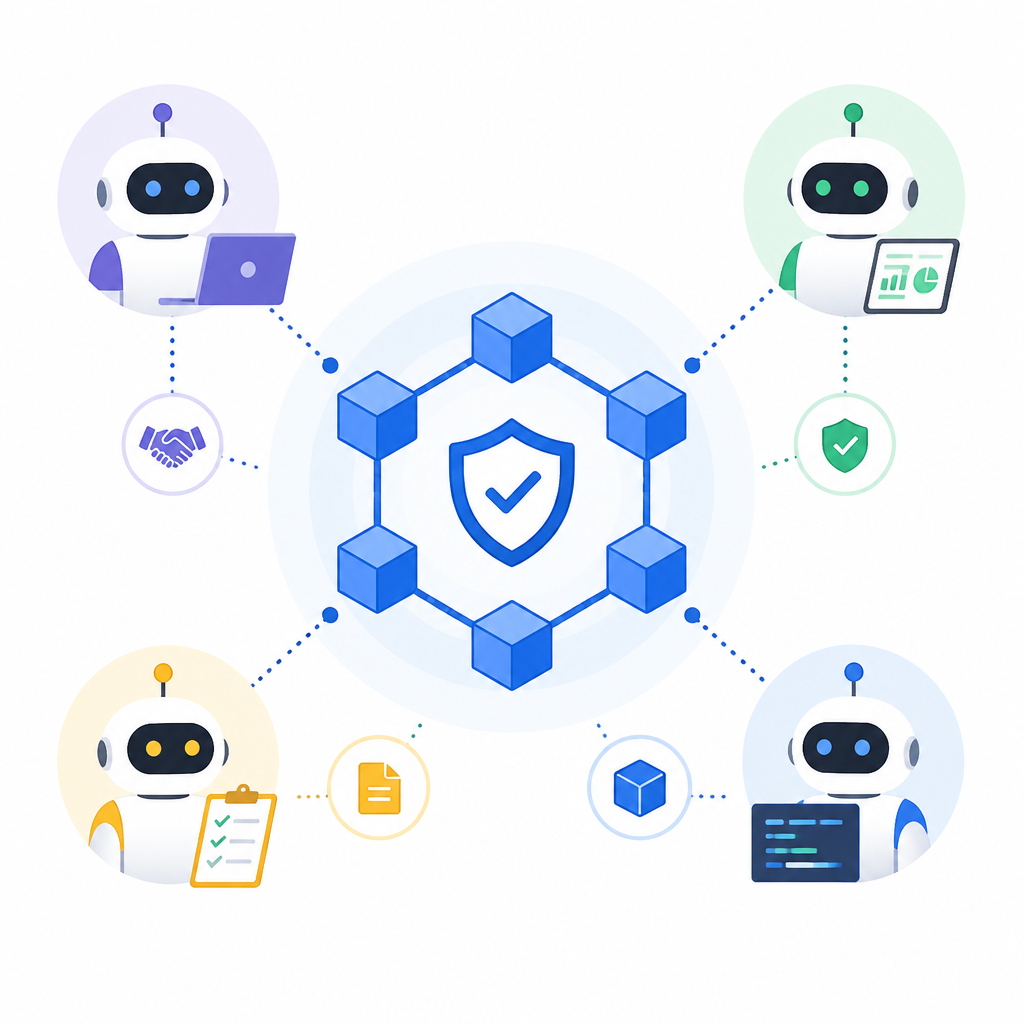
But payments are where sloppy architecture turns into real loss. If an agent can pay, it can also overpay, double-pay, pay the wrong vendor, or keep paying after the task is complete. The Blockchain Council article mentions the right guardrails: daily limits, approved vendors, multi-signature approvals, and emergency pauses. That’s not decoration. That’s the difference between a useful treasury bot and a wallet with a personality disorder.
I’ve seen teams try to solve this with “prompt discipline.” That’s a joke. A prompt is not a payment policy. If the agent has custody, you need policy at the protocol or contract layer. The agent can propose the payment, but another system should approve or reject it based on hard rules.
For machine-to-machine commerce, this gets even more interesting. Stablecoins like USDC make micro-payments and recurring service payments practical because the asset itself doesn’t whip around in value every hour. That’s why the article’s examples around subscriptions, cloud usage, and agent marketplaces make sense. The payment rail is the easy part. The hard part is making sure the agent can’t wander outside its budget.
How to apply it: separate “can propose payment” from “can release payment.” Put approval thresholds in code, not in a README. If the payment is recurring, make expiry mandatory. If the vendor is new, require a second signature. If the amount is above a threshold, require human sign-off.
- Use stablecoins for predictable agent spending.
- Require approval workflows above preset amounts.
- Make emergency pause and revocation paths boring and easy to use.
Multi-agent systems need a shared courtroom, not a chat room
“Blockchain supports secure collaboration among multi-agent systems by enabling identity, incentives, task allocation, and verifiable records without a central broker.”
That’s the part of the article that actually feels like a systems design note, not marketing copy. Once you have more than one agent, coordination becomes the problem. Who owns the task? Who paid whom? Who verified the result? Who gets blamed when the output is wrong? If you don’t have answers, you don’t have a system. You have a pile of bots talking over each other.
Blockchain helps here because it gives the agents a shared source of truth. That means one agent can request analysis, another can provide compute, a third can verify the result, and the contract can record who did what. This is especially useful when agents belong to different teams or even different organizations. Nobody wants to trust a private log file from someone else’s server. They want a record they can independently inspect.
I’ve run into this in distributed workflows where one service generates a result, another validates it, and a third pays for it. Without a shared ledger, disputes become email archaeology. With a ledger, the dispute becomes a contract question. That’s much better. Still annoying, but better.
The key is that blockchain is not just storing outcomes. It’s coordinating incentives. If a task needs collateral, the contract can hold it. If a verifier is wrong, the contract can slash it. If a provider completes work, the contract can release payment. That’s a much cleaner model than hoping every agent behaves nicely because the system prompt asked politely.
How to apply it: use the chain for task assignment, payment release, and dispute evidence. Keep the heavy reasoning and data processing off-chain. Make every agent register an identity, an allowed task type, and a payout rule. If the task needs verification, define the verifier before the work starts.
- Assign each agent a chain-backed identity.
- Attach collateral or escrow to work that can fail.
- Write down the dispute path before production.
DAO governance is where agents need a leash, not a crown
“A DAO may delegate limited voting authority to an agent under strict rules.”
This is where people get too enthusiastic and then regret it later. Yes, an agent can summarize proposals, check policy alignment, and even recommend votes. No, that does not mean you should hand it the keys to the treasury and call it governance innovation.
The Blockchain Council article gets the balance right: limited delegation, strict rules, immutable logs. That’s the pattern. An agent can vote on routine parameter changes or surface likely risks. It should not be making major treasury decisions unless humans have explicitly constrained that authority. Otherwise you’ve replaced governance with automation theater.
I’ve seen DAO tooling drift into this trap. The pitch is always the same: “Let the agent handle the boring stuff.” Fine. But boring stuff has a way of becoming expensive stuff when the rules are vague. If the agent can vote, it needs a policy envelope: what categories it can touch, what thresholds trigger review, and what gets escalated automatically.
What makes blockchain useful here is the audit trail. If the agent voted badly, you need to know whether it was a bad model input, a policy failure, or a permission bug. On-chain logs at least give you a shot at reconstructing the sequence. Without that, you’re guessing.
How to apply it: treat governance delegation like a scoped API key. Give the agent narrow authority, expiration dates, and review requirements. Log every proposal it reads, every recommendation it makes, and every vote it casts. If the DAO can’t inspect that trail after the fact, the delegation is too broad.
Hybrid architecture is the only sane default
“Most practical architectures use a hybrid model: AI reasoning runs off-chain, while blockchain handles settlement, verification, identity, and access control.”
This is the line I wish more teams would print on the wall before they start building. Advanced AI computation is expensive. On-chain compute is expensive in a different, more painful way. So the practical answer is almost always hybrid.
That means the model reasons off-chain, maybe in a service built on something like Amazon Bedrock, while the chain does the things chains are actually good at: recording state, enforcing permissions, and settling transactions. The article also points toward Circle for autonomous payment patterns and to public chain infrastructure for verifiable actions. That stack makes sense because it keeps the expensive intelligence where it belongs and the irreversible action where it belongs.
I’ve had the best results when I stop thinking of the agent as one monolith and start thinking of it as a planner with a policy boundary. The planner can be messy. The boundary cannot. That boundary should include least privilege, transaction simulation, rate limits, monitoring, and an emergency kill switch. If you skip those, you’re not building autonomy. You’re building a liability with a chat interface.
How to apply it: choose the smallest on-chain surface area possible. Use off-chain memory, retrieval, and reasoning. Use on-chain contracts for custody, settlement, and permissions. Add monitoring on both sides. If the agent’s behavior changes, you want to know whether the model changed, the data changed, or the contract rules changed.
- Off-chain: inference, retrieval, planning, orchestration.
- On-chain: identity, custody, settlement, constraints.
- Always: monitoring, alerts, and a way to shut it down fast.
The template you can copy
# AI Agent + Blockchain Architecture Template

## Goal
Build an AI agent that can propose and execute blockchain actions without giving it unrestricted wallet control.

## Default architecture
- Off-chain: model inference, retrieval, planning, tool selection
- On-chain: identity, permissions, settlement, audit trail
- Policy layer: transaction simulation, limits, approvals, revocation

## Components
1. Agent Planner
   - Reads user intent
   - Produces a proposed action
   - Never signs transactions directly

2. Policy Engine
   - Checks allowed contracts
   - Enforces spend caps
   - Blocks unknown counterparties
   - Requires approval above thresholds

3. Simulation Layer
   - Runs preflight transaction simulation
   - Compares expected vs actual state changes
   - Rejects unsafe or ambiguous calls

4. Execution Wallet
   - Uses least privilege
   - Holds only the funds needed for the task
   - Can be paused or revoked immediately

5. Audit Log
   - Stores prompt, model output, policy decision, tx hash
   - Records timestamp, chain, contract, function, amount
   - Keeps a human-readable reason for approval or rejection

## Safety rules
- Allow only whitelisted contracts and function selectors
- Set per-transaction and daily spending caps
- Require human approval for new vendors or new contract addresses
- Add rate limits for repeated actions
- Use a kill switch that can pause all outbound transactions
- Rotate keys on a schedule
- Separate planner credentials from custody credentials

## Example policy
yaml
agent_name: treasury-bot
mode: propose_and_execute
allowed_chains:
  - ethereum
  - base
allowed_contracts:
  - 0xYourWhitelistedContract1
  - 0xYourWhitelistedContract2
max_tx_value_usd: 250
max_daily_value_usd: 1000
require_human_approval_over_usd: 250
require_simulation: true
allow_new_counterparties: false
emergency_pause_enabled: true


## Execution flow
1. User or system creates a task.
2. Agent proposes a transaction.
3. Policy engine checks rules.
4. Simulation runs.
5. If safe, execution wallet signs and broadcasts.
6. Audit log stores everything.
7. Monitoring alerts on anomalies.

## What not to do
- Don’t let the model hold a hot wallet with full funds
- Don’t skip simulation because the transaction looks simple
- Don’t rely on prompts as security policy
- Don’t allow unlimited retries after failure
- Don’t mix governance voting with treasury custody

## Minimal human override
- Pause all transactions
- Revoke wallet permissions
- Freeze new counterparty approvals
- Export audit history
- Rotate keys and redeploy policy rules
What I like about this template is that it treats the agent like a useful employee, not a magical operator. It can propose. It can act. But it can’t freeload on trust it hasn’t earned. That’s the design that survives contact with real money.
Source attribution: I broke this down from Blockchain Council’s article by Toshendra Kumar Sharma. The architecture advice and template above are my own synthesis of that source, plus the guardrails I’d actually want in a production system.
// Related Articles
- [AGENT]
Claude Code 动态工作流:AI 自写 Harness
- [AGENT]
Agent orchestration is the missing layer for enterprise AI
- [AGENT]
8 RAG patterns that turn demos into prod
- [AGENT]
Fine-tuning beats RAG when the goal is style, not facts
- [AGENT]
OpenClaw shows how small businesses use AI staff
- [AGENT]
LiteLLM launches a minimal Rust gateway for agents