Alibaba runs Android 16 on RISC-V chips
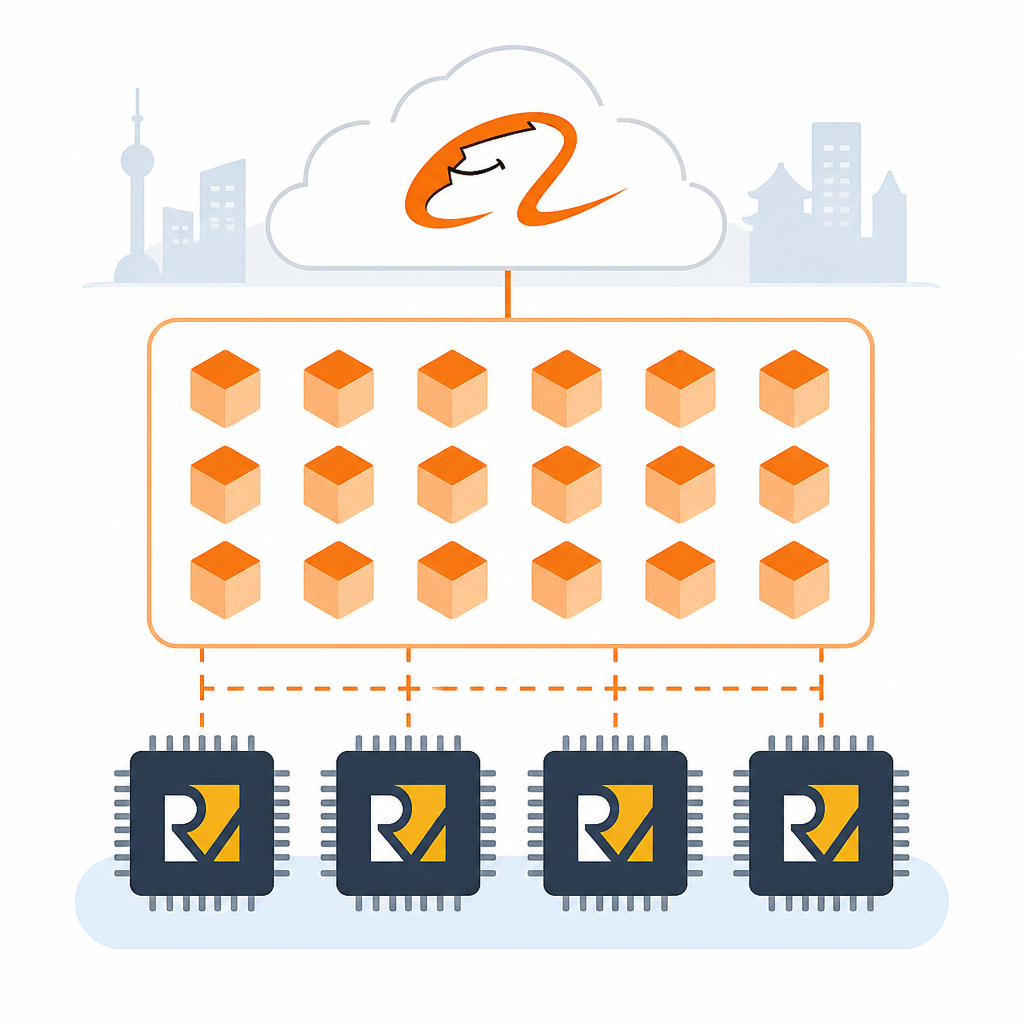
Alibaba’s DAMO Academy says it has ported Android 16 to XuanTie RISC-V silicon, a first for RVA23 processors.

Alibaba says it has ported Android 16 to its XuanTie RISC-V processors.
Alibaba’s DAMO Academy says it has gotten Android 16 running on its in-house RISC-V silicon. The company made the claim in a Monday social post, then said the work reached XuanTie 9-series processors and, more specifically, an RVA23 processor first.
That matters because RISC-V has been popular in theory for years, while real software support has lagged behind. A phone OS is a much harder proof point than a benchmark slide deck, and Android is one of the biggest compatibility tests a chip vendor can ask for.
| Fact | Detail |
|---|---|
| Android version | Android 16 |
| Chip family | XuanTie 9-series |
| Architecture milestone | RVA23 processor |
| Organization | DAMO Academy |
| Standards project | RISE Project |
What Alibaba actually announced
Get the latest AI news in your inbox
Weekly picks of model releases, tools, and deep dives — no spam, unsubscribe anytime.
No spam. Unsubscribe at any time.
Alibaba did not name the exact XuanTie 9-series part that boots Android 16, and that omission leaves room for a lot of interpretation. The 9-series spans everything from modest embedded parts to AI-oriented server chips, so the difference between a demo board and a usable product is not small.

The company also said it shared the work with the first batch of XuanTie strategic customers. In Alibaba’s phrasing, those customers can use the port to speed up “new RISC-V smart terminal scenarios” and shorten the time from chip prototype to product launch.
- XuanTie is Alibaba’s own RISC-V processor line.
- “Smart terminal” can mean phones, PCs, signage, or industrial gear.
- The claim points to software readiness, not just chip design.
- Alibaba says the work went to early strategic customers.
The wording is classic Chinese tech-industry translation: a little fuzzy, but still useful if you read between the lines. Alibaba is signaling that it wants RISC-V chips to move beyond hobbyist boards and into products that need a mainstream OS.
Why Android on RISC-V matters
RISC-V has a simple pitch: an open instruction set that chip makers can adopt without paying the same licensing tolls as Arm. The hard part has always been the software stack. Hardware vendors can draw diagrams fast; getting Android, toolchains, drivers, and apps to behave is where projects usually stall.
That is why this announcement carries more weight than a generic “we got Linux booting” note. Android is a sprawling, opinionated platform with its own expectations around graphics, input, app compatibility, and device management. If Alibaba can keep Android 16 alive on RISC-V, it gives manufacturers a cleaner path to shipping consumer or embedded devices without betting everything on Arm.
“This is about software compatibility, not just chip design.”
Alibaba’s work also lands in the middle of China’s push for domestic hardware. The company’s strategic customers are likely manufacturers that currently buy from Qualcomm or MediaTek, two vendors that dominate mobile and edge silicon outside China.
The comparison that explains the stakes
Alibaba is not alone in treating local silicon as a strategic goal. Lenovo has already built products under its Kaitian banner using Chinese chips, including a version of the ThinkPad X1 Carbon with local silicon. Huawei took a harder turn by moving away from Android and building HarmonyOS for its own devices.
Alibaba’s move looks different. It is not trying to replace Android; it is trying to keep Android in the stack while swapping out the processor underneath. That is a much easier sell for manufacturers that want domestic chips without rebuilding their software world from scratch.
- Huawei reduced Android dependence by building HarmonyOS.
- Lenovo has already shipped Chinese-chip systems under Kaitian.
- Alibaba is trying to keep Android while changing the silicon.
- That approach lowers the cost of adoption for device makers.
There is also a standards angle. Alibaba is a member of the RISC-V Software Ecosystem (RISE) Project, which exists to make sure major software can run on RISC-V hardware. Alibaba appears to have beaten RISE to this Android 16 milestone, at least based on the company’s public claim.
What happens next for Alibaba and RISC-V
The important question is no longer whether a demo can boot. It is whether Alibaba, its XuanTie customers, and the wider RISC-V ecosystem can turn this into repeatable support for real devices. Android support usually gets serious only when drivers, graphics, update paths, and app behavior all line up.
Alibaba also faces a crowded domestic chip market. Huawei is still a heavyweight in Chinese consumer and enterprise tech, Baidu has signaled plans to spin out and float its Kunlunxin chip unit, and plenty of other Chinese companies are building AI hardware or decent general-purpose processors. The competition is not just technical; it is political and commercial too.
My read: this announcement is less about Android itself than about proving that RISC-V can support a mainstream mobile-style software stack without heroic porting work every time. If Alibaba can show a stable Android 16 build on XuanTie hardware, the next step is obvious: a real device, a real customer, and a public list of what works and what still breaks.
That is the number to watch now, because the chip race is moving from “can it boot?” to “can a manufacturer ship it?”
// Related Articles
- [IND]
OpenAI’s IPO filing turns hype into scrutiny
- [IND]
Skatteetaten proves public sector AI should be judged by outcomes
- [IND]
OpenAI’s IPO filing puts AI’s biggest test on Wall Street
- [IND]
OpenAI’s latest moves now center on pricing, safety, and scale
- [IND]
RISC-V mini PCs are worth buying now, but only as a bet on the future
- [IND]
Fedora 44 RISC-V widens Linux board support