CEA-List’s RISC-V booth turns Summit into a playbook
CEA-List’s Summit page turns one event listing into a practical RISC-V meetup and demo plan.
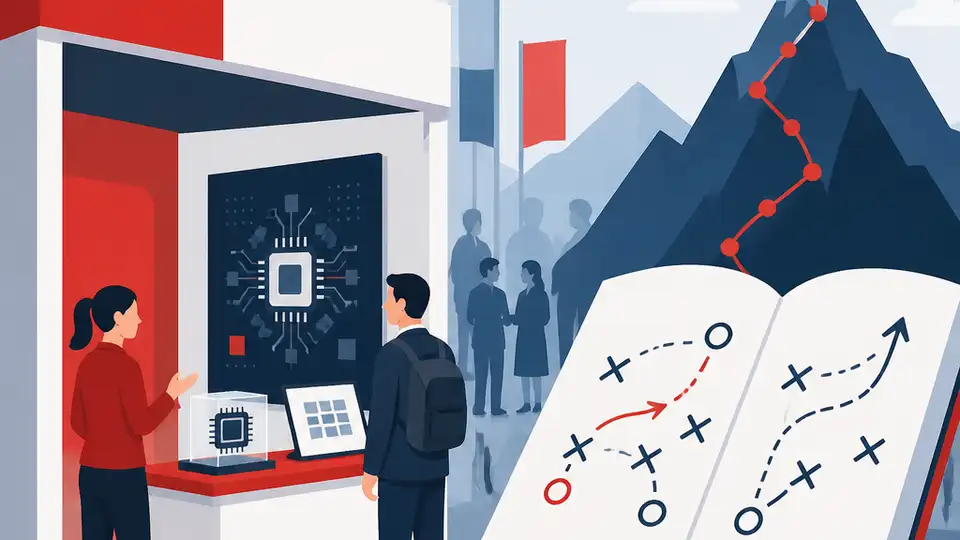
CEA-List’s event page turns a Summit listing into a usable RISC-V meetup plan.
I've been reading event pages like this for years, and most of them are basically decorative. Date, venue, a little sponsor glow, maybe a registration link, and then nothing you can actually use. This one felt different, but also annoyingly familiar in the way technical teams talk about themselves when they’re trying to do three jobs at once. CEA-List is announcing a sponsorship, yes. But they’re also trying to signal ecosystem position, demo readiness, and a technical story about where RISC-V goes next. That’s a lot to cram into a single page, and usually it comes out mushy.
What I wanted, reading it, was the real operating model behind the page. What are they actually showing at the booth? Why these demos? Why those topics? And what does this say about how a research org should show up at a summit without sounding like a brochure? I’ve done enough conference prep to know that the difference between a good presence and a wasted one is rarely the banner art. It’s whether the team can tell a coherent story in ten seconds, then back it up with something concrete when people wander over.
So I broke this page down the way I’d explain it to a teammate who has to prep a booth, a talk, and a follow-up plan without getting lost in event copy.
Source anchor: this breakdown is based on CEA-List’s event post on list.cea.fr, which announces CEA-List’s sponsorship of RISC-V Summit Europe 2026 in Bologna.
They’re not “attending.” They’re staking out a technical position
Get the latest AI news in your inbox
Weekly picks of model releases, tools, and deep dives — no spam, unsubscribe anytime.
No spam. Unsubscribe at any time.
“We’re excited to sponsor RISC-V Summit Europe 2026 and connect with the global community driving open standard innovation forward.”
What this actually means is: they’re not treating the summit like a calendar item. They’re using it as a public proof point that CEA has been part of the European RISC-V ecosystem since 2018 and intends to stay visible in it. That matters because conference presence is cheap until you try to make it mean something. Then it gets expensive fast.
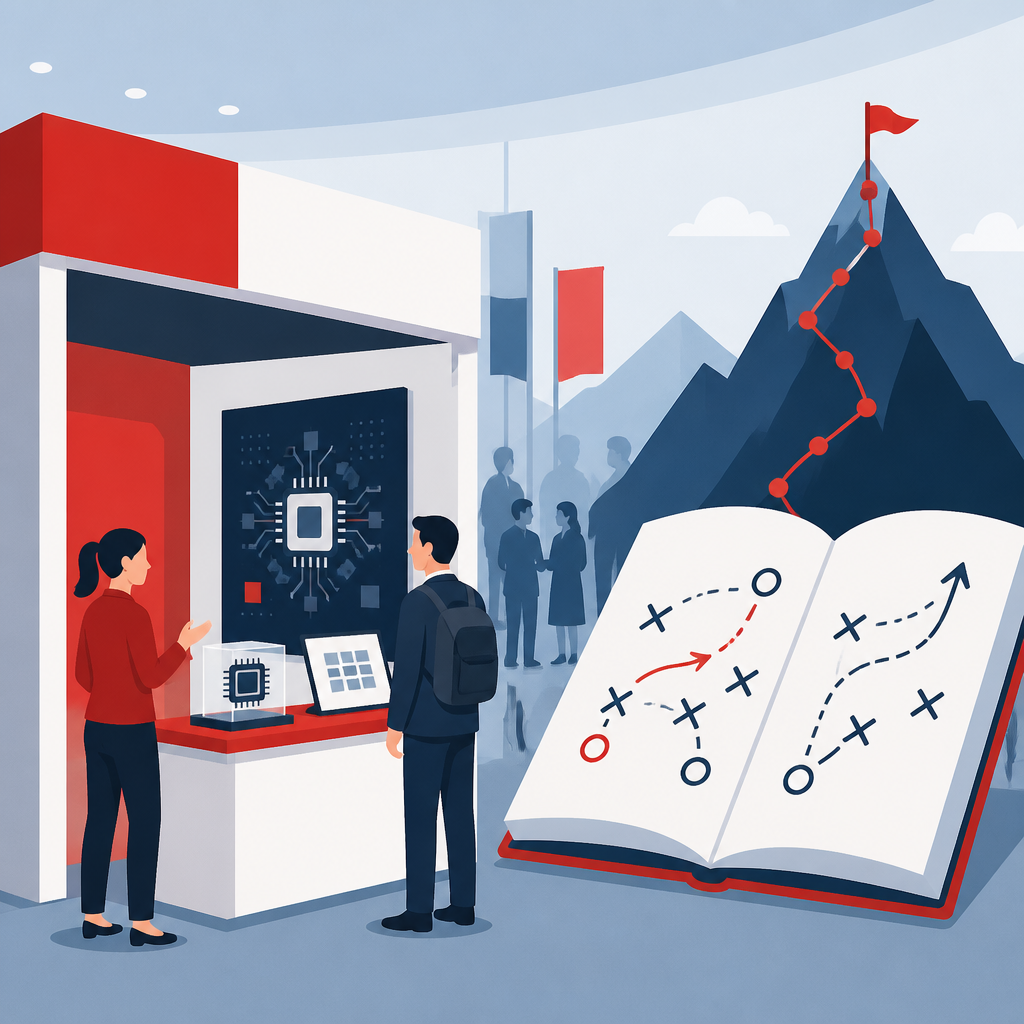
I’ve seen teams show up to events with a logo, a stack of flyers, and a vague idea that “networking” will handle the rest. It doesn’t. If you want the room to remember you, you need a position. Here, the position is pretty clear: open standard computing, European ecosystem development, and research-backed hardware/software demos that are not just slides.
The page also quietly does a useful bit of framing. It says “global community,” but the subtext is European capability. That’s the real game. RISC-V is open, but implementation is where regions build leverage. If you’re a research lab, the point is not to cheer from the sidelines. It’s to show you can contribute silicon, tooling, and system thinking.
How to apply it:
- Write your event copy around one clear stance, not three vague adjectives.
- Say what ecosystem you belong to, and what you’ve been doing in it.
- Use the event to reinforce a technical identity, not just awareness.
If I were rewriting this for a startup or lab, I’d ask one blunt question: what do we want people to repeat after they leave the booth? If the answer is “they were there,” start over.
The booth is the product, not the swag
“A dedicated booth showcasing the VASCO-3 demonstrator, an ASIC vehicle for integrated circuit security, the Intrinsec Secured Processor demonstrator and the Software Defined Computing demonstrator during the three days of the main conference.”
What this actually means is that CEA-List is using the booth as a live portfolio, not a sales counter. That’s the right move for a research org. Nobody cares that you had a table. They care whether you had something real enough to poke at, ask about, and remember.
The interesting part here is the mix. They’re not showing one monolithic platform. They’re showing three different angles: security, secured processing, and software-defined computing. That tells me the booth is meant to answer a broad question from multiple directions. If someone is interested in trusted silicon, there’s a hook. If they care about programmability, there’s another hook. If they want to understand the system story, they can connect the dots.
I ran into this exact issue when helping a team prep for an embedded systems conference. We had too many demos and too little narrative. Visitors would stop, but the team couldn’t quickly explain why the demos belonged together. We fixed it by forcing a single sentence per demo and one sentence that tied them together. That sounds basic because it is. Basic wins at noisy conferences.
How to apply it:
- Pick 2-3 demos that map to one broader technical thesis.
- Write a one-line explanation for each demo that a non-specialist can repeat.
- Make sure every demo answers a different question, not the same one three times.
CEA-List’s booth plan works because it feels like a curated argument. Not “look at our stuff,” but “here’s the shape of the problem we’re working on.” That’s a much stronger way to spend booth money.
VASCO-3 is the kind of demo people actually remember
“A presentation of the VASCO-3 demonstrator at the Demo Theater.”
What this actually means is they’re not hiding the most concrete hardware story in the booth. They’re giving it a stage. The page calls VASCO-3 “an ASIC vehicle for integrated circuit security,” which is the kind of phrase that tells me this is meant to be more than a concept slide. It’s a vehicle for showing how security gets built into silicon, not bolted on later.
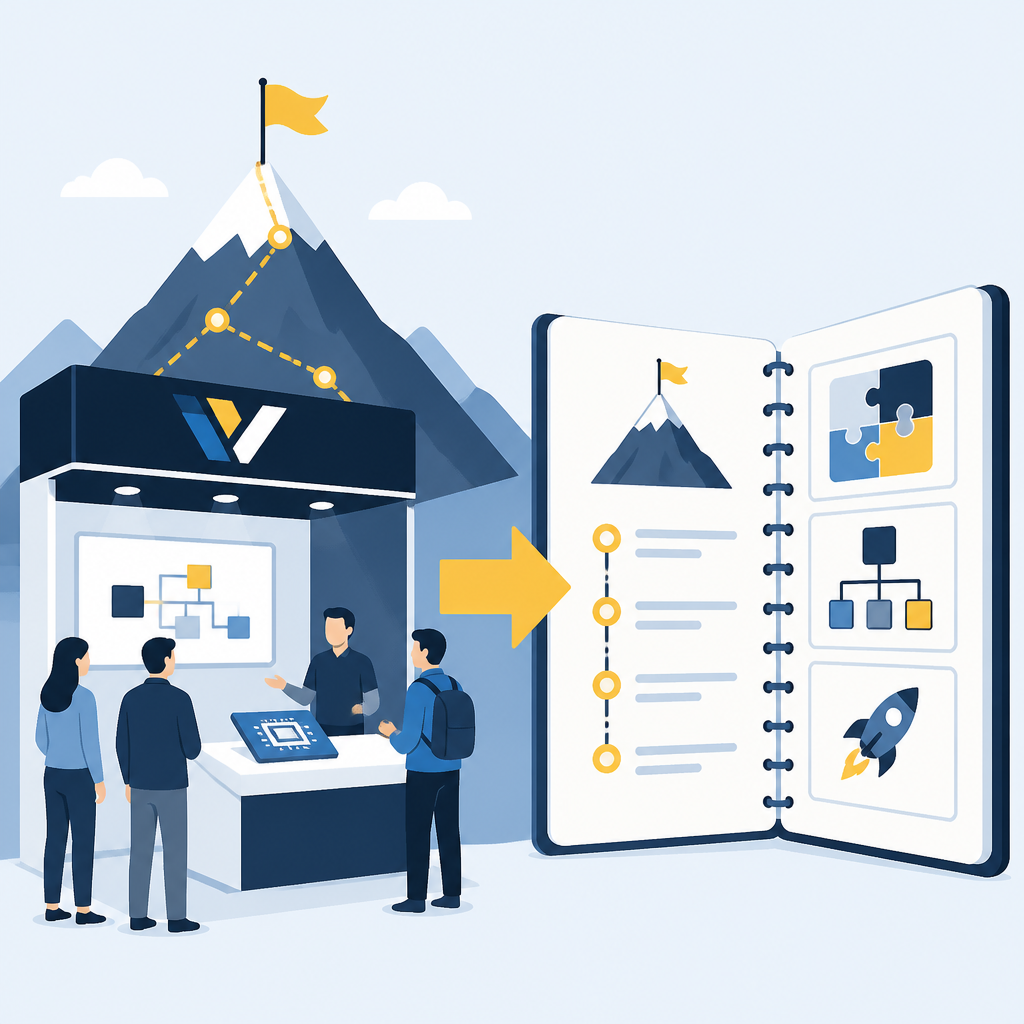
This is where a lot of technical organizations get lazy. They’ll say “security” and then show a diagram with too many arrows. That’s not enough. If you want people to care, you need a named artifact with a job. VASCO-3 is that artifact. It gives the audience something to remember, and it gives the team a handle for follow-up conversations after the event.
I like that the page explicitly says the demo theater presentation is separate from the booth. That separation matters. Booth conversations are shallow by design. Demo theater sessions are where you earn the right to go deeper. If you collapse both into one channel, you end up with a half-explained demo and a bored audience.
How to apply it:
- Give your strongest demo a stage slot, not just floor space.
- Use the stage to explain the problem, the architecture, and the outcome.
- Keep the booth version shorter and more tactical.
When I’m planning this kind of event, I always ask: what’s the thing we want people to quote back to us later? If the answer is a product name, a chip name, or a demonstrator name, good. If the answer is “our research,” that’s too fuzzy to survive the conference floor.
The white paper is the real sales asset, even if nobody calls it that
“A white paper presenting our vision of how RISC-V, combined with key enabling technologies such as on-chip photonics, on-chip security, chiplets, and advanced 3D packaging, can help shape the future of high-performance and cloud computing.”
What this actually means is that the event page isn’t only about showing hardware. It’s also about publishing a point of view. That white paper is doing a lot of heavy lifting. It connects the immediate RISC-V story to a longer-term systems story: chiplets, photonics, security, packaging, HPC, cloud. That’s not random topic stuffing. It’s a map of where the architecture conversation is going.
I’ve been burned by teams that think a white paper is just a PDF to hand out when the booth gets quiet. It’s not. A good white paper is a filter. It tells the right people they’re in the right place, and it tells the wrong people to move on. That’s useful. You do not want every passerby. You want the ones who care about the actual stack.
The title itself is long, which is usually a sign that nobody fought hard enough for brevity. But the content idea is solid: RISC-V is not being discussed as a standalone ISA here. It’s being positioned as the center of a much larger integration problem. That’s a much smarter story for a summit than “we like open hardware.”
How to apply it:
- Pair event presence with one written artifact that extends the conversation.
- Use the paper to connect the immediate demo to the next layer of the stack.
- Make the title specific enough that the right person self-selects in.
For context, if you want to understand the broader RISC-V ecosystem around the event, the main community site is riscv.org, and the Europe summit itself is organized under riscv-europe.org. That’s the ecosystem CEA-List is trying to speak into, not just decorate.
The poster count tells me this is a research presence, not a marketing stunt
“13 accepted posters presented throughout the three days of the main conference.”
What this actually means is that CEA-List is bringing a lot of research texture to the summit. Posters are not glamorous, but they are honest. They signal active work, multiple contributors, and enough breadth to support a real technical conversation. That’s different from a single polished demo pretending to represent an entire lab.
I like this detail because it makes the page feel less like a sponsor announcement and more like an internal coordination artifact that got published. Someone had to gather the accepted posters, spread them across the conference days, and make sure the team could support them. That’s operational work. It’s also the kind of work that usually gets ignored in event writeups, which is a mistake.
The posters also help with the “what exactly do you do?” problem. A booth can hint. A poster can explain. And a cluster of 13 posters says the organization has depth, not just one flagship narrative. If you’re in a research-heavy environment, that matters a lot more than a slick one-pager.
How to apply it:
- Don’t treat posters as leftovers; use them to show breadth and continuity.
- Group poster topics so visitors can follow a technical thread.
- Assign team members to posters, not just the booth, so conversations don’t die at the table.
If I were running this event, I’d build a simple matrix: poster title, owner, one-line summary, and which booth question it supports. That keeps the research from becoming random wallpaper.
The Topic Table is where the real ecosystem talk happens
“Participation in a Topic Table session exploring one of the ecosystem’s key emerging challenges.”
What this actually means is that CEA-List isn’t only there to present. They’re there to argue, listen, and shape the agenda. Topic tables are useful because they force the conversation away from polished scripts and into actual tradeoffs. That’s where ecosystem work gets real.
This is the part of the page that tells me they understand community building. If you only show up with demos, people remember your hardware. If you also show up in working sessions, people remember your judgment. The second one is harder to fake.
I’ve sat in enough “ecosystem” sessions to know they can become performative fast. Everyone nods, nobody disagrees, and somehow the room spends 45 minutes avoiding the one hard problem. The only way topic tables work is if somebody is willing to name the tension. In RISC-V, that could be security, interoperability, packaging, toolchain maturity, or deployment at scale. The page doesn’t say which challenge, and that’s fine. The point is that they’re entering the debate.
How to apply it:
- Use roundtables for open problems, not polished messaging.
- Send someone who can speak to tradeoffs, not just slides.
- Capture the discussion and feed it back into your roadmap or white paper.
For a summit like this, the topic table can be more valuable than the booth if the right people are in the room. That’s why I’d never treat it as an afterthought.
The page is really a meeting funnel, and that’s the useful part
“You will find us at Booth G2, located in the heart of the exhibition area. Come to the booth to meet our team to discuss RISC-V and the technologies shaping the next generation of European and global computing.”
What this actually means is the page is trying to convert interest into a scheduled conversation. Booth G2 is not just a location marker. It’s a call to action. The page pushes readers toward an onsite meeting, which is exactly what a conference page should do if the team actually wants follow-up.
I’ve seen too many event pages stop at awareness. That’s lazy. If someone is already interested enough to read the page, you should tell them exactly where to go, when to show up, and what they can talk about. CEA-List does that here. The page gives the venue, the dates, the booth, and the technical topics. That’s enough for a serious attendee to plan a stop.
The other thing I appreciate is the geographic framing. Bologna is the venue, but the message is broader: European and global computing. That’s a smart stretch. It says the team is rooted locally but thinking at system scale. Again, that’s the right posture for a research organization that wants to matter outside its own country.
How to apply it:
- Always include a concrete meeting destination, not just “find us there.”
- State the topics people can bring to the conversation.
- Give them one action, not five.
If you want to see how the event is being framed by the organizers, the summit listing is on CEA-List’s site, and the broader event context is available through RISC-V Summit Europe. That’s enough to validate the dates, venue, and ecosystem focus.
The template you can copy
<p data-speakable="summary">[One sentence: what this event page lets people do or copy.]</p>

<p>I've been using [framework / event / template] for a while, and it kept feeling off because [pain point]. This time, the useful part is [what the source actually does].</p>

<p>Source anchor: this breakdown is based on [source name] on <a href="[source URL]">[source domain]</a> and the broader ecosystem at <a href="[ecosystem URL]">[ecosystem name]</a>.</p>

<h2>[Opinionated section title]</h2>
<blockquote>“[Exact quote from the source]”</blockquote>
<p>What this actually means is: [plain-language paraphrase].</p>
<p>I ran into this when [brief anecdote].</p>
<p>How to apply it:</p>
<ul>
  <li>[Actionable step 1]</li>
  <li>[Actionable step 2]</li>
  <li>[Actionable step 3]</li>
</ul>

<h2>[Second opinionated section title]</h2>
<blockquote>“[Exact quote from the source]”</blockquote>
<p>What this actually means is: [plain-language paraphrase].</p>
<p>I ran into this when [brief anecdote].</p>
<p>How to apply it:</p>
<ul>
  <li>[Actionable step 1]</li>
  <li>[Actionable step 2]</li>
  <li>[Actionable step 3]</li>
</ul>

<h2>[Final section title that ties the story together]</h2>
<p>The real takeaway is [short summary].</p>
<p>If I were copying this for my own team, I’d keep the message narrow, the proof concrete, and the ask explicit.</p>

<h2>The template you can copy</h2>
<pre><code>[Paste the exact reusable template, prompt, config, or markdown here.]</code></pre>

<p>Source: [original source URL]. What I wrote here is my own breakdown of the source, not an official statement.</p>
That’s the version I’d actually reuse. It keeps the structure tight: one-sentence summary, source anchor, quoted idea, plain-English translation, a practical action list, and then a copy block that someone can lift without rebuilding the whole article.
For the record, the copy above is my derivative template, built from CEA-List’s event page structure and messaging. The original source is https://list.cea.fr/en/event/risc-v-europe-summit-2026/, and the summit context lives at https://riscv-europe.org/. I’ve added my own framing, interpretation, and reusable format on top of that source material.
// Related Articles
- [IND]
OpenAI’s IPO filing turns hype into scrutiny
- [IND]
Skatteetaten proves public sector AI should be judged by outcomes
- [IND]
OpenAI’s IPO filing puts AI’s biggest test on Wall Street
- [IND]
OpenAI’s latest moves now center on pricing, safety, and scale
- [IND]
RISC-V mini PCs are worth buying now, but only as a bet on the future
- [IND]
Fedora 44 RISC-V widens Linux board support