Chinese AI models are winning on tokens and price
JPMorgan data shows Chinese AI models taking over OpenRouter usage in 2026, driven by lower prices, open weights, and agentic workflows.

JPMorgan data shows Chinese AI models taking over OpenRouter usage in 2026.
In late February 2026, Chinese AI models accounted for about 61% of token consumption among the top ten models on OpenRouter, the API aggregator developers actually use. By April, those models made up more than 45% of all traffic on the platform, and OpenRouter said it was processing over 20 trillion tokens per week.
The headline here is simple: this is not a niche China story anymore. It is a pricing story, a developer workflow story, and a distribution story all at once. When engineers choose models for coding agents, batch jobs, and production tools, they vote with tokens, and the vote is shifting.
| Metric | Value | Why it matters |
|---|---|---|
| Top-ten token share by Chinese models | 61% | Shows how quickly usage tilted toward Chinese systems |
| OpenRouter weekly traffic | 20+ trillion tokens | Gives the data set real scale |
| MiniMax M2.5 SWE-Bench Verified | 80.2% | Puts it near top U.S. coding models |
| Claude Opus 4.6 SWE-Bench Verified | 80.8% | Shows how close the performance race has become |
| MiniMax M2.5 price | $0.30 per million tokens | Explains why developers are switching |
| Claude Opus 4.6 price | $5.00 per million tokens | Highlights the cost gap |
OpenRouter data shows where developers are actually going
Get the latest AI news in your inbox
Weekly picks of model releases, tools, and deep dives — no spam, unsubscribe anytime.
No spam. Unsubscribe at any time.
The most useful part of the JPMorgan note is that it leans on usage data, not marketing claims. OpenRouter sits between developers and hundreds of models, so its traffic shows what people pick when they care about cost, latency, and output quality.
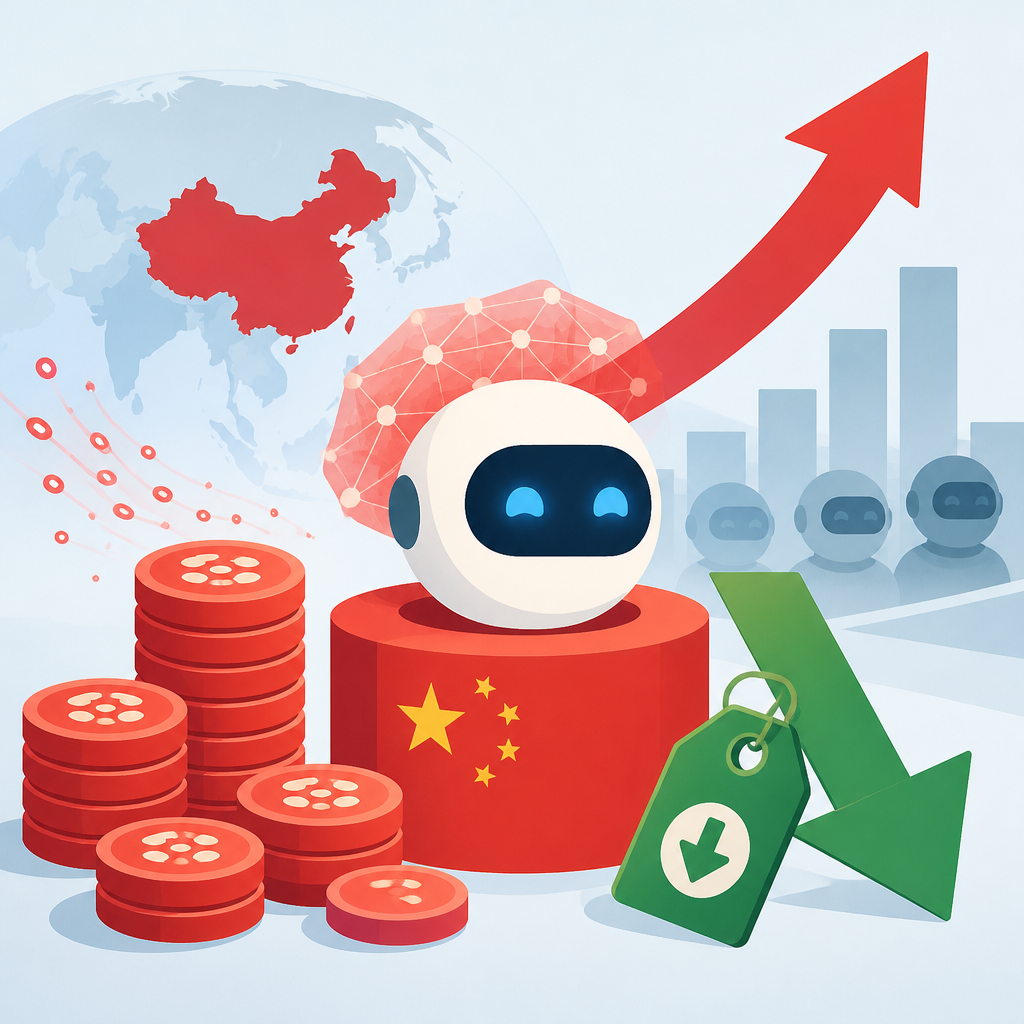
That matters because AI adoption often looks different in slide decks than it does in production. A model can win benchmarks and still lose on total cost. It can also have strong brand recognition and still get passed over when a developer needs to run millions of tokens through an agent loop.
JPMorgan Asset Management strategist Michael Cembalest highlighted this shift in his Eye on the Market commentary and Memorial Day 2026 podcast. His point was blunt: China’s domestic scale and low-cost open-source model strategy are pushing adoption faster than many people expected.
- Chinese models held the top three spots on OpenRouter’s global usage leaderboard in late February 2026.
- MiniMax M2.5 processed 4.55 trillion tokens in a single month on the platform.
- Kimi K2.5 from Moonshot AI reached 4.02 trillion tokens processed.
- By April 2026, Chinese models were responsible for more than 45% of all OpenRouter traffic.
Cheap models are winning the coding workload
The pricing gap is where the story gets interesting. MiniMax M2.5, built by Shanghai-based MiniMax, scored 80.2% on SWE-Bench Verified, almost matching Anthropic’s Claude Opus 4.6 at 80.8%. But MiniMax priced the model at $0.30 per million tokens, while Claude Opus 4.6 cost $5.00.
That is a massive difference for anyone running code agents, document pipelines, or customer support systems at scale. A model that is close on benchmark performance but far cheaper can quickly become the default choice for high-volume tasks. That is especially true when the workload is agentic, meaning the model takes many steps and burns through tokens fast.
“Chinese open-weight models have captured significant market share because they are disproportionately heavy in agentic flows run by U.S. developers,” said Chris Clark, COO of OpenRouter.
That quote explains the economics better than any chart. U.S. developers are still a major part of the demand side, but they are increasingly routing work to Chinese models because the math is hard to ignore.
- Programming grew from about 11% of OpenRouter usage in early 2025 to more than 50% by 2026.
- Agent-driven workflows now generate more than half of all output tokens on the platform.
- OpenRouter said Chinese models rose from under 2% of traffic in late 2024 to over 45% by April 2026.
- DeepSeek’s DeepSeek V3.2 also sat in the top tier alongside MiniMax, Moonshot AI, and Zhipu AI.
China’s model strategy is built for distribution
The companies winning here are following a similar playbook. They release open-weight models quickly, iterate often, and price aggressively. That gives developers more freedom to self-host, fine-tune, or plug the models into internal tools without getting locked into one vendor’s stack.
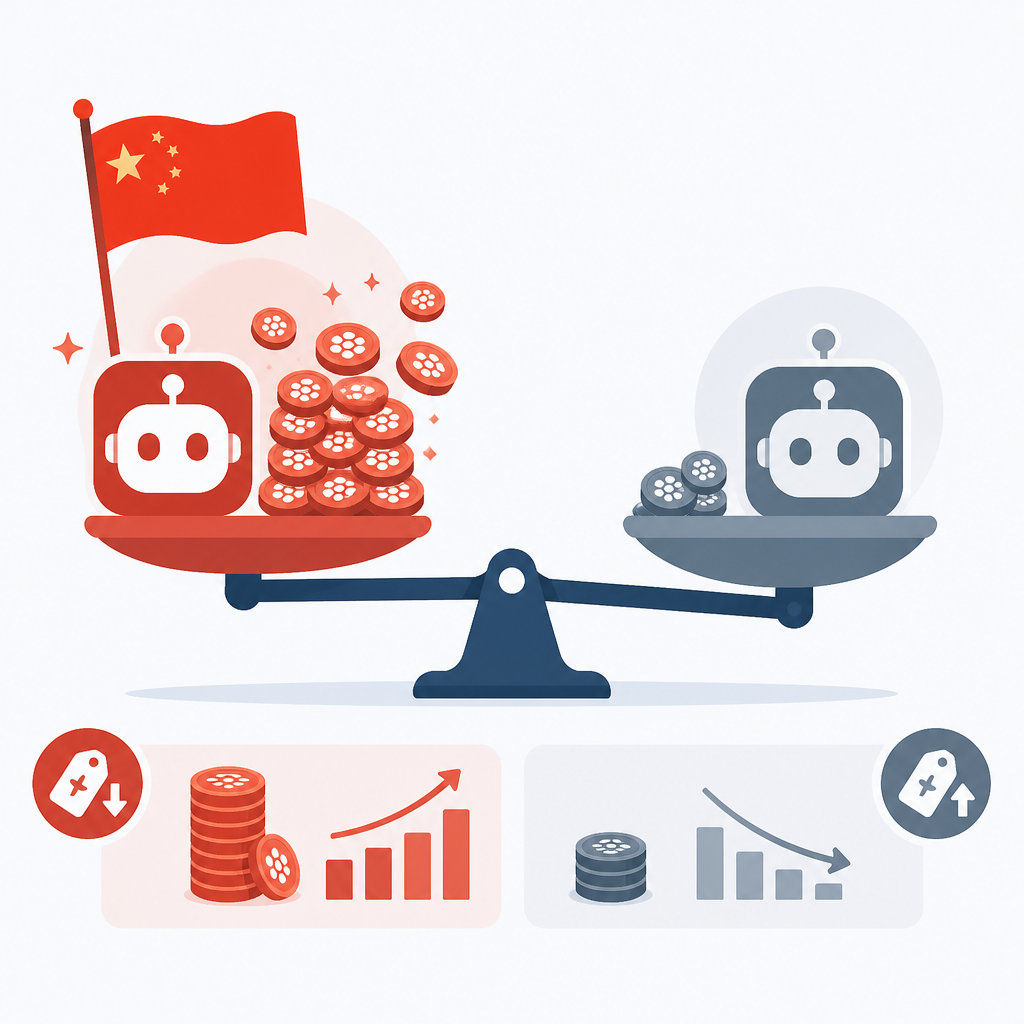
The names to watch are Zhipu AI, DeepSeek, MiniMax, Moonshot AI, and Alibaba Qwen. Each has pushed models that are good enough for serious work and cheap enough to scale across large usage volumes.
That combination matters more than raw hype. Enterprise teams do not buy models because they sound impressive. They buy them when a model can handle coding, summarization, search, or workflow automation without blowing up the bill.
China also benefits from a huge domestic market that gives these companies a fast feedback loop. If a model works well in consumer apps, enterprise tools, and e-commerce workflows at home, it can mature quickly before it ever tries to win global mindshare.
What this means for U.S. AI vendors and investors
The obvious reading is that U.S. model makers still lead on brand and ecosystem, but their pricing power is under pressure. When an open-weight Chinese model gets close to frontier performance and costs a fraction as much, the default procurement logic changes.
For investors, that could matter across cloud, software, and AI infrastructure names. For developers, it means the model choice is becoming less ideological and more operational. The question is no longer “which lab built it?” The question is “how many tokens can I run before the budget breaks?”
That is why JPMorgan’s note matters. It does not claim China has won AI. It shows that usage, especially in agentic and programming-heavy workloads, is moving toward Chinese models faster than the old U.S.-dominant story would suggest.
If current pricing and release patterns hold, the next test is whether U.S. vendors respond with lower-cost open models or accept a split market where premium models stay American and high-volume production traffic keeps moving east. That answer will show up first in token charts, not earnings calls.
For readers tracking the broader AI race, this is the kind of signal worth watching alongside model launches and benchmark scores. Usage data is the cleaner tell, and right now it points to a world where Chinese AI models are no longer chasing the market. They are taking share from it.
// Related Articles
- [IND]
AMD and Microsoft push Windows ML on GPU and NPU
- [IND]
OpenAI’s IPO filing turns hype into scrutiny
- [IND]
Skatteetaten proves public sector AI should be judged by outcomes
- [IND]
OpenAI’s IPO filing puts AI’s biggest test on Wall Street
- [IND]
OpenAI’s latest moves now center on pricing, safety, and scale
- [IND]
RISC-V mini PCs are worth buying now, but only as a bet on the future