Espressif’s ESP32-S31 packs Wi‑Fi 6 and Gigabit Ethernet
Espressif’s ESP32-S31 pairs dual RISC-V cores with Wi‑Fi 6, Bluetooth 5.4, 802.15.4, and Gigabit Ethernet in a single MCU.
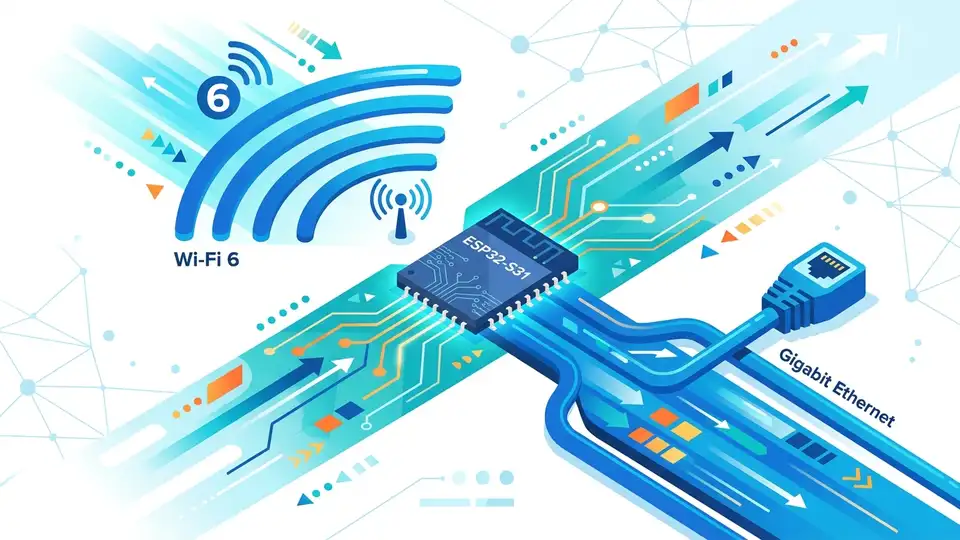
Espressif appears to be lining up a very busy MCU. The upcoming ESP32-S31 mixes a 320 MHz high-performance RISC-V core, a low-power companion core, Gigabit Ethernet, Wi‑Fi 6, Bluetooth 5.4, and 802.15.4 in one chip.
That is a lot to squeeze into a microcontroller. The headline detail is the networking stack: wired Ethernet for deterministic links, wireless for flexibility, and support for Zigbee, Thread, and Matter on the same silicon.
If the preliminary specs hold up, this chip could become one of Espressif’s most capable wireless MCUs yet, even if it gives up some multimedia features found on the ESP32-P4.
What the ESP32-S31 actually includes
Get the latest AI news in your inbox
Weekly picks of model releases, tools, and deep dives — no spam, unsubscribe anytime.
No spam. Unsubscribe at any time.
The leaked and forum-corroborated specs paint a pretty clear picture. The ESP32-S31 uses two RISC-V cores: one high-performance RV32IMAFCP core clocked at up to 320 MHz, and one low-power RISC-V core for background work and sleep-friendly tasks.
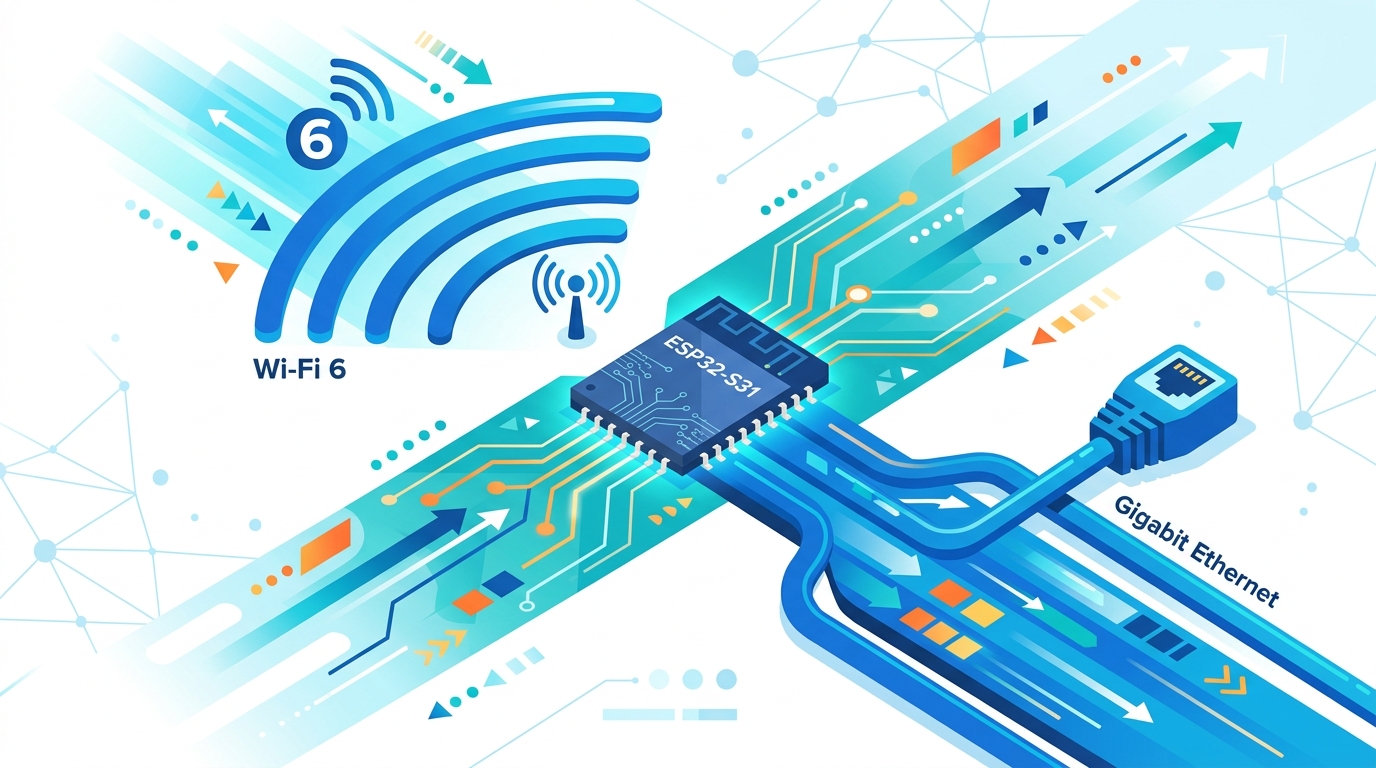
Espressif’s own ecosystem pieces help fill in the gaps here. The details were pieced together from the ESP-IDF source tree, including peripheral definition files, plus discussion on the ESP32 forum. That means some of the information is still provisional, but the shape of the chip is obvious.
The memory and I/O mix is also unusually strong for a wireless MCU. Espressif lists 512 KB of SRAM, 32 KB of RTC SRAM, support for external octal PSRAM and flash up to 64 MB, a 2D pixel processing accelerator, and (M)JPEG codec support.
- CPU: 1x RV32IMAFCP @ 320 MHz, 1x low-power RISC-V core
- Memory: 512 KB SRAM, 32 KB RTC SRAM, external octal PSRAM/flash up to 64 MB
- Networking: Gigabit Ethernet, Wi‑Fi 6, Bluetooth 5.4, 802.15.4
- GPIO: up to 62 pins
- USB: USB 2.0 OTG high-speed
Why the connectivity mix matters
Espressif is clearly aiming at devices that need more than one network path. Gigabit Ethernet gives the chip a wired option for gateways, industrial controllers, and lab gear. Wi‑Fi 6 makes sense for consumer and edge devices where cable runs are a pain. Bluetooth 5.4 adds modern low-energy features, while 802.15.4 opens the door to Thread, Zigbee, and Matter.
That combination is rare in the MCU world. The ESP32-S31 can sit in a smart-home hub, bridge wireless standards, and still talk to a local network without a separate Ethernet controller.
Espressif also appears to be pushing Bluetooth harder than before. The preliminary spec mentions LE Audio, direction finding, Bluetooth Mesh 1.1, and Classic BR/EDR support. That is a wider feature set than many low-cost MCUs expose on day one.
“I think this is the best combination of features we've seen so far in the ESP32 family.” — Jean-Luc Aufranc, CNX Software
That line comes from the original CNX Software coverage, and it matches the numbers pretty well. This is less about one killer feature and more about how many useful options Espressif is packing into a single part.
How it compares with other ESP32 chips
The easiest comparison is with the ESP32-P4 and ESP32-S3. The P4 has two high-performance RISC-V cores and stronger multimedia ambitions, including interfaces aimed at display-heavy designs. The S3 is older, but it remains a popular choice for AIoT boards, displays, and camera projects.
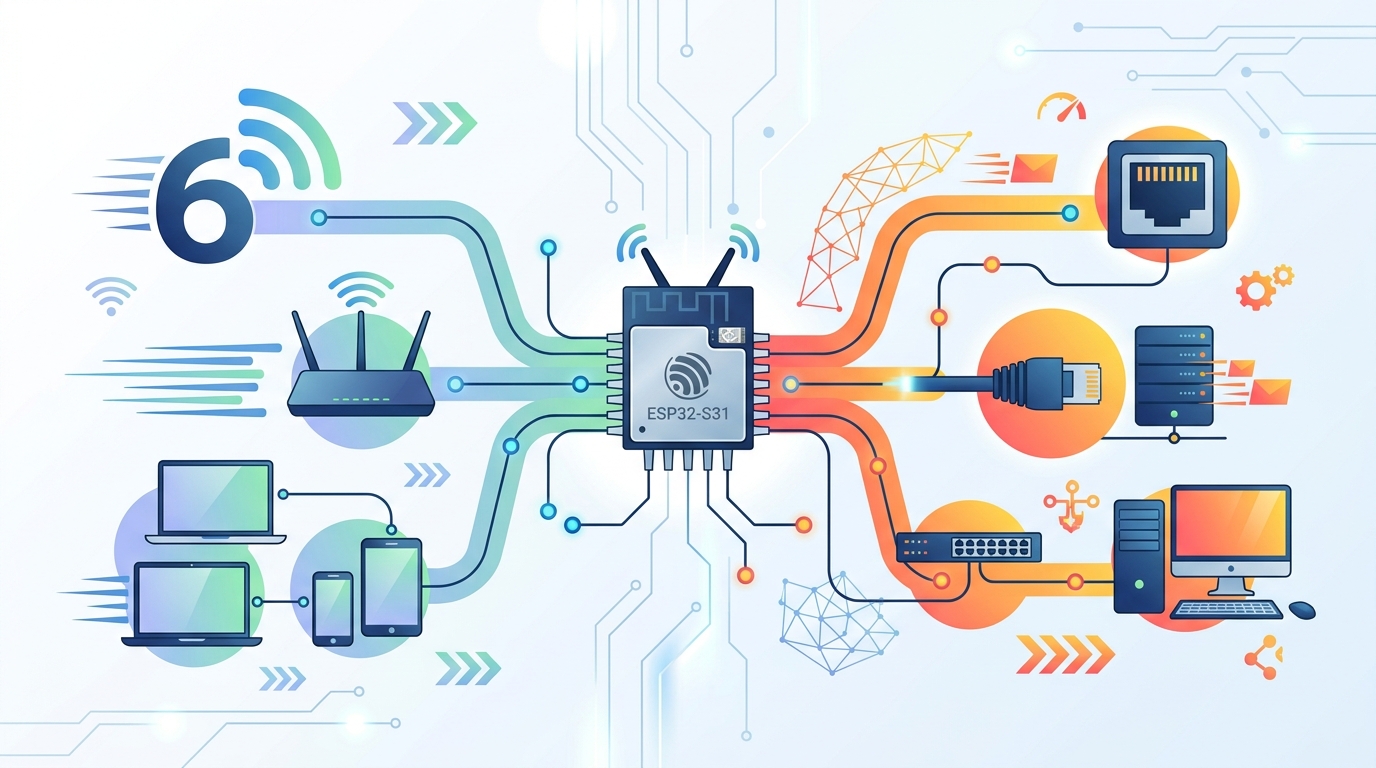
The ESP32-S31 takes a different route. It has one high-performance core instead of two, and it seems to skip H.264 video support, MIPI DSI, and MIPI CSI. In exchange, it adds Gigabit Ethernet and a larger GPIO count than any other ESP32 MCU family member mentioned in the source material.
That trade-off tells you a lot about Espressif’s target. This chip is less about tablet-style interfaces and more about connected control, gateways, and multi-protocol edge nodes.
- ESP32-S31: 1 high-performance core, Gigabit Ethernet, 62 GPIOs, Wi‑Fi 6, Bluetooth 5.4, 802.15.4
- ESP32-P4: 2 high-performance RISC-V cores, stronger multimedia focus, no built-in wireless
- ESP32-S3: popular wireless MCU, but lower ceiling on core count and wired networking
The other comparison that matters is with Espressif’s own wireless lineup. The company already has parts like the ESP32-H4, which focuses on low power and 802.15.4 plus Bluetooth 5.4 LE. The S31 looks like the heavier-duty sibling for projects that need more compute, more peripherals, and a real wired network path.
Security and developer implications
Security is another area where the chip looks serious. The listed features include secure boot, digital signatures, flash and PSRAM encryption, AES, SHA, RSA, ECC, RAM-based physically unclonable functions, and protections against side-channel and power-glitch attacks.
There is also a trusted execution environment with access permission management for software isolation. For developers, that matters because the chip is not just offering connectivity; it is also trying to make multi-application deployments less fragile.
For product teams building gateways, smart appliances, or industrial edge nodes, that matters more than raw benchmark bragging rights. A chip that can isolate tasks, encrypt memory, and speak multiple protocols can reduce the amount of extra silicon on the board.
It is also worth noting the practical limits. The ESP32-S31 still has one high-performance core, not two, so workloads that need a lot of parallel compute may still favor the ESP32-P4 or a higher-end application processor. But for many connected devices, the S31 may hit a sweet spot between cost, complexity, and capability.
Espressif has not published a full product page yet, so the final package, pricing, and module availability are still open questions. Even so, the direction is easy to read: this is a chip built for devices that need to talk a lot, trust a lot, and fit into a small board.
What to watch next
If Espressif follows its usual pattern, the next step is official documentation, SDK updates, and early modules that expose the new chip’s networking stack. The real test will be whether board vendors can ship affordable hardware that actually uses the Gigabit Ethernet and 802.15.4 features instead of treating them like bullet points.
My bet: the first interesting ESP32-S31 boards will be gateway-style devices, not hobbyist devkits. If Espressif keeps the chip accessible in the usual way, this could become the default pick for smart-home hubs and protocol bridges that need Wi‑Fi 6, Ethernet, and Matter support on one board.
For now, the best question is simple: does your next embedded design need a display-heavy MCU, or does it need a networking workhorse? The ESP32-S31 looks built for the second job.
// Related Articles
- [MODEL]
Gemini 1.5 Pro-002, Flash-002 and 2.0 Flash update Google AI
- [MODEL]
MiniMax M3 Proves Open-Weight Can Still Win on Coding
- [MODEL]
Gemini 3.5 Flash Pricing, Context, Benchmarks
- [MODEL]
Gemma 4 12B: Specs, Benchmarks & How to Run It Locally
- [MODEL]
Best Kimi Models in 2026: K2.5 vs K2 Thinking
- [MODEL]
Kimi K2.6 adds open-source coding and agent swarm