Figma puts an AI agent inside its canvas
Figma added an AI agent to its canvas so designers can generate, edit, and iterate on layouts with text prompts.

Figma added an AI agent to its collaborative canvas for prompt-based design work.
Figma is pushing deeper into AI with a new agent built directly into Figma Design. The company says the agent can generate new designs, edit existing ones, and automate iteration work with natural language prompts, while handling multiple tasks at once.
The timing matters. Figma reported $333.4 million in revenue for the first quarter of 2026, up 46% year over year, even as rivals from Canva to Adobe keep adding AI features of their own.
| Metric | Value | Why it matters |
|---|---|---|
| Q1 2026 revenue | $333.4 million | Shows Figma is still growing fast while adding AI |
| Year-over-year growth | 46% | Signals strong demand despite AI noise around design tools |
| Launch surface | Figma Design | AI is starting in the company’s core product |
| Partner tools | Claude Code, Codex | Figma is also pairing design with coding workflows |
What Figma actually shipped
Get the latest AI news in your inbox
Weekly picks of model releases, tools, and deep dives — no spam, unsubscribe anytime.
No spam. Unsubscribe at any time.
The new agent lives inside Figma’s multiplayer canvas, which is the heart of how teams already sketch, comment, and refine product ideas together. Figma says the assistant understands design context because it runs on models fine-tuned for design use.
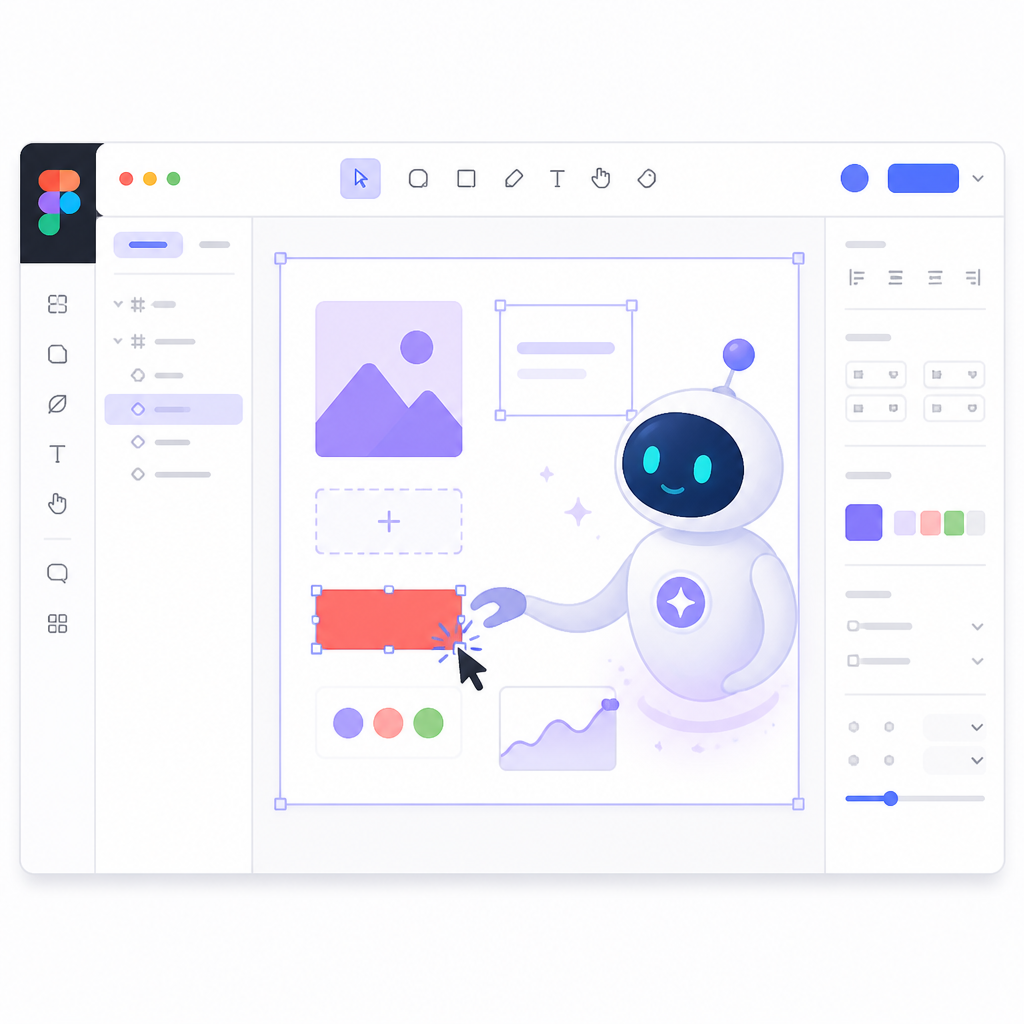
That last part matters more than the usual “AI inside a product” headline. A design tool can already accept text prompts. The harder job is reading layout structure, spacing, component patterns, and the messy intent behind a half-finished mockup.
- Users can ask the agent to generate new designs from text prompts.
- The agent can edit existing screens instead of starting from scratch.
- It can automate iterations, which is where a lot of design time disappears.
- Figma says multiple agents can run at the same time on different tasks.
That multi-agent detail is interesting because it hints at a workflow shift. Instead of one designer waiting on one assistant, a team could spin up several focused tasks in parallel: one for layout variants, one for copy changes, and one for edge-case exploration.
Why Figma is doing this now
Figma has spent the last few months building closer ties with Anthropic and OpenAI, adding support for coding tools like Claude Code and Codex alongside its design software. This new assistant is Figma’s own answer to the same question: what happens when design work gets more conversational?
“As building software gets easier, what matters most is setting direction: deciding what to work on, how it should function, what the experience should feel like,” Figma chief design officer Loredana Crisan said in a statement.
Crisan’s quote gets at the real business logic here. If AI can reduce the time spent on tedious production work, then the product that wins is the one that keeps humans focused on taste, direction, and tradeoffs.
Figma also has a competitive reason to move quickly. Weavy, the node-based design tool Figma acquired last year, and new image-editing features show the company is broadening beyond static mockups. Meanwhile, Krea, Flora, and Dessn are all chasing designers with AI-first workflows.
- Figma’s AI agent starts in Figma Design first.
- The company plans to expand it into other products later.
- Figma wants design and code to get closer inside its apps over time.
- The company is competing while still posting strong revenue growth.
How it compares with Figma’s earlier AI moves
This launch is different from Figma’s earlier partnerships because it is embedded in the design canvas instead of sitting beside it. The company is not just connecting users to external AI tools; it is putting its own agent into the workflow where the work happens.
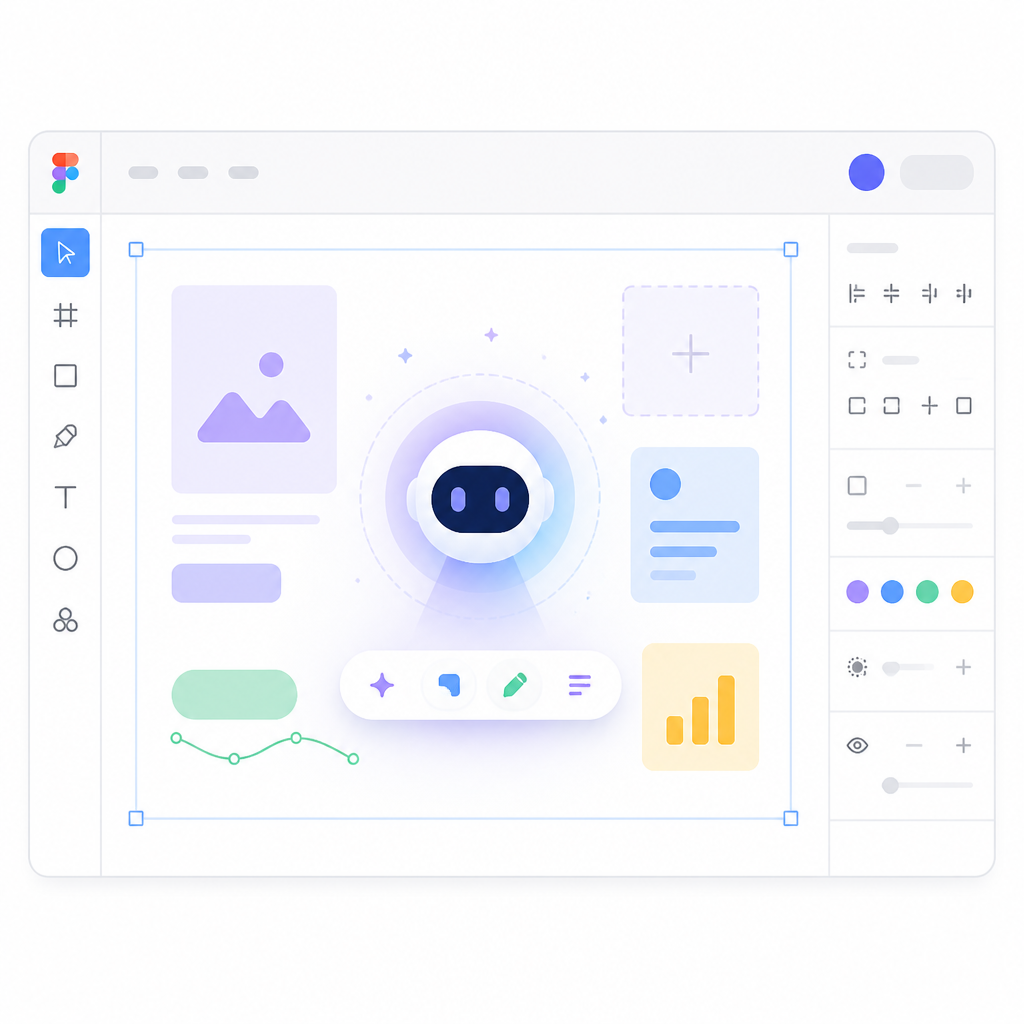
That matters for product strategy. If Claude Code and Codex help bridge design and development, Figma’s native agent helps own the middle of the process: ideation, iteration, and cleanup. That is where a lot of teams burn time, and it is also where AI can save the most clicks.
- Partnership route: Claude Code and Codex connect design with coding environments.
- Native route: the new agent edits and generates inside Figma itself.
- Business signal: $333.4 million in quarterly revenue suggests customers are still paying for the platform.
- Product signal: the launch begins in Figma Design, the company’s core surface.
There is also a practical question underneath all of this: how much of a designer’s day should an agent own? If Figma gets this right, the assistant will feel less like a chatbot bolted onto a canvas and more like a fast junior teammate that can handle repetitive work without flattening the designer’s intent.
What to watch next
Figma is betting that AI in design works best when it is close to the canvas, close to the component system, and close to the code handoff. The next test is simple: do teams actually trust the agent enough to use it for real iteration work, or do they keep it for rough drafts and one-off edits?
If Figma can answer that with usage data, the company may end up defining how AI fits into product design software. If it cannot, designers will keep splitting their time between Figma, external AI tools, and the old-fashioned process of fixing things by hand.
For now, the signal is clear: Figma wants AI to feel native to design work, not pasted on top of it.
// Related Articles
- [TOOLS]
Magenta RealTime 2 lets you score in the DAW
- [TOOLS]
Open-source AI tools beat Claude’s paid tiers on value
- [TOOLS]
500 AI agent projects show where agents work now
- [TOOLS]
Chocolatey’s Go package turns installs into policy
- [TOOLS]
Go support policy turns releases into a checklist
- [TOOLS]
RustDesk self-hosting setup for secure remote access