Gemini is coming to millions of cars
Google is rolling Gemini into Google built-in cars, starting in the U.S. with English support and wider rollout over time.

Google is rolling Gemini into cars with Google built-in, starting in the U.S.
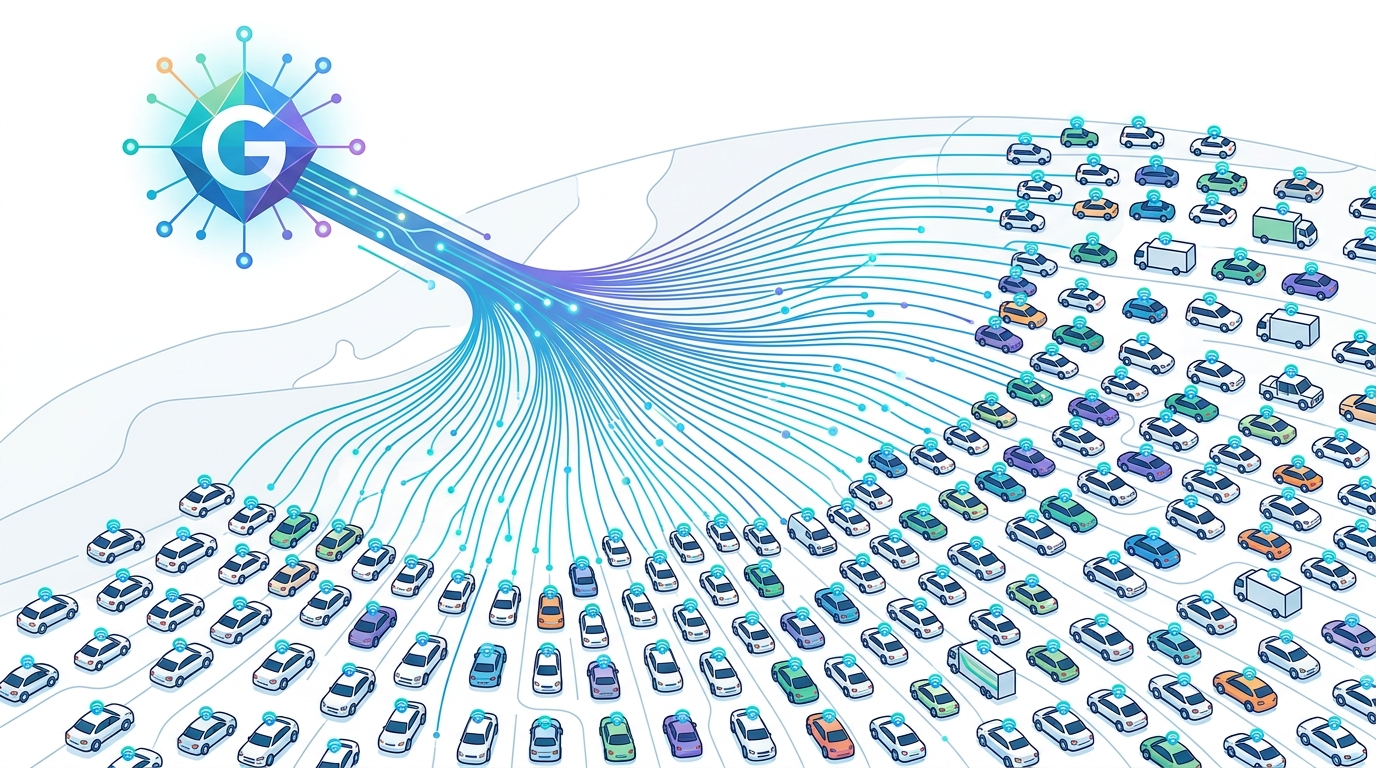
Google is bringing Gemini into cars with Google built-in, and the first wave starts with U.S. drivers using English. The company says the upgrade will reach compatible existing vehicles through software updates, which matters because this is not a fresh-car-only launch.
The timing is interesting: General Motors said a day earlier that Gemini is coming to about 4 million vehicles from model year 2022 and newer. Google did not name more automakers in its own announcement, so this is clearly bigger than one brand.
| Detail | What Google said |
|---|---|
| Initial rollout | U.S., English-language support |
| Compatible vehicles | Existing cars can get Gemini through software updates |
| GM fleet mentioned separately | About 4 million vehicles, model year 2022 and newer |
| Google built-in debut | 2020 |
What changes inside the car
Get the latest AI news in your inbox
Weekly picks of model releases, tools, and deep dives — no spam, unsubscribe anytime.
No spam. Unsubscribe at any time.
Gemini is a better fit for driving than the old Google Assistant because it can handle messy, natural speech instead of short commands. Google says drivers will be able to ask for things like a lunch stop with outdoor seating along a route, then keep the conversation going about parking, menu options, or dietary needs.

That sounds small until you compare it with the way in-car voice systems usually work. Most are fine at launching navigation or changing the temperature, then fall apart when the request gets a little more human. Google is trying to make the car feel less like a control panel and more like a conversational assistant that can actually keep up.
- Route-aware restaurant suggestions from Google Maps
- Hands-free replies to incoming messages
- Vehicle controls such as heat and directions
- Music recommendations and vehicle information
Google also says Gemini can summarize messages, help drivers respond hands-free, and pull in information from the car itself. If that all works well in practice, the biggest win may be reduced friction rather than flashy AI demos.
Gemini Live pushes the idea further
The more experimental piece is Gemini Live, which is in beta and allows more open-ended real-time conversation. Drivers can tap a button or say, “Hey Google, let’s talk,” then use it for brainstorming, learning, or general conversation while driving.
“Cars are one of the most personal spaces where people interact with technology,” Sundar Pichai said at Google I/O 2024 when discussing Gemini across Google products.
That quote matters here because Google is clearly treating the car as another place where Gemini has to earn trust, not just attention. Voice assistants in vehicles have always been about utility first. If Gemini starts feeling like a chatty novelty, people will turn it off. If it saves time and reduces taps, drivers may keep using it.
Google says drivers signed into their Google accounts in compatible vehicles will get a prompt to upgrade. Once enabled, Gemini can be used through voice, the on-screen microphone, or steering wheel controls. That flexibility is important because drivers do not want to hunt through menus while moving.
How Google’s rollout compares
The rollout also shows how Google is trying to widen its in-car reach without waiting for brand-new hardware. Cars with Google built-in first arrived in 2020, which means this update can land in a much larger installed base than a typical new-model launch.
Here is the practical comparison:
- Google built-in launch: 2020
- GM’s Gemini-compatible fleet: about 4 million vehicles
- Current rollout region: U.S. only, for now
- Current language support: English only, for now
Google also says more languages and regions are coming later, and future updates will deepen ties with Gmail, Google Calendar, and Google Home. That is where the feature could become genuinely useful: a car that knows your schedule, your messages, and your home devices already has a lot of context to work with.
What this means for drivers and automakers
This rollout is Google’s clearest push yet to make Gemini a default interface across everyday hardware, and cars are a smart place to do it. Drivers already rely on voice for low-distraction tasks, and the jump from Assistant to Gemini should make those interactions feel less brittle.
For automakers, the upside is obvious: they get a more capable assistant without building the entire AI stack themselves. The risk is also obvious: once the assistant becomes more central, the carmaker has to share more of the user experience with Google.
The real test is whether Gemini can stay useful when the car is noisy, the route changes, and the driver is half-listening. If Google gets that right, this could make in-car voice control feel less like a gimmick and more like the default way people interact with their vehicles. If it misses, drivers will fall back to touchscreens and old habits fast.
// Related Articles
- [MODEL]
Gemini 1.5 Pro-002, Flash-002 and 2.0 Flash update Google AI
- [MODEL]
MiniMax M3 Proves Open-Weight Can Still Win on Coding
- [MODEL]
Gemini 3.5 Flash Pricing, Context, Benchmarks
- [MODEL]
Gemma 4 12B: Specs, Benchmarks & How to Run It Locally
- [MODEL]
Best Kimi Models in 2026: K2.5 vs K2 Thinking
- [MODEL]
Kimi K2.6 adds open-source coding and agent swarm