Grayscale’s report maps the chains regulation favors
Grayscale’s latest report says regulation could funnel institutional capital toward Ethereum, Solana, BNB Chain, and Canton Network.

Grayscale’s report says regulation could funnel institutional capital toward Ethereum, Solana, BNB Chain, and Canton Network.
I’ve been watching crypto teams build like regulation was always going to stay fuzzy. That worked fine when the whole game was “ship first, apologize later.” But once you start talking to funds, banks, and compliance people, the vibe changes fast. They don’t want a token. They want a classification. They don’t want a chain that’s “popular.” They want a chain they can actually explain to legal, risk, and procurement without starting a three-hour argument.
That’s why this Grayscale report caught my attention. It’s not another “number go up” take dressed up as research. It’s basically a map of which public blockchains might benefit if Washington finally writes down some rules that institutions can live with. And honestly, that’s the part most crypto commentary still misses. The winners won’t just be the loudest communities. They’ll be the chains that fit into tokenization, stablecoins, and compliance workflows without making everyone in the room sweat.
I also like that this report is specific. It names Ethereum, Solana, BNB Chain, and Canton Network. Not “top chains,” not “best ecosystems,” not some vague bucket. Specific names mean specific reasons, and that’s where the useful part starts.
Source anchor: I’m breaking this down from CryptoBriefing’s coverage of Grayscale’s report, which points back to Grayscale’s own analysis, Grayscale. The article says the report landed around May 21-22, 2026, after the Digital Asset Market Clarity Act cleared the Senate Banking Committee by a 15-9 vote.
Grayscale is really betting on institutions, not degens
Get the latest AI news in your inbox
Weekly picks of model releases, tools, and deep dives — no spam, unsubscribe anytime.
No spam. Unsubscribe at any time.
The report, titled “The Blockchains that Stand to Benefit from Regulatory Clarity,” argues that a formal framework for classifying digital assets and registering intermediaries will accelerate institutional adoption of public blockchains.
What this actually means is simple: Grayscale thinks regulation will make public blockchains easier to buy, use, and defend inside traditional finance. That’s the whole thesis. Not “crypto gets cooler.” Not “communities get louder.” Institutions get a cleaner path to participate.

I’ve seen this pattern before in enterprise software. The tech can be fine for years, but nothing really moves until the policy layer stops being a mess. Then suddenly procurement can sign, legal can approve, and the budget opens up. Crypto is doing the same dance, except the stakes are way higher and the terminology is somehow worse.
Grayscale is basically saying that if Congress creates a usable classification system and a registration framework, public chains stop looking like legal gray goo. Once that happens, asset managers, custodians, exchanges, and payment firms can build with less fear of being the next test case.
How to apply it: if you’re building in crypto right now, stop pitching “decentralization” as your main institutional story. That’s not what gets a risk committee to nod. Pitch the thing the institution can actually do: issue, settle, move, tokenize, or hold assets with a clear compliance path. If your chain, protocol, or app can’t be described in those terms, you’re still speaking hobbyist.
- For founders: write your product one layer closer to legal language.
- For PMs: map every feature to a regulated workflow.
- For investors: ask which part of the stack becomes easier if market structure rules pass.
Ethereum wins because it already looks like financial plumbing
Ethereum sits at the top of Grayscale’s list, cited as the leader in tokenized assets with full on-chain functionality.
This is the least surprising part of the report, and that’s exactly why it matters. Ethereum keeps showing up in institutional conversations because it already behaves like infrastructure. It has the deepest developer base, the biggest mindshare, and the clearest story for tokenized assets.
When Grayscale says “full on-chain functionality,” I read that as: Ethereum can do more than just move value. It can host the asset, the logic, the settlement, and the surrounding app layer. That’s what tokenization needs. If you’re trying to represent a bond, fund share, or real-world asset on-chain, you want the chain to feel like a settlement system, not a meme machine.
I ran into this exact issue when helping a team think through tokenized treasury products. The first version of the pitch was all about “bringing finance on-chain.” Fine, but every serious buyer asked the same thing: can we explain custody, transfer restrictions, and reporting without inventing a new legal theory? Ethereum was the easiest answer because the ecosystem already had the tools, standards, and partners around it.
How to apply it: if you’re building on Ethereum, don’t just say you’re “on Ethereum.” Say what that buys the user. Better liquidity? Better tooling? Easier integration with token standards? Lower integration risk? Spell it out. If you’re not on Ethereum, you need an even sharper reason for why not.
- Tokenization projects should document why Ethereum is or isn’t the default.
- Infrastructure teams should point to standards support, not vibes.
- Compliance teams should track how on-chain controls map to off-chain requirements.
Solana and BNB Chain are here because activity matters
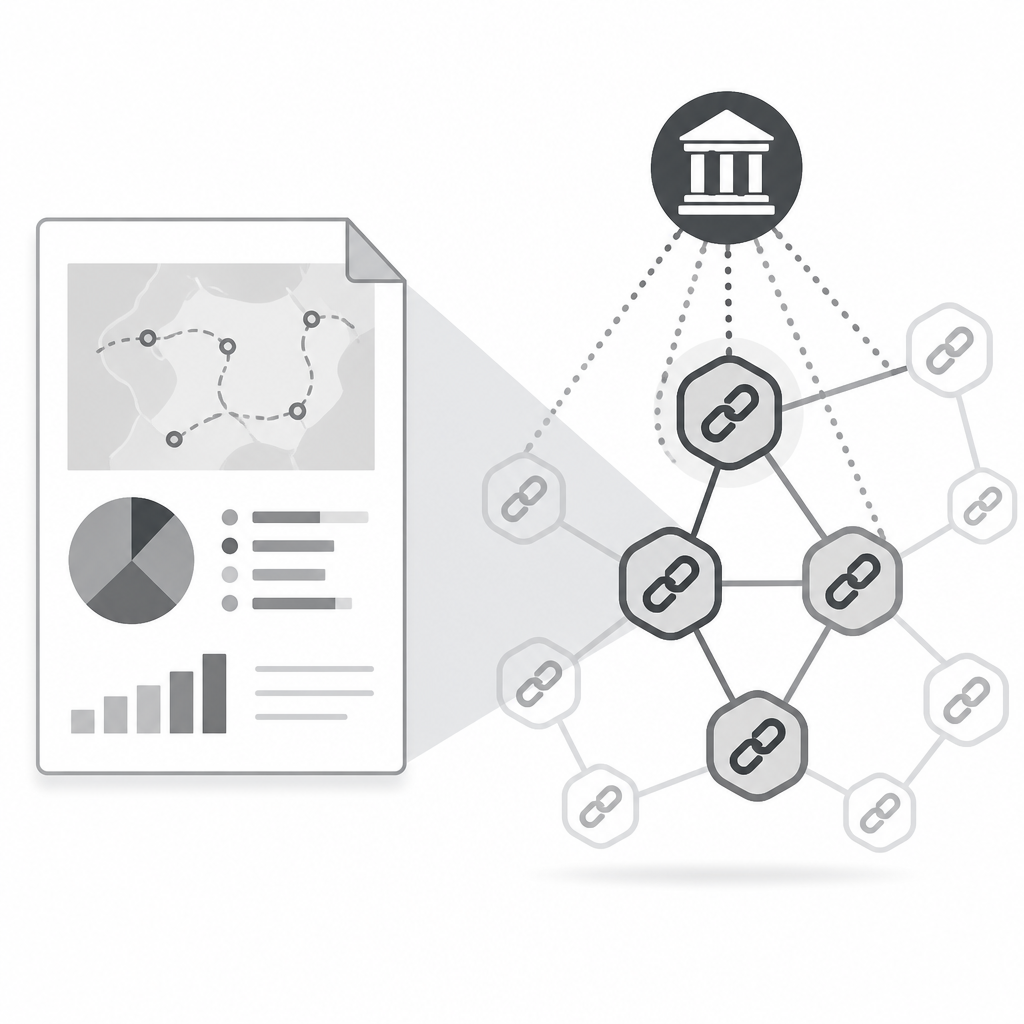
Solana and BNB Chain both rank highly for their stablecoin activity and DeFi engagement, measured by total value locked and decentralized exchange volume.
What this actually means is that Grayscale is rewarding chains where people actually use the rails. Stablecoin transfers, DeFi volume, TVL, DEX activity. Not just branding. Not just “ecosystem growth.” Actual usage.
This is where a lot of crypto commentary gets lazy. People talk about “quality chains” like that phrase means something by itself. It doesn’t. If a chain has liquidity, active markets, and real transaction flow, institutions notice. They may still worry about risk, but at least there’s something to analyze besides a whitepaper and a Discord server.
Solana and BNB Chain have both spent years building in the part of crypto that institutions can’t ignore: high-throughput activity with visible market demand. That doesn’t automatically make them compliant-friendly. It does make them relevant when the conversation shifts from ideology to utility.
I think the practical lesson here is that usage metrics still matter even when regulation is the headline. If your chain has no stablecoin activity, no meaningful DeFi footprint, and no liquidity depth, then “regulatory clarity” won’t save you. You still need something people actually do on the chain.
How to apply it: if you’re evaluating a chain for a product, look at the boring numbers first. Stablecoin volume. DEX activity. TVL trend. Wallet concentration. If the chain can’t support real flow, it’s not a candidate for institutional work no matter how good the marketing deck looks.
- Track whether stablecoin rails already exist.
- Check whether the chain has real liquidity, not just token emissions.
- Ask if your product depends on ecosystem activity that can survive a market cycle.
Canton Network is the weird one, and that’s why it matters
Canton Network rounds out the list as a strong contender for institutional use cases, particularly in privacy-compliant applications.
This is the most interesting call in the report because it tells you Grayscale isn’t only thinking about public DeFi chains. Canton Network is about institutional privacy and controlled sharing, which is a very different pitch from “open internet money.”
And yes, this is also where some coverage got sloppy. CryptoBriefing notes that Cointelegraph reportedly named Cardano as the fourth chain, but Grayscale’s source clearly says Canton Network. That’s not a tiny typo. That changes the whole interpretation. Cardano is one story. Canton is another. If you’re talking about privacy-compliant institutional workflows, Canton makes way more sense.
My read is that Grayscale is acknowledging a reality a lot of crypto purists don’t like: not every institution wants maximum transparency. Sometimes the buyer wants selective disclosure, permissioned access, or privacy-preserving settlement. That’s not a bug. That’s how regulated finance works.
I’ve seen teams lose deals because they assumed “public chain” automatically meant “public everything.” It doesn’t. The institution wants the benefits of shared infrastructure without exposing every counterparty detail to the world. Canton sits in that awkward but valuable middle ground.
How to apply it: if you’re building for institutions, stop treating privacy as an afterthought. Decide whether your product needs full public visibility, selective disclosure, or permissioned participation. Then pick the chain and architecture that matches that reality instead of forcing a purity test nobody asked for.
The Clarity Act is the real engine here
The Digital Asset Market Clarity Act aims to create three things: a classification system for digital assets, a registration framework for crypto intermediaries, and an overall market structure that gives both regulators and market participants clear guardrails.
This is the part that actually drives the whole report. Grayscale isn’t saying the chains win because they’re prettier. They win because the rules may finally stop being mushy.
A classification system matters because it tells everyone what something is. A registration framework matters because it tells everyone who is allowed to touch what. Market structure matters because it reduces the “are we allowed to do this?” tax that kills institutional momentum before it starts.
I’m not pretending legislation solves everything. It doesn’t. There will still be compliance work, custody issues, reporting headaches, and probably a few spectacular lawsuits. But clear rules change behavior. They change what gets funded, what gets piloted, and what gets approved.
That’s why this report feels more like a product brief than a market hot take. It’s saying: if the rules become legible, these are the chains most likely to absorb the capital that follows. That’s a much more useful lens than trying to guess which token gets the loudest retail bid next week.
How to apply it: if you work on a crypto product, build your roadmap as if regulation will get more explicit, not less. That means better audit trails, cleaner asset definitions, clearer permissions, and less hand-waving in your docs. If regulation tightens, you’ll be ready. If it doesn’t, you still built a better product.
Tokenization and stablecoins are the two rails that matter
Grayscale’s core thesis is not “all chains benefit equally.” It’s that regulatory clarity opens two major lanes: tokenized real-world assets and stablecoin use in DeFi. That’s the real money path.
Tokenization is the obvious institutional story. If you can represent traditional assets on-chain with clear rules, you can potentially improve settlement, transferability, and market access. Stablecoins are the other side of the coin because they already act like the cash layer for crypto markets and increasingly for payments.
Those two lanes explain the chain shortlist. Ethereum is strong in tokenization. Solana and BNB Chain are strong in active stablecoin and DeFi usage. Canton is positioned for privacy-aware institutional workflows. The report is less about “best blockchain” and more about “best fit for the next phase of regulated adoption.”
That distinction matters. A lot. Because once you frame it this way, the question stops being “which chain is best?” and becomes “which chain matches which regulated workflow?” That’s a much better question, and it’s the one serious teams should already be asking.
How to apply it: break your own product into rails. Does it need asset issuance, settlement, payments, lending, or privacy? Then match the chain to the rail instead of trying to make one chain do everything. The more honest you are here, the fewer bad architectural decisions you’ll make later.
The template you can copy
# Regulatory-clarity chain selection memo

## Goal
Pick the blockchain that best fits our regulated use case once market-structure rules become clearer.

## What we are building
- Product type: [tokenized asset / stablecoin app / DeFi workflow / institutional settlement / privacy workflow]
- Primary users: [funds / banks / fintechs / exchanges / enterprises]
- Compliance needs: [KYC, transfer restrictions, audit trails, selective disclosure, custody, reporting]

## Chain evaluation criteria
1. **Regulatory fit**
   - Can we explain the chain to legal and compliance without hand-waving?
   - Does the ecosystem support registered intermediaries and clear asset classification?

2. **Use-case fit**
   - Tokenization: [yes/no]
   - Stablecoin activity: [yes/no]
   - DeFi liquidity: [yes/no]
   - Privacy/compliance support: [yes/no]

3. **Ecosystem maturity**
   - Developer tooling: [strong / medium / weak]
   - Custody support: [strong / medium / weak]
   - Institutional partners: [strong / medium / weak]
   - Liquidity depth: [strong / medium / weak]

## Shortlist
### Ethereum
Use if: tokenization, on-chain financial infrastructure, broad institutional support.
Risk: higher fees, complexity, governance overhead.

### Solana
Use if: high-throughput stablecoin activity, active DeFi flows, consumer-scale usage.
Risk: ecosystem concentration, institutional perception gaps.

### BNB Chain
Use if: high-volume DeFi and stablecoin activity with broad retail reach.
Risk: regulatory scrutiny, ecosystem tradeoffs.

### Canton Network
Use if: privacy-compliant institutional workflows, selective disclosure, permissioned coordination.
Risk: narrower ecosystem, specialized adoption path.

## Decision rule
Choose the chain that best matches the regulated workflow, not the loudest narrative.

## Next steps
- Draft compliance requirements
- Map product flow to chain capabilities
- Validate custody and reporting assumptions
- Run a pilot with legal sign-off
- Reassess once market-structure rules change
That’s the actual takeaway I’d keep on my desk. Not the headline. The checklist.
If I were using this for a team memo, I’d also add one line at the top: “We are not choosing a chain based on sentiment; we are choosing based on regulated workflow fit.” That sentence alone will save you from half the nonsense meetings you’d otherwise have.
Source note: this piece is my breakdown of CryptoBriefing’s coverage of Grayscale’s report and the report’s stated findings. The original reporting is here: CryptoBriefing. The interpretation, framing, and template above are mine.
// Related Articles
- [CHAIN]
7 Solana APIs that cut weeks off integration
- [CHAIN]
Solana Unchained token sale nears Phase 1 close at $0.05
- [CHAIN]
June 2026 Web3 Signals Founders Should Use Now
- [CHAIN]
Bitcoin DeFi will grow, but not by copying Ethereum
- [CHAIN]
AI-blockchain projects need real utility, not token theater
- [CHAIN]
DMG’s 50 MW AI LOI is a better use of miners’ power assets