Grok’s Washington flop exposes the sales gap
Reuters’ Grok report shows why enterprise AI dies when the buyer doesn’t trust the seller.
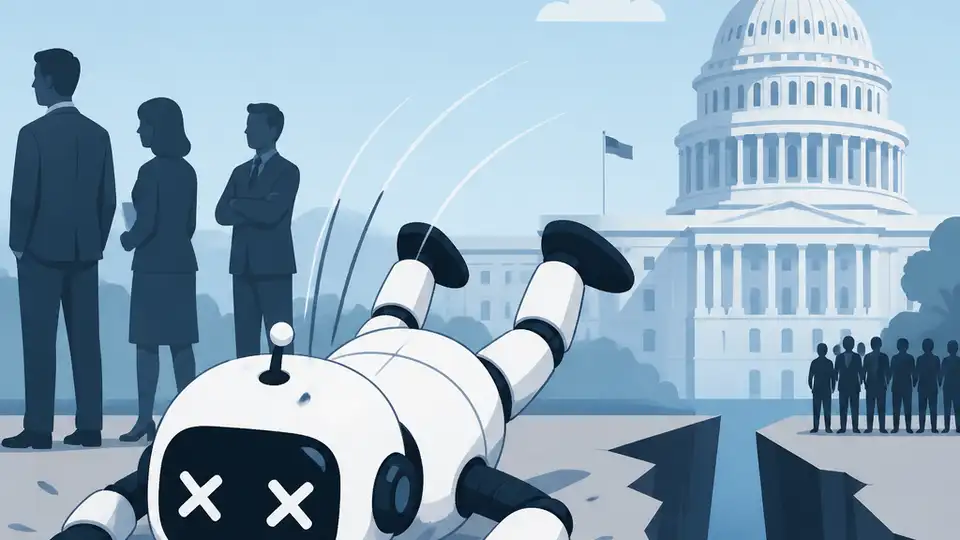
This breaks down why Grok’s Washington stumble matters for enterprise AI sales.
I've been watching teams ship AI features like they’re shipping buttons. Model wired up, demo looks slick, leadership gets a little too excited, and then the first real buyer asks the annoying question nobody wants to answer: why should I trust this thing? That’s where a lot of AI products start to wobble. Not because the model can’t generate text or summarize docs, but because the buyer has to believe the company behind it will keep the thing stable, boring, and politically survivable. I’ve seen this pattern enough times now that I don’t get impressed by a flashy launch anymore. I look for the part where procurement, legal, and the actual end user all stop squinting at the same time. If one of them keeps frowning, the whole story gets expensive fast.
The Reuters piece that kicked this off is "Exclusive: Grok falls flat in Washington, undercutting SpaceX's AI growth story". Reuters quotes Vineet Jain, co-founder and CEO of Egnyte, calling the U.S. government’s lukewarm response to Grok a “canary in the coal mine.” That’s the line I kept coming back to, because it’s not really about one chatbot. It’s about whether a company can turn technical capability into durable adoption when the buyer is skeptical, political, or just tired of vendor drama.
Grok can be interesting and still fail the buyer test
Get the latest AI news in your inbox
Weekly picks of model releases, tools, and deep dives — no spam, unsubscribe anytime.
No spam. Unsubscribe at any time.
The U.S. government’s lack of enthusiasm for Grok is a “canary in the coal mine,” casting doubt on SpaceX’s soaring ambitions for broad adoption.
What this actually means is simple: a product can be capable and still not be buyable. I’ve seen teams confuse “people tried it” with “people will standardize on it.” Those are not the same thing. The first is curiosity. The second is commitment, and commitment in enterprise or government usually means a long list of objections got answered well enough to stop blocking the deal.
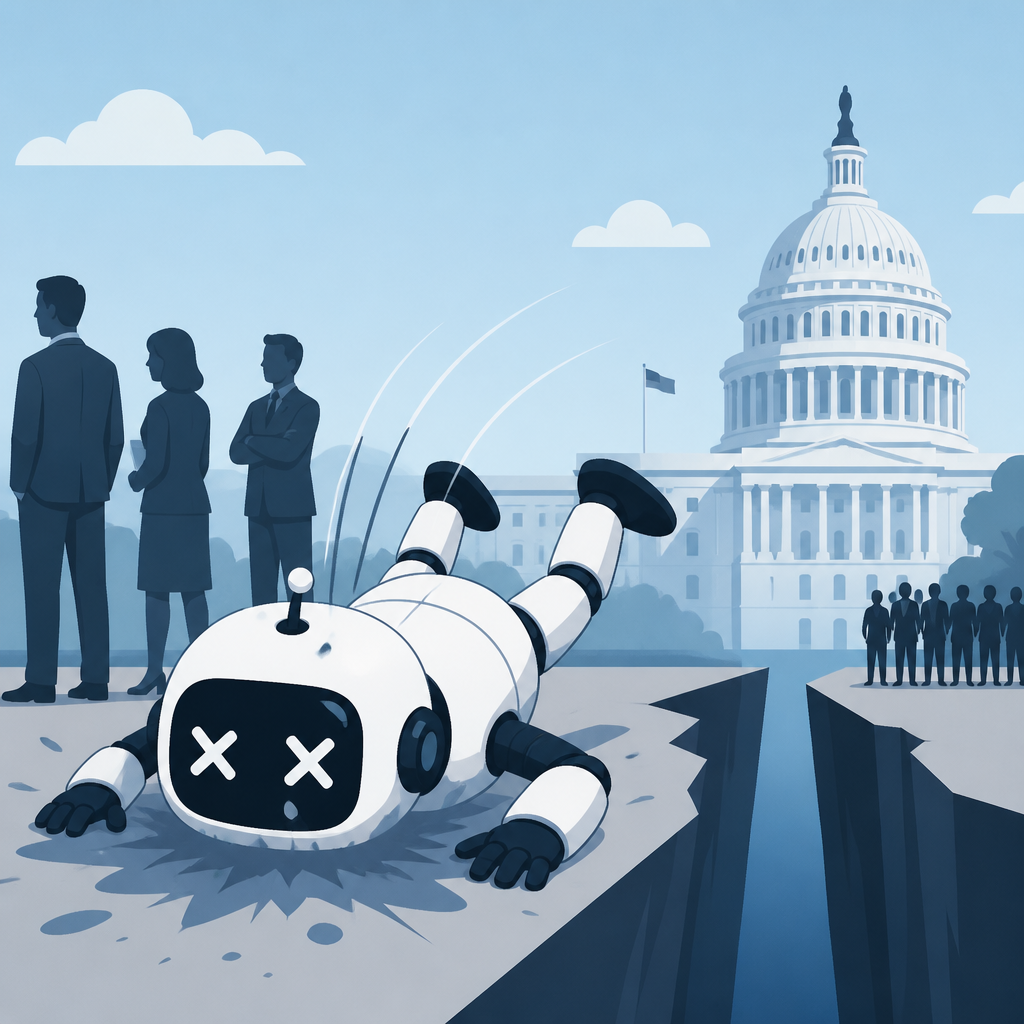
Reuters is reporting on the U.S. government’s reaction, but the deeper issue is trust. If the buyer thinks the product is tied to a company that creates too much noise, too much policy risk, or too much operational uncertainty, they’ll keep it in pilot mode forever. That’s not a model problem. That’s a packaging problem, a governance problem, and sometimes just a reputation problem.
I ran into this years ago with a vendor that had a genuinely useful AI feature. The demo was great. The security review was not. People kept asking who owned the data, where it lived, and what happened when the vendor changed direction. Nobody cared that the model was clever. They cared that the procurement memo would survive scrutiny.
How to apply it: stop asking whether your AI can impress on first contact. Ask whether it can survive the second meeting, the security questionnaire, and the budget owner’s bad mood. If you can’t answer those, you don’t have a growth story yet. You have a demo.
- Write down the top three objections your buyer will raise before they see the product.
- Map each objection to a real control, policy, or proof point.
- Make sure your sales deck answers those objections before it shows the shiny part.
Washington is not a normal customer, and that matters
Government buyers are slower, fussier, and more reputationally sensitive than most enterprise customers. That’s not a moral judgment. It’s just how the machine works. If a product gets a cold reception there, I immediately wonder whether the company has a story for the hardest possible buyer, or whether it only works when the audience is already friendly.
That’s why the Reuters framing matters. The article isn’t saying Grok is technically weak. It’s saying the adoption signal from Washington is weak, and that weak signal can bleed into broader market perception. When the public sector shrugs, enterprise buyers notice. They may not say it out loud, but they absolutely file it away under “maybe this vendor isn’t settled yet.”
I’ve watched this happen with tools that were perfectly fine on paper. The problem was that the buyer ecosystem didn’t want to be first. No CIO gets praised for picking the vendor that later becomes a headline. Nobody wants to explain why they bought the thing that keeps generating political headaches.
How to apply it: if you’re selling into government or regulated industries, design the product story around low-risk adoption. That means clear admin controls, auditability, policy options, data boundaries, and support that doesn’t sound improvisational. If you’re not ready for that, don’t pretend the market is.
- Separate feature value from adoption risk in your internal pitch.
- Build a one-page “why this is safe to pilot” doc.
- Have legal and security review the pitch before customers do.
The real product is not the model, it’s the trust wrapper
In AI, the model gets the attention, but the trust wrapper gets the contract. That wrapper includes governance, moderation, logging, permissions, deployment options, and the company’s own behavior when something goes wrong. If that sounds boring, good. Boring is what buyers pay for when the stakes are high.

Reuters’ quote from Vineet Jain lands because he’s not talking like a hype merchant. He’s saying the adoption problem may be a leading indicator. I agree with that instinct. A weak response from a serious buyer often means the seller hasn’t done enough work around the stuff that doesn’t fit in a demo: compliance, support, procurement, and long-term predictability.
I’ve had to explain this to founders who thought the answer to every objection was “but the model is better.” That’s not how enterprise buying works. Better is nice. Safer is what gets signed. If your product can’t show a buyer how it will behave under pressure, the model quality barely matters.
How to apply it: treat trust features like core product features, not legal afterthoughts. Write them into the roadmap. Put them in release notes. Make them visible in sales conversations. If your buyer has to ask for the basics, you’re making them do your job.
Here’s the checklist I use when I’m reviewing an AI product for serious deployment:
- Can the buyer control what data goes in and out?
- Can they audit actions and outputs after the fact?
- Can they restrict use by team, role, or environment?
- Can they explain the product to a risk committee without hand-waving?
Broad adoption dies when the first champion gets embarrassed
The Reuters story is really about the difference between a champion and a constituency. A champion can try a tool. A constituency has to defend it. That’s where a lot of AI vendors fall apart. They get one enthusiastic person, maybe two, and then the room fills up with people who have to live with the consequences.
That’s why a lukewarm government reception matters more than a random usage metric. It suggests the product is not building a constituency. It may be getting looks, but not defenders. And without defenders, broad adoption is just a slide title.
I’ve been in rollout meetings where the pilot users loved the tool and the managers hated the risk profile. Guess who won? Not the people with the nicest demo. The people with the authority to say no usually win, especially when the vendor hasn’t done the homework to make saying yes feel boring.
How to apply it: don’t measure success by early curiosity. Measure it by whether the product creates internal advocates who can survive objections from security, finance, operations, and leadership. If your pilot can’t produce that, it’s not a path to adoption yet.
SpaceX’s AI story needs a second act, not another announcement
There’s a temptation, especially in companies with a strong brand, to assume the brand will carry the product. Sometimes it does for a while. Then the buyer starts asking for evidence, references, controls, and a reason to believe the product will still be sane six months from now. That’s when the brand stops being enough.
This is the part of the story that I think matters most for anyone building AI products: technical ambition is cheap to announce and expensive to operationalize. If the market reads Grok’s reception as a sign that the company hasn’t solved the operational side, then the growth story gets smaller fast. Not dead. Just smaller, and harder.
I’ve seen strong brands make this mistake. They assume their reputation buys them extra patience. It buys some. Not infinite. The more regulated the buyer, the faster the patience runs out.
How to apply it: if you’re the product owner, write the second-act narrative now. Not “we have AI.” That’s useless. Write “we have governance, controls, and a deployment model that makes this safe enough for the buyer to keep.” That’s the story people can actually use.
What I’d do before pitching this to a serious buyer
If I were packaging an AI product after reading this Reuters report, I would stop leading with capability and start leading with proof. Not proof that the model can answer questions. Proof that the product can be adopted without creating a mess for the buyer’s team.
That means the pitch changes. The demo changes. The docs change. The questions you invite change. You want the hard questions early, because if the buyer is already hesitating, hiding the risk only makes the later conversation uglier.
For me, the practical lesson here is not “Grok is doomed” or “government adoption is impossible.” It’s that AI vendors keep underestimating how much of the sale is really about operational trust. The model gets you a meeting. The wrapper gets you the contract. The rollout gets you the renewal.
If you miss that sequence, you end up with a nice announcement and a very awkward quarter.
The template you can copy
# AI product trust story template

## One-line positioning
We help [buyer] use AI for [job] without creating [risk].

## What the buyer is worried about
- Data leakage
- Unclear audit trail
- Bad outputs in public or regulated settings
- Vendor instability
- Procurement and legal friction

## What we prove before the sale
- Data controls: [describe]
- Auditability: [describe]
- Admin controls: [describe]
- Deployment options: [describe]
- Support and escalation: [describe]

## How we talk about the product
Do not lead with: "Our model is smarter."
Lead with: "This is how we keep your team safe, compliant, and in control."

## Pilot success criteria
- A real team uses it for [specific task]
- Security signs off
- Legal has no open blockers
- The buyer can explain it to leadership
- The pilot produces at least one internal advocate

## Objection handling
### Objection: Why should we trust this vendor?
Answer: [specific controls, references, and governance]

### Objection: What happens if outputs are wrong?
Answer: [human review, logging, rollback, escalation]

### Objection: Can we control data use?
Answer: [policy, permissions, retention, isolation]

## Renewal story
We keep the contract because the product remains safe, useful, and easy to defend internally.
That template is mine, not Reuters’. The original reporting is from Reuters at https://www.reuters.com/world/grok-falls-flat-in-washington-undercutting-spacexs-ai-growth-story-2026-05-21/. My breakdown is the derivative part: I’m taking the reported reaction to Grok and turning it into a practical way to think about AI adoption, trust, and sales.
// Related Articles
- [IND]
OpenAI’s IPO filing turns hype into scrutiny
- [IND]
Skatteetaten proves public sector AI should be judged by outcomes
- [IND]
OpenAI’s IPO filing puts AI’s biggest test on Wall Street
- [IND]
OpenAI’s latest moves now center on pricing, safety, and scale
- [IND]
RISC-V mini PCs are worth buying now, but only as a bet on the future
- [IND]
Fedora 44 RISC-V widens Linux board support