How to assess “carb face” beauty claims
A practical guide to evaluating “carb face” claims without turning them into body-shaming.

A practical guide to evaluating “carb face” claims without turning them into body-shaming.
This guide is for readers who want to understand the “carb face” and “protein face” trend, separate physiology from appearance bias, and respond without amplifying stigma. By following the steps, you will have a simple framework for judging the claim, spotting harmful language, and discussing the topic in a fair, evidence-aware way.
The goal is not to police anyone’s face. It is to help you recognize when a catchy label is being used as a shortcut for complex things like body composition, hydration, lighting, sleep, and online aesthetics.
Before you start
Get the latest AI news in your inbox
Weekly picks of model releases, tools, and deep dives — no spam, unsubscribe anytime.
No spam. Unsubscribe at any time.
- Access to a browser and a current search engine.
- One or two reliable health sources, such as NHS, Mayo Clinic, or a local public health site.
- Basic familiarity with nutrition terms: carbohydrates, protein, sodium, hydration, and calorie balance.
- A note-taking app or document for comparing claims and evidence.
- If you want to verify scientific claims, use PubMed or Google Scholar.
Step 1: Define the claim clearly
Goal: turn a vague viral phrase into a testable statement. “Carb face” usually implies that eating more carbs makes a face look puffy, softer, or less attractive, while “protein face” implies the opposite.
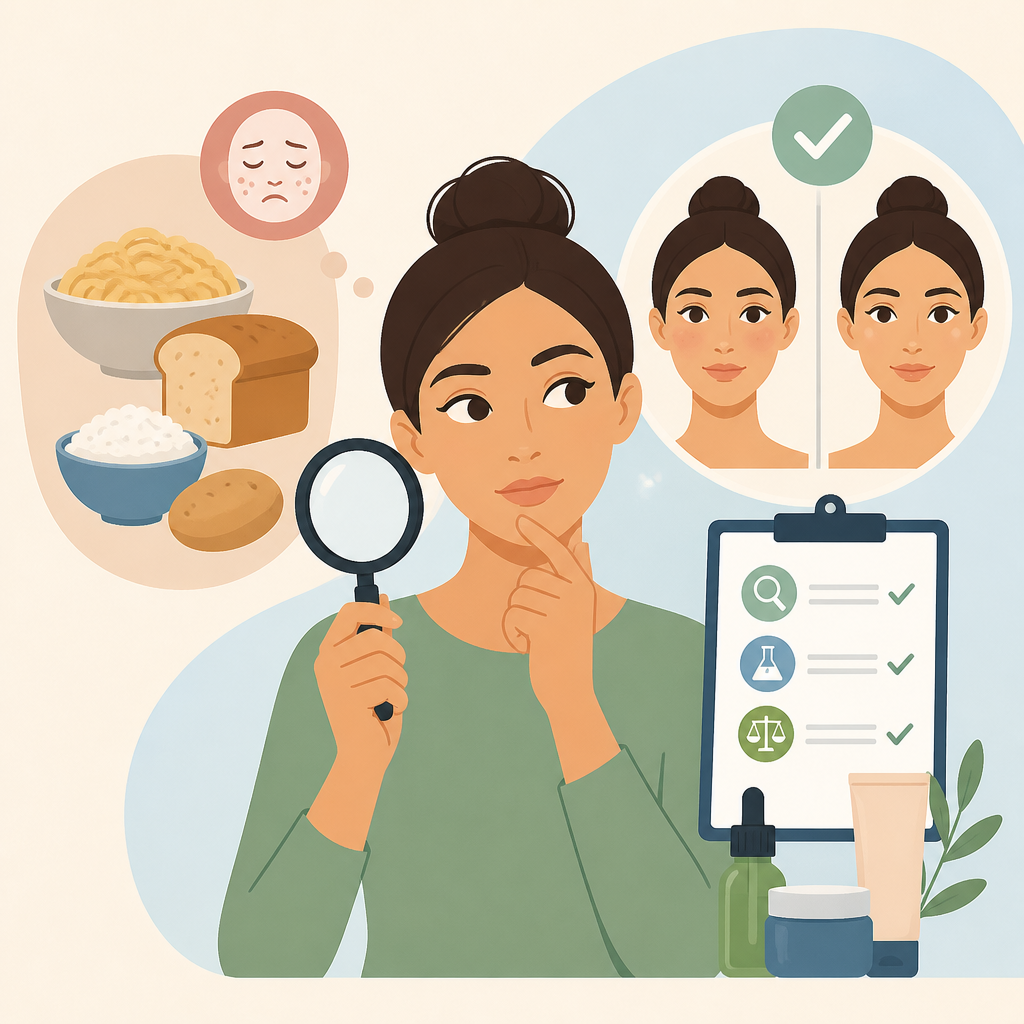
Write the claim in plain language: “A high-carb diet changes facial appearance in a way you can reliably identify from photos.” That wording makes it easier to check whether the idea is descriptive, exaggerated, or just a stereotype.
Verification: you should be able to restate the claim in one sentence without using slang. If you cannot, the label is probably doing more social work than factual work.
Step 2: Check what the body actually changes
Goal: separate temporary appearance changes from permanent traits. Facial puffiness can be influenced by water retention, salt intake, sleep, alcohol, stress, menstrual cycle, illness, and recent weight change, not just one macronutrient.

Look for evidence that discusses glycogen storage, hydration, and overall calorie intake. Carbohydrates can affect water balance because stored glycogen binds water, but that is not the same as saying carbs create a distinct “type” of face.
Verification: you should see that the body’s appearance is affected by many variables at once, and that no single food group can be used as a universal face classifier.
Step 3: Compare photos before drawing conclusions
Goal: avoid mistaking photography effects for biology. Lighting, camera angle, lens distortion, facial expression, makeup, and posture can all change how a face looks online.
If a post compares two people, check whether the photos were taken under the same conditions. A bright front light can flatten features, while side lighting can exaggerate shadows and make someone look leaner or sharper.
Checklist for photo comparison:
- Same lighting?
- Same angle?
- Same expression?
- Same time of day?
- Same editing or filter?
- Same hydration or sleep context?
Verification: you should be able to identify at least one non-diet reason the images look different. If not, the comparison is too weak to support a broad claim.
Step 4: Test the language for stigma
Goal: decide whether the phrase is an observation or a social ranking. Labels like “poor person carb face” often attach moral value to body size, diet, and class, which can turn a casual comment into a form of shaming.
Ask three questions: Does the phrase imply superiority? Does it reduce a person to appearance? Does it treat a normal body variation as a flaw? If the answer is yes, the phrase is not neutral even if it sounds playful.
Verification: you should be able to explain why the term may pressure people to self-monitor or feel embarrassed, even when no medical issue is present.
Step 5: Respond with evidence and boundaries
Goal: answer the trend without escalating it. A good response can be short: “Facial fullness is influenced by many factors, so this label is too simplistic and often judgmental.”
If the conversation is friendly, you can add context: “Carbs affect glycogen and water retention, but that does not justify ranking people by face shape or diet.” If the conversation is hostile, it is fine to stop engaging.
Verification: you should have one neutral sentence, one evidence-based sentence, and one boundary-setting sentence ready to use in comments or conversation.
Common mistakes
- Assuming one photo proves a diet effect. Fix: compare multiple images and check for lighting, angle, expression, and editing.
- Confusing temporary puffiness with body type. Fix: consider sleep, salt, hydration, stress, alcohol, and recent weight change before blaming carbs.
- Using the trend as a joke at someone’s expense. Fix: replace ranking language with neutral descriptions of appearance or nutrition.
What's next
If you want to go deeper, read a basic nutrition primer and a source on body image or appearance bias, then practice rewriting viral labels into neutral, evidence-based language.
// Related Articles
- [IND]
OpenAI updates its Europe privacy policy
- [IND]
OpenAI is right to keep ads out of sensitive chats
- [IND]
AI bootlegs are already draining streaming royalties
- [IND]
AMD and Microsoft push Windows ML on GPU and NPU
- [IND]
OpenAI’s IPO filing turns hype into scrutiny
- [IND]
Skatteetaten proves public sector AI should be judged by outcomes