How to Understand Cryptocurrency Regulation in 2025
Learn the main U.S. and global rules shaping cryptocurrency regulation in 2025.
Learn the main U.S. and global rules shaping cryptocurrency regulation in 2025.
This guide is for developers, founders, and product teams building crypto apps that must work across U.S. and international markets. By following the steps, you will have a practical map of the main regulators, the rules that affect tokens and stablecoins, and the checks you need before launch.
You will also know where to verify current policy changes, how to classify a product more safely, and how to avoid common compliance mistakes that can delay a release or trigger enforcement risk.
Before you start
Get the latest AI news in your inbox
Weekly picks of model releases, tools, and deep dives — no spam, unsubscribe anytime.
No spam. Unsubscribe at any time.
- Access to the current SEC, CFTC, and FinCEN websites
- Access to the U.S. Congress legislation tracker or official bill text
- Access to at least one non-U.S. regulator source, such as the EU, UK, or Singapore
- A basic product description for your token, wallet, exchange, or stablecoin feature
- Internal notes on custody, trading, payments, and user onboarding flows
- Optional: legal counsel familiar with securities, commodities, and money transmission rules
Keep this material current. Crypto rules change quickly, and the same asset can be treated differently depending on how it is issued, marketed, and used.
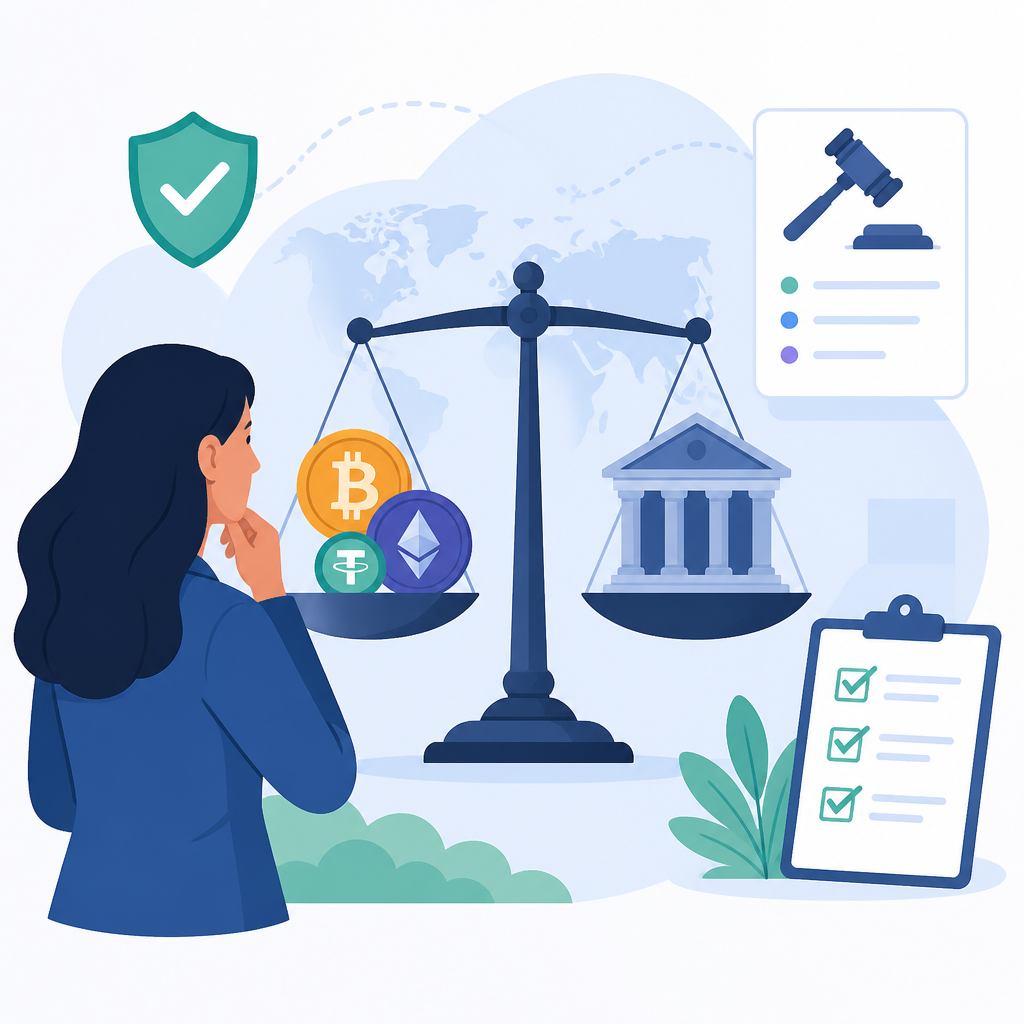
Step 1: Map the regulators that control your product
Goal: identify which agencies can affect your project so you know where compliance decisions start. In the U.S., that usually means the SEC for securities questions, the CFTC for derivatives and some commodity-related issues, and FinCEN for anti-money-laundering obligations. Outside the U.S., you may also need to track financial services, payments, and consumer protection authorities.
Start with the primary sources for each agency and write down which product features they may regulate.
SEC: securities and investment products
CFTC: derivatives and commodity-linked activity
FinCEN: AML, KYC, money transmission
State regulators: licensing and consumer rules
Foreign regulators: local token, payment, and exchange rules
Verification: you should see a one-page regulator map that names every agency relevant to your product and the feature it touches.
Step 2: Classify the asset and use case
Goal: determine whether your token is likely to be treated as a security, commodity, payment instrument, or stablecoin-related product. The article notes that U.S. policy has been fragmented, but 2025 legislation began creating a clearer framework for stablecoins and digital asset markets. That means classification still matters, because the same project can fall under different rules depending on design and distribution.
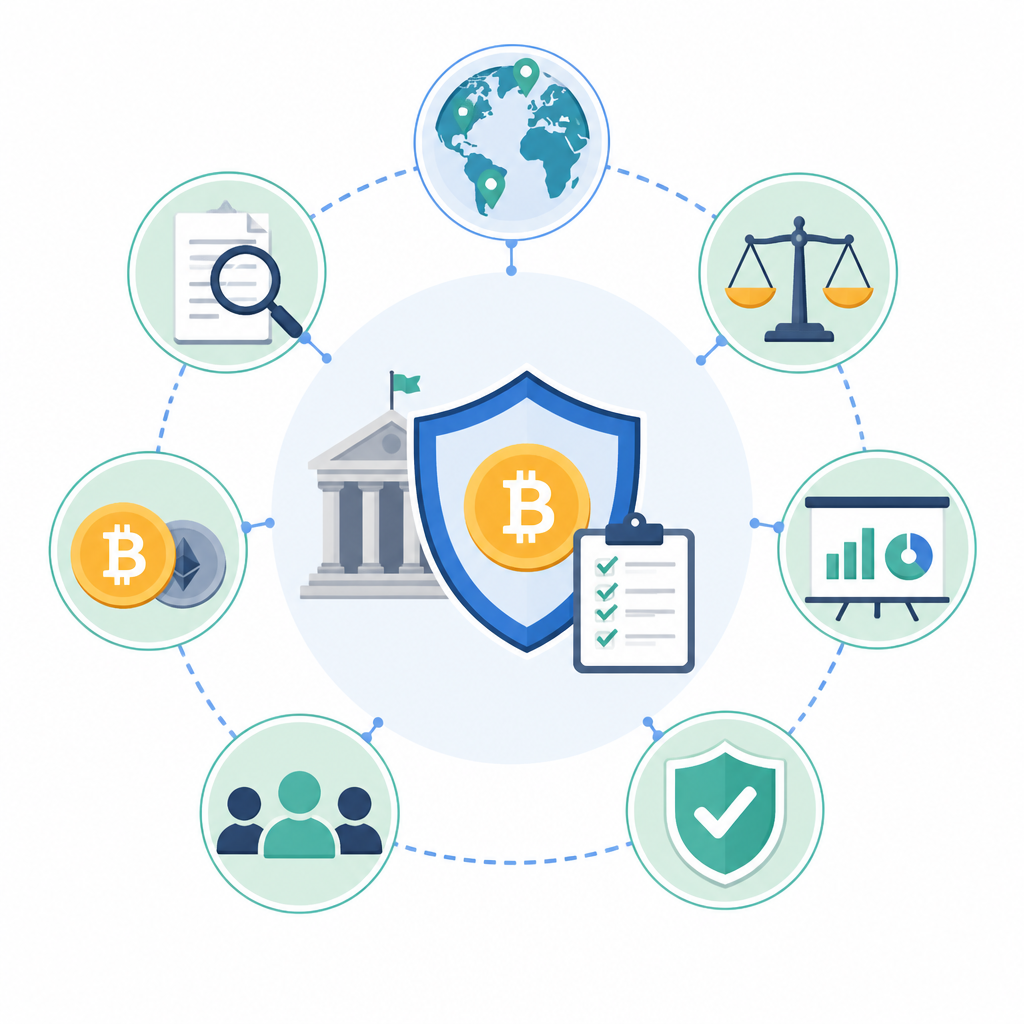
Review how the asset is sold, what rights it gives holders, and whether it is used for payments, governance, trading, or yield. Then document the strongest regulatory interpretation and the most conservative one.
Verification: you should see a written classification memo that explains your product’s likely regulatory bucket and the reasons for it.
Step 3: Check stablecoin and market-structure rules
Goal: confirm whether your product is affected by the newer U.S. framework for stablecoins and digital asset markets. If you issue, custody, or integrate a stablecoin, the reserve model, redemption rights, disclosures, and counterparties may all matter. If you operate a trading venue or brokerage-like service, market-structure rules can affect listing, surveillance, and customer protections.
Use the official text of the new legislation and any agency guidance to compare your product design against the required controls.
1. Identify whether the product is a stablecoin or touches stablecoin payments
2. Confirm reserve, redemption, and disclosure requirements
3. Check whether trading, listing, or custody features trigger extra obligations
4. Record any gaps between your design and the new framework
Verification: you should see a gap list that shows which controls are already covered and which ones still need legal or product changes.
Step 4: Review global compliance requirements
Goal: avoid assuming U.S. rules are enough for international users. Many jurisdictions have their own licensing, marketing, custody, and consumer disclosure rules. A product that is allowed in one country may need registration or be restricted in another.
Pick the markets where you have users or plan to launch, then check the local regulator’s crypto guidance and any passporting or licensing rules. Focus on stablecoins, exchange services, wallet custody, and cross-border transfers first.
Verification: you should see a country-by-country launch matrix with allowed, restricted, and review-needed statuses.
Step 5: Build a launch compliance checklist
Goal: turn policy research into a release-ready process. Your checklist should cover KYC onboarding, transaction monitoring, disclosures, custody controls, recordkeeping, sanctions screening, and escalation paths for legal review. If you are working with partners or exchanges, include their compliance requirements too.
Make the checklist part of your product launch gate so no feature ships without a policy review.
- Product classification approved
- U.S. regulator map complete
- Stablecoin or market-structure review complete
- Global market review complete
- KYC/AML and sanctions controls tested
- Customer disclosures published
- Legal sign-off recorded
Verification: you should see a launch checklist that can block release until every required item is complete.
Common mistakes
- Assuming one regulator covers everything. Fix: map SEC, CFTC, FinCEN, state, and foreign rules separately.
- Labeling a token by name instead of function. Fix: classify it by rights, use case, and distribution model.
- Launching globally with only U.S. review. Fix: create a market-by-market approval matrix before rollout.
| Metric | Before/Baseline | After/Result |
|---|---|---|
| Regulatory coverage | Single-agency review | Multi-agency map across U.S. and foreign markets |
| Product classification | Informal label | Documented legal and product memo |
| Launch readiness | No compliance gate | Checklist tied to release approval |
What's next
From here, go deeper on jurisdiction-specific licensing, stablecoin reserve design, and ongoing monitoring of SEC, CFTC, FinCEN, and foreign regulator updates so your policy map stays current as the rules evolve.
// Related Articles
- [IND]
OpenAI updates its Europe privacy policy
- [IND]
OpenAI is right to keep ads out of sensitive chats
- [IND]
AI bootlegs are already draining streaming royalties
- [IND]
AMD and Microsoft push Windows ML on GPU and NPU
- [IND]
OpenAI’s IPO filing turns hype into scrutiny
- [IND]
Skatteetaten proves public sector AI should be judged by outcomes