How to Write Clear AI Prompts
A practical guide to writing clearer AI prompts for better, safer research results.

A practical guide to writing clearer AI prompts for better, safer research results.
This guide is for students, researchers, and staff who want AI to return more useful answers for study, writing, and source discovery. After following the steps, you will have a repeatable prompt workflow with context, source checks, and self-critique built in.
You will also know how to revise a prompt when the output is vague, how to reduce privacy risk, and how to verify AI claims against reliable sources before you use them.
Before you start
Get the latest AI news in your inbox
Weekly picks of model releases, tools, and deep dives — no spam, unsubscribe anytime.
No spam. Unsubscribe at any time.
- An account for one AI tool such as Google Gemini, Microsoft Copilot, or ChatGPT
- At least one source-checking destination such as your library database, Google Scholar, or a trusted publisher site
- A device with a modern browser and internet access
- A note-taking app or document for saving prompts and responses
- A clear research topic, assignment prompt, or question
- No personal identifiable information, passwords, or sensitive data in your prompt
Step 1: Define your research goal
Goal: create a prompt that tells AI who you are, what you need, and why you need it. This context helps the system produce an answer that matches your academic level and research purpose.

Start with a short identity statement and a concrete task. For example: “I am a nursing student researching saturated fat and human health. Summarize the main arguments for and against its health effects.”
Verification: you should see an answer that stays closer to your topic instead of drifting into generic background.
Step 2: Add clear instructions and limits
Goal: reduce confusion by making the request specific, direct, and easy to parse. Clear prompts lower the chance of misunderstanding and help avoid weak or hallucinated output.
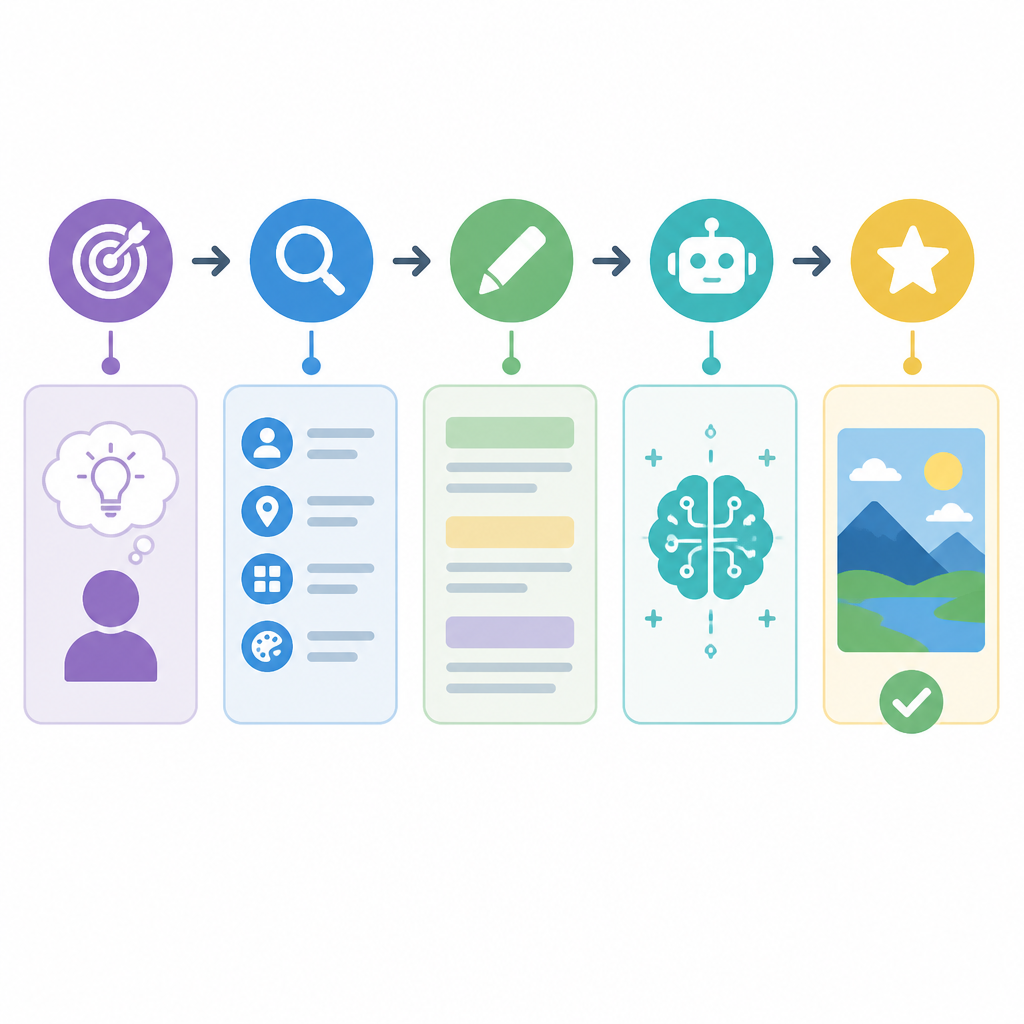
Include the format you want, the scope you want, and the kind of source evidence you expect. A useful pattern is: topic + task + output format + limits.
I am a history student writing a short literature review on the causes of the French Revolution. Give me a 5-bullet summary of the major causes, use plain language, and keep the answer under 250 words.Verification: you should see a shorter, more structured response that follows the word limit and stays on task.
Step 3: Request reliable sources
Goal: make AI support its claims with links, citations, or named sources you can verify. This matters because AI may cite weak sources or invent details that sound plausible.
Ask for source types, date ranges, and quality standards. For example, request peer-reviewed articles from the last five years, government reports, or books from recognized academic presses.
Verification: you should see source links or citations that you can open and compare against the answer. If the links do not match the claim, treat the response as unverified.
Step 4: Ask for self-critique
Goal: use AI to review its own answer for bias, missing points, and weak reasoning. This second pass often surfaces gaps that were not obvious in the first response.
After the first answer, ask a follow-up like: “How would an expert researcher critique your response? What biases, gaps, or unsupported claims should I check?”
Verification: you should see a response that flags uncertainty, missing evidence, or alternative viewpoints instead of simply repeating the first answer.
Step 5: Revise and verify the output
Goal: turn prompt engineering into a repeatable process of test, review, and improvement. If the answer is too broad, too narrow, or inaccurate, rewrite the prompt and try again.
Compare responses across tools if needed, then verify the final claims with library databases, Google Scholar, or authoritative websites. Save the prompt, the AI response, and your verification notes so you can reuse the workflow later.
Verification: you should end with a cleaner prompt, a better answer, and a documented list of sources you trust.
| Metric | Before/Baseline | After/Result |
|---|---|---|
| Response relevance | Generic or off-topic answer | Answer aligned to user role, topic, and goal |
| Source quality | No citations or weak links | Named sources that can be checked directly |
| Output reliability | Possible hallucinations or missing context | Self-critique exposes gaps and uncertainty |
Common mistakes
- Including personal or sensitive information in the prompt. Fix: remove names, IDs, health details, and confidential material before submitting.
- Asking a vague question like “tell me about this topic.” Fix: add role, task, format, and source limits.
- Trusting the first answer without checking sources. Fix: open the links, confirm the claims, and compare against library databases or trusted publishers.
What's next
Once you are comfortable with basic prompt engineering, build reusable templates for literature reviews, source discovery, brainstorming, and feedback on drafts. You can then adapt the same structure for different AI tools and research assignments.
// Related Articles
- [RSCH]
CRDTs keep replicas in sync without locks
- [RSCH]
Post-Deterministic Systems for Autonomous Infra
- [RSCH]
Causal methods for measuring task learnability
- [RSCH]
RL Training That Hands Off Control Gradually
- [RSCH]
OmniGameArena benchmarks VLM game agents better
- [RSCH]
TurboQuant cuts KV cache memory 6x in Google tests