iOS 27 Siri may ride on Gemini
I break down the reported Siri-Gemini shift and give you a copy-ready pattern for AI app chat deletion and fallback wiring.
I break down the reported Siri-Gemini shift and give you a copy-ready pattern for AI app chat deletion and fallback wiring.
I’ve been building with assistants long enough to stop getting impressed by the demo and start noticing the weird parts. The part that keeps bugging me is this: you wire up a chatbot, it answers fast, it sounds confident, and then you realize the whole thing is held together by guesses, prompt glue, and a privacy story that gets hand-waved away until someone asks where the data went. That’s the part that feels off.
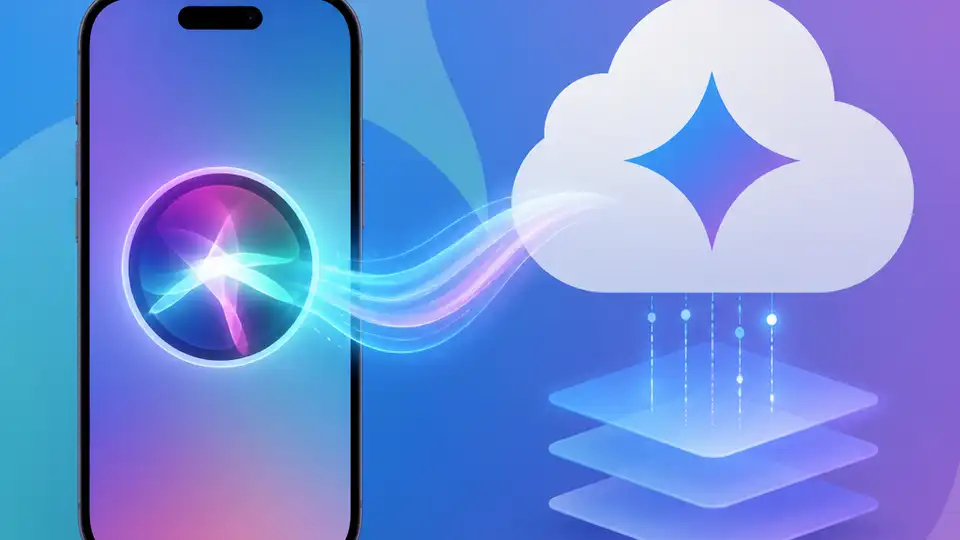
Apple’s Siri has had that same problem for years, just with better packaging. It can do a few useful things, then it stalls, then it punts, then it acts like it understood you when it really just took a shortcut. So when I saw the report that Apple may lean heavily on Google’s Gemini for the next Siri app in iOS 27, plus add an auto-delete option for chats, my first reaction was not surprise. It was, honestly, relief that somebody at Apple is finally admitting the current setup needs a real backend strategy, not more marketing around “intelligence.”
The report that kicked this off comes from CNET, which summarizes a Bloomberg report by Mark Gurman. The specific angle here is pretty blunt: Apple’s next Siri app may use Google’s Gemini for a lot of the chatbot work, and users may get an auto-delete control for conversations. That’s the kind of detail that matters more than the usual “Apple is exploring AI” fog.
Apple isn’t “adding AI,” it’s outsourcing the hard part
Get the latest AI news in your inbox
Weekly picks of model releases, tools, and deep dives — no spam, unsubscribe anytime.
No spam. Unsubscribe at any time.
Apple's Siri app in iOS 27 will get an auto-delete option for chats and will also rely heavily on Google's Gemini for its AI chatbot operations.
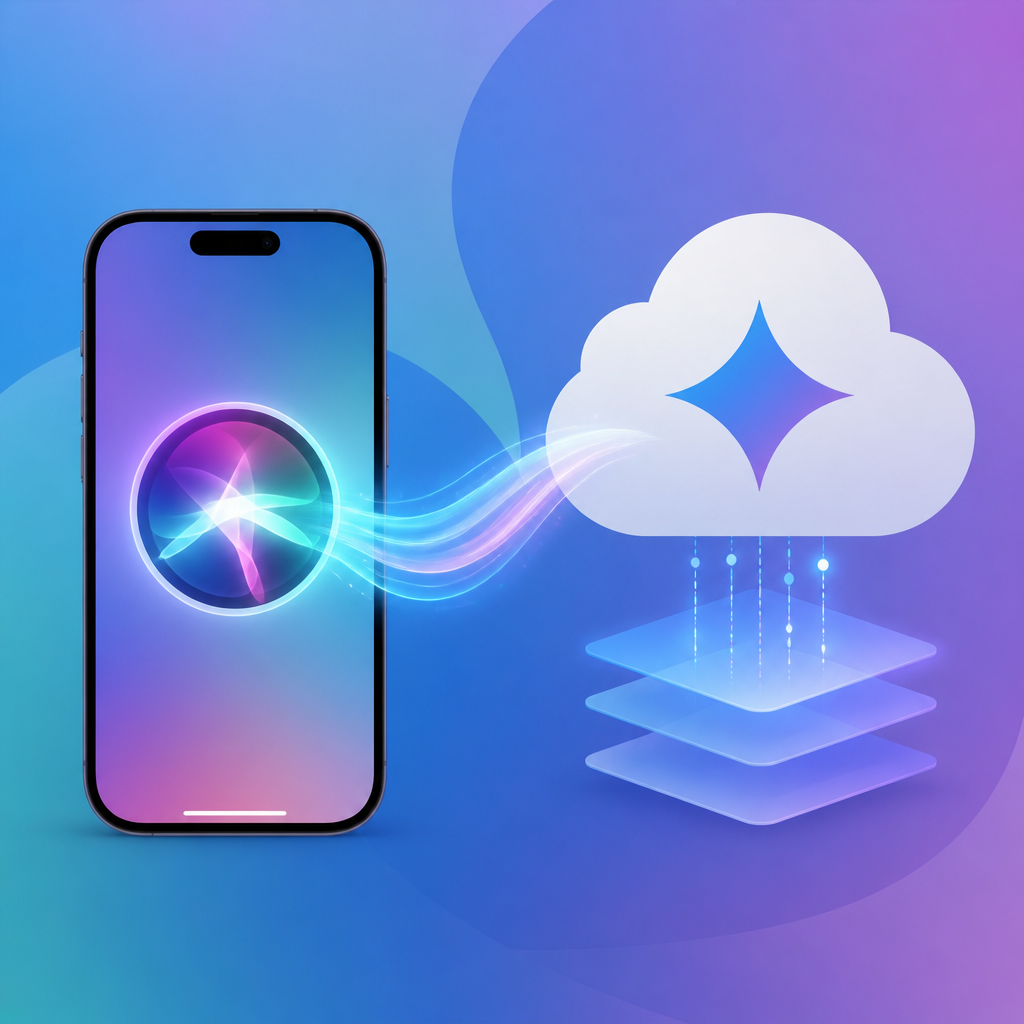
What this actually means is Apple may be treating Siri less like a self-contained assistant and more like a client on top of somebody else’s model stack. That’s a huge difference. If Gemini is doing the heavy lifting, Apple is no longer pretending it can build every layer itself on a sane timeline. It’s admitting the model layer is expensive, messy, and not worth reinventing just to keep the logo pure.
I’ve run into this exact trap in product work. Teams insist they want “one stack,” then they spend six months rebuilding a mediocre model pipeline instead of shipping the thing users asked for. The ego tax is brutal. Using an external model is not a moral failing. Pretending you don’t need one while your assistant keeps face-planting is the actual problem.
For developers, the lesson is simple: separate the assistant shell from the model provider. Your UI, memory rules, safety rules, and deletion controls should not care whether the backend is Gemini, OpenAI, Anthropic, or something you swap in later. If you hardwire those concerns together, you’ll hate yourself during the first provider migration.
- Keep the assistant interface provider-agnostic.
- Put model calls behind one adapter layer.
- Store conversation policy outside the model prompt.
Auto-delete is not a nice-to-have, it’s the trust layer
The other reported change matters just as much: an auto-delete option for chats. That sounds boring until you remember how many AI products quietly keep everything forever unless someone digs through settings and finds a privacy toggle buried under three menus and a prayer.
What this actually means is Apple may be acknowledging that chat retention is now part of product trust, not just legal fine print. If an assistant can summarize your calendar, draft your messages, and remember your preferences, users are going to ask one very practical question: how long do you keep all this stuff?
I’ve seen teams treat deletion like a compliance checkbox. That’s a mistake. Deletion policy shapes behavior. If users know chats disappear automatically, they’re more likely to use the assistant for sensitive tasks. If they don’t trust the retention model, they’ll avoid the feature entirely or use it like a toy.
For implementation, I’d split deletion into three layers:
- Session content: the raw chat log, eligible for auto-delete.
- Derived memory: preferences or summaries, with separate retention rules.
- Audit metadata: minimal operational logs, time-boxed and anonymized where possible.
That separation is where most teams get sloppy. They delete the visible chat but keep the useful bits forever in another table with a friendlier name. Users don’t care about your naming scheme. They care whether the assistant is still holding onto their words.
Gemini in Siri means the orchestration layer finally matters
If Apple really does lean on Gemini, then Siri becomes an orchestration problem first and a model problem second. That’s the part I wish more teams understood. The model is only one node in the chain. You still need intent routing, tool selection, fallback behavior, refusal handling, and a way to recover when the model gets cute and answers the wrong question.

What this actually means is the assistant has to decide when to ask Gemini, when to handle something locally, and when to punt to a deterministic system. You do not want every request going to a giant model if the user just asked for a timer or a contact lookup. That’s wasteful, slow, and expensive.
I ran into this when I built a small assistant prototype for internal docs. The model was great at explaining stuff, terrible at knowing when it should just call a search endpoint. Once I added a routing layer with explicit intent classes, the whole thing got less theatrical and much more useful.
Here’s the practical version:
- Use the model for language-heavy tasks.
- Use deterministic tools for structured tasks.
- Use a router to choose between them before the prompt even goes out.
If Apple is smart here, Siri won’t be “one giant prompt.” It’ll be a policy engine wrapped around a model provider. That’s the boring architecture that actually ships.
Privacy has to be designed before the first token leaves the device
Apple talking about AI and deletion in the same breath is not accidental. The company knows its users care about privacy, and it also knows AI assistants are basically data vacuums if you let them be. That tension is the whole product.
What this actually means is the privacy story can’t live in a blog post. It has to live in the data path. If a request is going to Gemini, the product needs to say what leaves the device, what gets stored, what gets summarized, and what gets wiped. Not later. Not after legal review. Before launch.
I’m blunt about this because I’ve seen the opposite too many times. A team launches a helpful assistant, then spends the next quarter trying to retrofit consent screens and retention controls onto a system that was never built for them. That’s how you end up with “privacy features” that feel like damage control.
For a sane setup, I’d recommend:
- Explicit user consent before cloud processing where required.
- Clear per-chat deletion controls.
- A visible retention window, not a vague promise.
- Redaction of obvious sensitive fields before model submission.
That last one is big. If you can strip phone numbers, addresses, and account IDs before sending a request upstream, do it. Don’t make the model your first line of defense. That’s backwards.
This is the part Apple can actually get right
The interesting thing about this report is that it points to Apple doing what a lot of teams refuse to do: using the best external system where it makes sense, then wrapping it in product controls users can understand. That’s not glamorous. It’s just competent.
What this actually means is Siri may finally become less of a personality demo and more of a useful interface. If Gemini helps with reasoning and generation, and Apple handles device integration, deletion, permissions, and UX, that’s a much better split than trying to force a single in-house model to do everything badly.
I’m not pretending this will be perfect. External model dependence creates its own mess: vendor risk, latency, cost, policy drift, and the fun little surprise of your assistant changing behavior because the upstream model changed. But I’d still take that over a closed, brittle system that never improves.
So if you’re building an AI product right now, my advice is boring and annoying, which usually means it’s right:
- Own the user experience.
- Abstract the model provider.
- Make deletion a first-class feature.
- Design for fallback, not optimism.
The template you can copy
# AI assistant architecture template with provider swap + auto-delete

## 1) Core principles
- The assistant UI does not know which model provider is active.
- Chat retention is configurable per conversation.
- Deletion applies to raw chat, not just visible UI records.
- Sensitive fields are redacted before any upstream request.
- A router decides whether to use local tools or a cloud model.

## 2) Data model
conversation {
  id: string
  user_id: string
  provider: "gemini" | "openai" | "anthropic" | "local"
  retention_policy: {
    mode: "manual" | "auto_delete"
    delete_after_hours: number | null
  }
  raw_messages: []
  derived_memory: []
  audit_metadata: []
}

## 3) Request flow
1. User sends a message.
2. Redaction layer removes obvious sensitive fields.
3. Router classifies intent:
   - local_tool
   - cloud_model
   - retrieval
   - refusal
4. If cloud_model is selected, call the provider adapter.
5. Store the response.
6. Apply retention policy on schedule.
7. Remove raw messages when delete window expires.
8. Keep only minimal audit metadata if required.

## 4) Provider adapter interface
interface ModelProvider {
  generate(input: {
    systemPrompt: string
    messages: Message[]
    tools?: Tool[]
    temperature?: number
  }): Promise
}

## 5) Deletion policy rules
- Auto-delete raw chats after N hours.
- Delete derived memory only if user opts out or deletes account.
- Never keep a second hidden copy of raw messages.
- Log deletion events without storing message content.

## 6) Practical prompt skeleton
You are an assistant that must:
- answer directly
- call tools when needed
- avoid inventing facts
- refuse unsafe requests
- respect chat retention and privacy policies

## 7) Example implementation checklist
- [ ] Build provider adapter
- [ ] Add intent router
- [ ] Add redaction middleware
- [ ] Add retention scheduler
- [ ] Add delete-now button
- [ ] Add auto-delete setting
- [ ] Add audit-only logs
- [ ] Test provider swap without UI changes

## 8) Copy-ready user-facing settings copy
- Auto-delete chats after: 24 hours / 7 days / 30 days / Off
- Delete this chat now
- Clear remembered preferences
- Review what this assistant stores
- Export my data

## 9) Failure handling
- If provider fails, fall back to local response or apology.
- If deletion fails, retry and surface status.
- If the router is uncertain, choose the safer path.
- If the model response is unsupported, do not silently guess.

## 10) Minimal API endpoints
POST /chat
POST /chat/:id/delete
POST /chat/:id/retention
GET  /chat/:id/export
GET  /settings/privacy

## 11) One-sentence product rule
If users cannot understand what is stored, who processes it, and when it disappears, the assistant is not ready.
That’s the pattern I’d use if I were rebuilding Siri or anything like it. The model provider can change. The trust contract shouldn’t.
Source attribution: the reporting discussed here comes from CNET’s coverage of Mark Gurman’s Bloomberg report at https://www.cnet.com/tech/services-and-software/apple-siri-google-gemini-ai-ios-27/. The architecture template above is my own derivative take, not part of the original article.
// Related Articles
- [IND]
AMD and Microsoft push Windows ML on GPU and NPU
- [IND]
OpenAI’s IPO filing turns hype into scrutiny
- [IND]
Skatteetaten proves public sector AI should be judged by outcomes
- [IND]
OpenAI’s IPO filing puts AI’s biggest test on Wall Street
- [IND]
OpenAI’s latest moves now center on pricing, safety, and scale
- [IND]
RISC-V mini PCs are worth buying now, but only as a bet on the future