Why Japan Classifying Ethereum as a Financial Product Matters
Japan’s move to treat Ethereum as a financial product is the right regulatory shift for the market.

Japan’s Ethereum ruling puts ETH under stricter financial-market oversight.
Japan is right to classify Ethereum as a financial product, because the asset has already outgrown the loose, payment-first framing that crypto regulators used to rely on. Once an asset is traded globally, held by institutions, used as collateral, and discussed in the same breath as ETFs and brokerage products, treating it like a simple payment token becomes regulatory fiction. Japan’s Financial Services Agency is not just adding paperwork; it is acknowledging how ETH actually functions in modern markets.
Ethereum has crossed into the territory that securities-style rules were built for
Get the latest AI news in your inbox
Weekly picks of model releases, tools, and deep dives — no spam, unsubscribe anytime.
No spam. Unsubscribe at any time.
The clearest sign that Japan’s move makes sense is the rulebook it chose. Under the Financial Instruments and Exchange Act, Ethereum will face disclosure duties, compliance reporting, and insider-trading restrictions. Those are not cosmetic changes. They are the core protections that make markets more trustworthy when an asset is widely traded and price-sensitive information can move billions in value in minutes.

This matters because Ethereum is no longer just a network token for hobbyists and developers. It sits at the center of tokenization, DeFi, staking, and institutional treasury conversations. When an asset becomes infrastructure for financial activity, the market needs infrastructure-grade oversight. Japan is applying the right standard to the right asset class.
Clear rules unlock the institutional capital crypto keeps asking for
Japan’s real signal is not punishment, it is permission. By moving Ethereum under a formal financial-product framework, regulators are making room for ETFs, brokerage access, and more comfortable participation from banks, insurers, and pension funds. That is the kind of legal clarity institutions need before they commit serious capital.
The market has already shown what happens when a major jurisdiction gives a crypto asset a cleaner path into regulated finance. Spot Bitcoin ETFs in the US turned a speculative narrative into a product category that asset managers could actually sell, hold, and explain to compliance teams. Japan is aiming to do the same for Ethereum, and that is a stronger long-term growth strategy than leaving ETH in a regulatory gray zone where every new product must be negotiated from scratch.
Japan is choosing market integrity over crypto theater
Supporters of lighter crypto regulation often argue that stricter rules will smother innovation. That argument sounds persuasive until you look at the actual failure modes in crypto markets: opaque token distributions, insider advantage, weak disclosure, and retail investors buying into products they cannot properly evaluate. Japan’s framework addresses those failures directly. It does not ban innovation; it forces innovation to survive in a market that can be audited.
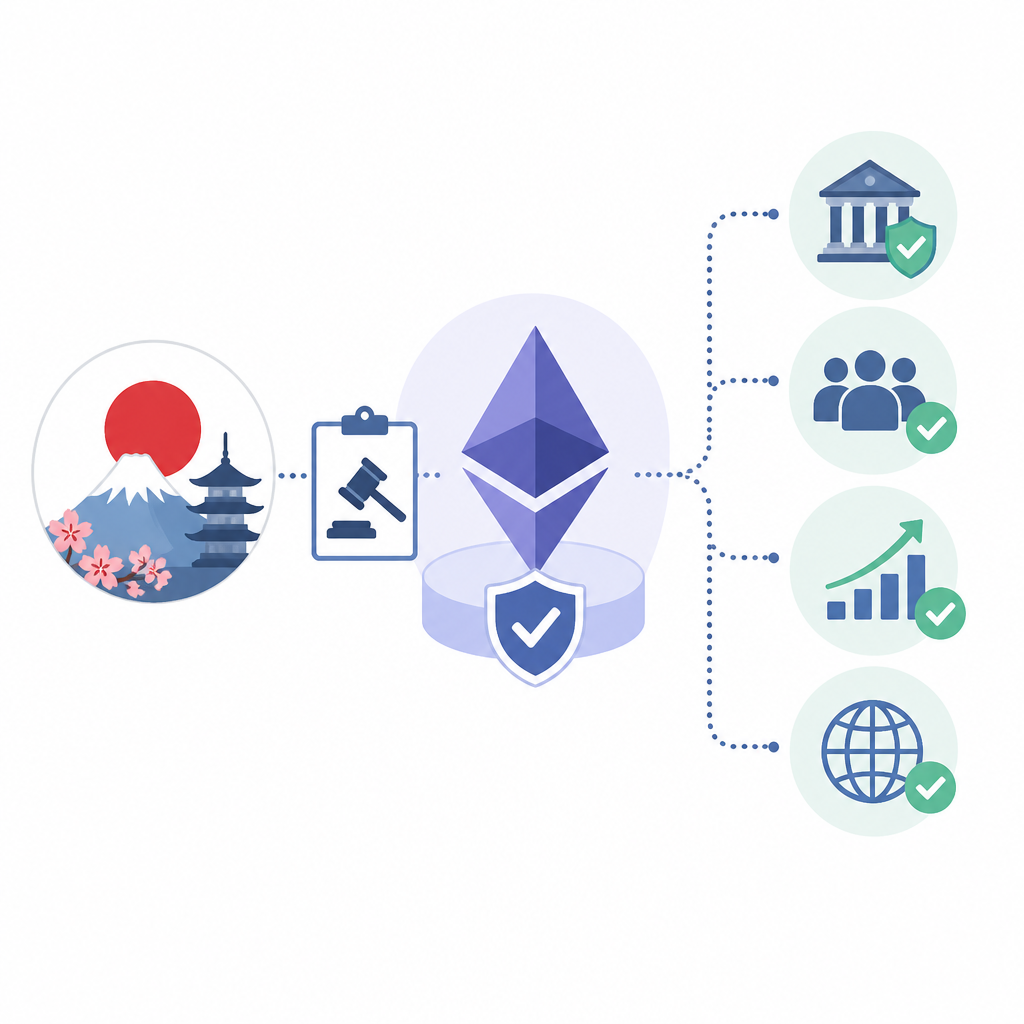
The practical upside is bigger than a single legal label. If Ethereum gains a more durable place inside Japan’s financial system, then tokenized assets, regulated custody, and compliant investment products all become easier to build around it. That is how mainstream adoption happens: not through slogans, but through rules that reduce uncertainty for the people controlling capital. Japan is making the smarter bet by demanding maturity instead of pretending crypto can scale without it.
The counter-argument
The strongest objection is that calling Ethereum a financial product blurs the line between a decentralized network and a regulated instrument. Ethereum is not a company, not a stock, and not a bond. Its value comes from a global protocol with no single issuer, so critics say securities-style oversight risks importing a corporate model onto software that was designed to be open and permissionless.
That concern has weight, but it does not defeat the policy. Regulators are not claiming Ethereum is a share in a business; they are classifying how it functions in the market. Once ETH is used in investment products, traded at scale, and exposed to the same manipulation risks as other financial assets, the absence of disclosure and insider-trading rules becomes a weakness, not a virtue. Japan is not redefining Ethereum’s code. It is defining the market conditions around it.
What to do with this
Engineers, PMs, and founders should treat Japan’s move as a blueprint, not a headline. If you are building on Ethereum, design for disclosure, custody, auditability, and compliance from the start. If you are shipping a product that depends on institutional adoption, assume the next phase of growth will come from regulated distribution, not from retail hype. The teams that win will be the ones that build as if Ethereum is becoming financial infrastructure, because Japan just said it is.
// Related Articles
- [CHAIN]
7 Solana APIs that cut weeks off integration
- [CHAIN]
Solana Unchained token sale nears Phase 1 close at $0.05
- [CHAIN]
June 2026 Web3 Signals Founders Should Use Now
- [CHAIN]
Bitcoin DeFi will grow, but not by copying Ethereum
- [CHAIN]
AI-blockchain projects need real utility, not token theater
- [CHAIN]
DMG’s 50 MW AI LOI is a better use of miners’ power assets