June 2026 agentic AI platform war centers on memory
Microsoft, Snowflake, Databricks, Google, OpenAI, Anthropic, Salesforce, and SAP are racing to own enterprise agent memory, context, and action.
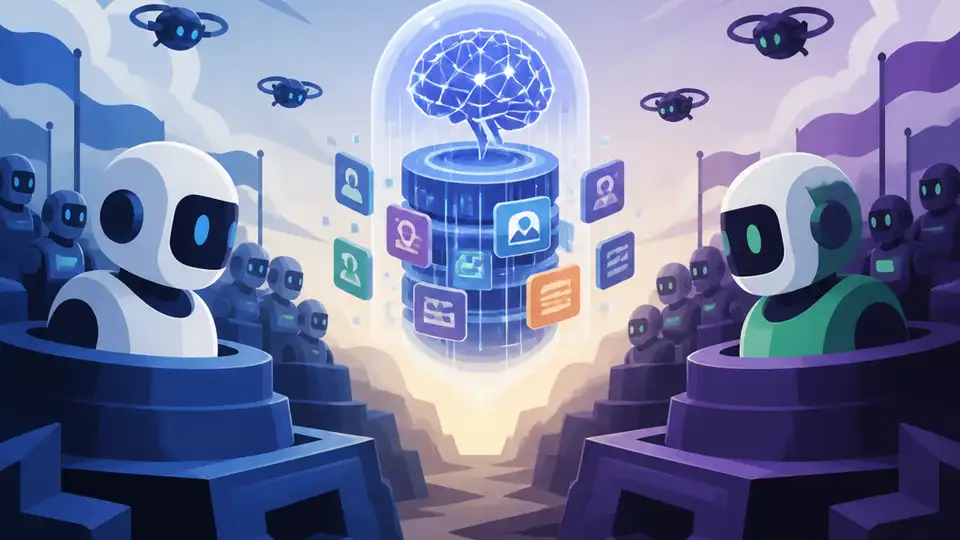
Enterprise AI in June 2026 is a fight to control the agentic client for memory, context, and action.
By June 2026, enterprise AI competition has shifted from model scores to the control point where workers trigger agent actions. Microsoft, Snowflake, Databricks, Google, OpenAI, Anthropic, Salesforce, and SAP are all pushing to own that surface, because it decides which data agents can see, what they remember, and what they can do.
| 項目 | 數值 |
|---|---|
| Timeframe | June 2026 |
| Snowflake Cortex Agents launch | April 2026 |
| Anthropic Claude Enterprise context | 500+ pages |
| Microsoft Copilot reach | Windows, Edge, Office 365, Azure |
| Databricks agent stack | Unity Catalog, AI/BI Agent, Spark |
What changed
Get the latest AI news in your inbox
Weekly picks of model releases, tools, and deep dives — no spam, unsubscribe anytime.
No spam. Unsubscribe at any time.
The new battleground is the agentic client: a thin interface that blends chat, notebooks, and orchestration into one place where employees ask for work to be done. The article argues that the winner will shape enterprise memory, context rules, and execution paths, not just answer prompts.
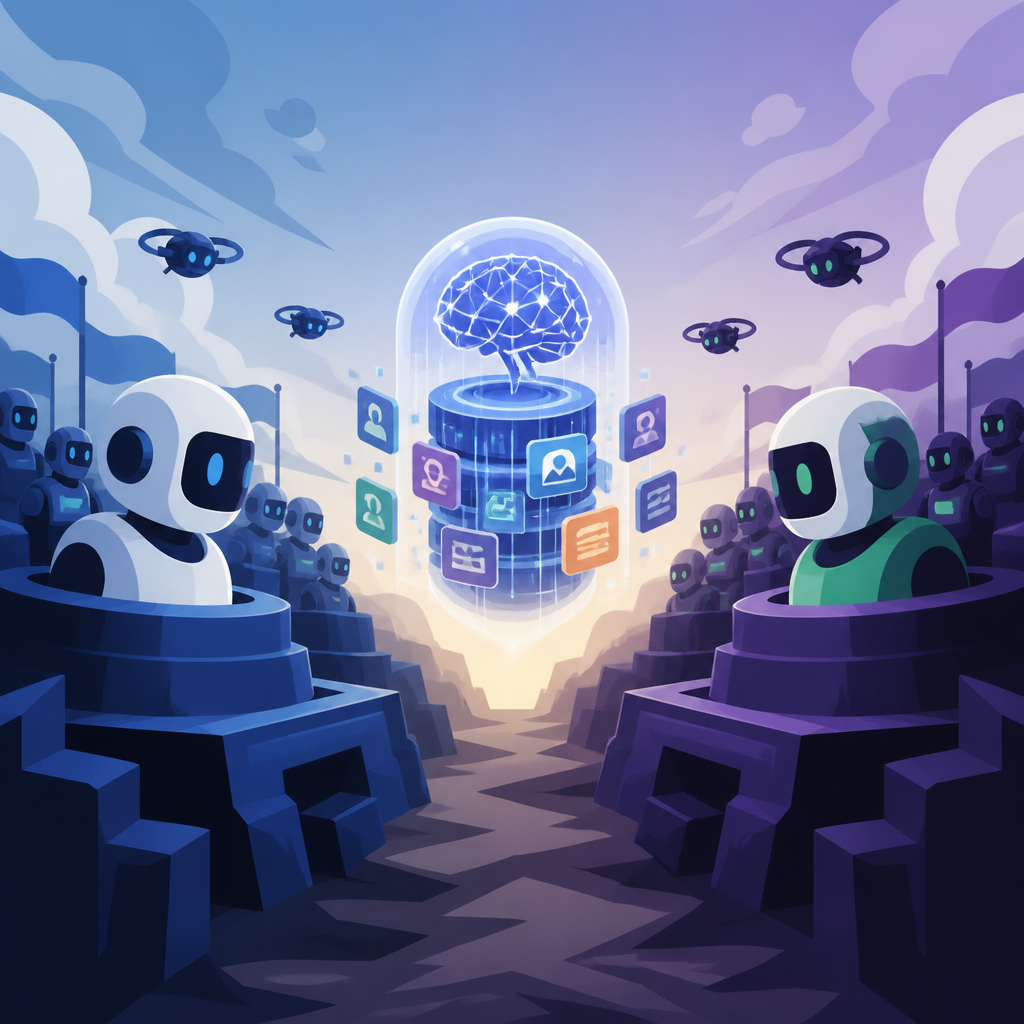
Microsoft has the broadest distribution because Copilot is already embedded across Microsoft Windows, Edge, Office 365, and Azure AI Studio. Its pitch is that Graph, Recall Vault, and Windows agent runtime APIs can keep tasks alive across sessions and devices.
- Snowflake is pushing Cortex Agents inside its governance boundary.
- Databricks ties agents to Unity Catalog and Delta tables.
- Google is pairing Gemini 2.0 with Vertex AI Agent Builder and BigQuery.
- OpenAI and Anthropic are leaning on MCP and long-context models.
- Salesforce and SAP are anchoring agents in CRM and ERP workflows.
Snowflake and Databricks are answering from the data layer. Snowflake’s Cortex Agents run where governed data already lives, while its Horizon framework logs retrievals and actions for audit. Databricks is embedding its AI/BI Agent in Unity Catalog and pushing portability through LangChain and LlamaIndex partnerships.
Why it matters
For developers, the practical question is no longer which model to call, but which platform can safely store memory, apply permissions, and execute actions without breaking enterprise controls. That shifts buying decisions toward governance, observability, and the APIs that expose business workflows to agents.
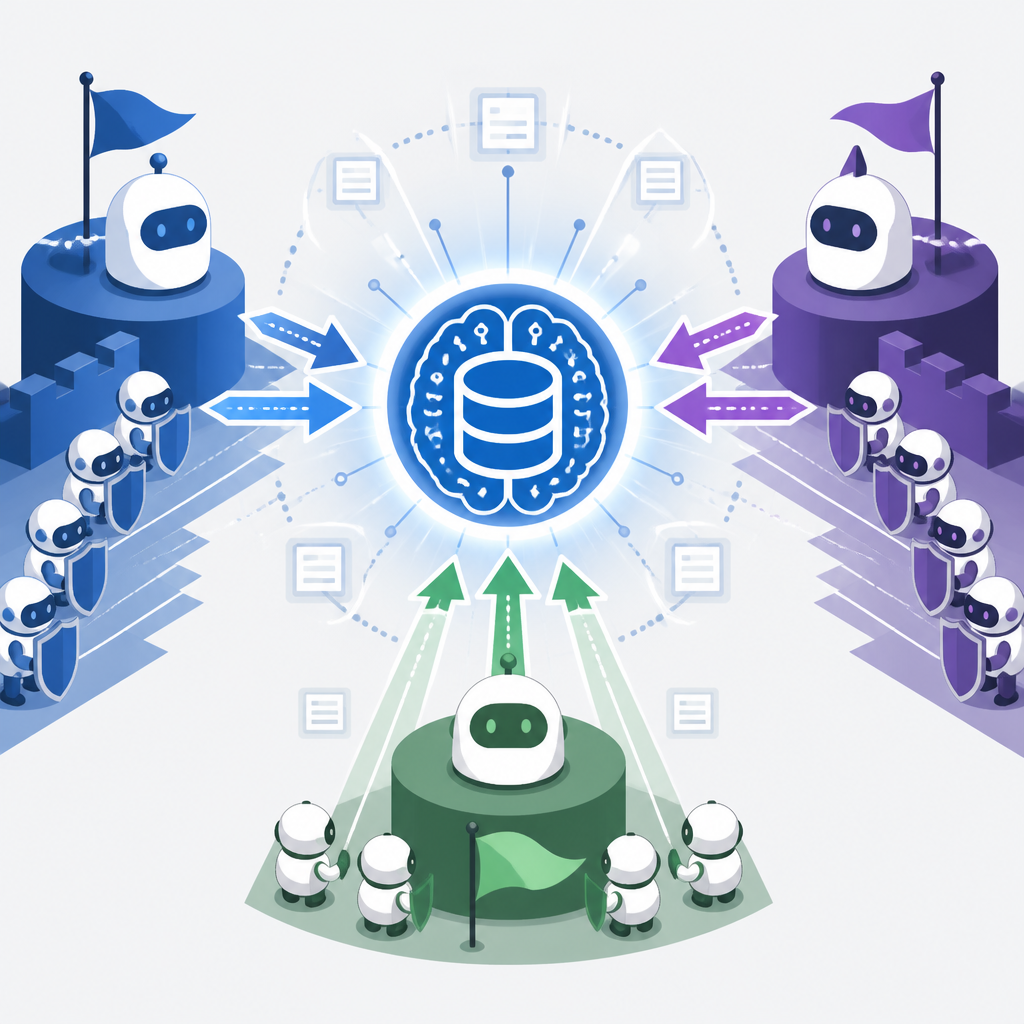
The biggest benefit goes to vendors that already own the workflow surface. Salesforce can automate sales and service inside CRM. SAP can approve transactions inside ERP. Microsoft can span office work and device context. If agents become the new front end for enterprise software, the platform with the deepest data and policy hooks gets the most leverage over future app design.
The article also points to a market split: horizontal platforms want to sit above every app, while data and business-suite vendors want the agent to live inside the system of record. That tension will decide whether enterprise AI becomes portable across stacks or locked to the place where memory is stored.
The real question now is not which model is smartest, but which company becomes the default home for enterprise memory and action.
// Related Articles
- [IND]
OpenAI’s IPO filing turns hype into scrutiny
- [IND]
Skatteetaten proves public sector AI should be judged by outcomes
- [IND]
OpenAI’s IPO filing puts AI’s biggest test on Wall Street
- [IND]
OpenAI’s latest moves now center on pricing, safety, and scale
- [IND]
RISC-V mini PCs are worth buying now, but only as a bet on the future
- [IND]
Fedora 44 RISC-V widens Linux board support