Microsoft 365 Gets Copilot Cowork and Claude
Microsoft is turning Copilot into an execution engine in 365, with Claude added through a $30 billion Anthropic deal.

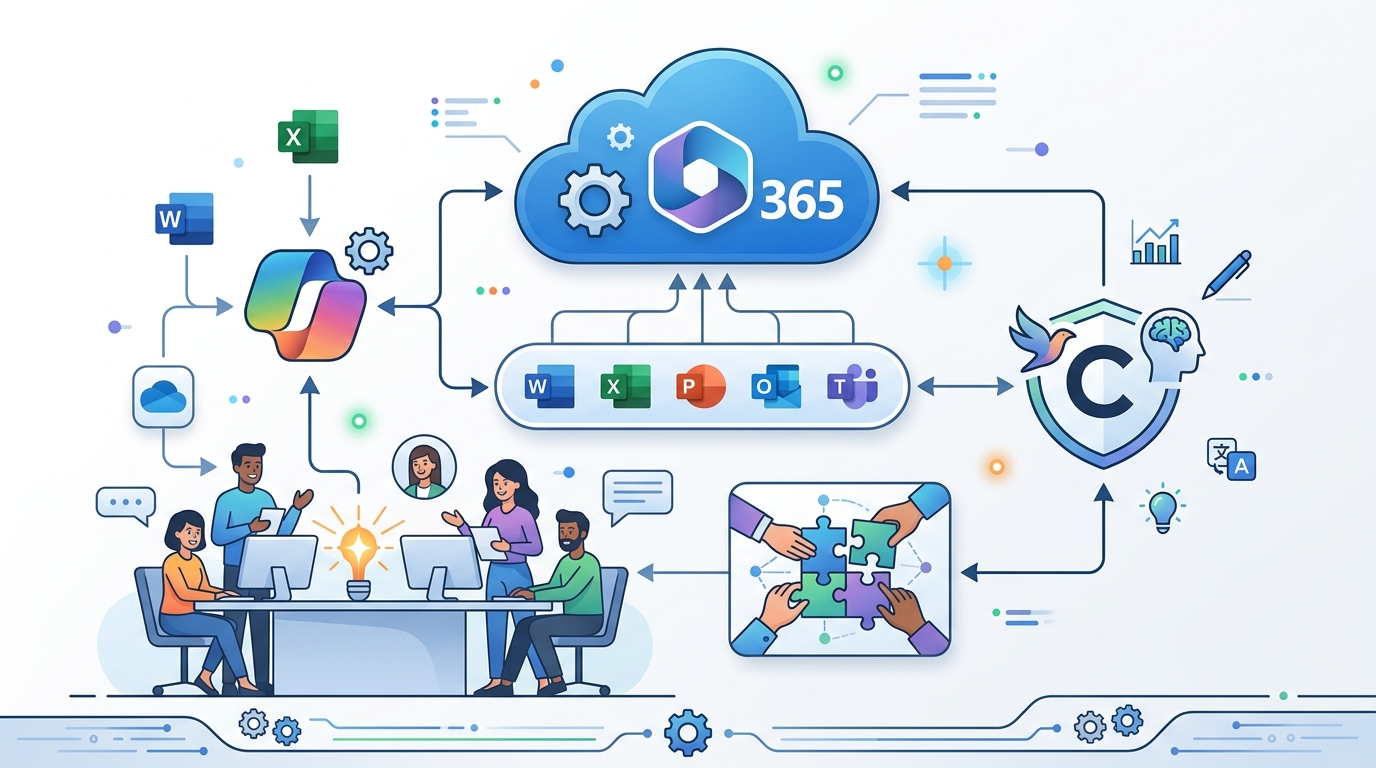
Microsoft says Microsoft 365 is moving beyond chatty assistance and into actual task execution. The company’s new Copilot Cowork effort, launched through its Frontier program, uses Claude alongside OpenAI models to carry out multi-step work inside the Microsoft 365 environment.
The number that jumps out is the scale of the deal behind it: a reported $30 billion agreement with Anthropic. Microsoft is also talking about a user base of 450 million commercial Microsoft 365 customers, which makes this more than a lab demo. If even a small slice of that base adopts agentic workflows, the impact on office software could be huge.
Copilot Cowork is Microsoft’s execution bet
Get the latest AI news in your inbox
Weekly picks of model releases, tools, and deep dives — no spam, unsubscribe anytime.
No spam. Unsubscribe at any time.
Microsoft’s pitch is simple: stop treating Copilot like a text generator and start treating it like a worker. Copilot Cowork uses what Microsoft calls Work IQ to pull signals from apps such as Outlook and Teams, then act within the user’s context instead of asking for constant step-by-step commands.

That matters because the old assistant model has a ceiling. It can draft, summarize, and classify, but it still depends on the user to stitch the work together. Cowork is aimed at the messier middle: planning, coordination, follow-ups, and the kind of repetitive office work that eats entire afternoons.
Microsoft says the system can handle tasks like building presentations, running competitive analysis, and managing scheduling flows. Those are exactly the jobs that sound simple in a slide deck and become annoying in real life, especially when they involve several apps and a lot of context switching.
- Copilot Cowork runs inside Microsoft 365 rather than as a separate consumer chatbot.
- Work IQ pulls signals from Outlook and Teams to keep actions tied to the user’s context.
- Microsoft says the system can create presentations and analyze product growth.
- The company says customer data stays inside the 365 environment.
Anthropic gives Microsoft more than one model choice
The Anthropic partnership matters because Microsoft is clearly building a multi-model stack, not a single-model dependency. That is a practical move. Different models are better at different jobs, and a large enterprise platform needs room to swap in the best tool for the task instead of betting everything on one vendor.
Microsoft’s own message is that Claude now functions as a sub-processor for Microsoft, alongside OpenAI models. That makes the company’s AI stack look less like a single product and more like a managed system of models, policies, and controls. For enterprises, that is a lot easier to defend in procurement conversations than a black-box assistant that claims to do everything.
“The next phase of AI is about agents that can do work, not just talk about it.” — Satya Nadella, Microsoft Build 2025 keynote
That quote is a good summary of where Microsoft wants this to go. Nadella has been pushing this idea for a while: AI should move from response mode into action mode. Copilot Cowork is the clearest sign yet that Microsoft wants Microsoft 365 to become the place where that shift happens.
What Microsoft is changing in Researcher and enterprise controls
Microsoft also says it has improved its Researcher agent by separating content generation from evaluation. That sounds minor, but it is the sort of change enterprise teams care about. If one system writes the answer and another checks it, the odds of catching weak sourcing or sloppy reasoning go up.
For business users, this is where the product story gets real. A model that drafts a report is useful. A model that drafts a report and then checks whether its own output is accurate enough for leadership review is much more interesting. Microsoft is clearly trying to reduce the “AI wrote it, now someone has to verify everything” tax.
Capital Group is one of the early adopters Microsoft points to. Barton Warner, the company’s SVP of Enterprise Technology, said Cowork helps connect and coordinate enterprise tasks while staying inside security boundaries. That is the kind of quote Microsoft wants because it speaks directly to the biggest objection in corporate AI: control.
- Researcher now separates generation from evaluation to improve accuracy.
- Capital Group is an early customer Microsoft cites for planning and coordination gains.
- Microsoft says all actions stay inside the customer’s 365 environment.
- UK and EU admins must enable Anthropic settings before deployment.
How this compares with the current Copilot base
Microsoft says only a fraction of its 450 million commercial Microsoft 365 users currently use Copilot. That gap matters. It tells you the company is still early in adoption, even after a lot of product pushes, pricing work, and enterprise messaging. The upside is that the market is still wide open if the new agent features actually save time.
There is also a practical difference between a paid Copilot subscription and a task-executing agent. A user may pay for summaries and drafts, then ignore them after a few weeks if the outputs feel generic. An agent that creates a deck, checks data, and coordinates next steps has a much clearer business case because it removes work, not just text entry.
Here is the comparison that matters most:
- Old Copilot use case: draft an email, summarize a meeting, rewrite a document.
- Copilot Cowork use case: coordinate a workflow, create a presentation, analyze product growth.
- Old model: user approves each step and fills in gaps.
- New model: user defines the outcome and the system does more of the legwork inside Microsoft 365.
That shift changes how IT teams will evaluate the product. They will not only ask whether the model writes well. They will ask whether it can act safely, whether permissions are respected, and whether the audit trail is good enough for regulated work. In other words, the buying decision moves from “does it sound smart?” to “can we trust it with real work?”
Microsoft’s real test is adoption, not demos
The demo story is easy. The hard part is getting enterprises to turn on Anthropic settings, let agents touch internal workflows, and trust the results enough to use them daily. Microsoft has the distribution, and Anthropic has the model variety, but adoption will depend on whether this actually saves time in a measurable way.
My read: Microsoft is setting up Microsoft 365 to become the control center for office agents, and Copilot Cowork is the first serious proof point. If it works, the next wave will be less about writing prompts and more about assigning outcomes. If it does not, companies will keep using Copilot for lightweight drafting and leave the bigger automation dreams on the shelf.
The key question for the next few quarters is simple: will enterprises treat Copilot Cowork as a productivity tool they test, or as a system they build around? The answer will decide whether Microsoft 365 becomes an agent platform in practice, not just in product slides.
// Related Articles
- [AGENT]
Claude Code 动态工作流:AI 自写 Harness
- [AGENT]
Agent orchestration is the missing layer for enterprise AI
- [AGENT]
AI agents use blockchain as a trust layer
- [AGENT]
8 RAG patterns that turn demos into prod
- [AGENT]
Fine-tuning beats RAG when the goal is style, not facts
- [AGENT]
OpenClaw shows how small businesses use AI staff