Why Microsoft’s agentic Linux push matters more than its AI demos
Microsoft is right to treat hardened open-source infrastructure as the real foundation for agentic AI.

Microsoft is betting that secure Linux infrastructure will shape agentic AI more than flashy demos.
Microsoft’s Open Source Summit North America 2026 message was simple: the next AI wave will not be won by chatbots alone, but by the operating systems, standards, and security layers underneath them. The company used the event to announce the public preview of Azure Linux 4.0 on Azure Virtual Machines and the general availability of Azure Container Linux, while also pushing the idea that open source is the base layer for AI-native systems. That is the right bet. If agents are going to touch production data, automate workflows, and make decisions inside real businesses, the real competitive advantage is not a clever prompt. It is a hardened, predictable, interoperable platform.
The infrastructure layer is where AI becomes real
Get the latest AI news in your inbox
Weekly picks of model releases, tools, and deep dives — no spam, unsubscribe anytime.
No spam. Unsubscribe at any time.
AI agents are only useful when they can run continuously, securely, and close to the systems they need to act on. Microsoft’s emphasis on Azure Linux 4.0 and Azure Container Linux reflects a basic truth that the industry keeps rediscovering: reliability beats novelty once software leaves the demo stage. A container-optimized, immutable OS is not glamorous, but it reduces drift, limits attack surface, and makes workloads easier to reason about. That matters far more for agentic systems than for one-off model calls.
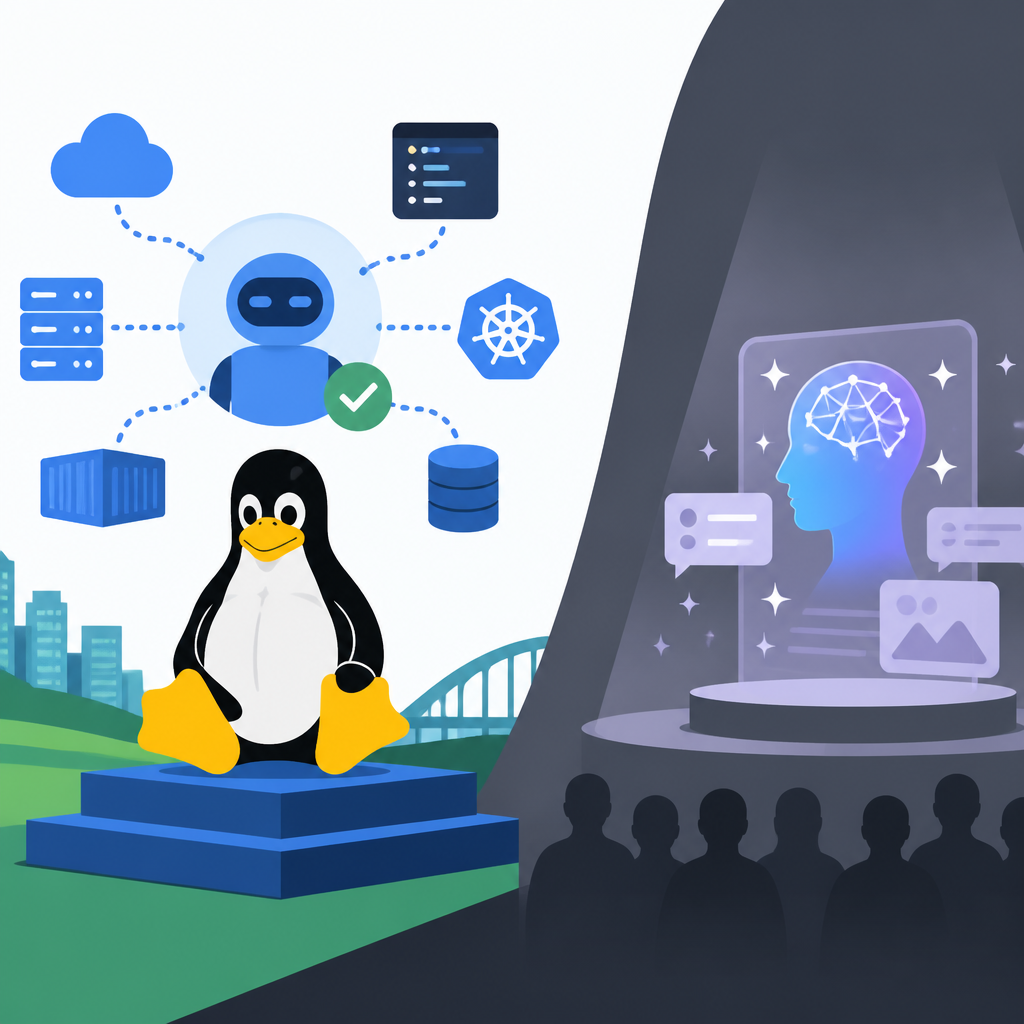
There is a reason cloud-native teams spend so much time on base images, patch cadence, and supply-chain controls. When an agent can trigger deployments, read tickets, or generate code, the operating environment becomes part of the product. Microsoft’s pitch that the OS layer should be “invisible” is exactly the point. Infrastructure should disappear because it is stable, not because it is ignored. The companies that win with agentic AI will be the ones that make the underlying system boring enough to trust.
Open standards matter more than vendor theater
Microsoft also leaned on the Agentic AI Foundation, which it co-founded to push open standards for agent interoperability. That is not a side note. It is the central strategic move. If agents are going to coordinate across tools, clouds, and business systems, then proprietary protocols will become a tax on adoption. The market does not need another closed AI stack pretending to be a platform.
Brendan Burns put the issue plainly: “Customers don’t want to bet their agentic future on a single vendor’s stack.” He is right, and the evidence is already visible in enterprise software history. Open standards won in containers, identity, and web protocols because they lowered switching costs and widened the market. Agentic systems will follow the same pattern. Businesses will not build long-term workflows on tools that trap them inside one vendor’s orchestration model, especially when those workflows may span multiple models and services over time.
Security is the real test of agentic AI
Microsoft’s framing around security and predictability is more than messaging. Agentic systems amplify risk because they do not just generate text; they can take actions. That means every dependency, permission, and integration becomes a potential failure point. A model that writes code is one thing. A model that opens a ticket, changes a config, or touches production is another. The more autonomy you add, the more the system needs guardrails built into the platform itself.
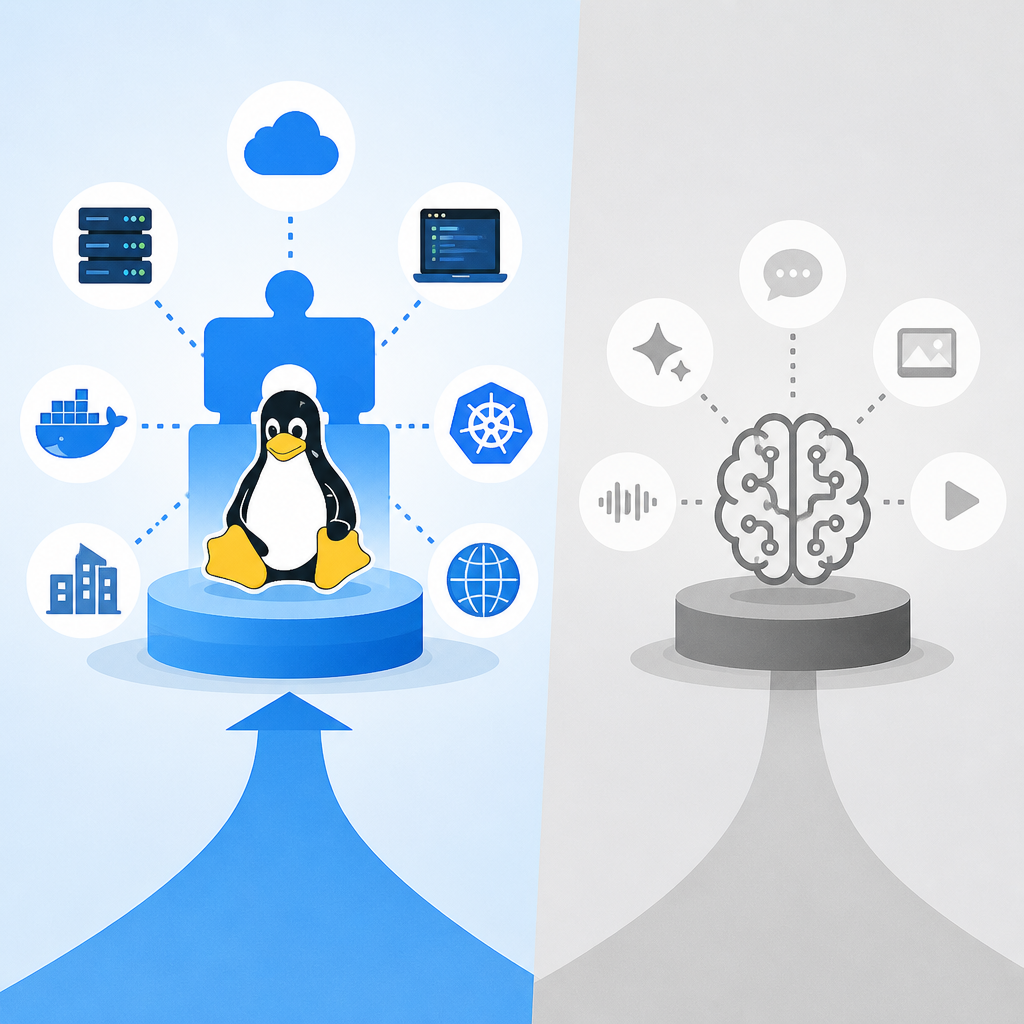
The article’s emphasis on regulated and security-sensitive workloads is the right place to focus. Small businesses often assume AI risk comes from the model layer, but the larger exposure is often operational: who can access what, what gets logged, what updates automatically, and what happens when a third-party service changes behavior. Immutable infrastructure, tighter OS controls, and clearer governance do not solve every problem, but they reduce the number of ways an agent can fail catastrophically. In agentic AI, security is not a feature. It is the product requirement.
The counter-argument
The strongest objection is that Microsoft is dressing up a platform play as an open-source story. The company still wants more Azure workloads, more control over enterprise deployment, and more influence over the standards that will govern agent behavior. From that angle, the Linux announcements are just a way to make Azure look like the safest place to build AI systems, while the interoperability push keeps Microsoft close to the center of the ecosystem.
That critique is fair, and it should not be dismissed. Microsoft is absolutely pursuing strategic advantage. But that does not weaken the case for the announcements. It strengthens it. The market needs vendors with the scale to harden infrastructure and the incentive to push standards forward. If Microsoft is using its cloud leverage to make open-source Linux more production-ready and agent interoperability more open, the result is still better for customers than a fragmented market of incompatible tools. The key test is not whether Microsoft benefits. It is whether developers and businesses gain more control, more safety, and more portability. On that score, these moves help.
What to do with this
If you are an engineer, stop treating agentic AI as a model-selection problem and start treating it as an infrastructure and governance problem. If you are a PM, define success around reliability, auditability, and interoperability, not just automation throughput. If you are a founder, avoid building your agent workflows on closed assumptions that lock you into one cloud or one orchestration layer. The winners in this phase will not be the teams with the flashiest demos. They will be the teams that build on secure, open, boring foundations and then let agents do useful work on top of them.
// Related Articles
- [IND]
OpenAI’s IPO filing turns hype into scrutiny
- [IND]
Skatteetaten proves public sector AI should be judged by outcomes
- [IND]
OpenAI’s IPO filing puts AI’s biggest test on Wall Street
- [IND]
OpenAI’s latest moves now center on pricing, safety, and scale
- [IND]
RISC-V mini PCs are worth buying now, but only as a bet on the future
- [IND]
Fedora 44 RISC-V widens Linux board support