Microsoft’s agentic stack turns Linux into AI infra
A breakdown of Microsoft’s open-source agentic stack, from Azure Linux 4.0 to AAIF, with a copy-ready blueprint at the end.
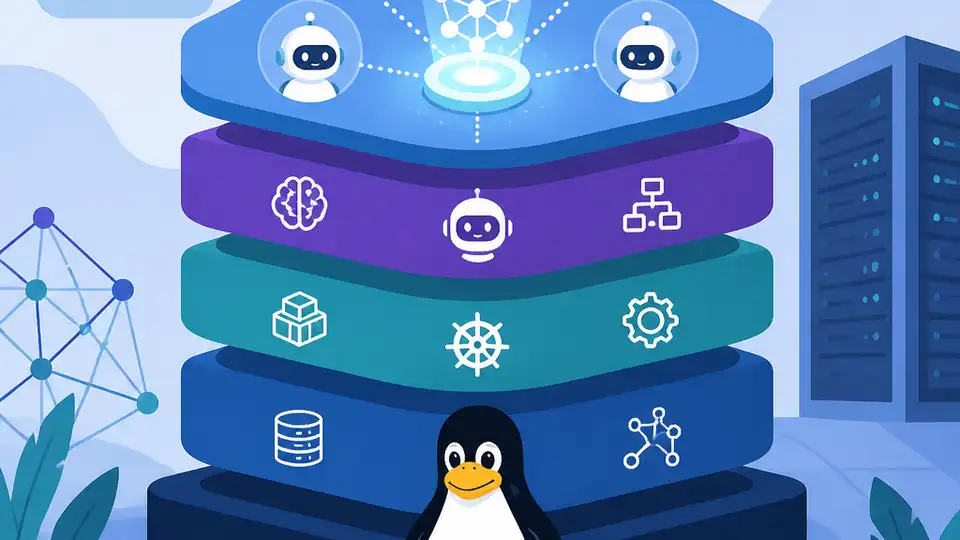
Microsoft’s OSS Summit post maps a practical path from Linux to agentic systems.
I've been using “open source for AI” pitches long enough to know when something feels off. The demos are slick, the agent stories are grand, and then you look at the actual stack and realize nobody has answered the annoying parts: what OS are we trusting, how do agents talk to each other, who signs off on a dependency, and what happens when the whole thing needs to run in a regulated environment without turning into a science project?
That’s the friction I kept bumping into. Every agent framework talk I’ve sat through eventually hits the same wall. The prototype is easy. The operating model is not. If the base image is messy, the supply chain is fuzzy, and the governance story is basically “we’ll add that later,” I’m not interested. I want the boring layers to be boring, because that’s what lets the interesting stuff survive contact with production.
Microsoft’s Open Source Blog post from Brendan Burns finally reads like someone who has actually run this stuff at scale. It’s not a victory lap. It’s a stack diagram hiding inside a conference announcement: hardened Linux, open agent frameworks, interoperability standards, and supply-chain security. That’s the part worth unpacking.
The real headline is not the keynote, it’s the base layer
Get the latest AI news in your inbox
Weekly picks of model releases, tools, and deep dives — no spam, unsubscribe anytime.
No spam. Unsubscribe at any time.
“At Open Source Summit North America 2026, we’re announcing two updates that strengthen exactly that: the upcoming public preview of Azure Linux 4.0 on Azure Virtual Machines and the general availability of Azure Container Linux, our immutable container-optimized operating system (OS).”
What this actually means is Microsoft is treating the OS as part of the AI platform, not as a generic substrate you ignore until it breaks. I like that framing because it’s honest. Agents and cloud-native workloads don’t care about your slide deck. They care about kernel behavior, patch cadence, image consistency, and whether the host layer surprises them at 2 a.m.
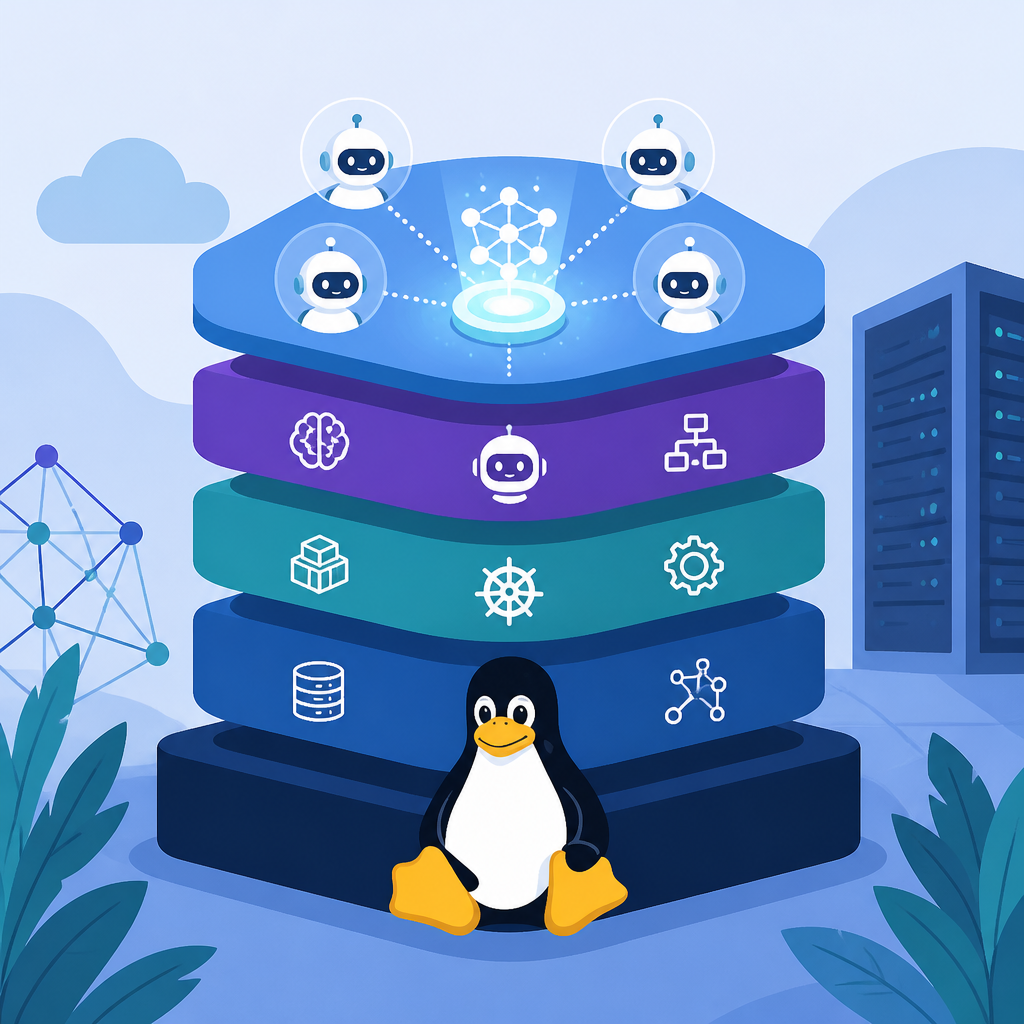
The post makes a simple point that a lot of teams still miss: if you want AI workloads to be predictable, you start by making the machine underneath them predictable. Azure Linux 4.0 is Fedora-derived and RPM-based. Azure Container Linux is based on Flatcar. Both are positioned as hardened, reduced-footprint systems with transparent supply chains and consistent performance characteristics.
I’ve seen teams try to build “AI-ready” platforms on top of generic distros and then spend months trimming packages, locking images, and fighting drift. That’s backwards. If the vendor already knows the target environment, ship the opinionated OS. Don’t make every customer rediscover the same hardening checklist.
How to apply it: if you run Azure workloads, define your node and container base images as platform decisions, not app-team preferences. Put the OS choice in your platform docs, pin the image source, and treat upgrades like an infrastructure change with tests, not a casual patch Tuesday habit.
- Use a smaller package footprint to shrink attack surface.
- Track image provenance explicitly, not by tribal memory.
- Keep host and container assumptions aligned so weird runtime drift doesn’t sneak in later.
Microsoft is betting on open source because closed stacks get brittle fast
The post spends a lot of time on history, and I’m glad it does. The “we’ve done this before” line is doing real work here. Microsoft points back to the 2009 Hyper-V driver contribution to the Linux kernel and then jumps to today, where more than two-thirds of customer cores in Azure run Linux. It also says the platforms running Microsoft 365, GitHub, and OpenAI’s ChatGPT sit on Linux foundations.
That’s not just a brag. It’s the argument for why open source matters at infrastructure scale. If every hyperscaler, training cluster, and inference endpoint depends on Linux and Kubernetes, then the only sane move is to keep those layers open enough that the ecosystem can pressure-test them.
I ran into this exact lesson the hard way when a team I worked with tried to standardize on a vendor-managed stack that looked great in procurement and awful in incident review. The problem wasn’t features. The problem was opacity. Once you can’t see the failure modes, you can’t improve them collaboratively. Open source doesn’t magically fix that, but it does make the failure modes discussable.
How to apply it: when you choose platform components for AI or agentic systems, ask three questions. Can I inspect it? Can I contribute upstream? Can I move away from it without rewriting the app? If the answer to all three is no, you’re not buying infrastructure. You’re buying dependency anxiety.
- Prefer projects with active upstream governance.
- Track whether your vendor contributes back or just consumes.
- Assume portability matters more once agents start moving between clouds and runtimes.
Agents need runtimes, but they need contracts even more
Here’s where the post gets more interesting. Microsoft says the move from cloud native to AI native is the next evolution of open source, and that AI is changing how open source itself gets built. Maintainers are using coding agents to triage issues, generate tests, and review pull requests. Agentic tooling is taking on dependency updates and security patches. Fine. That’s the easy part.
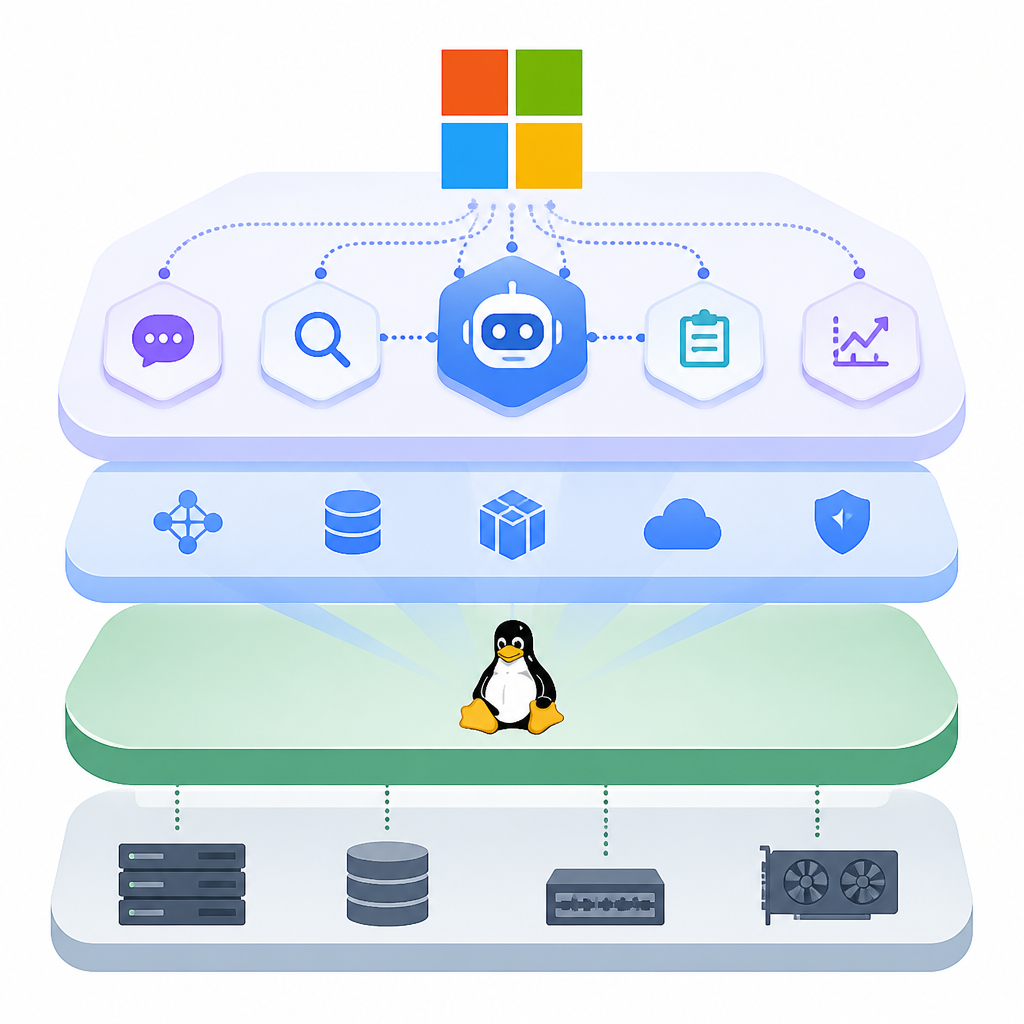
The hard part is trust. Once agents are doing real work, you need provenance, review discipline, supply-chain integrity, and clear standards. Otherwise you’ve just automated chaos. I’ve watched teams celebrate agent productivity only to realize nobody could answer who approved the output, what policy governed it, or how to audit the decision path after the fact.
The post names the pieces Microsoft wants around that problem: Semantic Kernel, AutoGen, and the new Microsoft Agent Framework. It also points to Ray and NVIDIA Dynamo, plus A2A protocols and an Agent Governance Toolkit.
What this actually means is the company is trying to turn “agent” from a demo noun into a managed system with lifecycle, observability, identity, and policy. That’s the right direction. A framework without a governance layer is just a toy that can talk.
How to apply it: if you’re building agentic systems, separate the runtime from the controls. One layer handles planning and execution. Another layer handles identity, permissions, logging, and review. If those are fused together, you’ll hate yourself during the first security review.
Interoperability is the whole point, not a nice-to-have
The post spends a lot of energy on the Linux Foundation and the Agentic AI Foundation (AAIF). Microsoft says AAIF is already the fastest-growing project in Linux Foundation history, and that it exists to establish open standards for agent-to-agent communication, agent runtimes, and orchestration.
That part matters because agent systems get ugly fast when every vendor invents a private protocol. I’ve seen enough “platform strategy” decks to know the pattern: one team ships an agent, another ships a different one, and suddenly the org is maintaining a translation layer nobody wanted. Standards are boring until they save you from that mess.
The post also ties AAIF back to CNCF, which is the right comparison. Kubernetes became enterprise-usable because the ecosystem agreed on the primitives around it. Agents need the same treatment. If they can’t communicate cleanly across frameworks, clouds, and languages, then every multi-agent deployment becomes a custom integration project.
How to apply it: when you evaluate agent tooling, ask whether it speaks open interfaces or only its own dialect. If your roadmap includes multiple agents from different teams or vendors, make protocol compatibility a first-class requirement. Don’t wait until the second integration to discover you’ve built a walled garden.
Security is not a cleanup task once agents get autonomy
This is the section I cared about most. Microsoft says securing open source isn’t hygiene anymore; it’s a prerequisite for letting AI agents do real work. That’s a better sentence than most of the AI security content I’ve read this year.
The post names OpenSSF and Alpha-Omega, and says Microsoft made a multi-phase investment: first to seed Alpha-Omega’s mission around improving security posture through expert engagement and automated testing, then another round to scale sustainable, AI-powered open source security solutions. It also mentions the GitHub Secure Open Source Fund, with $10,000 per project plus a three-week program of education, mentorship, tooling, and check-ins.
What this actually means is Microsoft is treating maintainers like a security control surface. That’s smart. You don’t secure a supply chain by yelling at volunteers. You fund the people who actually keep the packages alive, then you automate the repetitive checks around them.
I’ve been on teams where “security” meant a quarterly spreadsheet and a lot of guilt. That approach collapses the minute you introduce autonomous systems. If an agent can update dependencies, open PRs, or patch containers, then your trust model has to be machine-readable and auditable from the start.
How to apply it: build policy around agent actions before you let them touch production. Log every agent-generated change, require human review for high-risk paths, and make SBOM/provenance checks non-optional. If the agent can change code, it can also create your next incident if you don’t box it in.
Microsoft’s upstream list is the part I actually trust
The post closes with a long list of projects Microsoft contributes to: Kubernetes, Helm, containerd, Istio, Envoy, OpenTelemetry, ArgoCD, OPA Gatekeeper, Cilium, Dapr, KAITO, KubeFleet, Radius, Drasi, Copacetic, Dalec, Flatcar, Headlamp, and Inspektor Gadget. That’s a lot, and I’m not pretending every one of those names matters equally to every team.
But the list is useful because it shows where the company thinks the real work lives. Not in a single agent app. In the plumbing. In the runtime. In the observability. In the policy layer. In the patching story. In the dashboard people actually use when things are on fire.
That’s the part I respect. When a vendor only talks about the shiny top layer, I assume they’re hiding weak foundations. When they talk about the projects that carry the weight, I pay attention. Not because I’m cheering for them, but because that’s usually where the operational truth leaks through.
How to apply it: map your own stack the same way. List the upstream projects you depend on, then mark which ones are runtime, policy, security, observability, and deployment. If you can’t draw that map in one sitting, your platform is already more fragile than you think.
The template you can copy
# Agentic platform blueprint for open source teams

## 1) Base OS
- Use a hardened, minimal Linux distribution for nodes and containers.
- Pin image sources and publish upgrade policy.
- Treat host OS changes as platform changes, not app-team chores.

## 2) Runtime layer
- Separate agent execution from governance.
- Keep planning, tool use, and state management in one layer.
- Keep identity, policy, audit, and access control in another.

## 3) Interoperability
- Require open APIs and protocols for agent-to-agent communication.
- Avoid vendor-specific message formats unless you can translate them cleanly.
- Document how agents move across frameworks, clouds, and languages.

## 4) Security controls
- Require provenance for all agent-generated changes.
- Log every action with actor, tool, policy decision, and timestamp.
- Gate risky operations behind human approval.
- Run SBOM, dependency, and image checks before deployment.

## 5) Upstream strategy
- Prefer projects with active upstream governance.
- Contribute fixes back instead of forking quietly.
- Track the projects you depend on by category: runtime, policy, security, observability, deployment.

## 6) Operational checklist
- Can I inspect it?
- Can I contribute upstream?
- Can I move away from it without rewriting the app?
- Can I audit every agent action after the fact?
- Can multiple agents interoperate without a custom bridge?

## 7) Copy-ready policy stub

yaml
agent_platform:
  base_os:
    distro: hardened-linux
    image_source: pinned
    upgrade_policy: platform-managed
  runtime:
    execution: isolated
    governance: separate
    identity: required
    audit_logging: enabled
  interoperability:
    protocol: open_standard
    vendor_lock_in: avoid
    cross_framework_support: required
  security:
    provenance: required
    sbom: required
    human_approval_for_high_risk: true
    dependency_scanning: required
  upstream:
    prefer_open_governance: true
    contribute_back: true
    maintain_dependency_map: true
If I were rolling out agentic systems tomorrow, I’d start with that template and then replace the placeholders with my actual platform choices. The point is not to copy Microsoft’s products. The point is to copy the operating logic: hardened base layer, open interfaces, explicit governance, and upstream-first thinking.
That’s the part I’d want on my desk before I let agents anywhere near production. Not a promise. A system.
Source attribution: this breakdown is based on Microsoft Open Source Blog’s “From open source to agentic systems: Microsoft at Open Source Summit North America 2026”. The template and commentary here are my own interpretation of the post’s ideas, not an official Microsoft artifact.
// Related Articles
- [TOOLS]
500 AI agent projects show where agents work now
- [TOOLS]
Chocolatey’s Go package turns installs into policy
- [TOOLS]
Go support policy turns releases into a checklist
- [TOOLS]
RustDesk self-hosting setup for secure remote access
- [TOOLS]
Aider turns open-source coding into repo edits
- [TOOLS]
WWDC 2026 rumors turn Siri into a real assistant