Microsoft-EY FDE playbook for corporate AI adoption
A practical breakdown of how Microsoft and EY are packaging FDEs, consulting, and AI rollout into one corporate adoption motion.
I break down the Microsoft-EY FDE playbook for rolling out corporate AI.
I’ve been watching enterprise AI adoption get stuck in the same annoying place: a vendor demo looks slick, the leadership team gets nodding, and then everything falls apart when it hits real workflows, real controls, and real people who do the actual work. The model is fine. The tooling is fine. The problem is the handoff from “cool prototype” to “this is now how finance, legal, operations, and sales work on Tuesday morning.” That’s where most AI programs start sounding confident and then quietly die.
So when I saw Microsoft and EY say they’re teaming up on a $1 billion partnership to push AI adoption, my first reaction wasn’t hype. It was: ah, they’re trying to solve the boring part. The part where someone has to sit between the tech stack and the business process and make the thing actually land. Microsoft says its Forward Deployed Engineers will work with EY industry professionals. That’s the interesting bit. It’s not just “here’s a model.” It’s “here’s a model, here’s a process person, now let’s go break your workflow and rebuild it with guardrails.”
They’re not selling AI. They’re selling adoption
Get the latest AI news in your inbox
Weekly picks of model releases, tools, and deep dives — no spam, unsubscribe anytime.
No spam. Unsubscribe at any time.
The $1 billion partnership, announced Thursday (May 21), will see Microsoft’s Forward Deployed Engineers (FDE) and EY industry professionals join forces to accelerate artificial intelligence (AI) adoption.
What this actually means is that the pitch is no longer “buy AI.” It’s “buy the messy middle between AI capability and business use.” That middle is where enterprises spend money anyway: mapping workflows, rewriting controls, getting security to stop flinching, and getting one department to stop saying “we’re not ready.”
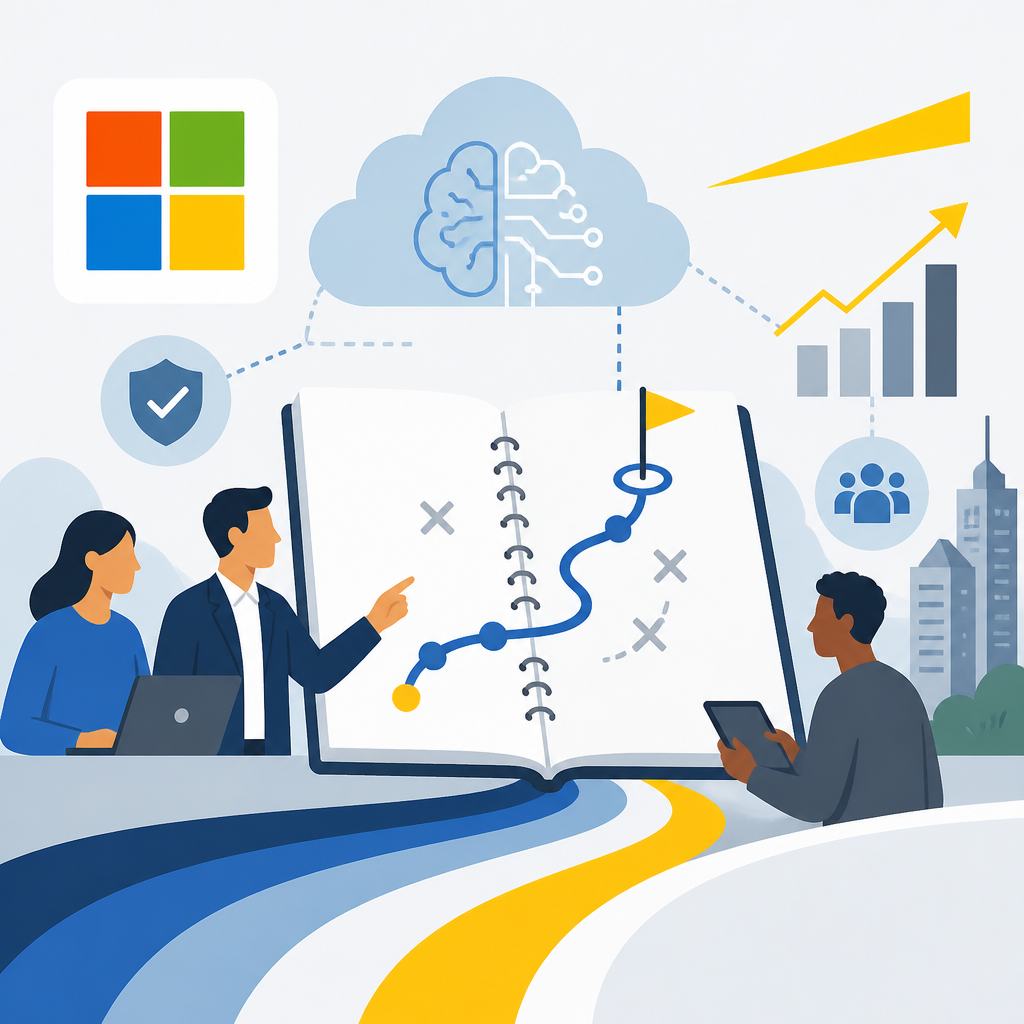
I’ve seen too many AI programs get framed like software procurement. That’s the wrong mental model. AI adoption is closer to a systems integration problem with a people problem glued on top. The model can be impressive and still fail because nobody agreed on who owns the output, where the data comes from, or what happens when the assistant confidently invents a policy exception.
If I were translating this Microsoft-EY move into plain English, I’d say they’re packaging trust, implementation, and domain knowledge into one motion. Microsoft brings the platform and the FDE muscle. EY brings the industry-specific process knowledge and the consulting cover that big companies already pay for. That combination matters because most executives don’t want another AI experiment. They want someone to take responsibility for the thing working in a regulated, budgeted, audited environment.
How to apply it: stop pitching AI as a feature request. Pitch it as a workflow change with named owners. If you’re inside a company, define the business process first, then decide where AI can sit inside it, then decide who signs off on the output. If you’re a vendor, stop leading with model specs and start leading with the operational change you’re willing to help carry.
FDEs are the real product here
Microsoft’s Forward Deployed Engineers are the part of this story I’d pay attention to. The name sounds like internal jargon, but the role is simple: put technical people close to the customer’s actual problem instead of hiding them behind a sales deck. That’s a very different motion from the old “here’s your license portal, good luck” enterprise software routine.
What this actually means is that Microsoft is admitting something the industry keeps dancing around: enterprise AI doesn’t fail because the models are too weak. It fails because the implementation layer is underpowered. Someone has to wire the model into systems, test edge cases, tune prompts, handle permissions, and keep the business from using the tool in ways that create legal or operational nonsense.
I ran into this exact pattern when helping teams pilot assistants for internal knowledge work. The first demo always looks great. The second meeting is where the real work shows up. “Can it read from this SharePoint site?” “What if the answer conflicts with policy?” “Who can see the logs?” “Can legal delete this data?” That’s not a product question anymore. That’s a deployment question. And deployment questions need engineers who can sit in the room and answer them without turning every issue into a six-week ticket.
There’s a reason this matters for adoption. FDEs shorten the distance between “we should try this” and “this is now live in a narrow, controlled slice of the business.” That’s the only way most enterprises build confidence. Not by announcing a moonshot. By getting one ugly but useful workflow to work well enough that nobody wants to go back.
- Use FDE-style support for one workflow, not twenty.
- Pick a process with measurable pain: time, cost, error rate, or backlog.
- Keep the first deployment narrow so the team can actually learn.
How to apply it: if you’re evaluating a vendor, ask who will sit with your ops team after the contract is signed. Ask who handles the first three failures. Ask what gets instrumented, what gets logged, and what gets turned off when the output starts drifting. If nobody can answer that cleanly, you’re buying a demo, not adoption.
EY is there because process beats novelty
EY’s role in this partnership is not cosmetic. Big firms like EY live in the world of controls, governance, and industry-specific process mapping. That sounds dry, but it’s exactly what most corporate AI projects are missing. The shiny part is never the hard part. The hard part is making sure a bank, manufacturer, insurer, or retailer can use AI without creating a compliance headache or a business mess.
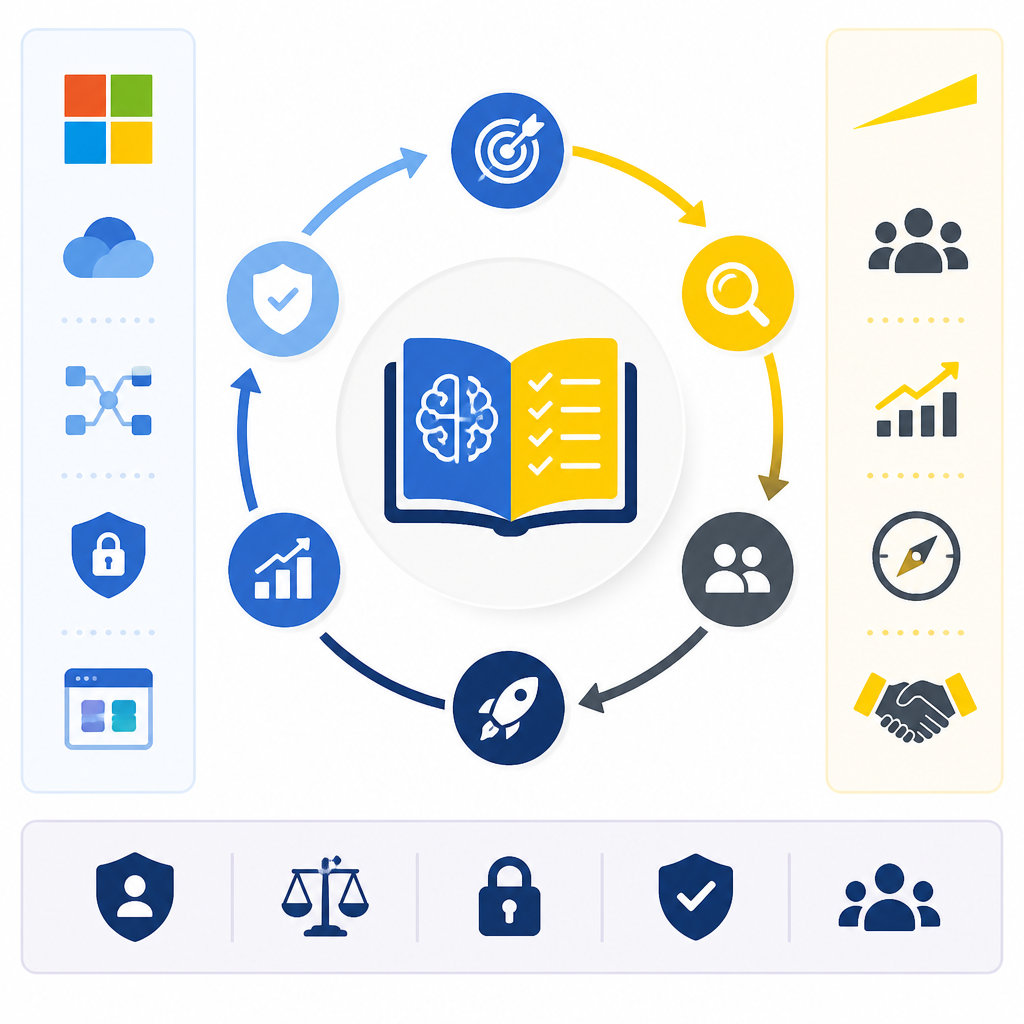
What this actually means is that EY gives Microsoft a way to speak the language of the enterprise beyond the CIO office. Consultants know how to frame a rollout in terms of risk, operating model, and business case. They also know where the bodies are buried, which is useful when an AI tool touches procurement, customer support, finance, or HR.
I’ve seen teams get seduced by the idea that a general-purpose AI assistant can just be dropped into a company and immediately create value. That fantasy dies fast. The minute the tool touches real records, real approvals, or real customer-facing work, the company needs process design. EY’s value here is that it already knows how to walk into a messy org and ask the boring questions everyone else avoids.
How to apply it: if you’re inside a large company, do not let AI sit in a vacuum under innovation. Put it inside the business process owners’ world. Have legal, compliance, operations, and IT in the same room before the pilot starts. If you’re building an AI service, create an implementation package that includes controls, escalation paths, and a rollout checklist. That’s what enterprises actually buy.
- Map the process owner, not just the system owner.
- Document approval paths before the pilot starts.
- Write down what the assistant is not allowed to do.
Corporate AI adoption is really a trust problem
Everyone talks about productivity, but that’s not what slows enterprise AI down. Trust does. People need to trust that the system is accurate enough, that it won’t expose sensitive data, that it won’t make them look stupid, and that management won’t use it as a cheap excuse to cut corners. Until those concerns are addressed, adoption stays stuck in pilot purgatory.
That’s why this Microsoft-EY pairing is interesting. It’s trying to borrow credibility from both sides of the house. Microsoft brings the platform and the engineering depth. EY brings the business-facing trust layer. Together, they’re trying to answer the question executives actually ask: “Who do I blame when this goes wrong?” That sounds cynical, but it’s real. In enterprise software, accountability is part of the product.
I’ve watched teams obsess over model quality when the real blocker was user confidence. People won’t use a system if they think it hallucinates, even if it’s right most of the time. They also won’t use it if they don’t understand why it made a recommendation. So adoption work has to include explanation, policy, and escalation, not just accuracy benchmarks.
How to apply it: build trust into the workflow. Show sources. Log decisions. Make human override obvious. Publish what the system can and cannot do. If the output affects money, customers, or compliance, give people a visible way to challenge it. That’s not extra polish. That’s the adoption strategy.
The partnership model says consulting is still central
There’s a lot of talk in tech about companies wanting to “self-serve” AI. Maybe in theory. In practice, large organizations still lean on consultants when the stakes are high and the org chart is messy. This deal is a reminder that consulting didn’t get erased by AI. If anything, AI made the need for implementation guidance more obvious.
What this actually means is that enterprise AI is becoming a services-plus-software bundle. The software gets attention, but the services are what make the budget sign-off easier. A CFO can understand a rollout package. A line-of-business leader can understand a transformation plan. A vendor-only pitch often leaves both of them guessing.
I’m not saying this is elegant. It isn’t. But it’s realistic. Most companies do not have the internal capacity to turn a capable model into a dependable workflow across departments. They need someone who can translate between technical teams and business teams without making everybody miserable.
How to apply it: if you’re building internal AI capability, don’t pretend you can skip change management. Budget for training, process redesign, and support. If you’re selling AI, package implementation like part of the product, not an afterthought. If you’re evaluating vendors, ask what the rollout looks like after the pilot. That’s where the real cost shows up.
What I’d watch next is the first boring use case
The big number in the announcement is nice, but I care more about the first thing they actually deploy. That’s where you learn whether this is a real operating model or just a glossy partnership statement. The first use case will tell you a lot: is it customer support, internal knowledge retrieval, document processing, code assistance, or something else?
What this actually means is that the winner won’t be the biggest demo. It’ll be the most repeatable workflow. The kind of task that happens a thousand times a week, has enough structure to automate part of it, and has enough risk that people need guardrails. That’s where enterprise AI earns its keep.
I’ve learned to ignore the grand language and watch the first deployment mechanics. Who owns the metrics? Who gets paged when the output is wrong? What happens when the model drifts? How quickly can the team roll back? Those are the questions that tell you whether adoption is real.
How to apply it: if you’re choosing a first AI project, pick something narrow, repetitive, and painful. Then define success in operational terms: minutes saved, errors reduced, tickets closed faster, or backlog cleared. Don’t start with “transformation.” Start with one process that people already hate.
The template you can copy
# Corporate AI adoption playbook

## Goal
Turn one high-friction business workflow into a controlled AI-assisted process.

## Team
- Business owner: owns the process and the outcome
- Technical lead: owns integration, logging, and rollback
- Risk/compliance reviewer: owns policy, data, and approval rules
- Change lead: owns training and rollout

## Use case selection criteria
Pick a workflow that is:
- repetitive
- high-volume
- measurable
- annoying enough that people want it fixed
- low enough risk to pilot in a narrow slice

## Pilot scope
- One team
- One workflow
- One source of truth
- One approval path
- One rollback plan

## Operating rules
- The AI can suggest, summarize, classify, or draft
- A human approves anything that affects money, customers, or compliance
- The system must show sources when available
- All outputs are logged
- Sensitive data stays inside approved systems

## Success metrics
- Time saved per task
- Error rate before vs after
- Adoption rate by the target team
- Escalation rate
- Rollback count

## Rollout checklist
1. Map the current workflow
2. Define the failure cases
3. Set data access rules
4. Add logging and review
5. Train the first users
6. Run a narrow pilot
7. Review results weekly
8. Expand only after the process is stable

## Vendor questions
- Who helps after the contract is signed?
- Who handles the first three failures?
- What is logged?
- What can be turned off?
- What data is excluded?
- What happens when the output is wrong?

## Adoption principle
Do not sell AI as a feature.
Sell it as a workflow change with owners, controls, and measurable outcomes.
The reason I’d keep this template simple is that enterprise AI already has enough moving parts. You do not need a 40-page transformation deck. You need a tight operating model that tells everyone who owns what, what the system is allowed to do, and how you know it’s working.
If I were using this for an internal rollout, I’d start by filling in the team, the pilot scope, and the operating rules. Then I’d force the business owner and technical lead to agree on the rollback plan before anyone touches production. That one conversation saves a lot of pain later.
Source attribution: the original trigger for this breakdown is the PYMNTS.com article at https://www.pymnts.com/artificial-intelligence-2/2026/microsoft-and-ey-team-to-promote-corporate-ai-adoption/. The analysis, framing, and template above are my own synthesis of that announcement and Microsoft’s FDE concept, not a reproduction of the source text.
// Related Articles
- [IND]
OpenAI updates its Europe privacy policy
- [IND]
OpenAI is right to keep ads out of sensitive chats
- [IND]
AI bootlegs are already draining streaming royalties
- [IND]
AMD and Microsoft push Windows ML on GPU and NPU
- [IND]
OpenAI’s IPO filing turns hype into scrutiny
- [IND]
Skatteetaten proves public sector AI should be judged by outcomes