MiniMax M2.1 turns mixed stacks into one model
MiniMax M2.1 pushes multi-language coding, agent tools, and UI-heavy app work into one model you can actually use.

MiniMax M2.1 is a coding model tuned for mixed-language, agent-heavy software work.
I've been using coding models long enough to know when one is quietly lying to me. The pattern is always the same: it looks brilliant in Python, then I hand it a real repo and it starts sweating the second it sees Kotlin, Rust, a frontend app, and a half-broken agent loop in the same request. It writes decent snippets, then misses the constraint that actually matters. Or it edits code fine, but the tool loop falls apart the moment I ask it to keep state across steps. That gets old fast.
MiniMax M2.1 caught my attention because it is not being sold like another “best at code” model with a single benchmark trophy. The MiniMax announcement is basically saying: stop pretending real software lives in one language, one framework, or one happy-path prompt. I care about that framing because most of my debugging time is spent in the seams, not the isolated green field demo. And the moment a model handles those seams better, I notice.
So I dug through the release and pulled out the parts that matter to developers who actually ship things. Not the marketing gloss. The bits about mixed stacks, app generation, tool use, and the annoying little details that decide whether a model is useful or just impressive for ten minutes.
MiniMax is finally talking about the mess we actually build
Get the latest AI news in your inbox
Weekly picks of model releases, tools, and deep dives — no spam, unsubscribe anytime.
No spam. Unsubscribe at any time.
“In M2.1, we have systematically enhanced capabilities in Rust, Java, Golang, C++, Kotlin, Objective-C, TypeScript, JavaScript, and other languages.”
What this actually means is simple: they are not treating Python as the center of the universe anymore. That matters because real products are stitched together from whatever each layer needs. Backend in Go, mobile in Kotlin or Swift, scripts in Python, frontend in TypeScript, low-level bits in Rust or C++. If a model only behaves in one of those worlds, it is not a coding model. It is a demo generator.

I have run into this exact failure mode while asking models to move between a Node service, a Rust worker, and a React frontend. The code looked fine in each individual file, but the model kept forgetting shared constraints like naming, serialization shape, or how the worker’s retry logic should line up with the API contract. That is the kind of bug that wastes a whole afternoon because every piece is “correct” in isolation.
MiniMax says M2.1 improved across the full chain from low-level system development to application-layer development. I read that as a claim about context switching. The model is supposed to hold onto intent while the language changes under it. That is the difference between “generate code” and “help me ship a system.”
How to apply it: when you test a model like this, stop giving it single-file toy tasks. Give it a repo with at least two languages and one shared contract. Ask it to change the API in one place and propagate the update through the backend, client, and tests. If it survives that without inventing nonsense, then you have something useful.
- Use one prompt that spans backend, frontend, and tests.
- Check whether it preserves naming and data shapes across files.
- Look for consistency, not just syntactic correctness.
Web and mobile are where models usually embarrass themselves
“M2.1 significantly strengthens native Android and iOS development capabilities.”
This line made me nod because mobile is where a lot of coding models get exposed immediately. They can fake an API route. They can fake a utility function. Then they meet native UI state, lifecycle behavior, gesture handling, or layout constraints and suddenly the wheels come off. The MiniMax post also says it improved design comprehension and aesthetic expression in Web and App scenarios, including complex interactions and 3D simulations.
That sounds fluffy until you remember how much of app work is not “logic” but “make this feel right.” I have watched models produce technically valid React code that still felt like it was assembled by someone who has never touched a design system. Wrong spacing, wrong hierarchy, wrong interaction rhythm. The code compiles, but nobody would ship it without a rewrite.
MiniMax is claiming M2.1 can do better on the visual side too, not just the functional side. That matters for vibe coding, but only if you define vibe coding as something you can hand to a user, not something that looks cool in a screenshot. The release explicitly says it wants vibe coding to become “a sustainable and deliverable production practice.” That is the useful part. Not the aesthetic fluff. The deliverable part.
How to apply it: ask the model to build a real screen with navigation, state, and a visible design constraint. Then ask for a second pass that changes the design system without breaking behavior. If it can adapt layout and interaction together, it is much closer to being useful in production.
- Test with mobile UI, not only web components.
- Include one visual constraint and one behavioral constraint.
- Force a revision pass. That is where weak models fall apart.
Composite instructions are the part people keep underestimating
“The model not only focuses on code execution correctness but also emphasizes integrated execution of ‘composite instruction constraints.’”
That sentence is a little bureaucratic, but I think I know what they mean. They are trying to describe a model that can obey multiple constraints at once instead of latching onto the first one it sees. That is not a small thing. Most coding prompts are not “write function X.” They are “write function X, keep the old API, preserve backward compatibility, do not add dependencies, match this style, and also explain the tradeoff.”
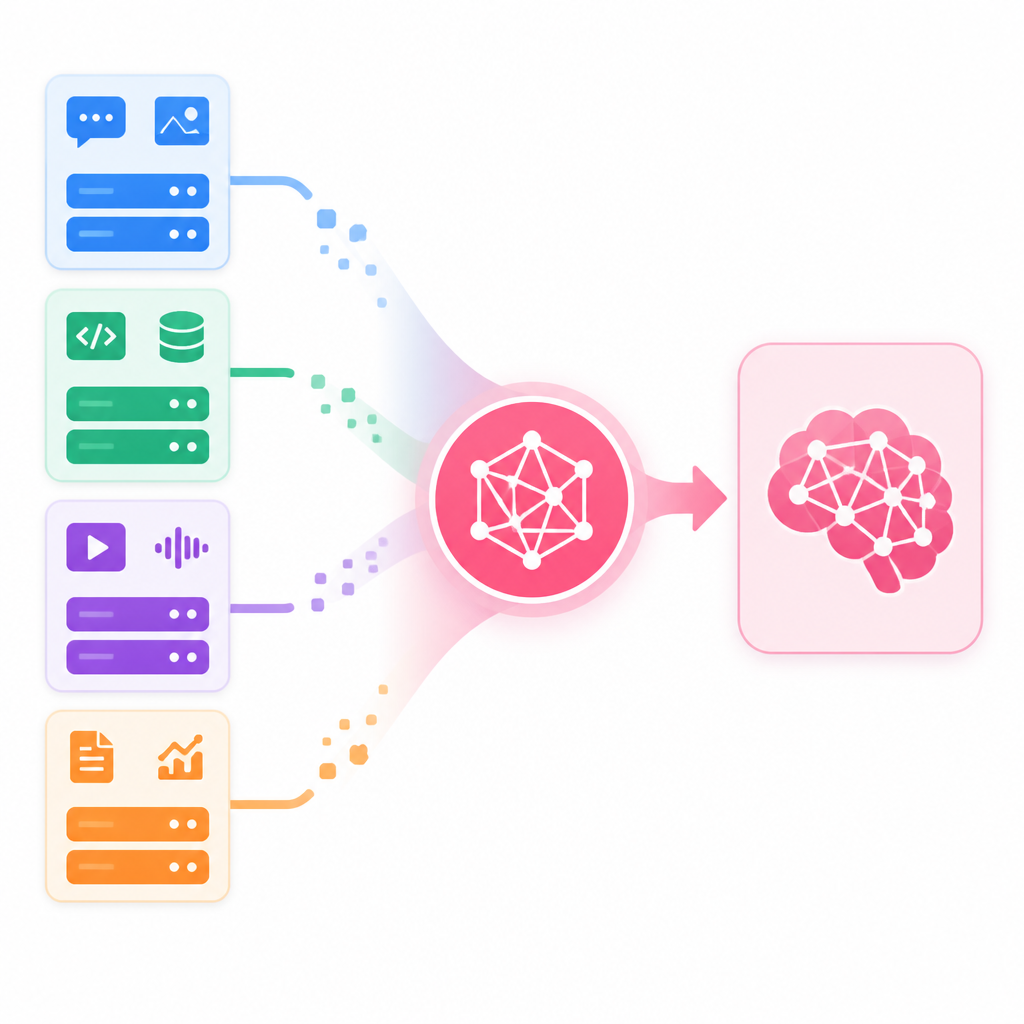
Models often fail by optimizing one instruction and quietly dropping the rest. I see this constantly in code review tasks. Ask for a refactor that keeps behavior stable, and the model will rewrite the whole thing into something cleaner but break edge cases. Ask for a fix plus a test plus a concise explanation, and it will do two of the three.
The MiniMax release ties this to office scenarios too, which is interesting because it suggests the same skill is useful outside code: long instruction chains, mixed constraints, and a need to keep the output structured. That is a pretty honest way to frame it. Not “this model thinks like a genius.” More like “this model is less likely to forget the second half of your prompt.”
How to apply it: build prompts with explicit constraint stacking. I like to separate them into bullets and then ask the model to restate them before coding. If it can restate the constraints correctly and then follow them, that is a good sign. If it starts drifting, you know the model is pattern-matching instead of actually tracking the task.
Task constraints I want you to preserve:
- Do not change the public API
- Keep behavior identical for existing inputs
- Add tests for the new edge case
- Keep dependencies unchanged
- Explain any tradeoff in one short paragraph
Shorter answers matter more than people admit
“Compared to M2, MiniMax-M2.1 delivers more concise model responses and thought chains.”
I know “concise thought chains” is not the sexiest pitch in the world, but I actually care about it. Long-winded models are expensive in the dumbest possible way: they burn tokens, slow down agent loops, and make it harder to spot where the reasoning went sideways. If a model can get to the point faster, I can iterate faster. That is the whole game.
The release says response speed improved and token consumption dropped. That is not just a cost story. It changes the shape of the workflow. When I am running an agent through a multi-step repo task, I do not want a model that narrates its own existence. I want one that makes a decision, executes, checks the result, and moves on.
This is also where a lot of “smart” models become annoying. They produce a wall of text that feels thoughtful, but it is really just extra friction. MiniMax is claiming M2.1 is less chatty and more efficient. That is the kind of improvement you feel after twenty prompts, not just one.
How to apply it: measure practical speed, not just raw output quality. Time a simple repo task across several prompts. Watch how much text the model burns before it actually edits something. If you are using an agent framework, shorter outputs usually mean fewer chances for the loop to wander.
- Track token usage on real tasks, not benchmarks only.
- Compare time-to-first-useful-edit.
- Prefer models that decide faster and explain less when you do not need the extra prose.
Agent frameworks are now part of the product, whether vendors like it or not
“M2.1 demonstrates excellent performance across various programming tools and Agent frameworks.”
This is the part I trust more than the polished screenshots. If a model works in Claude Code, Cline, Kilo Code, Roo Code, BlackBox, or Droid, that tells me more than a curated demo ever will. The MiniMax post specifically names Claude Code, Cline, Kilo Code, Roo Code, BlackBox AI, and Factory AI. It also mentions context management formats like Skill.md, Claude.md, agent.md, cursorrule, and Slash Commands.
What this actually means is that model quality is no longer enough. Tool compatibility is part of the job. If a model is brittle inside an agent loop, it becomes annoying fast. It might still be good in a chat box, but that is not where a lot of us are using these systems anymore. We are using them inside long-running workflows with memory, tool calls, and handoffs.
I have seen models that are great at single-turn coding but collapse when wrapped in a real agent scaffold. They lose state, over-edit files, or ignore the project conventions encoded in the context files. So when MiniMax says M2.1 generalizes across tools and frameworks, I read that as a claim about operational reliability. That is the thing teams care about when they want to plug a model into an existing setup instead of rewriting everything around it.
How to apply it: test the model in the tool you actually use, not in a clean web UI. Drop it into your existing agent setup, feed it your real context files, and see whether it respects them. If it only works in a demo environment, it is not ready for your workflow.
The benchmark story is more interesting than the headline numbers
“MiniMax-M2.1 delivers a significant leap over M2 on core software engineering leaderboards.”
The release says M2.1 does especially well on multilingual tasks and comes close to or exceeds Claude Sonnet 4.5 in some areas, while also matching or beating it in specific benchmark categories like test generation, performance optimization, code review, and instruction following. I am not going to pretend benchmark claims settle anything by themselves. They do not. But they do tell you where the model was trained to care.
The more interesting part is VIBE, their “Visual & Interactive Benchmark for Execution.” That benchmark covers Web, Simulation, Android, iOS, and Backend, and the post says it uses an Agent-as-a-Verifier setup to check interactive logic and visual aesthetics in a runtime environment. That is actually a decent idea because static code output is not enough for app work. The app has to run. The UI has to behave. The interaction has to make sense.
MiniMax says M2.1 scored 88.6 on the VIBE aggregate benchmark, with 91.5 on VIBE-Web and 89.7 on VIBE-Android. I am quoting those numbers because they are in the source, but I would still treat them as directional rather than sacred. The useful takeaway is that they are trying to measure full-stack execution, not just text completion.
How to apply it: when you evaluate a model, ask whether the benchmark matches your actual pain. If you build apps, look for runtime-aware evaluation. If you do backend work, look for multi-step tool use and code review quality. If you do mixed-stack product work, the benchmark should include UI and backend together or it is missing the point.
MiniMax is selling a workflow, not just a model
“MiniMax has been continuously transforming itself in a more AI-native way.”
This line is doing a lot of work. The release keeps coming back to models, agent scaffolding, and organization as the three pieces of the system. That is probably the most honest part of the whole post. A model alone does not create a usable developer workflow. You need the scaffolding around it, and you need the organization around that. Otherwise you just have a smart autocomplete with a credit card bill.
That is why the partner quotes matter too. Factory AI, Fireworks, Cline, Kilo, RooCode, and BlackBox are all basically saying the same thing in different words: M2.1 seems useful in real workflows, not just isolated demos. You can read those quotes on the MiniMax page, but the pattern is obvious. The model is being positioned as something you embed into an existing coding system.
I like that framing because it matches how I actually work. I do not want a model that demands a special ceremony. I want one that respects my repo, my toolchain, and my constraints. If it can do that while staying fast and not wasting tokens, I will keep using it. If not, it becomes another tab I close after three days.
How to apply it: decide whether you are buying a model or a workflow component. If you are running agents, your evaluation should include prompts, context files, editor integration, and failure recovery. The model is only one piece of the stack.
The template you can copy
# Multi-language agent coding prompt template

You are working inside a real repository with mixed languages and existing conventions.

## Goal
Implement the requested change without breaking current behavior.

## Hard constraints
- Preserve the public API unless I explicitly say otherwise
- Keep existing behavior stable for unchanged inputs
- Do not introduce new dependencies unless necessary
- Follow the repo's formatting and naming conventions
- Update tests for every behavior change
- If you touch multiple languages, keep contracts aligned across them

## Context
- Primary language: [fill in]
- Secondary language(s): [fill in]
- Frameworks in use: [fill in]
- Relevant files: [list files]
- Existing conventions: [describe briefly]

## Task
[Describe the change in one paragraph]

## Output requirements
1. First, summarize the constraints you will follow in 3-5 bullets.
2. Then make the code changes.
3. Then list files changed.
4. Then explain any tradeoffs in 3-6 sentences.
5. If something is ambiguous, ask one focused question before editing.

## Agent workflow rules
- Prefer small, reversible edits
- Verify each step before moving on
- If a tool call fails, explain the failure and retry with a narrower change
- Do not rewrite unrelated code
- Keep responses concise unless I ask for detail

## Example use
"Add a shared validation rule to the Go API and the TypeScript client, then update tests and keep the payload shape unchanged."
The prompt above is the part I would actually paste into my own workflow. It is built to force the model to respect mixed-language constraints, keep the output short, and handle agent-style iteration without wandering off into essay mode.
If I were testing MiniMax M2.1, I would pair this prompt with a repo that has at least one backend service, one frontend app, and one test suite. Then I would see whether the model keeps the contract intact across all three. That is the real test, not whether it can write a pretty snippet in isolation.
Source attribution: original release and quotes are from MiniMax’s M2.1 announcement. My breakdown, evaluation framing, and copy-ready template are my own interpretation of that source.
// Related Articles
- [MODEL]
Gemini 1.5 Pro-002, Flash-002 and 2.0 Flash update Google AI
- [MODEL]
MiniMax M3 Proves Open-Weight Can Still Win on Coding
- [MODEL]
Gemini 3.5 Flash Pricing, Context, Benchmarks
- [MODEL]
Gemma 4 12B: Specs, Benchmarks & How to Run It Locally
- [MODEL]
Best Kimi Models in 2026: K2.5 vs K2 Thinking
- [MODEL]
Kimi K2.6 adds open-source coding and agent swarm