All Mistral AI Models Ranked in 2026
LM Market Cap ranks 24 Mistral models by score, price, and context window, with Mistral Large 3 leading the pack.

LM Market Cap ranks 24 Mistral models by score, price, and context window.
Mistral AI now has 24 models in one live ranking, and the spread is wide: top-tier flagships, cheap small models, coding specialists, and multimodal variants all sit in the same catalog. The current list on LM Market Cap updates hourly and shows scores from the mid-40s to 67, output pricing from $0.030 to $7.50 per 1M tokens, and context windows from 4K to 262K.
| Metric | Value | What it means |
|---|---|---|
| Total models | 24 | Full Mistral lineup in one ranking |
| Top score | 67 | Mistral Large 3 2512 leads the chart |
| Cheapest output | $0.030 / 1M tokens | Mistral Nemo is the lowest listed output price |
| Highest output | $7.50 / 1M tokens | Mistral Medium 3.5 is the priciest output option |
| Largest context | 262K tokens | Several models can hold very long prompts |
The ranking tells a simple story
Get the latest AI news in your inbox
Weekly picks of model releases, tools, and deep dives — no spam, unsubscribe anytime.
No spam. Unsubscribe at any time.
The top of the list is led by Mistral Large 3 2512, which posts a score of 67 with $0.500 input pricing and $1.50 output pricing. That puts it above the older Mistral Large at 66 and well ahead of Mixtral 8x22B Instruct at 63. For teams comparing raw quality, the gap is small enough that price and context window matter just as much as score.

The rest of the list is less about one obvious winner and more about tradeoffs. Devstral Small 1.1 scores 47 at only $0.100 input and $0.300 output, while Mistral Nemo drops to $0.020 input and $0.030 output for users who care more about cost than benchmark bragging rights.
- Mistral Large 3 2512: score 67, 262K context, $0.500 input, $1.50 output
- Mistral Large: score 66, 128K context, $2.00 input, $6.00 output
- Mixtral 8x22B Instruct: score 63, 66K context, $2.00 input, $6.00 output
- Mistral Nemo: score 40, 131K context, $0.020 input, $0.030 output
Why Mistral keeps winning attention
Mistral’s pitch is not just model quality. It is also the company’s mix of open weights, efficient architectures, and deployment options. The company, based in Paris, was founded by former DeepMind and Meta researchers, and that pedigree shows up in the lineup: the company keeps shipping models that are practical for real deployments, not just leaderboard screenshots.
The architecture story matters here. Mistral helped push Mixture-of-Experts into the mainstream with Mixtral, where only a subset of experts activates per token. That design gives teams a way to get stronger output without paying the full compute bill of a dense giant model. It is one reason Mixtral still gets referenced in open-model discussions even as newer releases arrive.
“I think the whole idea of open source is to make technology more accessible.” — Arthur Mensch, co-founder and CEO of Mistral AI, in an interview with The Verge
That quote explains the company’s product choices better than a marketing page ever could. Mistral keeps opening doors for teams that want to self-host, fine-tune, or keep data in their own infrastructure.
Pricing is where the lineup gets interesting
If you sort by output price instead of score, the picture changes fast. The cheapest models are not the strongest, but they are good enough for many production tasks where volume matters more than benchmark wins. On the other end, the premium models are priced like premium models, and the spread is large enough to affect architecture decisions immediately.
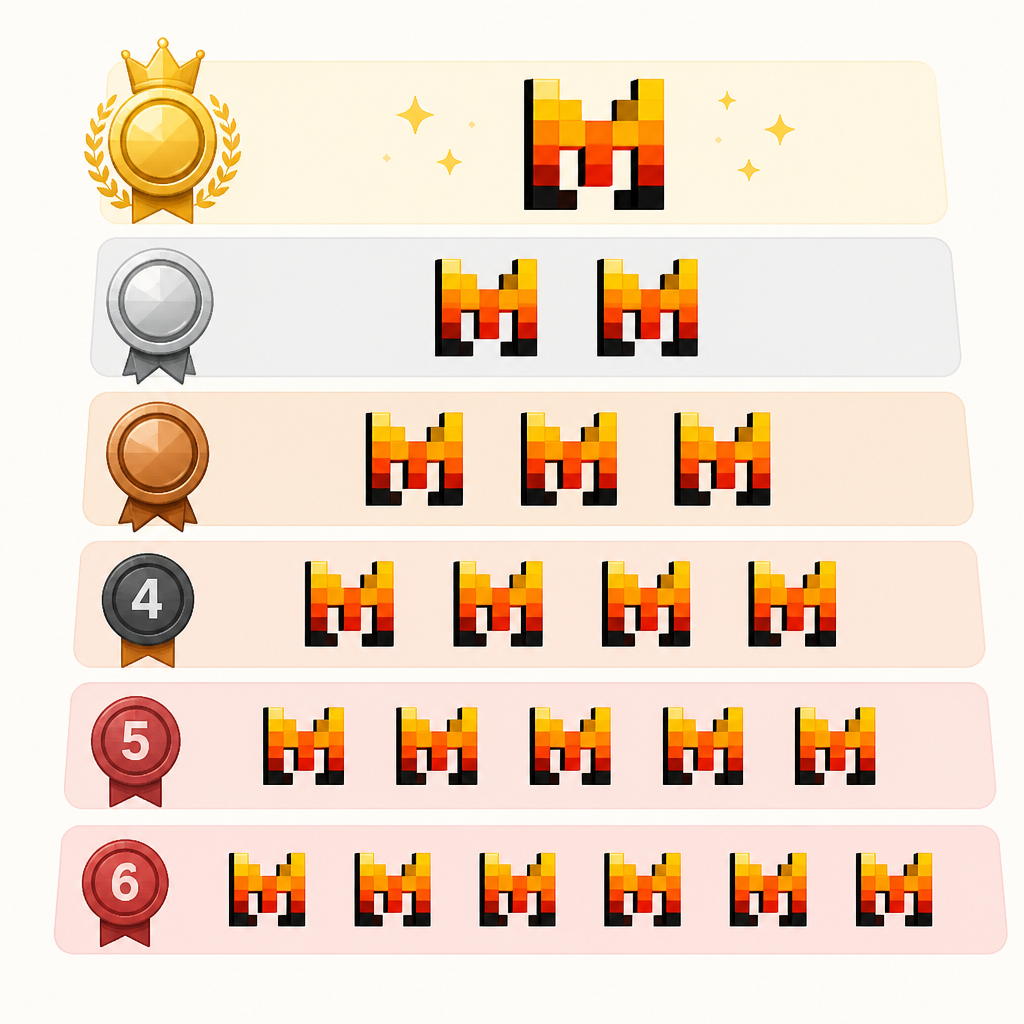
Here are some of the clearest price-and-capability pairings from the live list on LM Market Cap:
- Mistral Nemo: $0.020 input, $0.030 output, 131K context, score 40
- Mistral Small 3: $0.050 input, $0.080 output, 33K context, score 40
- Codestral 2508: $0.300 input, $0.900 output, 256K context, score 40
- Mistral Medium 3.5: $1.50 input, $7.50 output, 262K context, score 40
That spread is useful because it shows how Mistral segments the market. Codestral targets coding workflows with a long 256K context window, while Pixtral Large brings multimodal capability into the lineup at the same $2.00 / $6.00 price band as older flagships.
The practical takeaway is simple: if you are building a coding assistant, retrieval-heavy app, or internal agent, the best Mistral choice may not be the highest-scoring one. It may be the one that gives you enough context at a price you can actually run for months.
What this means for teams choosing a model
Mistral’s catalog is now broad enough that “use Mistral” is no longer a useful recommendation. You have to decide whether you want the best score, the cheapest token bill, the longest context, or the easiest path to self-hosting. That is good news for developers, because the lineup gives real options instead of one overpriced default.
For most teams, the decision tree looks like this: choose Mistral AI flagship models when you need higher quality and can pay for it, choose Mixtral or Devstral when you want strong efficiency, and choose the smaller Mistral or Ministral variants when throughput and cost matter most. If you want a broader market view, OraCore’s related coverage on LLM leaderboards and open-source models gives useful context.
The live ranking also reminds you that model choice is moving target territory. A difference of a few points today can matter less than a better price curve, a longer context window, or a model family that your team can actually deploy. The next question is not whether Mistral has enough models. It is which one fits your workload without wasting tokens every day.
// Related Articles
- [MODEL]
Gemini 1.5 Pro-002, Flash-002 and 2.0 Flash update Google AI
- [MODEL]
MiniMax M3 Proves Open-Weight Can Still Win on Coding
- [MODEL]
Gemini 3.5 Flash Pricing, Context, Benchmarks
- [MODEL]
Gemma 4 12B: Specs, Benchmarks & How to Run It Locally
- [MODEL]
Best Kimi Models in 2026: K2.5 vs K2 Thinking
- [MODEL]
Kimi K2.6 adds open-source coding and agent swarm