OpenAI vs Anthropic on AI jobs and doom
Anthropic’s Chris Olah backed Dario Amodei’s warning that AI could hit jobs hard, widening the split with OpenAI.
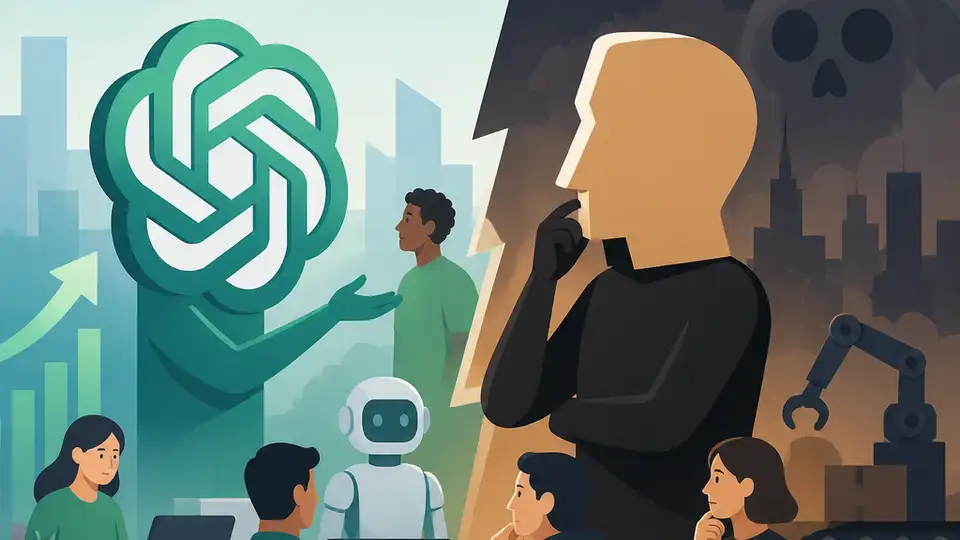
Anthropic’s Chris Olah backed Dario Amodei’s warning that AI could hit jobs hard.
At the Vatican’s AI ethics conference, Anthropic co-founder Chris Olah echoed the company’s most alarmist line on labor disruption. The timing matters because this is happening while OpenAI keeps pitching AI as broadly useful, even as both companies race to ship more capable models.
| Topic | What was said | Why it matters |
|---|---|---|
| Speaker | Chris Olah | Anthropic co-founder reinforced the company’s warning tone |
| Venue | Vatican AI ethics conference | Signals the debate has moved beyond Silicon Valley |
| Company line | Dario Amodei’s warnings about AI and jobs | Shows Anthropic is sticking with a risk-first message |
Anthropic is making the labor warning louder
Get the latest AI news in your inbox
Weekly picks of model releases, tools, and deep dives — no spam, unsubscribe anytime.
No spam. Unsubscribe at any time.
Olah’s comments matter because they were not a one-off. They fit a pattern Anthropic has used for months: emphasize the social cost of more capable AI, especially when it comes to white-collar work and the speed of disruption.
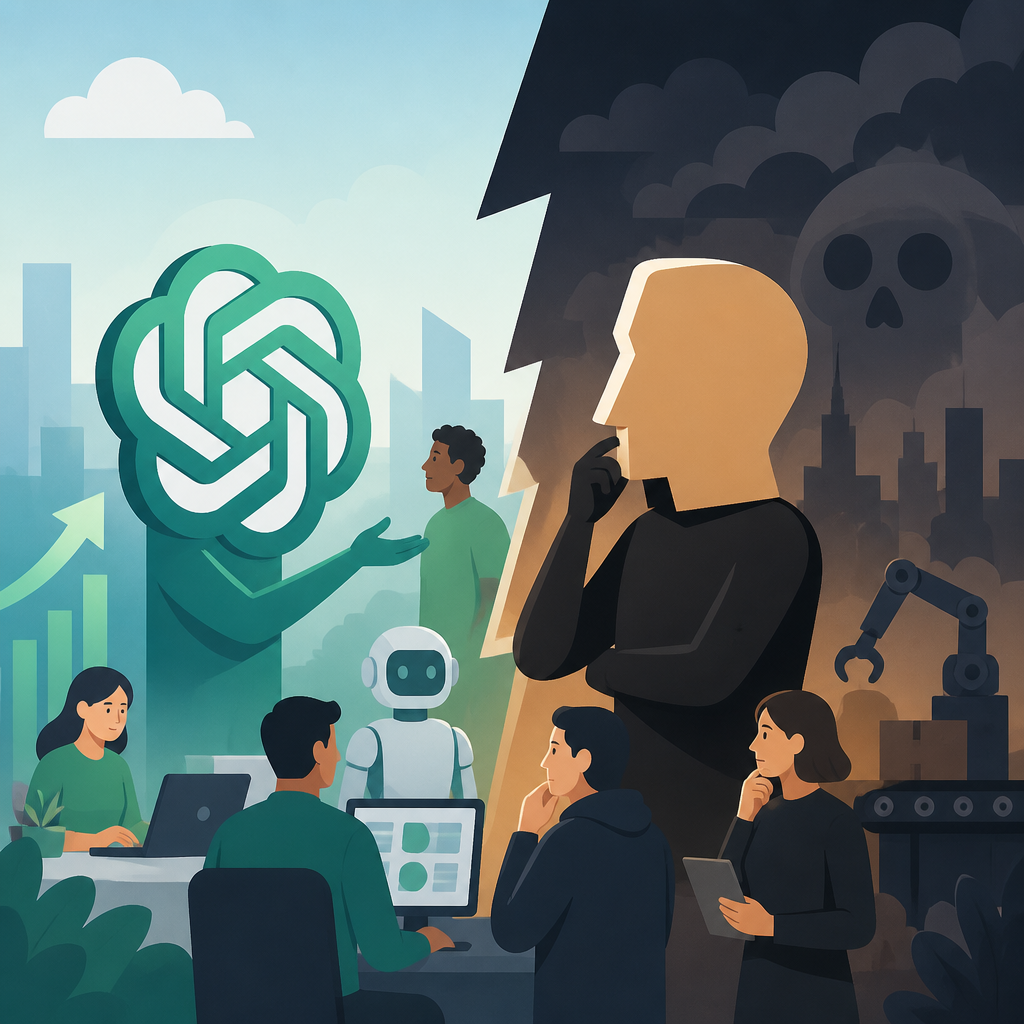
That message is a direct contrast to the way many AI companies talk about their products. Instead of framing AI as a productivity boost with side effects, Anthropic keeps pointing to the possibility that the same systems could remove a lot of jobs faster than workers can adapt.
- Chris Olah is one of Anthropic’s co-founders.
- The remarks came at a Vatican conference focused on AI ethics.
- The comments echoed CEO Dario Amodei’s public warnings.
The split with OpenAI is about framing, not just features
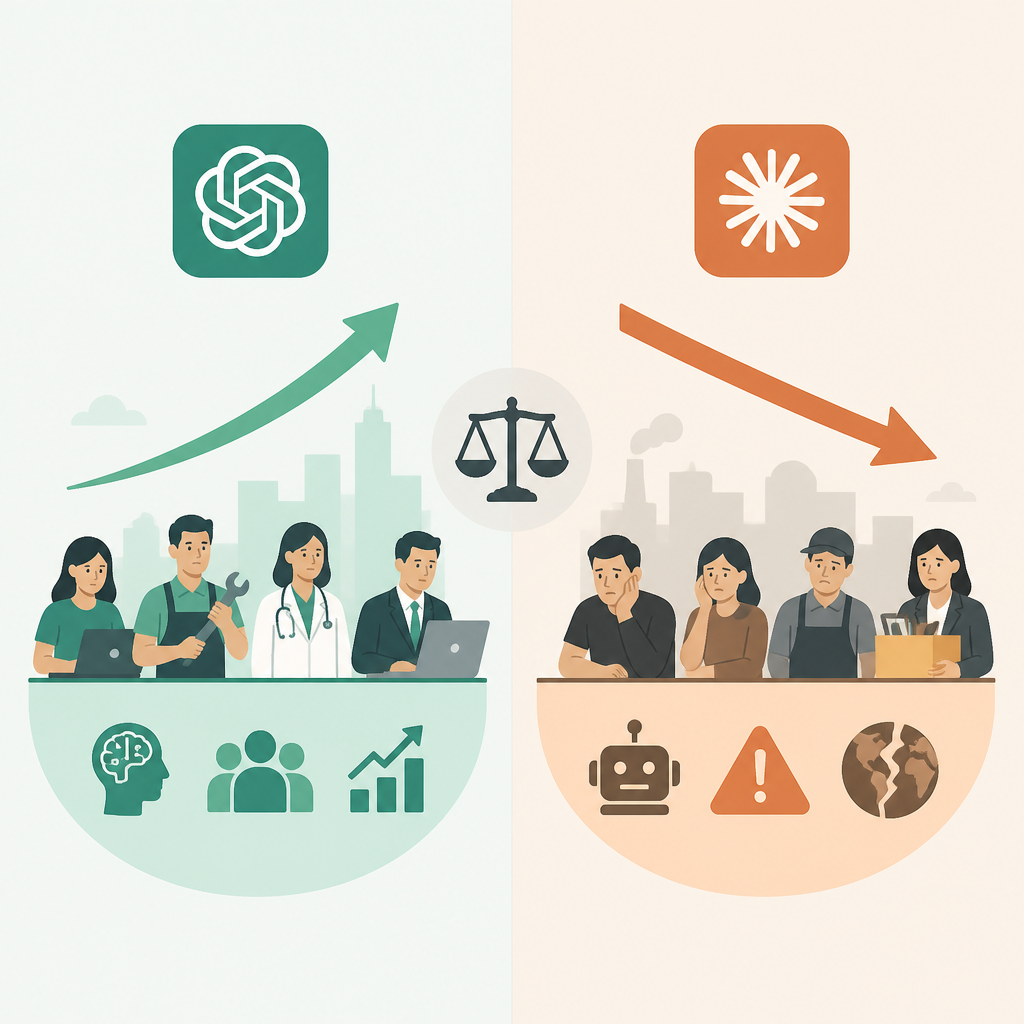
This fight is less about a single model release and more about how the public should think about AI. OpenAI generally sells capability, speed, and usefulness. Anthropic keeps making the case that capability comes with labor-market risk, governance questions, and real-world tradeoffs.
That difference matters because the companies are competing for the same customers, the same developers, and the same policymakers. If one lab sounds like it is selling automation while another sounds like it is warning about automation, both messages can be true at the same time.
“We need to be very careful about how we deploy these systems,” Dario Amodei said in a 2025 interview with Axios.
That quote captures the tone Anthropic has been using in public: cautious, direct, and willing to say the quiet part out loud. It also helps explain why Olah’s Vatican appearance landed as more than just another conference talk.
The numbers behind the AI jobs debate
The article itself is short, but the broader debate is already full of measurable claims. That is why the argument keeps getting sharper: once a company ties AI to labor displacement, people start asking for timelines, categories of work, and evidence.
- Anthropic’s Economic Index tracks how AI affects work tasks over time.
- GPT-4o and Claude both push toward broader automation of knowledge work.
- The Vatican event shows the debate has moved into policy and ethics circles, not just product launches.
What makes this dispute interesting is that neither side can fully escape the other’s argument. If AI boosts output, it can also compress teams. If it improves customer support, coding, or document work, it can also reduce headcount in those same functions.
That is why the public messaging matters so much. Companies are not only selling models. They are selling a story about what those models mean for work, wages, and who gets to benefit first.
What to watch next
The next signal will be whether Anthropic keeps pushing this labor-first warning in more public venues, or whether it softens the message as competition with OpenAI intensifies. If the company keeps repeating the same theme, policymakers will treat it as a serious forecast rather than a marketing angle.
For developers and product teams, the practical takeaway is simple: plan for AI adoption as a staffing question, not just a software upgrade. The real issue is not whether AI can do more work. It is which work changes first, and which teams have time to adjust.
// Related Articles
- [IND]
AMD and Microsoft push Windows ML on GPU and NPU
- [IND]
OpenAI’s IPO filing turns hype into scrutiny
- [IND]
Skatteetaten proves public sector AI should be judged by outcomes
- [IND]
OpenAI’s IPO filing puts AI’s biggest test on Wall Street
- [IND]
OpenAI’s latest moves now center on pricing, safety, and scale
- [IND]
RISC-V mini PCs are worth buying now, but only as a bet on the future