Saylor Says Tokenization Will Let Investors Shop for Yield
Michael Saylor says tokenization will let asset owners compare credit terms and yield directly, pressuring banks and brokerages.

Michael Saylor says tokenization will let asset owners compare credit terms and yield directly.
Michael Saylor used a CNBC Squawk Box appearance on May 21, 2026 to make a bigger claim than the usual tokenization pitch. He argued that tokenized securities could let investors shop for yield the way shoppers compare prices, and he said that shift would pressure banks and brokerages that control access to credit today.
The timing matters. Tokenized stocks are already live at Coinbase, Robinhood, and Gemini for some customers, while Washington is still debating how far onchain markets can go under U.S. law.
| Item | Detail | Why it matters |
|---|---|---|
| Interview date | May 21, 2026 | Shows how current the policy debate is |
| Squawk Box segment length | 9:23 | Indicates this was a focused live-market discussion |
| Named firms already offering tokenized stock trading | 3 | Coinbase, Robinhood, Gemini are already testing demand |
| Policy bill mentioned | Clarity Act | Could define how real-world assets move onchain |
What Saylor is actually arguing
Get the latest AI news in your inbox
Weekly picks of model releases, tools, and deep dives — no spam, unsubscribe anytime.
No spam. Unsubscribe at any time.
Saylor’s core point is simple: tokenization turns credit and yield into something closer to an open market. If a stock, bond, fund, or private-credit claim lives onchain, the owner can compare financing terms and returns across more venues instead of accepting whatever a single bank offers.

That is a much sharper argument than the usual tokenization checklist of faster settlement and 24/7 trading. Those benefits matter, but Saylor is talking about pricing power. In his view, tokenization shifts control away from institutions that decide who gets credit and what yield they get.
He framed the old system as one where banks can say no and the customer has little recourse. In his words, the traditional finance model lets a bank decide that you simply will not get credit or yield, and there is not much you can do about it.
- Tokenization can make asset ownership easier to move and compare
- Onchain assets can trade outside normal market hours
- Yield discovery becomes more transparent when more venues compete
- Credit terms can be priced against each other instead of set by one gatekeeper
The policy fight behind the pitch
This is where the story gets bigger than one executive’s opinion. The crypto industry is watching the proposed Clarity Act, which could help define how real-world assets move onto blockchains under U.S. law. If that bill advances, tokenization stops being a side experiment and becomes part of a formal market structure debate.
Regulators are already signaling that tokenized securities will not get a free pass. The U.S. Securities and Exchange Commission said earlier this year that tokenized securities are likely to become part of mainstream finance, but they still fall under traditional securities laws. That matters because the legal wrapper may change, while the compliance burden stays heavy.
“The real power of tokenization is it creates a free market in credit formation and yield for asset owners,” Saylor said on CNBC’s Squawk Box.
That quote captures the whole thesis. He is not selling tokenization as a prettier database. He is arguing that it can change who gets to set the price of money.
How this compares with today’s market
Traditional finance still works through intermediaries that control access, custody, and settlement. Tokenized markets try to compress those steps into software, which can reduce friction and widen access, but it also introduces new questions about custody, compliance, and market fragmentation.
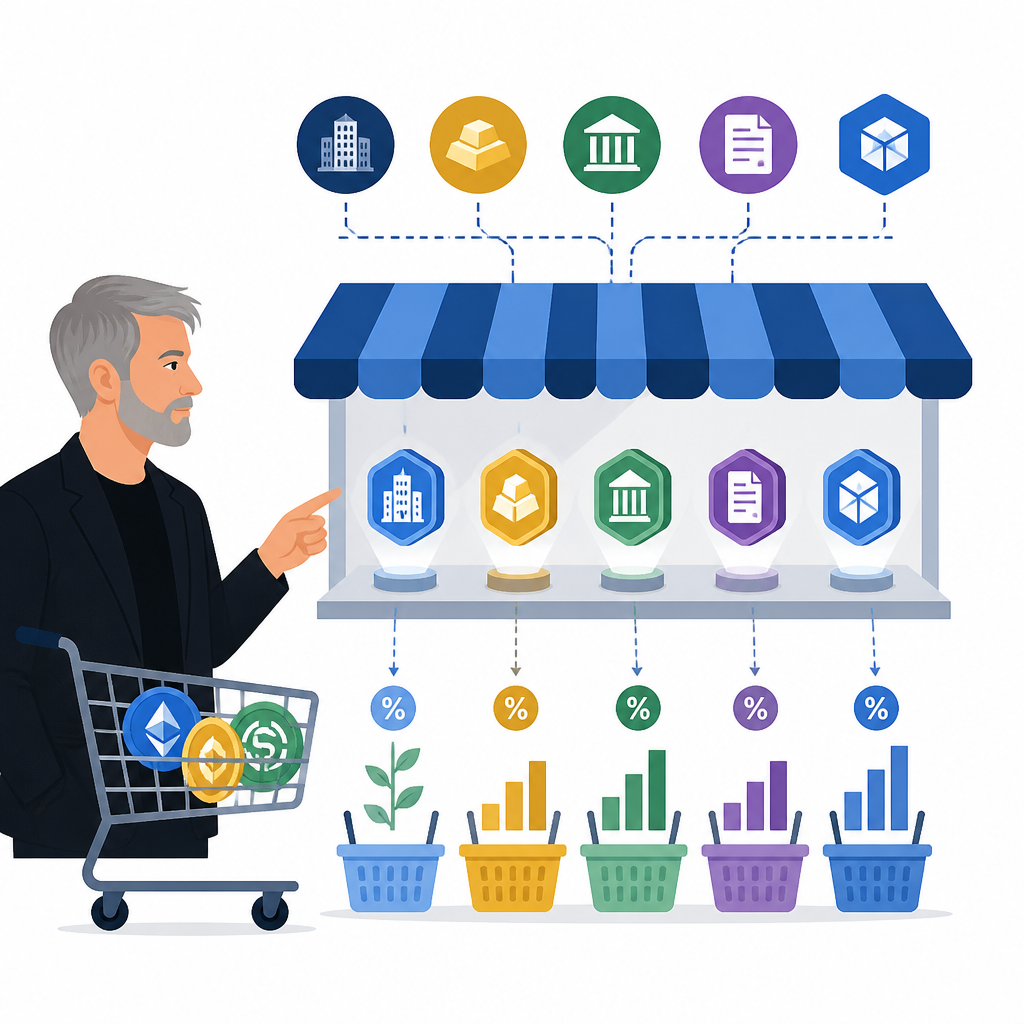
The difference shows up in who holds the power. In the current system, banks, brokers, and clearing firms sit between the asset and the investor. In a tokenized system, the asset itself can become a programmable instrument that moves across platforms faster than legacy rails allow.
- Traditional markets rely on banks and brokerages for access and pricing
- Tokenized markets can let owners compare yields across more venues
- Legacy systems usually trade during set hours
- Onchain assets can trade around the clock, which changes liquidity patterns
That does not mean tokenization automatically wins. It means the competition moves from distribution to pricing, and from custody to control of the asset wrapper. If that happens at scale, banks will have to defend more than their fees; they will have to defend their role in deciding who gets capital and on what terms.
What to watch next
For now, the practical question is whether lawmakers and the SEC give tokenized securities a clearer path in the United States. If they do, firms like Coinbase, Robinhood, and Gemini could push tokenized products from niche offerings into a more visible part of retail investing.
My read is that the next real test is not whether tokenization can exist, but whether it can offer better pricing without creating a mess of overlapping market rules. If Washington gives a clearer answer in 2026, tokenized stocks may move from a crypto talking point to a direct challenge to the way yield gets sold in the U.S.
// Related Articles
- [IND]
OpenAI’s IPO filing turns hype into scrutiny
- [IND]
Skatteetaten proves public sector AI should be judged by outcomes
- [IND]
OpenAI’s IPO filing puts AI’s biggest test on Wall Street
- [IND]
OpenAI’s latest moves now center on pricing, safety, and scale
- [IND]
RISC-V mini PCs are worth buying now, but only as a bet on the future
- [IND]
Fedora 44 RISC-V widens Linux board support