Why the Vatican should partner with AI labs
The Vatican should partner with AI labs, but only as a moral counterweight to their power.

The Vatican should partner with AI labs as a moral counterweight to their power.
Pope Leo XIV is right to put the Catholic Church inside the AI debate, and Anthropic co-founder Christopher Olah was right to show up at the Vatican to make that case in public. The release of Magnifica Humanitas made the point plainly: AI is no longer a niche engineering issue, it is a governance problem shaped by concentrated capital, opaque models, and incentives that reward speed over restraint. When a company valued in the hundreds of billions asks for outside criticism, that is not public relations theater. It is a sign that the people building these systems know the normal feedback loops are failing.
First argument: AI needs an institution that is not paid to cheer for it
Get the latest AI news in your inbox
Weekly picks of model releases, tools, and deep dives — no spam, unsubscribe anytime.
No spam. Unsubscribe at any time.
The strongest reason for a church-tech partnership is that the industry’s internal checks are structurally weak. Olah said tech leaders need dialogue with people who are not driven by the money AI firms are chasing, and he is correct. If the main actors setting the pace are companies under relentless pressure to ship products, capture market share, and satisfy investors, then “responsible innovation” becomes a slogan unless an outside institution can apply friction.
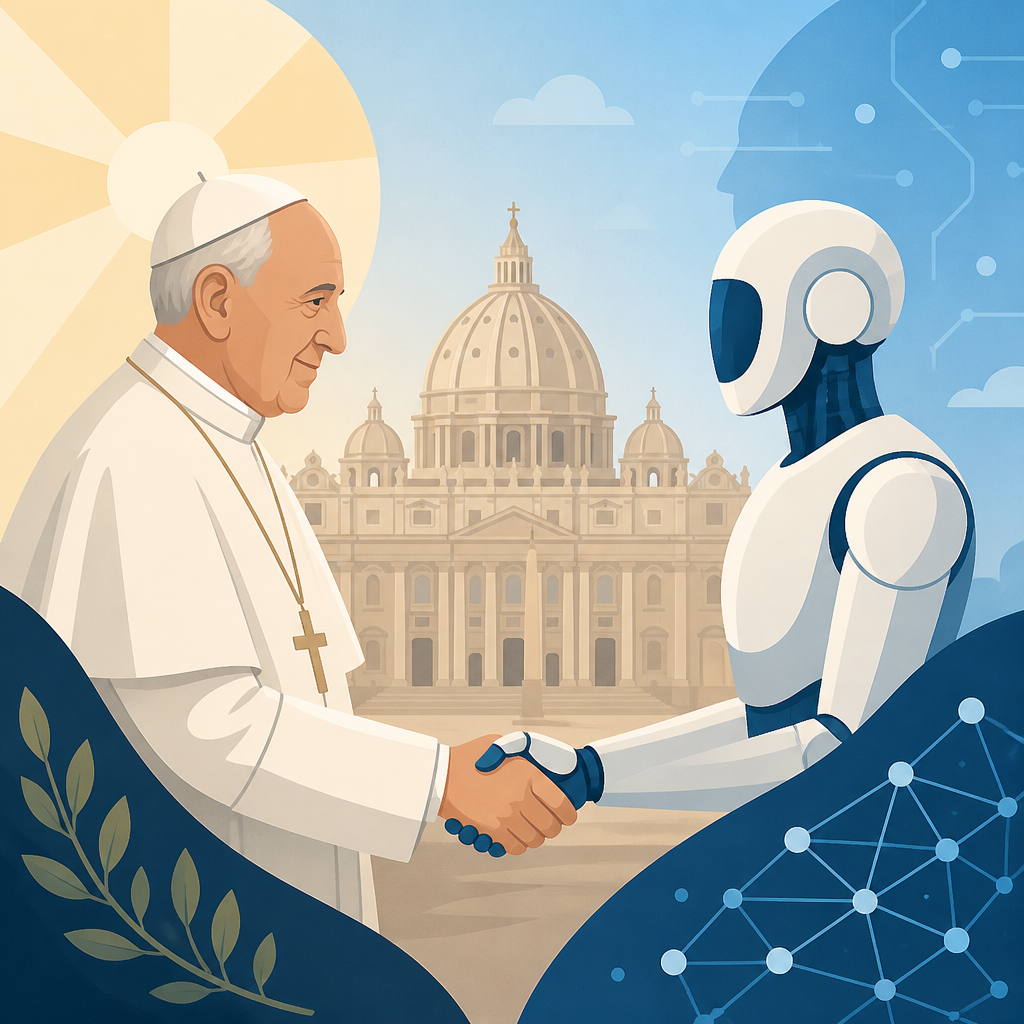
This is not abstract. The article notes that Anthropic’s value is estimated at about $900 billion, which is exactly the kind of scale that distorts judgment. At that level, even a serious safety team can be overruled by growth logic. The Vatican does not bring code, compute, or benchmark expertise. It brings something the market cannot manufacture: a standing obligation to ask whether a system serves human dignity before it serves revenue.
Second argument: the church is useful because it speaks in moral categories, not product cycles
Pope Leo’s warning about autonomous weapons, biased algorithms, and concentrated digital power goes beyond standard policy language, and that matters. Governments often move on election cycles, regulators move on case law, and companies move on quarterly targets. The church can speak in a longer register, one that treats the human person as the unit of analysis rather than the user, customer, or data point.
The encyclical’s claim that every person is “unique and irreplaceable” is not decorative theology; it is a direct rebuttal to the logic of systems that sort, rank, and automate without moral accountability. That framing is especially valuable because AI failures already show up in ordinary life, not only in speculative doomsday scenarios. If an algorithm can block access to healthcare, employment, or security on the basis of biased data, then the issue is not technical elegance. It is whether institutions still recognize human beings as ends in themselves.
The counter-argument
The best objection is that the church risks lending legitimacy to companies that are still racing ahead. A Vatican stage can sanitize a tech firm’s image, and a partnership can look like moral cover for an industry whose products are already embedded in surveillance, labor displacement, and militarization. Critics are right to worry that symbolic inclusion can become an alibi for inaction.
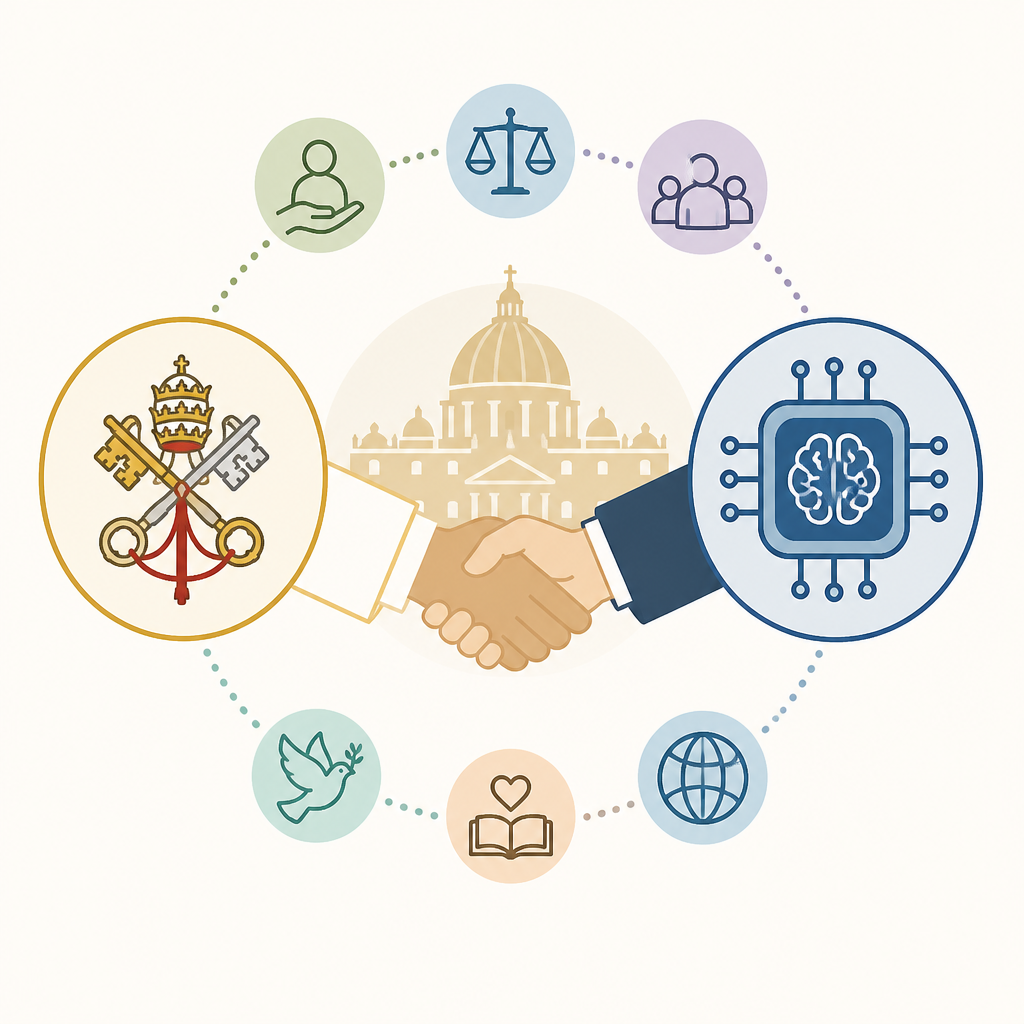
That concern is real, and it should not be dismissed. But the answer is not withdrawal. The article makes clear that Leo did not offer a blessing for AI as it exists; he called for regulation, warned about power concentration, and said the church has no technical answers to displace experts. That is the right boundary. The church should not become a branding partner for labs. It should become a persistent, public irritant that forces them to answer uncomfortable questions in front of people who are not on payroll.
What to do with this
If you are an engineer, treat religious and civil-society critics as part of your safety stack, not as outsiders to be managed. If you are a PM or founder, build review processes that can block launches, not just soften language around them. And if you are in a position of institutional leadership, copy the Vatican’s useful move here: bring in voices that do not share your incentives, publish the disagreements, and make moral scrutiny a required step before deployment. AI will not become trustworthy because its builders say so. It will become trustworthy only when power has to answer to something outside itself.
// Related Articles
- [IND]
OpenAI is right to keep ads out of sensitive chats
- [IND]
AI bootlegs are already draining streaming royalties
- [IND]
AMD and Microsoft push Windows ML on GPU and NPU
- [IND]
OpenAI’s IPO filing turns hype into scrutiny
- [IND]
Skatteetaten proves public sector AI should be judged by outcomes
- [IND]
OpenAI’s IPO filing puts AI’s biggest test on Wall Street