Wasm in 2026 turns one codebase into many runtimes
I break down why WebAssembly finally feels production-ready, and give you a copyable template for browser, edge, and plugin use.
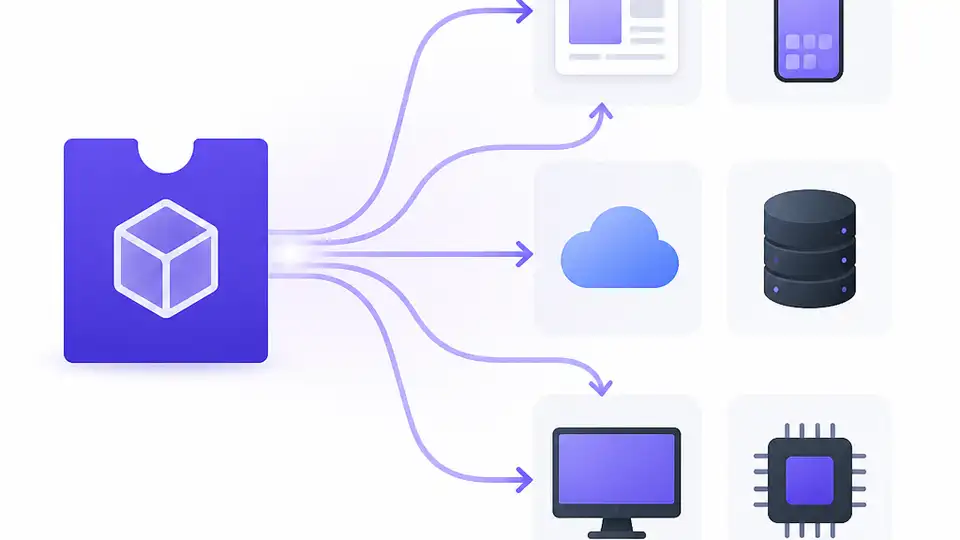
This breaks down the WASM playbook and gives you a copyable template for shipping one module across runtimes.
I've been around WebAssembly long enough to remember the awkward phase. The demos were slick, the promises were loud, and the actual day-to-day experience was annoying enough that I kept reaching for plain JavaScript or native code instead. Tooling felt half-baked. Debugging was a chore. The whole thing had that familiar smell of a technology that was technically real but practically inconvenient.
And honestly, that mismatch was the problem. I’d read posts saying WASM would run everywhere, then I’d try to wire it into a browser app, a server, and an edge function, and the seams showed immediately. Different build steps. Different runtime assumptions. Different packaging headaches. I could make it work once, but not in a way I’d want to maintain with a team.
What changed for me is that the ecosystem stopped behaving like a science project. The toolchain got cleaner, WASI got useful, and the runtime story stopped being browser-only theater. At that point I stopped thinking of WebAssembly as “that thing for hot loops” and started treating it like a portable execution target that I could actually ship.
The article that pushed me back into this topic was ZNY’s DEV Community post on WebAssembly in 2026. It’s a broad, practical walkthrough of where WASM fits now: browser, server, edge, and plugins. I’m not copying it line for line here. I’m decomposing the useful parts into the version I wish someone had handed me before I wasted time on the older mental model.
WASM is not a language, and that distinction matters
Get the latest AI news in your inbox
Weekly picks of model releases, tools, and deep dives — no spam, unsubscribe anytime.
No spam. Unsubscribe at any time.
WebAssembly is a binary instruction format, not a language. You compile Rust, C++, Go, or other languages to WASM.
What this actually means is that WebAssembly is the target, not the source. I’ve seen people talk about “writing WASM” the same way they talk about writing TypeScript, and that mental model causes confusion fast. You usually write Rust, C, C++, Go, or another supported language, then compile down to a compact binary that a runtime can execute.
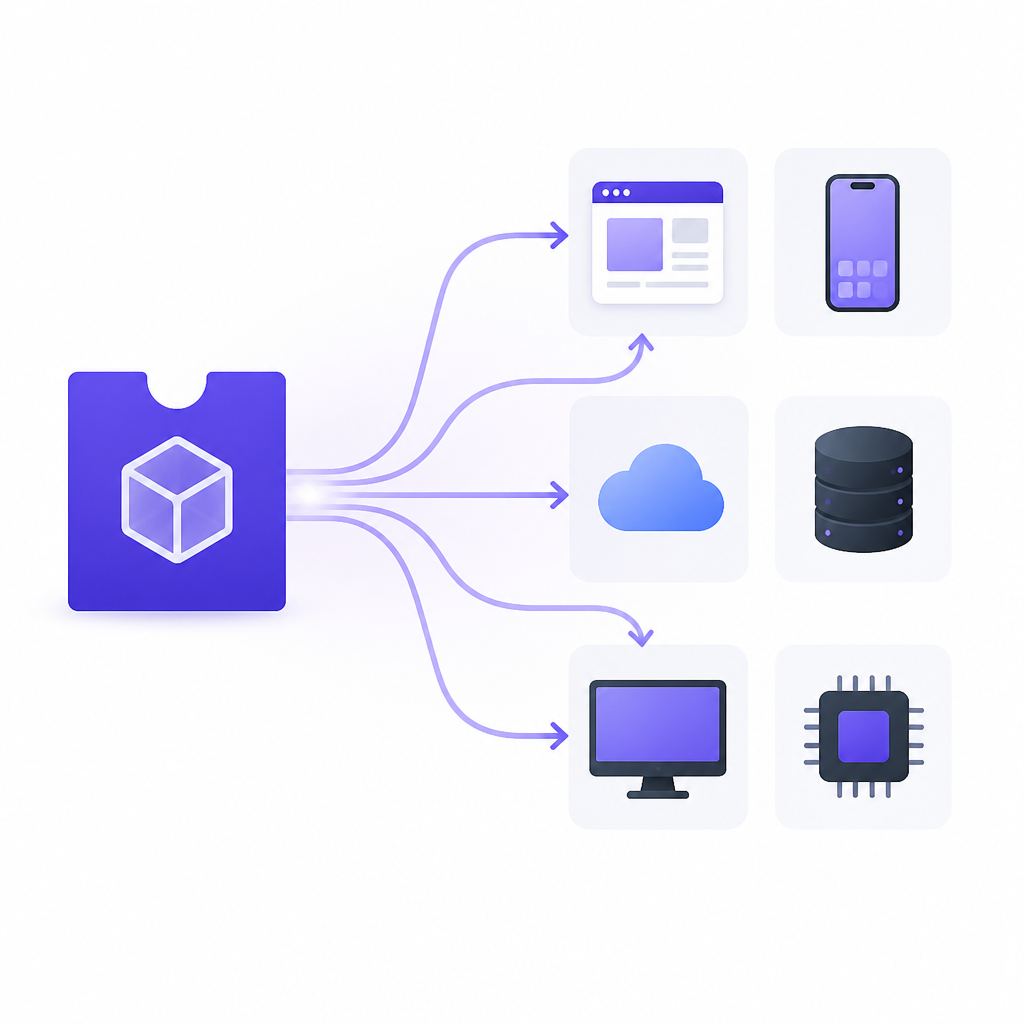
That distinction sounds pedantic until you’re trying to design a system. If WASM is your execution target, then your real questions become: what language do I want to author in, what runtime will host it, and what boundary do I want between the module and the rest of the app? That’s a much more useful conversation than “should I use WASM?”
I ran into this when I tried to replace a bunch of JavaScript number-crunching with a WASM module. The code itself was easy. The real work was deciding how the module would be called, what data crossed the boundary, and how much friction I was willing to accept for the call overhead. That’s where most teams lose patience. They expect a magic speed boost, then discover architecture still matters.
How to apply it: treat WASM like a compiled artifact with a clear contract. Keep the interface small. Move heavy computation across the boundary, not random helper logic. If your code is mostly UI behavior, stay in JavaScript. If your code is a tight loop, parser, encoder, or crypto routine, WASM starts making sense.
- Author in a language with mature WASM support, usually Rust first.
- Keep the public API narrow and typed.
- Measure the boundary cost before moving everything over.
The browser is no longer the only place that matters
WASM is the runtime for edge computing, plugin systems, server-side apps, and the browser.
This is the part that actually changed the game for me. For years, WebAssembly was mentally filed under “browser performance trick.” That’s too small now. The interesting shift is that WASM became a portable runtime substrate, which means the same module can be useful in places that used to need separate implementations.
That portability is why the article points at Cloudflare Workers, Fastly Compute, AWS Lambda@Edge, Node.js, Deno, Bun, and browser runtimes in one sweep. The runtime names matter less than the pattern: compile once, execute in more than one environment, and keep the behavior consistent.
I’ve had enough projects where the browser version and the server version drifted apart because they were implemented in different languages. It starts with one “temporary” divergence, then six months later you’ve got two codepaths and nobody trusts either one. WASM helps when the thing you’re shipping is logic, not UI chrome.
How to apply it: if you already know a piece of code needs to run in multiple places, stop writing it twice. Put the shared logic in a WASM module and keep the host-specific glue thin. If the browser needs it, use a browser host. If the edge needs it, use an edge host. If your plugin system needs isolation, use a WASM sandbox.
- Great fit: validation, parsing, transformation, compression, crypto, inference.
- Poor fit: DOM manipulation, layout work, chatty I/O, trivial app logic.
- Best mindset: one portable core, many thin adapters.
WASI is the reason the browser story finally escaped the browser
WASI provides a standardized way for WASM modules to interact with system resources like files, network, and clocks.
What this actually means is that WASM stopped being trapped in a toy runtime. Once you give a module a standard system interface, it can do useful work outside the browser without each host inventing a totally different integration story. That’s the real unlock.
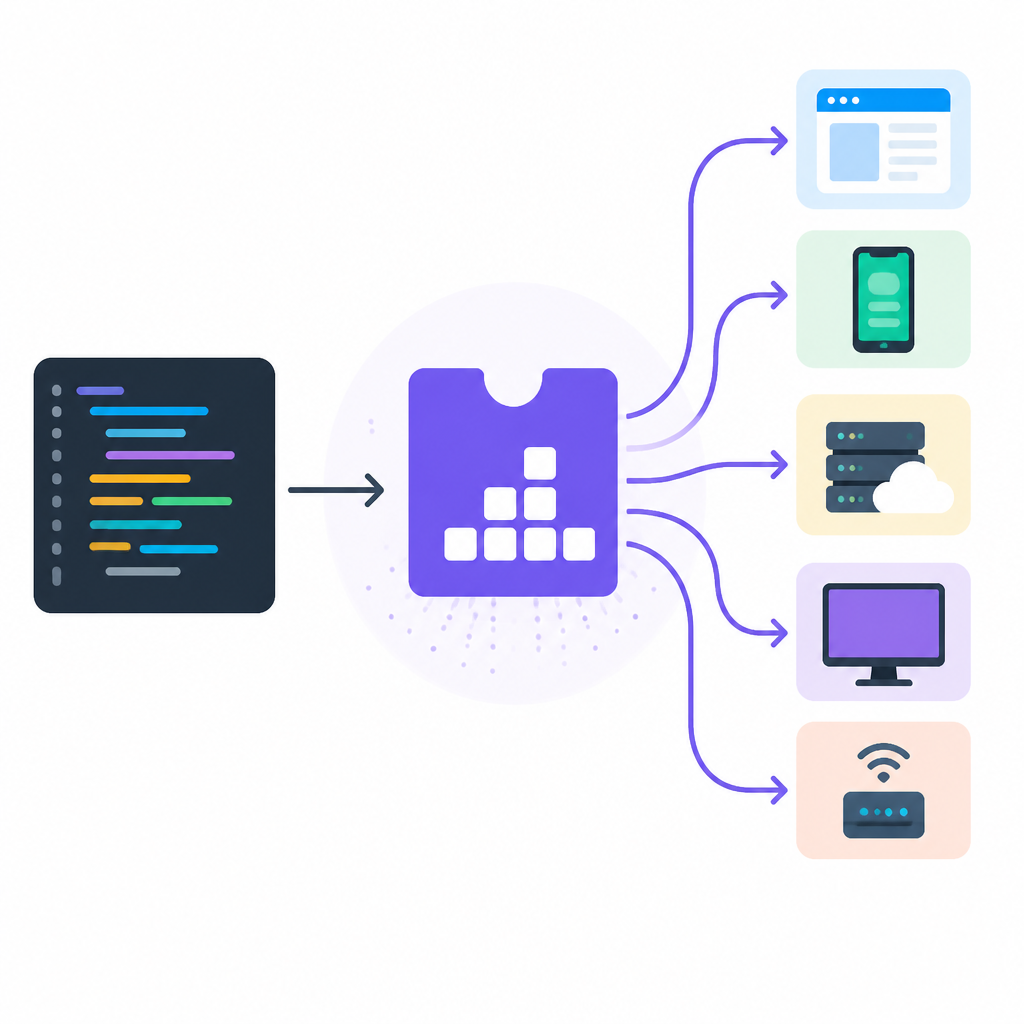
The article’s file-reading example is the right instinct: read input, process it, return output. That’s the kind of workload WASI is good at. It’s not trying to replace every OS feature. It’s trying to give portable modules enough system access to do real work without becoming host-specific snowflakes.
I’ve been burned by “portable” abstractions before, so I’m suspicious by default. But this one is actually useful because the contract is narrow. A WASI module doesn’t need to know whether it’s running in a browser-adjacent environment, a server process, or a standalone runtime. It just needs the host to expose the agreed capabilities.
How to apply it: start with file processing, data transformation, or batch jobs where the module takes input and emits output. Don’t start with a service that needs deep network choreography or a bunch of OS-specific behavior. WASI is strongest when the module is deterministic and the host handles the messy edges.
If you want to track the ecosystem itself, I’d keep tabs on WASI, WebAssembly, and the Bytecode Alliance. Those are the places where the interface and runtime story keeps getting sharpened.
Rust + WASM is the path of least regret
cargo add wasm-bindgen serde serde_json --target wasm32-wasip1
That command line is the practical heart of the article, and I get why. Rust has become the most boringly reliable way to ship WASM modules. I don’t mean boring as an insult. I mean I can usually predict what the build will do, what the type system will catch, and where the runtime boundary pain will show up.
What this actually means is that the Rust toolchain now does a lot of the annoying work for you. You’re not hand-assembling binary blobs. You’re not guessing at exports. You’re using crates like wasm-bindgen, wasm-pack, and serialization helpers to make the module behave like a normal artifact instead of a cursed side project.
I ran into this while building a data transform that had to run in the browser and in a Node process. The first version was a mess of JS wrappers and too much data copying. The Rust version was cleaner, and once I got the boundary right, the module became easier to reason about than the original JavaScript.
How to apply it: if your team already has Rust skills, use them. If you don’t, don’t pretend the learning curve is fake. It isn’t. But the payoff is real when the module does something CPU-heavy or security-sensitive. The article’s examples are good because they keep the Rust side focused on pure computation rather than pretending WASM should own the whole app.
My rule is simple: Rust + WASM is worth it when the code is performance-sensitive, reusable across runtimes, or worth isolating for safety. If the module is just a thin wrapper around app state, I’d rather stay in the host language and move on with my life.
The component model is the missing piece for sane composition
The component model means you can mix Rust, Go, and C++ components in one application.
This is the part that makes me stop rolling my eyes and pay attention. Early WASM was good at shipping a single compiled unit. The component model is about composing multiple units without making everything speak raw internals to everything else. That’s a much more mature story.
What this actually means is that WASM is moving from “one module, one export table” toward “real modular systems with typed interfaces.” That matters because most production systems aren’t one neat blob. They’re a bunch of capabilities stitched together by contracts that somebody will eventually need to version.
I’ve seen teams build plugin architectures in plain language runtimes and then regret the lack of isolation. One bad plugin, one dependency conflict, one accidental memory mess, and suddenly the host is fragile. The component model gives you a way to keep those parts separated while still letting them cooperate.
How to apply it: use the component model when you want independently versioned units that can be swapped, updated, or sandboxed. It’s especially useful for plugin ecosystems, internal extension points, and cross-language composition. If you’re just shipping one app module, you probably don’t need the extra complexity yet.
- Use it for plugins and extensions.
- Use it when different teams own different pieces.
- Use it when language choice should not dictate system architecture.
Plugins are where WASM feels immediately practical
Extism is the framework for building plugin systems with WASM.
This is the most obvious “oh, that’s actually useful” case in the article. I’ve built enough plugin systems to know the usual pain: untrusted code, dependency isolation, version drift, and a host application that becomes the garbage collector for everybody else’s mistakes. WASM helps because it gives you a sandbox with a predictable boundary.
Extism is a good example because it treats plugins as first-class WASM modules instead of awkward scripting add-ons. If you want to see the project, look at Extism. The host can load a module, call a function, and keep the blast radius contained. That’s the kind of boring safety I like.
What this actually means is that you can let other people extend your app without handing them the keys to the whole process. That’s huge for SaaS products, internal platforms, and tools that need user-defined transforms. I’ve had to build “safe scripting” before, and it’s never as safe as you want it to be. WASM gets you closer with fewer hand-built guardrails.
How to apply it: if your app needs custom transformations, filters, importers, or policy hooks, consider a WASM plugin layer before you invent a custom scripting language. Keep the plugin API tiny. Pass in plain data. Return plain data. Don’t let the plugin rummage around in your host’s internals.
If you want to see the broader runtime ecosystem around this, Wasmtime is worth a look too. It’s one of the runtimes that keeps the WASM story grounded in actual execution rather than marketing fluff.
Use WASM for the ugly bottlenecks, not for everything
Use WASM when you need performance-critical computations, portability across environments, sandboxed plugin systems, or existing C/Rust code in the browser.
I like this part because it’s the least romantic and the most useful. The article doesn’t pretend WASM should replace JavaScript, and that restraint is exactly right. I’ve seen too many teams chase a technology because it sounds elegant, then end up with a slower build and a more complicated deployment path.
What this actually means is that WASM is a specialist tool. It shines when the workload is CPU-heavy, when the same logic needs to run in multiple runtimes, or when you need a strong isolation boundary. It is not a general excuse to rewrite your app.
I usually ask three questions before I reach for it: is there a real bottleneck, does the logic need to move across runtimes, and would a sandbox help? If the answer is no three times, I leave it alone. That saves a lot of time and a lot of self-inflicted architecture.
How to apply it: profile first, then isolate the hot path. Use WASM for image transforms, compression, parsing, cryptography, simulation, or ML inference. Keep UI logic, DOM work, and network-heavy code in the host language. That split is usually where the maintainability lives.
The article also mentions AI inference, and that’s a good reminder that WASM isn’t just for old-school systems code. Client-side inference, edge inference, and portable model runners are all strong fits when the module can stay focused on computation instead of orchestration.
The template you can copy
# WebAssembly adoption template for 2026

## When I should use WASM
- I have a measured CPU bottleneck in a hot path.
- I need the same logic to run in browser, server, and/or edge.
- I want to sandbox untrusted extensions or plugins.
- I need to reuse existing Rust/C/C++ logic in a new runtime.

## When I should not use WASM
- The feature is mostly UI behavior or DOM manipulation.
- The workload is I/O bound, not CPU bound.
- The code depends on large host-specific frameworks.
- The team cannot afford an extra build and runtime boundary.

## Default stack
- Authoring language: Rust
- Browser packaging: wasm-bindgen + wasm-pack
- Server/edge runtime: Wasmtime, Node.js, Deno, Bun, or host-native WASM support
- System interface: WASI where file/process-style access is needed
- Plugin system: Extism or a similar WASM host

## Project structure
my-wasm-project/
  src/
    lib.rs
  pkg/
  Cargo.toml
  README.md

## Minimal Rust module
use wasm_bindgen::prelude::*;

#[wasm_bindgen]
pub fn process_data(input: &str) -> String {
    let reversed: String = input.chars().rev().collect();
    format!("Processed: {}", reversed)
}

#[wasm_bindgen]
pub fn calculate_stats(numbers: &[f64]) -> JsValue {
    let sum: f64 = numbers.iter().sum();
    let count = numbers.len() as f64;
    let mean = if count > 0.0 { sum / count } else { 0.0 };

    serde_wasm_bindgen::to_value(&serde_json::json!({
        "sum": sum,
        "mean": mean,
        "count": count
    }))
    .unwrap()
}

## Build commands
rustup target add wasm32-wasip1
cargo install wasm-pack
cargo add wasm-bindgen serde serde_json --target wasm32-wasip1
wasm-pack build --target web --release
wasm-pack build --target nodejs --release

## Browser usage
import init, { process_data, calculate_stats } from './pkg/my_wasm_project.js';

await init();

const result = process_data('Hello WebAssembly!');
const stats = calculate_stats([1,2,3,4,5,6,7,8,9,10]);

console.log(result);
console.log(stats.mean);

## Host integration checklist
- Keep the WASM API small and typed.
- Pass plain data across the boundary.
- Measure serialization and call overhead.
- Keep DOM and UI logic outside the module.
- Version the module separately from the host app.
- Add tests for both the module and the host adapter.

## Plugin checklist
- Treat the plugin as untrusted by default.
- Expose only the functions it needs.
- Avoid direct access to host internals.
- Validate inputs at the boundary.
- Return plain JSON or typed values.

## Decision rule
If the code is compute-heavy, portable, or sandbox-worthy, move it to WASM.
If the code is mostly UI, orchestration, or network chatter, leave it in the host.
That’s the version I’d actually hand to a team. It’s not trying to be clever. It’s trying to keep you from making the same mistakes I already made: overusing WASM, overcomplicating the boundary, and pretending the runtime layer doesn’t exist.
My source for the breakdown is ZNY’s DEV Community post, WebAssembly in 2026: The Quiet Revolution That Finally Delivered. My write-up is derivative in structure and theme, but the framing, commentary, and copy-ready template here are mine.
// Related Articles
- [TOOLS]
Magenta RealTime 2 lets you score in the DAW
- [TOOLS]
Open-source AI tools beat Claude’s paid tiers on value
- [TOOLS]
500 AI agent projects show where agents work now
- [TOOLS]
Chocolatey’s Go package turns installs into policy
- [TOOLS]
Go support policy turns releases into a checklist
- [TOOLS]
RustDesk self-hosting setup for secure remote access