Why ByteDance Is Right to Build Its Own CPUs
ByteDance should build in-house CPUs to control cost, supply, and AI infrastructure performance.
ByteDance is building in-house CPUs to cut costs and reduce supply risk.
ByteDance is doing the right thing by developing its own CPUs, because the company cannot keep scaling AI infrastructure while depending on a market that is both expensive and tight. The reported quarter-over-quarter price increases of 10% to 35% from Intel and AMD are not a nuisance, they are a tax on every new server ByteDance wants to deploy. Add Intel’s warning that delivery lead times for Chinese customers could stretch to six months, plus AMD’s own admission that the global CPU market remains tight, and the case for internal silicon becomes obvious: if your business depends on predictable compute, you do not leave the most critical part of the stack to someone else’s schedule.
First, supply control matters more than elegance
Get the latest AI news in your inbox
Weekly picks of model releases, tools, and deep dives — no spam, unsubscribe anytime.
No spam. Unsubscribe at any time.
ByteDance’s AI plans are not static. The company is preparing a major rollout of agent-based products, including Coze, and those products need steady inference capacity, not sporadic access to whatever CPUs happen to be available. In that context, in-house CPUs are not a vanity project. They are a capacity strategy. When a company is building servers for internal use, it is buying resilience as much as performance.
The broader industry proves the point. Google, Amazon, and Microsoft all built custom CPUs because general-purpose parts stopped being the best answer once scale, latency, and cost became strategic. ByteDance is now facing the same math. If it can tune a CPU for its own data centers and workloads, it can reduce waste, improve utilization, and avoid paying premium prices for features it does not need.
Second, architecture choice is a sign of discipline, not confusion
ByteDance exploring both Arm and RISC-V is the correct move because it shows the company is optimizing for fit rather than ideology. Arm offers a mature ecosystem, predictable software support, and a lower integration risk for a company that needs to ship. RISC-V offers more design freedom and a cleaner path to long-term differentiation, especially if ByteDance wants to control more of the silicon roadmap itself. Testing both tracks is what serious platform builders do before locking themselves into a decade of tooling and software decisions.
That choice also reflects the reality of AI infrastructure. A CPU for inference-heavy data centers does not need to win a spec-sheet contest; it needs to match workload patterns, memory behavior, and procurement constraints. If ByteDance can tailor an Arm-based design for speed to deployment and a RISC-V design for deeper control, it is doing exactly what a large-scale operator should do: treat architecture as a business decision, not a branding exercise.
The counter-argument
The strongest case against ByteDance’s move is simple: CPU design is hard, expensive, and slow. External partners will have to help with chip design and foundry access, which means ByteDance is not escaping the supply chain so much as reshaping it. There is also a real software burden. A custom CPU only pays off if the company is willing to invest in compilers, kernels, libraries, validation, and ongoing maintenance. If the workload mix changes quickly, the payoff can shrink.
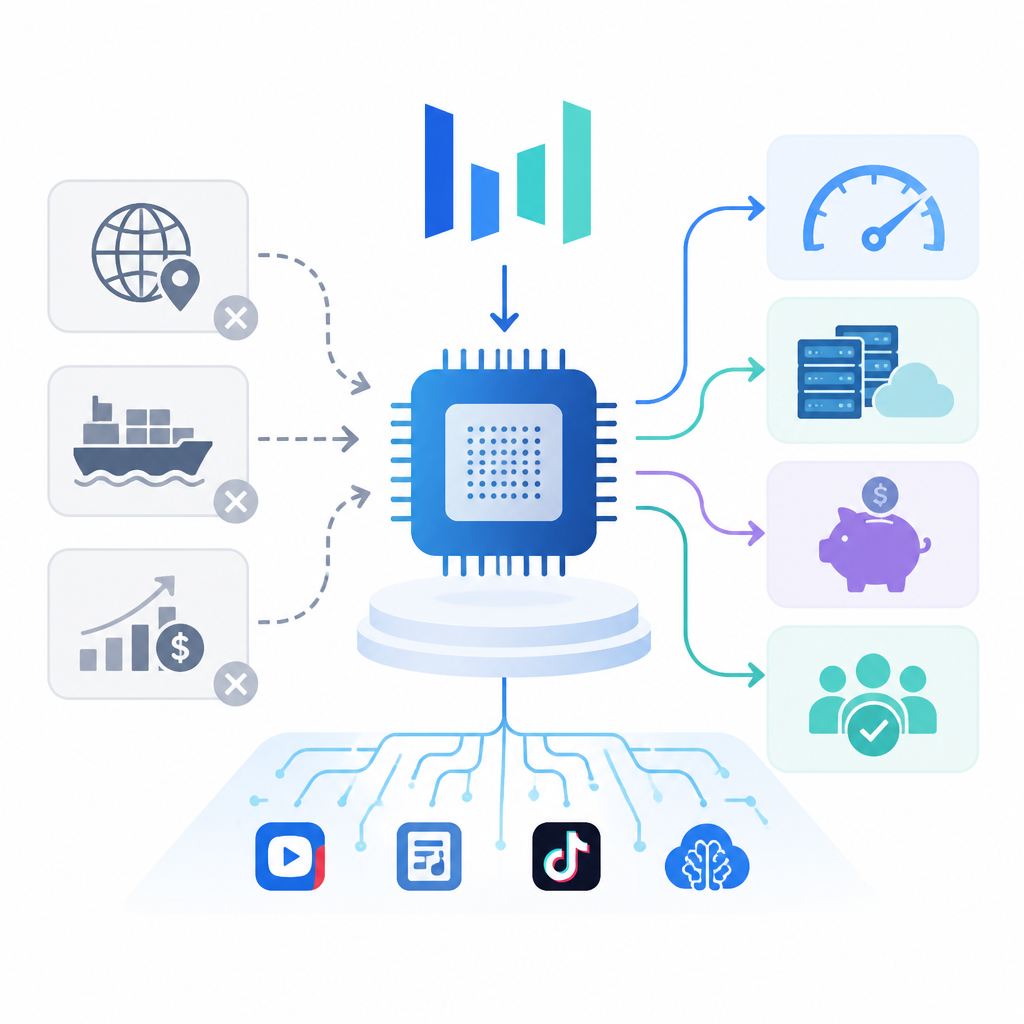
That critique is fair, but it misses the point of why hyperscalers build silicon in the first place. The goal is not full independence from the semiconductor ecosystem. The goal is to stop being hostage to commodity pricing and generic roadmaps. ByteDance does not need to beat Intel or AMD at their own game. It needs enough control to stabilize its own infrastructure economics. If the company is already facing sharp price hikes and long lead times, the cost of doing nothing is higher than the cost of building.
What to do with this
If you are a founder or CTO, treat ByteDance’s move as a reminder that custom silicon is a supply-chain decision before it is a technology one. Start with the workloads that are expensive, predictable, and strategically important. If you are a PM, focus on the operational win: lower unit cost, better scheduling, and fewer procurement surprises. If you are an engineer, push for architecture choices that minimize software friction first, because the best chip is the one your teams can actually deploy at scale.
// Related Articles
- [IND]
OpenAI’s IPO filing turns hype into scrutiny
- [IND]
Skatteetaten proves public sector AI should be judged by outcomes
- [IND]
OpenAI’s IPO filing puts AI’s biggest test on Wall Street
- [IND]
OpenAI’s latest moves now center on pricing, safety, and scale
- [IND]
RISC-V mini PCs are worth buying now, but only as a bet on the future
- [IND]
Fedora 44 RISC-V widens Linux board support