Why DCD Is Wrong to Treat the Data Center as Just a News Site
DCD is not just a media brand; it is an industry operating system for data center decision-makers.

DCD is the industry’s operating system for data center decision-makers.
DCD is not merely a publication that reports on the data center market. It has become a commercial layer on top of the industry itself, mixing news, sponsored analysis, events, reports, awards, and lead-generation into one machine that shapes what operators, investors, and vendors treat as important. The proof is in the homepage architecture: the same page that surfaces headlines about AI compute, geothermal power, and grid constraints also funnels readers toward Connect events, whitepapers, MarketWatch sponsorships, podcasts, and account creation. That is not a neutral editorial storefront. It is a market-making platform.
The first argument: DCD does not just cover the market, it helps set the agenda
Get the latest AI news in your inbox
Weekly picks of model releases, tools, and deep dives — no spam, unsubscribe anytime.
No spam. Unsubscribe at any time.
In data centers, attention is capital. When a single outlet repeatedly elevates topics like mission critical power, liquid cooling, edge inference, and investment forums, it influences what gets budget, board time, and procurement urgency. DCD’s front page makes that role obvious. It does not simply list stories; it organizes the sector into a hierarchy of problems and opportunities, from hyperscale and colocation to semiconductors and sustainability. That framing matters because industry buyers often arrive looking for signals, not just facts.

Consider the way the site bundles editorial coverage with live events and research products. A reader can move from a headline about a 150MW geothermal project to a conference ticket, then to a whitepaper on retrofitting for density, then to a sponsored feature on power agility. That is a full funnel, not a magazine. The result is that DCD helps define which themes look urgent and which vendors look credible. In a market where power, land, and compute are scarce, agenda-setting is not a side effect. It is the product.
The second argument: DCD monetizes trust without hiding the machinery
Some outlets pretend editorial and commerce live in separate buildings. DCD does not bother with that fiction. Its homepage openly labels sponsored content, market perspectives, reports, and partner podcasts. That transparency is a strength, not a weakness, because the reader can see exactly how the business works. In a sector that depends on specialist knowledge, the audience understands that deep reporting, event access, and industry research cost money. DCD packages those needs into one commercial ecosystem and does it in the open.
The scale of that ecosystem is the point. DCD offers live events across APAC, London, LATAM, India, MENA, Virginia, Brasil, New York, and Southern Europe. It also sells reports on portfolio governance, density retrofits, and mission critical power. This is not a newsroom surviving on banner ads. It is a specialized platform that turns expertise into recurring revenue. For a niche industry publication, that model is healthier than pretending pure editorial independence can pay for itself at global scale.
The counter-argument
The strongest objection is that this setup blurs the line between journalism and promotion. If the same brand publishes news, hosts events, sells sponsorships, and runs partner content, then readers may wonder whether coverage of a vendor, a technology, or a market trend is shaped by commercial relationships. In a field where suppliers spend heavily to reach buyers, that skepticism is rational. The more a publication becomes a hub, the easier it is to suspect that access is being sold alongside analysis.
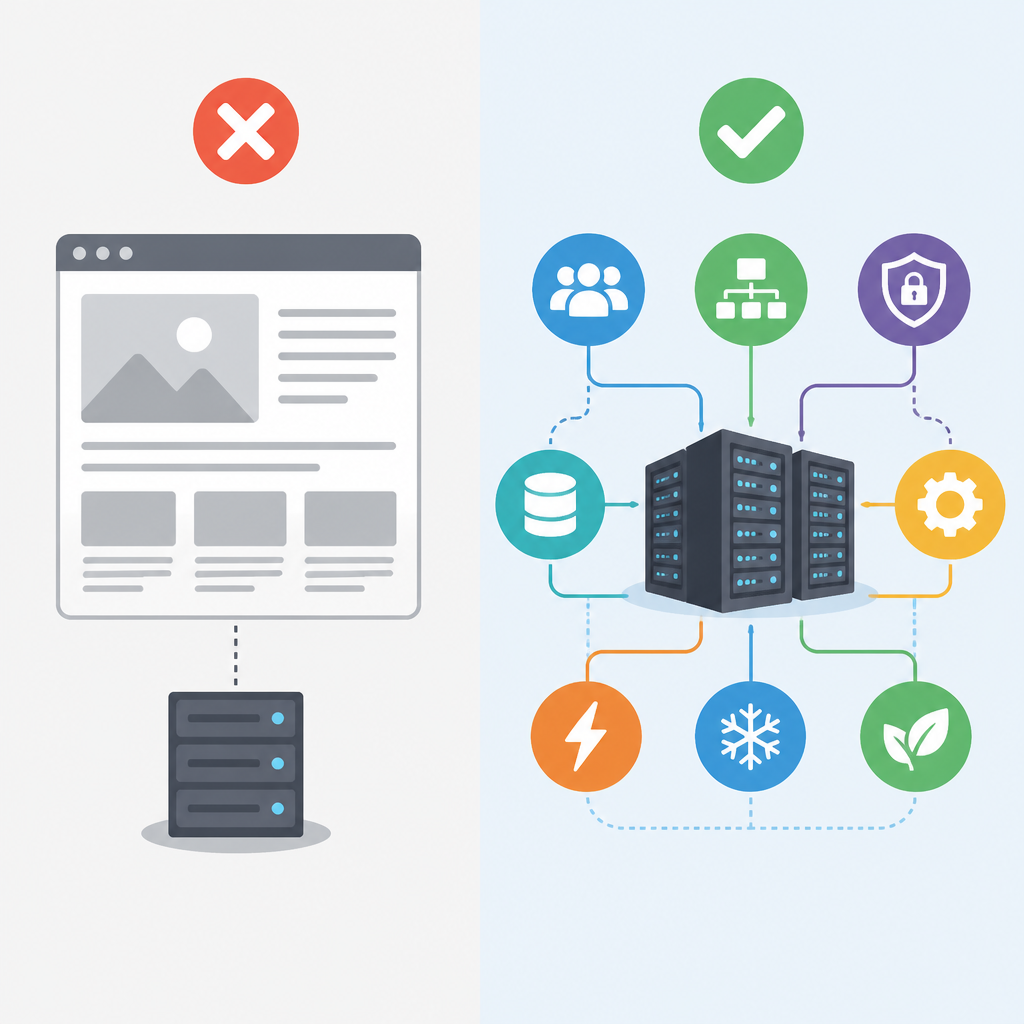
That criticism has force, but it does not defeat the model. It only sets the condition for legitimacy: clear labeling, consistent editorial standards, and a willingness to publish stories that make sponsors uncomfortable. DCD appears to meet the first condition on its homepage by distinguishing sponsored items from editorial ones. More important, the industry it covers is too complex for a pure-news model to serve well. Readers need a place where reporting, research, and convening sit together. The real risk is not that DCD is integrated. The real risk would be if it stopped being useful.
What to do with this
If you are an engineer, PM, or founder in the data center stack, treat DCD as a signal aggregator, not an oracle. Use it to track what the market is funding, what buyers are worried about, and which themes are crossing from niche to mainstream. Then verify every claim against primary sources: utility filings, planning records, earnings calls, and technical documentation. If you are building products or raising capital in this space, DCD is where category narratives form, but your own diligence has to separate durable demand from editorial momentum. Read it for direction, not for permission.
// Related Articles
- [IND]
OpenAI’s IPO filing turns hype into scrutiny
- [IND]
Skatteetaten proves public sector AI should be judged by outcomes
- [IND]
OpenAI’s IPO filing puts AI’s biggest test on Wall Street
- [IND]
OpenAI’s latest moves now center on pricing, safety, and scale
- [IND]
RISC-V mini PCs are worth buying now, but only as a bet on the future
- [IND]
Fedora 44 RISC-V widens Linux board support