Why Google will win the AI war
Google will win the AI war because it controls the distribution, the infrastructure, and the ad business that turns AI into profit.
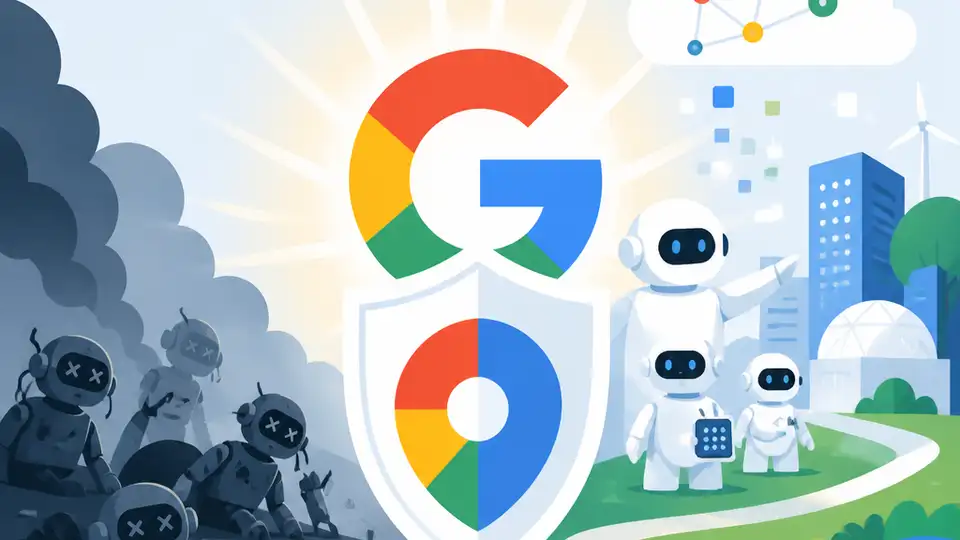
Google will win the AI war because it owns distribution, infrastructure, and monetization.
Google is not trying to win the AI race by shipping the flashiest chatbot. It is trying to win by controlling where people search, where developers build, and where the money flows. That is the stronger strategy. The Axios report makes the core point plain: Google is testing ads inside chatbots while OpenAI is already talking about a $100 billion AI ads market by 2030. That is not a side note. It is the business model contest underneath the product contest.
Google’s distribution advantage is the real moat
Get the latest AI news in your inbox
Weekly picks of model releases, tools, and deep dives — no spam, unsubscribe anytime.
No spam. Unsubscribe at any time.
Google starts with default placement, and default placement matters more than model hype. Search, Chrome, Android, Gmail, YouTube, and Workspace give Google more user touchpoints than any pure-play AI company can match. Even if users sample competing assistants, Google can keep reintroducing its own AI at the exact moments when people need answers, navigation, writing help, or shopping guidance.
That matters because AI adoption is not just about who has the smartest model. It is about who can make the model unavoidable. Google has spent two decades turning products into habits and habits into ecosystems. OpenAI can win mindshare with a better interface. Google can win by making AI a layer across the products billions already use every day.
Google has the infrastructure to make AI cheaper and stickier
Model performance is expensive, and cost is where many AI winners will break. Google controls custom silicon, cloud capacity, and the operational discipline needed to serve inference at scale. That gives it a direct path to lower unit costs than companies that rent most of their compute from the same market they are trying to disrupt. In an AI market where margins are still unstable, that advantage is decisive.
We have already seen how infrastructure wins shape platform wars. AWS did not dominate cloud because it had the prettiest dashboard. It won because it made deployment reliable, scalable, and economically rational. Google is applying the same logic to AI. If it can make Gemini cheap enough to embed across Search, Workspace, and Android, it does not need to beat every rival on benchmark theater. It only needs to be the easiest AI to run at planet scale.
The ad model gives Google a cleaner path to monetization
Google understands advertising better than anyone in tech, and that is the part most AI rivals cannot fake. Chatbots are still in the experimental phase for ads, but the direction is obvious: once conversational interfaces become routine, commercial intent will follow. Google already knows how to translate intent into revenue without destroying the user experience, and that is a huge structural edge over companies that are still figuring out where the ad unit belongs.
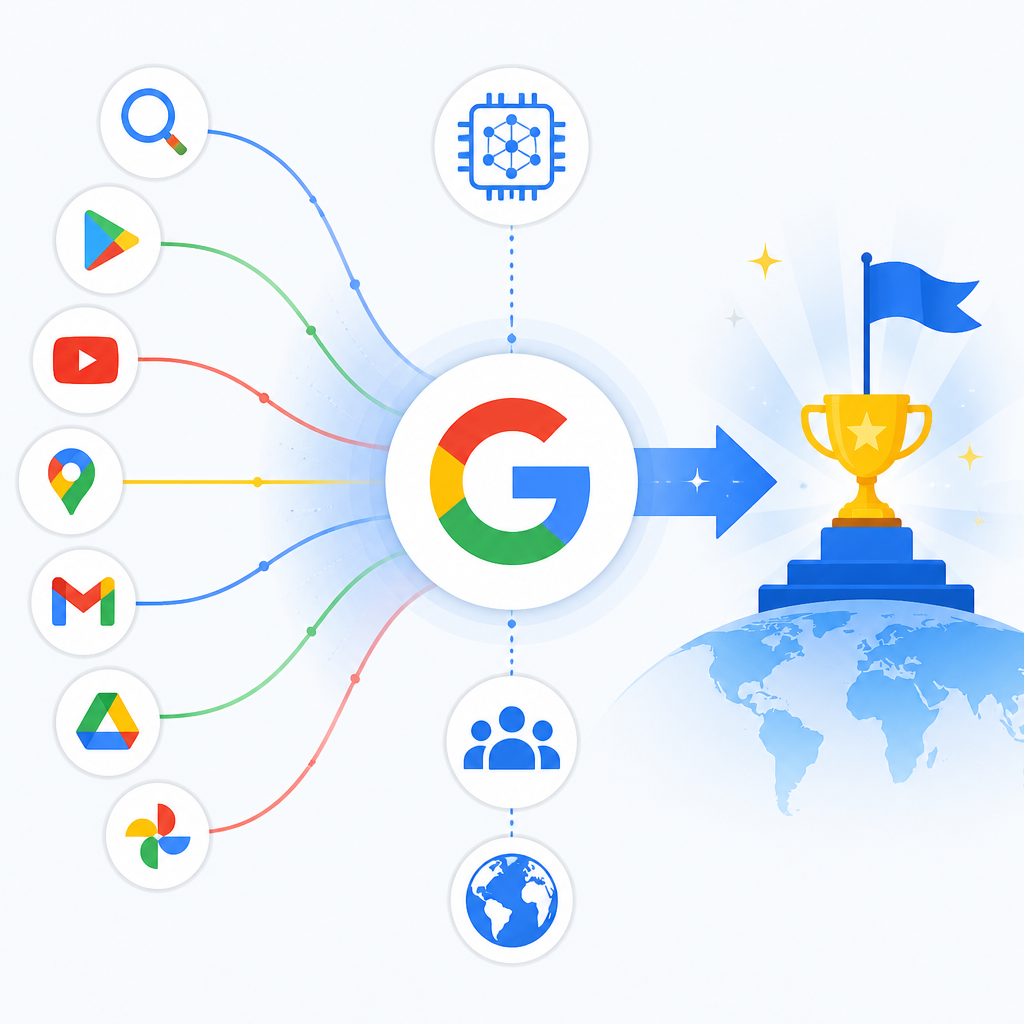
OpenAI may be right that AI ads can become a massive business. The problem is that being right about the market is not the same as owning the market. Google already has the advertiser relationships, the measurement stack, and the auction machinery. If AI ads become a $100 billion category, Google has the best chance of capturing the largest share because it can fuse conversational intent with the ad systems it already runs at scale.
The counter-argument
The strongest case against Google is simple: incumbents often miss platform shifts because they protect the old cash cow. Search ads still pay the bills, and AI answers can reduce clicks, compress ad inventory, and cannibalize the very business Google needs to defend. OpenAI and Anthropic also move faster culturally. They are not managing a legacy ad empire, a giant product portfolio, and a bureaucracy built for a different era.
There is also a product argument. Users may prefer a cleaner AI-first experience over an AI layer inside Google’s existing products. If the best assistant feels like a new operating layer, not an extension of old software, then the company with the best model and the best UX can win loyalty before the incumbent adapts.
That is a real risk, but it does not overturn the thesis. Google does not need to preserve the old search experience unchanged. It needs to migrate its own traffic into AI-native surfaces faster than rivals can pull users away. The company has the scale, distribution, and monetization machine to absorb cannibalization and turn it into a transition. That is harder for startups to do because they do not have a legacy business to fund the shift.
What to do with this
If you are an engineer, PM, or founder, stop judging AI winners by model demos alone. Track distribution, cost per answer, and monetization readiness. Ask which company can place AI in front of users repeatedly, serve it cheaply, and make money without inventing a new business from scratch. On those metrics, Google is not just in the race. It is built to win it.
// Related Articles
- [IND]
AMD and Microsoft push Windows ML on GPU and NPU
- [IND]
OpenAI’s IPO filing turns hype into scrutiny
- [IND]
Skatteetaten proves public sector AI should be judged by outcomes
- [IND]
OpenAI’s IPO filing puts AI’s biggest test on Wall Street
- [IND]
OpenAI’s latest moves now center on pricing, safety, and scale
- [IND]
RISC-V mini PCs are worth buying now, but only as a bet on the future