Why Manus AI APK Downloads Deserve More Skepticism
Manus AI APK download pages are not enough reason to trust the app or its claims.

Manus AI APK download pages are not enough reason to trust the app or its claims.
Manus AI’s AppBrain listing tells you almost nothing that matters: it is free, the APK is 107.49 MB, the version is 26.5.1, and the last update was May 13, 2026. That is distribution metadata, not proof of quality, safety, or product fit. In practice, pages like this are often used as a shortcut for discovery, but they can also flatten important differences between an app store listing, a sideloaded APK, and a product that is actually worth installing.
Distribution metadata is not product evidence
Get the latest AI news in your inbox
Weekly picks of model releases, tools, and deep dives — no spam, unsubscribe anytime.
No spam. Unsubscribe at any time.
A free download label is the weakest possible signal. It tells you nothing about whether the app is stable, whether the AI features work, or whether the developer has a sustainable release process. Plenty of low-quality apps are free; plenty of serious tools are free too. The price tag alone does not distinguish between a legitimate product and a wrapper around a trend.

The same goes for APK size. At 107.49 MB, Manus AI is neither unusually small nor unusually large for a modern Android app with bundled assets, model hooks, or analytics libraries. Size can hint at complexity, but it cannot tell you whether the app is efficient, privacy-conscious, or bloated with third-party code. If you are using file size as a proxy for trust, you are guessing.
Version numbers and update dates can mislead
Version 26.5.1 sounds mature, but versioning is branding unless you know the release history. An app can jump through versions quickly without shipping meaningful improvements, or it can maintain a conservative version scheme while delivering solid engineering. The number on the page is a label, not a measure of reliability.
The May 13, 2026 update date is also easy to overread. A recent update does not guarantee active maintenance in the way users care about: bug fixes, permission cleanup, security patches, or compatibility with current Android releases. The real question is whether the app’s changelog shows responsible evolution. Without that, the date is just a timestamp.
AppBrain is useful, but it is not due diligence
Third-party app directories are helpful for discovery and comparison, and AppBrain is better than random download mirrors. But a directory page is still an index, not an audit. It can surface a package name and basic metadata, yet it cannot verify whether the APK is the same binary the developer intended users to install, whether the app over-collects data, or whether the permissions match the promised functionality.
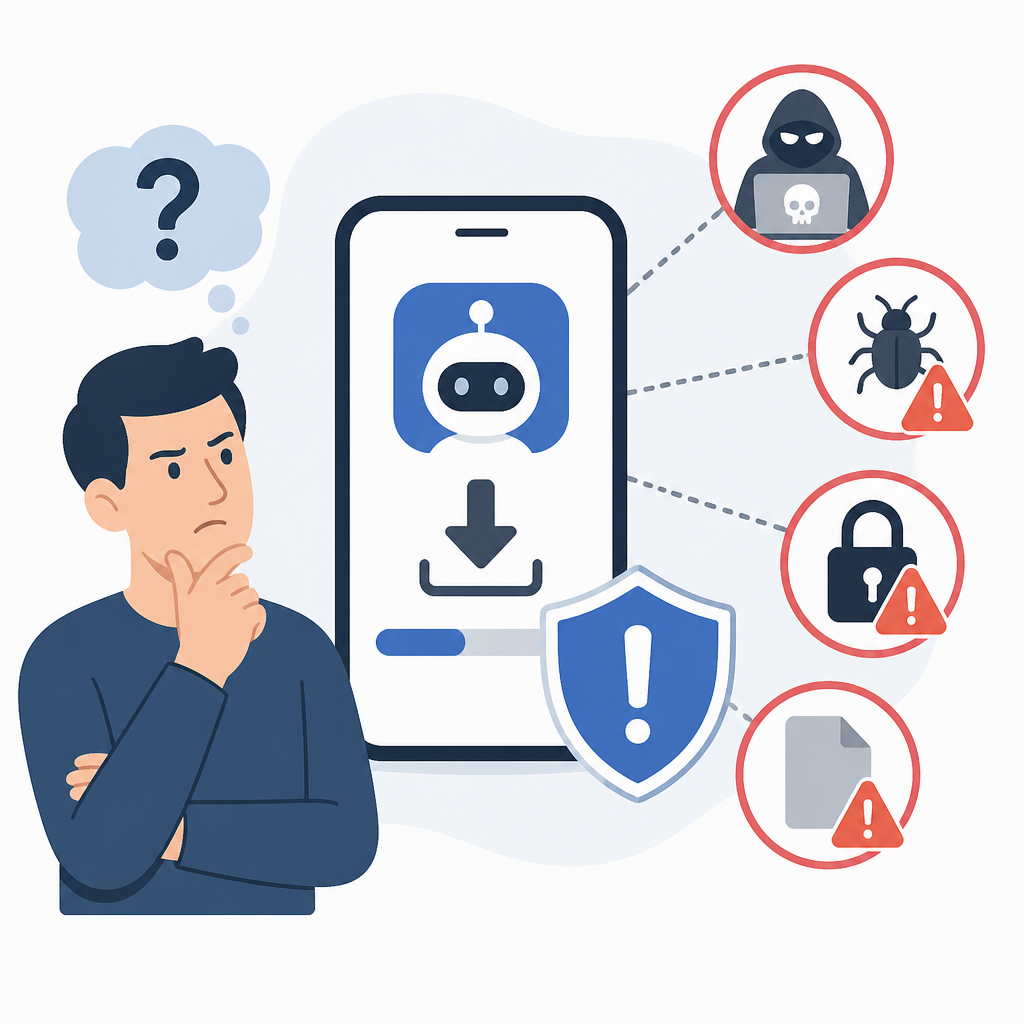
That matters because Android sideloading carries real risk. A user who treats a directory listing as endorsement may install software without checking signing certificates, permission requests, or the developer’s official distribution channel. The result is a false sense of safety built on convenience. For an AI-branded app, that is especially dangerous, because the product category already invites hype and vague claims.
The counter-argument
The strongest defense of these pages is practical: users need a quick way to find apps, compare versions, and confirm that a package exists. For many people, an APK directory is the only accessible path to an app that is not available in their region or not listed in the Play Store. In that context, a page like this does provide value by reducing friction and making installation possible.
That argument is real, and it is not wrong. Discovery matters, and metadata can be enough for a first pass when the goal is simply to identify the app. But it fails as a trust model. If the claim is “this page helps you find Manus AI,” fine. If the claim is “this page tells you Manus AI is safe, current, and worth installing,” that claim collapses. The directory can support discovery, not judgment.
What to do with this
If you are an engineer, PM, or founder evaluating an Android AI app, treat directory listings as intake, not validation. Check the official package signature, release notes, permission set, privacy policy, and update cadence from the developer’s own channels. If you are shipping the app, make those signals easy to verify. If you are choosing between tools, ignore the free badge and file size until you have evidence that the product is maintained, transparent, and technically credible.
// Related Articles
- [TOOLS]
Magenta RealTime 2 lets you score in the DAW
- [TOOLS]
Open-source AI tools beat Claude’s paid tiers on value
- [TOOLS]
500 AI agent projects show where agents work now
- [TOOLS]
Chocolatey’s Go package turns installs into policy
- [TOOLS]
Go support policy turns releases into a checklist
- [TOOLS]
RustDesk self-hosting setup for secure remote access