Why Meta’s layoffs are the right AI reset
Meta’s layoffs are a blunt but necessary reset toward AI, not a sign of collapse.

Meta’s layoffs are a blunt but necessary reset toward AI, not a sign of collapse.
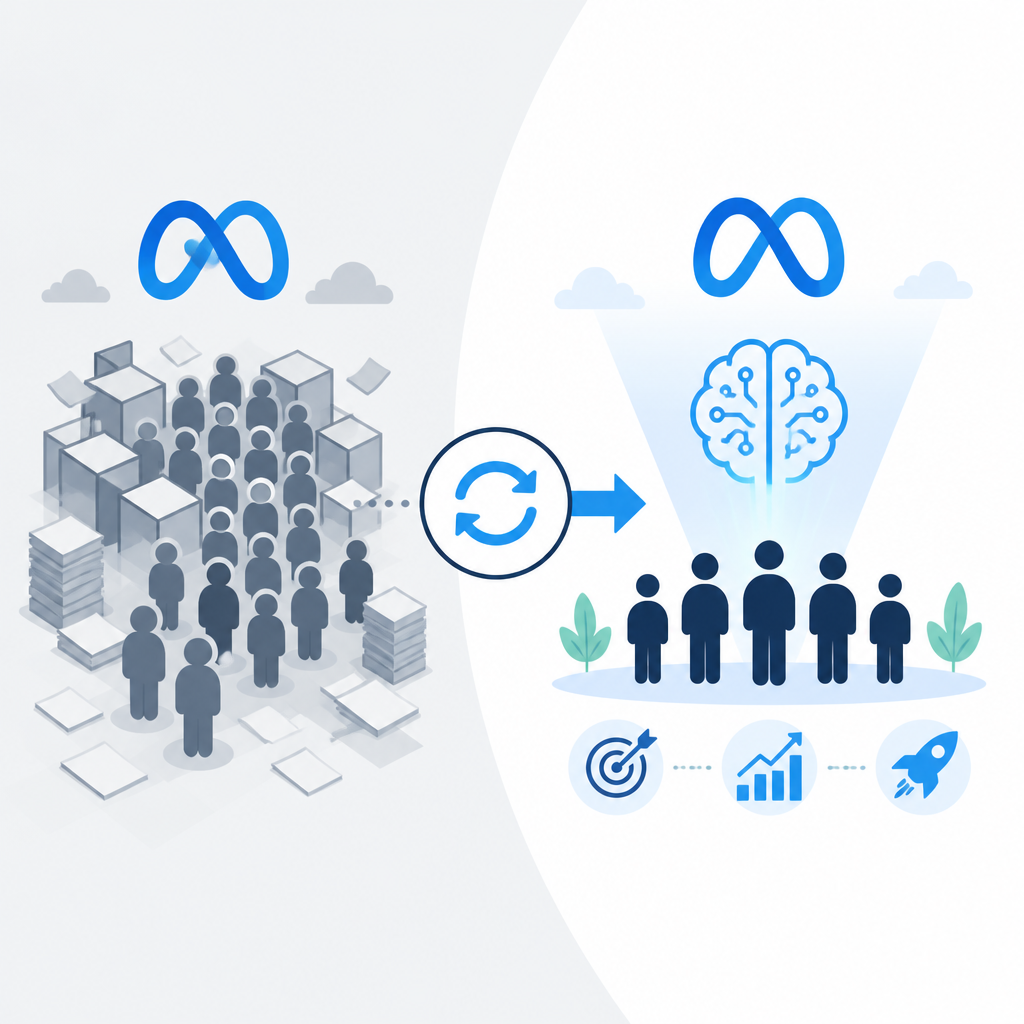
Meta is right to cut thousands of jobs and reassign thousands more because its future depends on moving capital, talent, and attention toward AI, not preserving headcount for its own sake. Mark Zuckerberg’s memo is harsh, but the underlying logic is sound: the company is in a race where speed matters more than sentiment, and the firms that win will be the ones that concentrate resources on the technologies shaping the next platform shift. Meta has already started that shift, with roughly 1,000 Reality Labs layoffs in January, hundreds more cuts in March, and a plan to replace contractor-heavy moderation work with AI. That is not random churn. It is a company admitting that legacy staffing patterns are too slow for the market it now faces.
First, Meta cannot afford to treat AI as one business among many
Get the latest AI news in your inbox
Weekly picks of model releases, tools, and deep dives — no spam, unsubscribe anytime.
No spam. Unsubscribe at any time.
Meta’s scale makes indecision expensive. The company’s own memo says AI is “the most consequential technology of our lifetimes,” and that framing is not hyperbole when you look at the competitive field. OpenAI, Google, Microsoft, and Anthropic are all pouring money into models, infrastructure, and product integration. If Meta spreads its effort evenly across every internal function, it loses the only race that matters: the one to define how consumers and advertisers use AI at internet scale.

The layoffs and role shifts show a deliberate reallocation, not a retreat. CNBC reported that about 7,000 employees are being moved into AI-focused roles, while teams tied to AI infrastructure, foundation models, and AI monetization are expected to be protected. That is exactly the kind of internal reshuffling a serious platform company should do when a new layer of computing emerges. The mistake would be to keep a bloated org chart intact and call that stability.
Second, Meta’s old operating model was already showing strain
Layoffs are not just about future bets. They are also about fixing a company that had become too complex to move quickly. Meta told workers in April that the cuts were meant to offset investment in AI, and the company has also said it plans to move away from third-party vendors and contractors for content moderation in favor of AI. That is a clear signal that parts of the existing staffing model were built for a different era, one where manual review and layered management were acceptable costs of doing business.
Employee morale has clearly taken a hit, and that matters. Data from Blind showed Meta’s overall staff rating fell 25% from its peak in the second quarter of 2024, while its culture rating dropped 39%. Those numbers are ugly, but they do not prove the restructuring is wrong. They prove the status quo was already under pressure. A company can either absorb that pain in a controlled reset or let it leak out as years of drift, duplicated work, and weak execution. Meta is choosing the first path.
The counter-argument
The strongest case against Meta’s layoffs is that they damage trust faster than they improve execution. Repeated cuts create fear, and fear makes people less likely to take risks, share ideas, or stay long enough to build durable products. Critics also argue that firing experienced employees while leaning harder on AI can create a dangerous illusion of efficiency: fewer people on payroll, but more blind spots in product quality, moderation, and safety.
That concern is real, especially at a company whose products touch billions of users. If layoffs become a standing management tool, they stop looking like discipline and start looking like panic. Meta has also admitted it has not been as clear as it should be in communication, which is a legitimate failure. But that is an argument for better execution of the reset, not for preserving an inefficient structure. The specific reason this counter-argument falls short is that Meta is not cutting into a mature, stable market. It is compressing layers to fund a fight for the next computing platform, and in that environment, hesitation is more costly than discomfort.
What to do with this
If you are an engineer, PM, or founder, read Meta’s move as a warning against org bloat and a reminder to keep your highest-value talent aimed at the next platform shift. Do not protect legacy processes just because they are familiar. Audit where time, headcount, and budget are going, then move resources aggressively toward the product area that will matter most in 12 to 24 months. If your company is not making room for its next major bet, it is already falling behind.
// Related Articles
- [IND]
OpenAI’s IPO filing turns hype into scrutiny
- [IND]
Skatteetaten proves public sector AI should be judged by outcomes
- [IND]
OpenAI’s IPO filing puts AI’s biggest test on Wall Street
- [IND]
OpenAI’s latest moves now center on pricing, safety, and scale
- [IND]
RISC-V mini PCs are worth buying now, but only as a bet on the future
- [IND]
Fedora 44 RISC-V widens Linux board support