AI agents hit chaos mode with Claude Code and OpenClaw
Claude Code and OpenClaw pushed AI agents into mainstream developer workflows, with OpenClaw topping 366,000 GitHub stars by May 2026.
Claude Code and OpenClaw pushed AI agents into mainstream developer workflows.
In 2025 and early 2026, Anthropic’s Claude Code and Peter Steinberger’s OpenClaw turned AI agents from demos into tools that can run code, manage tasks, and act with limited supervision. OpenClaw hit more than 100,000 GitHub stars in under two weeks and reached 366,000 by early May, while Claude Opus 4.5 added longer runs, more memory, and subagent management.
| 項目 | 數值 |
|---|---|
| Claude Opus 4.5 release window | November 2025 |
| OpenClaw initial launch | November 2025 |
| OpenClaw stars in under two weeks | 100,000+ |
| OpenClaw stars by early May | 366,000 |
| Garry Tan output claim | 4 million lines of code a year |
| Reported output comparison | about 90X his 2013 pace |
What changed
Get the latest AI news in your inbox
Weekly picks of model releases, tools, and deep dives — no spam, unsubscribe anytime.
No spam. Unsubscribe at any time.
The shift started with Claude Code, which moved beyond basic code completion and into longer, more autonomous coding sessions. Anthropic said Opus 4.5 could handle harder programming tasks, keep more context in memory, run for hours, and coordinate a team of subagents.
That made the tool useful for real software work, not just autocomplete. Engineers described letting Claude shape code structure, generate pull requests, and keep working while they stepped back, even if they still had to review output for errors.
- Anthropic released a preview of Claude Code in February 2025 and launched it in May.
- Opus 4.5 arrived in November 2025 and expanded runtime, memory, and subagent use.
- OpenClaw let users wrap Claude or Codex in a personal agent that can access apps, data, and web tools.
- Steinberger’s GitHub project spread fast enough to become the most-starred open source project in GitHub history.
OpenClaw changed the user experience again. Instead of staying pinned to a terminal, users could launch an agent that ran in the background, checked email, queried shipping updates, or handled web tasks with little direct oversight. That broader access made the software feel less like a coding helper and more like a general-purpose operator.
Why it matters
For developers, the practical effect is speed. The article describes coders, startup founders, and product leads using agents to generate code at rates they compare with entire teams, while still relying on human review for quality control.
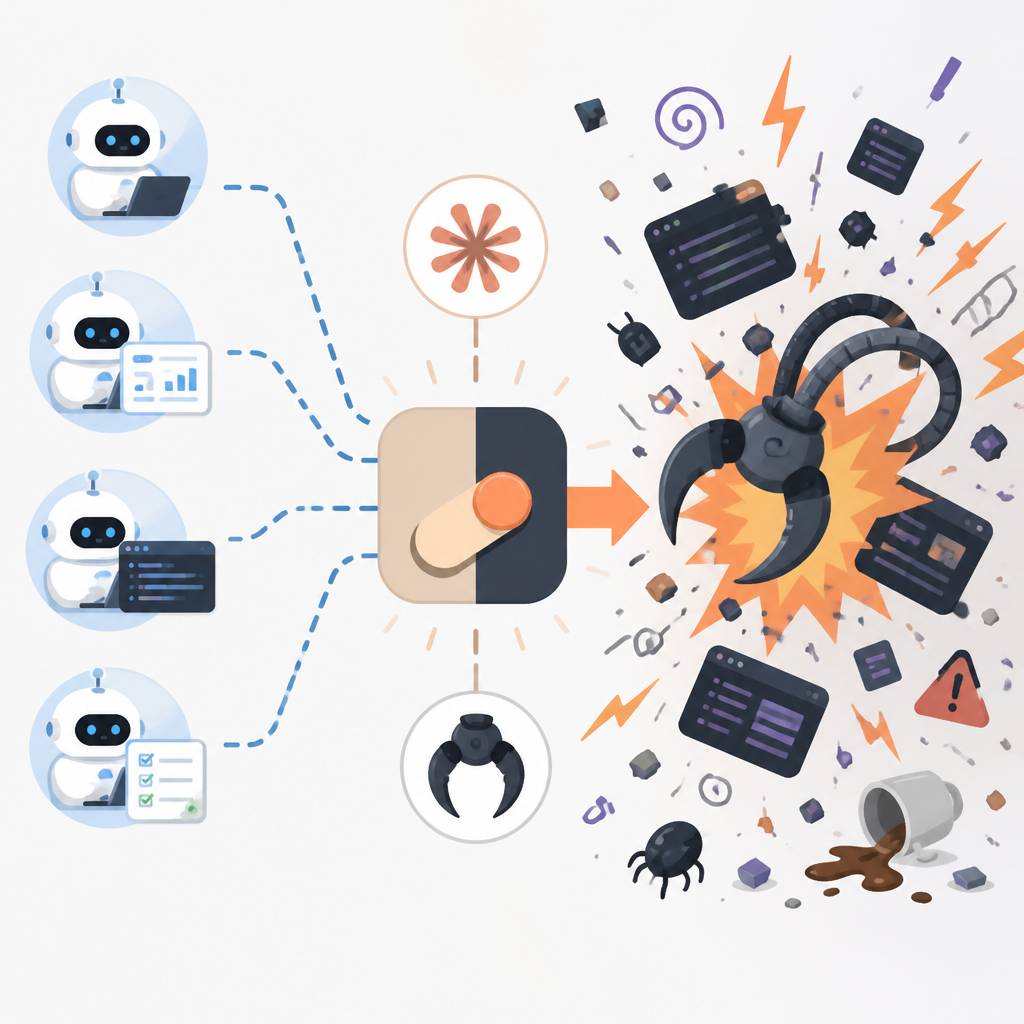
For the market, the shift is bigger than a single product cycle. AI agents are moving from niche experiments into workflows that touch engineering, operations, and personal productivity, which raises both adoption pressure and risk around data access, autonomy, and mistakes.
The core question now is not whether agents can do useful work, but how much trust teams will give them before the cost of errors, privacy exposure, or runaway automation becomes too high.
// Related Articles
- [AGENT]
Claude Code 动态工作流:AI 自写 Harness
- [AGENT]
Agent orchestration is the missing layer for enterprise AI
- [AGENT]
AI agents use blockchain as a trust layer
- [AGENT]
8 RAG patterns that turn demos into prod
- [AGENT]
Fine-tuning beats RAG when the goal is style, not facts
- [AGENT]
OpenClaw shows how small businesses use AI staff