AWS turns Bedrock into an OpenAI control plane
AWS folded OpenAI models, Codex, and managed agents into Bedrock so teams can ship AI work inside AWS controls.
AWS is folding OpenAI models, Codex, and managed agents into Bedrock.
I’ve been using AWS long enough to know when a launch is actually about plumbing and when it’s just shiny packaging. This one felt like plumbing, which is why I paid attention. For a while, the annoying part of building with frontier models has not been the model quality. It’s been the mess around it: separate auth, separate governance, separate billing, separate deployment paths, and then the endless fun of explaining to security why the “quick prototype” now needs three more exceptions.
That’s why this announcement hit differently. AWS is not pretending everything suddenly became simple. It’s doing the thing I wish more vendors would do: put the model where the enterprise already lives, then make the workflow less stupid. The OpenAI partnership, Codex inside AWS environments, and managed agents on Bedrock all point at the same idea. Keep the AI close to the controls, not the other way around.
I’m breaking down the parts that matter, because the blog post is a pile of announcements and the useful bit is buried underneath the marketing gloss.
Source anchor: the original post is AWS News Blog’s “Top announcements of the What’s Next with AWS, 2026”, published April 28, 2026. I’m working from that post and the linked AWS/OpenAI materials, not from any private demo notes.
1) AWS stopped asking you to pick a side
Get the latest AI news in your inbox
Weekly picks of model releases, tools, and deep dives — no spam, unsubscribe anytime.
No spam. Unsubscribe at any time.
AWS and OpenAI are bringing the latest OpenAI models to Amazon Bedrock, launching Codex on Amazon Bedrock, and launching Amazon Bedrock Managed Agents, powered by OpenAI (all in limited preview), giving enterprises the frontier intelligence they want on the infrastructure they trust.
What this actually means is AWS is trying to make the model choice less political and more operational. If your company already runs its data, identity, logging, and approvals through AWS, you can now bring OpenAI models into that same control surface instead of bolting on a separate stack and hoping nobody notices the cracks.
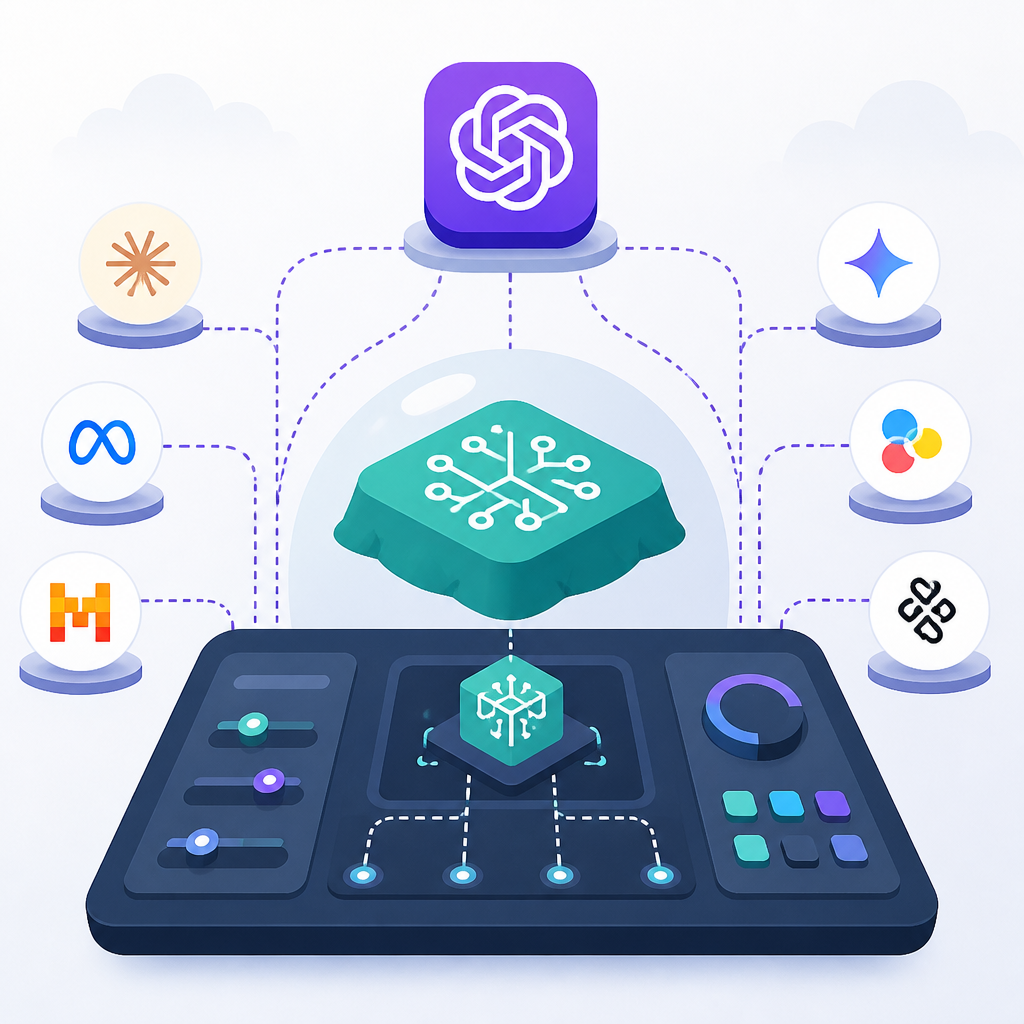
I’ve seen teams burn weeks on “model evaluation” when the real issue was infrastructure mismatch. The model was fine. The deployment path was the problem. Bedrock has always been AWS’s answer to that, and this announcement pushes it harder: if you want OpenAI, you don’t necessarily have to leave the AWS envelope to get it.
The useful part here is not “OpenAI on AWS” as a headline. The useful part is unified security, governance, and cost controls. That’s the boring sentence that saves real money. It means fewer custom wrappers, fewer duplicate policy layers, and fewer meetings where someone asks whether the logs live in the right account.
How to apply it: if you’re already on AWS, map your current model workflow into four buckets: identity, network, audit, and billing. Then ask which of those become simpler if the model lives in Bedrock. If the answer is “none,” don’t migrate just because the logo changed. If the answer is “all four,” now you’re talking.
- Use Bedrock if your main pain is control, not raw access.
- Don’t move a model stack just to avoid one integration task.
- Make security and finance sign off on the same architecture, not separate ones.
2) Codex inside AWS is the part dev teams will actually feel
AWS says Codex is coming to Amazon Bedrock in limited preview, and that you can use AWS credentials, process inference through Bedrock infrastructure, and apply Codex usage toward AWS cloud commitments. It’s also showing up through the Bedrock API, starting with the Codex CLI, the Codex desktop app, and the Visual Studio Code extension.
What this actually means is the coding agent is no longer a sidecar you have to explain to procurement. It sits closer to the same AWS identity and billing model your team already uses. That matters because developer tools die in the enterprise when they create one more exception. Nobody wants to maintain “the AI tool account” like it’s a haunted basement.
I ran into this exact problem with internal copilots before. The devs loved them for a week. Then they hit auth friction, then billing confusion, then “can we log this properly,” and then half the team went back to copy-paste and prayer. If Codex can live inside the AWS environment without a second administrative universe, that removes a lot of the friction that kills adoption.
There’s also a subtle but important detail here: AWS is making Codex something you can use where you already work, not just in a standalone chat box. CLI, desktop app, editor extension. That’s the right shape. Developers do not want another tab. They want the agent to sit next to the code, the terminal, and the deploy path.
How to apply it: if you’re evaluating this for a team, test three things first. Can a developer authenticate with existing AWS credentials? Can you trace the usage cleanly to your AWS spend model? Can the agent operate in the tools your team already uses every day? If any answer is no, adoption will stall.
- Start with one repo and one team, not the whole org.
- Measure time saved on review, scaffolding, and refactors.
- Track whether the agent reduces context switching, not just token spend.
3) Managed agents are AWS admitting orchestration is the real product
AWS introduced Amazon Bedrock Managed Agents, powered by OpenAI, as a limited preview for building production-ready agents in the cloud. AWS says these agents combine frontier models with trusted AWS infrastructure and use an OpenAI harness designed for faster execution, sharper reasoning, and better steering of long-running tasks.
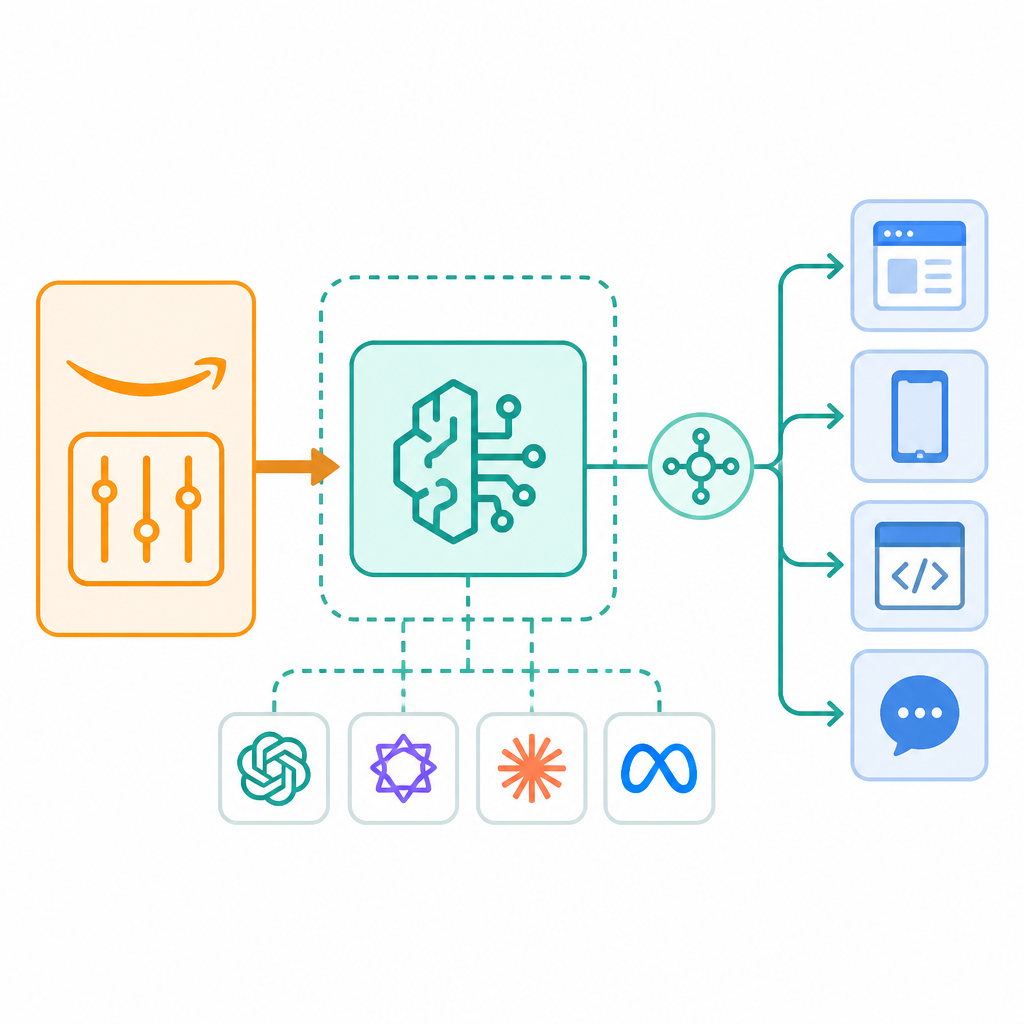
What this actually means is AWS is moving up the stack from “here’s a model endpoint” to “here’s the thing you actually need to run work.” That’s orchestration, task steering, state, and the ugly long-running stuff that turns demos into software.
People love to talk about agents like they’re just prompts with tools. That’s nonsense. A useful agent is mostly about lifecycle management: what it can do, how it recovers, what it logs, when it stops, and who owns the mess when it drifts. AWS is clearly trying to package that problem into something enterprises can buy without building everything from scratch.
I’ve built enough agent prototypes to know the first version always looks magical and the second version looks like a support ticket generator. The difference between those two is boring infrastructure. Managed agents are AWS saying, “fine, we’ll own more of the boring parts.” That’s the right instinct.
How to apply it: write down the exact tasks you want an agent to own. Not “help with support” but “triage tickets, pull account context, draft a response, and escalate when confidence is low.” Then decide which parts must stay under your own control and which parts you’re willing to hand to managed orchestration.
If you’re comparing this with other agent platforms, look at OpenAI’s platform docs and AWS Bedrock side by side. I’d care less about the demo and more about observability, guardrails, and failure handling.
4) Quick is AWS trying to become the work app people actually open
The Amazon Quick updates are less flashy than the OpenAI deal, but I think they matter just as much. AWS says Quick is an AI assistant for work, now with a desktop app, Free and Plus plans, visual asset generation in chat, and more native integrations with Google Workspace, Zoom, Airtable, Dropbox, and Microsoft Teams.
What this actually means is AWS wants a daily-use interface, not just an infrastructure layer. That’s a big shift. It’s one thing to be where the models run. It’s another to be the thing people open when they need to get work done.
The desktop app is the part I’d watch. Browser-only assistants are easy to ignore. Desktop apps can stay connected to local files, calendars, and communications without forcing people to juggle tabs like a caffeinated air traffic controller. If AWS gets that right, Quick becomes a real workflow surface instead of a novelty.
The new pricing plans are also a tell. Free and Plus means AWS wants people to try it without going through the usual “please file a ticket, then wait three weeks” ritual. That’s smart. Internal tools die when they start as procurement exercises.
How to apply it: if you’re building an internal AI assistant, don’t start with model choice. Start with the smallest daily job people already do in Slack, email, docs, or spreadsheets. Then wire the assistant into that exact surface. If it doesn’t save time in a real workflow, nobody will care that it can generate a polished infographic.
- Pick one repeated task per team.
- Connect the assistant to the data source, not a copied export.
- Ship a desktop or native workflow if the browser keeps getting in the way.
5) Amazon Connect is turning customer ops into a bundle of agents
AWS says Amazon Connect is expanding from a single product into four agentic AI solutions: Amazon Connect Decisions, Talent, Customer, and Health. That split tells me AWS thinks “contact center” was too narrow and too old-fashioned for what customers are actually buying.
What this actually means is AWS is packaging AI around specific business functions, not just generic chat. Decisions is for supply chains. Talent is for hiring. Customer is for customer experience. Health is for patient workflows. That’s a more honest product strategy than pretending one agent shape fits every mess.
I like this move because it admits that domain context matters more than generic intelligence. A hiring workflow needs consistency and fairness. A supply chain workflow needs planning and exception handling. Health care needs verification, documentation, and coding. Same model family, different operational rules.
If you’ve ever tried to force a general-purpose assistant into a regulated workflow, you know how fast the wheels come off. The agent gets confident at exactly the wrong moment. AWS is trying to reduce that by giving each domain a narrower target and more opinionated workflow design.
How to apply it: if you’re in a vertical, stop asking “can the model do it?” Ask “what workflow bundle does the model need?” Then define the task, the data sources, the approvals, and the handoff points. The narrower the use case, the easier it is to make useful.
For the health and hiring pieces especially, I’d read the AWS announcements carefully and compare them with your compliance requirements. The product can be smart and still be a bad fit for your policy stack.
6) The real strategy is keeping AI spend inside AWS gravity
This is the part people will dance around, but I won’t. AWS is trying to keep more AI spend, more AI workflows, and more AI governance inside its own orbit. That’s not a criticism. It’s the business model, and it’s also a practical answer to the fragmentation problem many teams are dealing with.
What this actually means is AWS wants Bedrock to be the place where model access, agent execution, and enterprise controls converge. If you’re already paying AWS for compute, storage, identity, and observability, this announcement says you can keep the AI layer in the same accounting and compliance world.
I’ve seen enough platform shifts to know the winning move is rarely “best model wins.” It’s usually “least annoying path wins.” AWS is betting that enterprises will choose the path that reduces integration drag, even if it means giving up some freedom outside the cloud they already trust.
The catch, of course, is lock-in. If you build everything around AWS-managed agents and Bedrock-native workflows, you are making a bet on AWS’s roadmap. That may be totally fine. I just want people to say it out loud instead of pretending vendor dependence is a neutral state of nature.
How to apply it: before you adopt any of this, write a portability note. What parts are model-specific, what parts are orchestration-specific, and what parts are pure business logic? If you can separate those cleanly, you’ll sleep better. If you can’t, you’re not buying a feature, you’re buying a platform commitment.
The template you can copy
# AWS Bedrock + OpenAI adoption template

## Goal
Use OpenAI models and managed agents inside AWS so teams can keep identity, logging, and billing in one place.

## When this is worth it
- We already run core workloads on AWS
- Security wants one governance model
- Finance wants usage tied to AWS commitments
- Developers want AI tools inside CLI, desktop, and editor workflows

## What to evaluate
### 1. Identity
- Can users authenticate with existing AWS credentials?
- Do we avoid creating a separate AI account universe?

### 2. Governance
- Are model calls covered by existing security controls?
- Can we apply the same audit and retention rules we use elsewhere?

### 3. Billing
- Can usage roll into AWS spend and commitments?
- Can we separate model spend from app spend?

### 4. Developer workflow
- Does the coding agent work in CLI, desktop app, and VS Code?
- Does it reduce context switching?
- Can teams use it without changing their whole toolchain?

### 5. Agent design
Define each agent like this:
- Task: what it owns
- Inputs: what data it can read
- Tools: what it can call
- Guardrails: what it must not do
- Escalation: when a human takes over
- Logs: what gets recorded
- Exit conditions: how the task ends

## Pilot plan
### Week 1
- Pick one team
- Pick one repo or one workflow
- Turn on the smallest possible preview

### Week 2
- Measure time saved on setup, review, and repetitive work
- Track auth friction and billing confusion
- Record failure cases and escalation paths

### Week 3
- Decide whether the workflow is better inside AWS or should stay external
- Decide whether the value is real enough to expand

## Decision rule
Adopt only if the AWS-native path reduces friction in at least three of these four areas:
- identity
- governance
- billing
- developer workflow

## Red flags
- The team needs a separate account just for AI
- Security has to invent new controls from scratch
- Billing cannot be traced cleanly
- The agent works in demos but not in the tools people actually use

## Short version
If the model is good but the operating path is messy, don’t ship it.
If AWS keeps the path boring, that’s the point.
I’d use this template as the first-pass filter before anyone gets excited about a demo. It keeps the conversation grounded in operational reality, which is where these projects either live or die.
My read on this AWS announcement is simple: they’re turning Bedrock into a control plane for frontier models and agent workflows, and they’re trying to make that feel normal for enterprise teams. That is much more interesting than another “AI everywhere” slogan.
Source attribution: the original material is AWS News Blog’s “Top announcements of the What’s Next with AWS, 2026”. My breakdown is original commentary and implementation advice built from that post and the linked AWS/OpenAI references, not a reproduction of the announcement itself.
// Related Articles
- [IND]
OpenAI’s IPO filing turns hype into scrutiny
- [IND]
Skatteetaten proves public sector AI should be judged by outcomes
- [IND]
OpenAI’s IPO filing puts AI’s biggest test on Wall Street
- [IND]
OpenAI’s latest moves now center on pricing, safety, and scale
- [IND]
RISC-V mini PCs are worth buying now, but only as a bet on the future
- [IND]
Fedora 44 RISC-V widens Linux board support