Why Microsoft’s open source AI safety tools matter for agent developm…
Microsoft’s RAMPART and Clarity push AI safety into everyday agent engineering, and that is the right move.
Microsoft’s RAMPART and Clarity push AI safety into everyday agent engineering.
Microsoft is right to ship RAMPART and Clarity as open source because agent safety fails when it is treated like a late-stage review instead of a development habit. The company says RAMPART turns red-team findings into repeatable tests that can run in CI, while Clarity captures design assumptions before code exists. That matters now because agents are no longer just generating text; they are reading mail, pulling records, writing code, and calling tools inside enterprise systems, which means a single bad assumption can become a live incident.
Safety belongs in the build loop, not in a report
Get the latest AI news in your inbox
Weekly picks of model releases, tools, and deep dives — no spam, unsubscribe anytime.
No spam. Unsubscribe at any time.
RAMPART’s biggest contribution is not novelty, it is discipline. By wrapping adversarial scenarios in pytest, Microsoft makes safety checks look like any other engineering test, which is exactly how they should be treated. A team that adds a new data source or tool can add a test for prompt injection, run it in CI, and fail the build when the agent takes the wrong action. That is a real change from the usual pattern, where red-team notes sit in a slide deck and never reach the next sprint.
The repeatability angle matters just as much. LLM behavior is probabilistic, so one clean run proves very little. Microsoft explicitly supports statistical trials and policies such as requiring safe behavior in a certain percentage of runs. That is a practical acknowledgment that agent safety is not binary. It is measured under load, across runs, with enough samples to expose brittle behavior before customers do.
Clarity fixes the earlier, more expensive mistake
Clarity is the more underrated part of the release because it attacks a common failure in AI projects: teams build the wrong system with confidence. The tool forces structured discussion around the problem, solution options, failure analysis, and decision tracking before implementation starts. In practice, that means a team can surface unsafe assumptions about user intent, tool access, or operational boundaries before those assumptions harden into code and process.
Its markdown-based protocol is smart because it turns design reasoning into versioned project material. If the output lives in a repository, it can be reviewed in pull requests, diffed over time, and revisited when the system changes. That is a stronger model than a one-time workshop or a confluence page no one opens again. For AI agents, where requirements drift quickly and failure modes multiply, preserving the reasoning trail is not paperwork. It is engineering memory.
Open source is the right distribution model
Microsoft also chose the right release strategy. Safety tools only matter if developers can inspect them, adapt them, and trust that the checks map to their own threat model. Open source makes that possible. It also creates a common language between security teams and application teams, which is essential when the same organization has to think about prompt injection, tool misuse, and business logic failures at the same time.
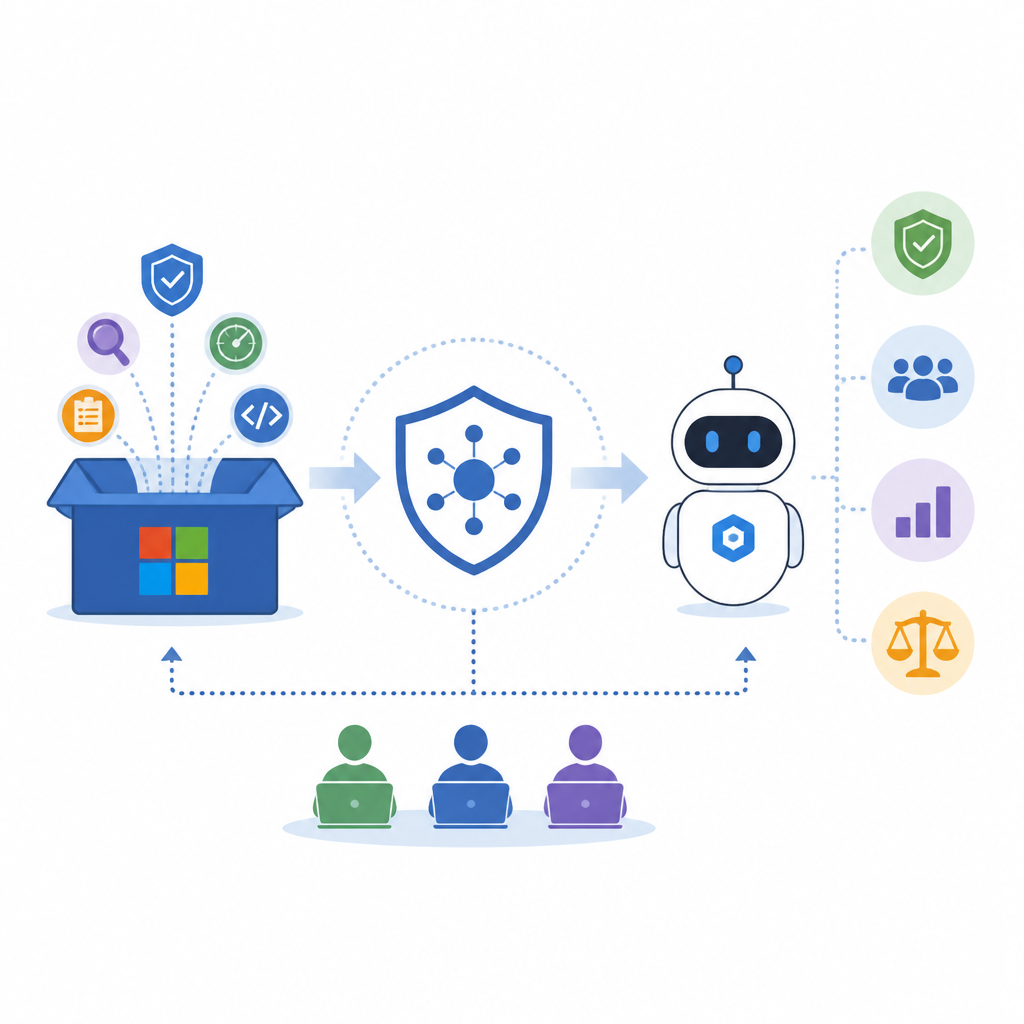
There is a second benefit: open source makes safety portable across stacks. Microsoft is not the only company shipping agent frameworks, and it will not be the last. If RAMPART and Clarity gain traction, they can become reference patterns for how to operationalize safety in mixed environments, not just inside Microsoft’s own ecosystem. That matters for higher education, healthcare, finance, and other sectors that will not standardize on one model provider but still need the same safety discipline.
The counter-argument
The strongest objection is that tools like RAMPART and Clarity can create a false sense of control. Agents remain non-deterministic, models change under the hood, and a test suite cannot cover every poisoned document, malicious prompt, or tool-chain edge case. Critics are right that safety cannot be reduced to a checklist, and they are right that teams can mistake formal process for real risk reduction.
That critique lands only if these tools are treated as complete solutions. They are not. They are guardrails. The point is not to prove an agent is safe in the abstract; the point is to catch known failures earlier and make new failures harder to repeat. Microsoft’s own framing supports that limit by focusing on continuous testing, statistical outcomes, and design review rather than a one-and-done certification. The right standard is improvement, not perfection, and that is the standard these tools can meet.
What to do with this
If you build agents, stop waiting until launch to think about safety. Engineers should turn red-team incidents into automated tests, wire them into CI, and treat safety regressions like any other broken build. PMs should require a written decision trail for agent scope, tool access, and failure handling before implementation starts. Founders should fund safety work as core product work, because the first serious agent incident will cost far more than the time spent building the checks now.
// Related Articles
- [TOOLS]
Magenta RealTime 2 lets you score in the DAW
- [TOOLS]
Open-source AI tools beat Claude’s paid tiers on value
- [TOOLS]
500 AI agent projects show where agents work now
- [TOOLS]
Chocolatey’s Go package turns installs into policy
- [TOOLS]
Go support policy turns releases into a checklist
- [TOOLS]
RustDesk self-hosting setup for secure remote access