Why the Packers should stop treating running back depth like an after…
The Packers need to treat running back depth as a real roster priority, not a backup plan.

The Packers need to treat running back depth as a real roster priority, not a backup plan.
The Packers are making a mistake if they keep treating running back depth as a luxury instead of a roster requirement. Josh Jacobs is the centerpiece, but the team’s own offseason chatter shows how quickly the conversation shifts from “what he adds” to “what happens if he is unavailable,” and that is the wrong place for a contender to live. A team that wants to protect Jordan Love and stay balanced cannot afford to enter the season with its backup plan defined by hope.
First, the Packers’ current approach puts too much weight on one player
Get the latest AI news in your inbox
Weekly picks of model releases, tools, and deep dives — no spam, unsubscribe anytime.
No spam. Unsubscribe at any time.
Jacobs is a proven lead back, and the Packers know it. He changes how defenses line up, he gives Green Bay a downhill identity, and he helps take pressure off the passing game. But the very fact that the team has spent so much time discussing his return to practice, his workload, and his status tells you how fragile the setup becomes when one player absorbs too much of the identity. That is not roster strength; it is concentration risk.

The Packers have already shown they understand the issue by asking what comes next behind him. That is the correct instinct, and it should become action, not just conversation. If a team is publicly weighing alternate running back plans before the season even starts, then it already knows the room is thin enough to matter. The lesson is simple: depth at running back is not about finding a star replacement. It is about avoiding a cliff when the starter misses time.
Second, the modern Packers offense needs more than a single reliable runner
Green Bay’s offense is built around balance, timing, and keeping the defense honest. That means the run game cannot collapse the moment the lead back is unavailable or limited. The Packers are trying to develop Jordan Love, stabilize the line, and keep the offense efficient on early downs. If the run game becomes predictable because the depth chart is shallow, the entire structure gets harder for Love, not easier. The offense does not need a miracle backfield. It needs multiple functional answers.
Look at the practical reality of an NFL season: injuries, short weeks, rotation, and game-script volatility all force teams to use more than one back. The Packers have already been linked to questions about their options behind Jacobs, and that is the right problem to identify now rather than in November. A contender does not wait for the first missed game to discover that its No. 2 and No. 3 options are situational at best. It builds a room that can survive contact with the season.
The counter-argument
The best case for standing pat is cost control. Running backs are replaceable, the argument goes, and investing heavily in the position is how teams waste resources. There is truth there. The league has spent years teaching front offices that paying premium money for a back who can be replicated by committee is a bad bet. The Packers also have other needs, and every roster dollar spent on insurance at running back is a dollar not spent elsewhere.
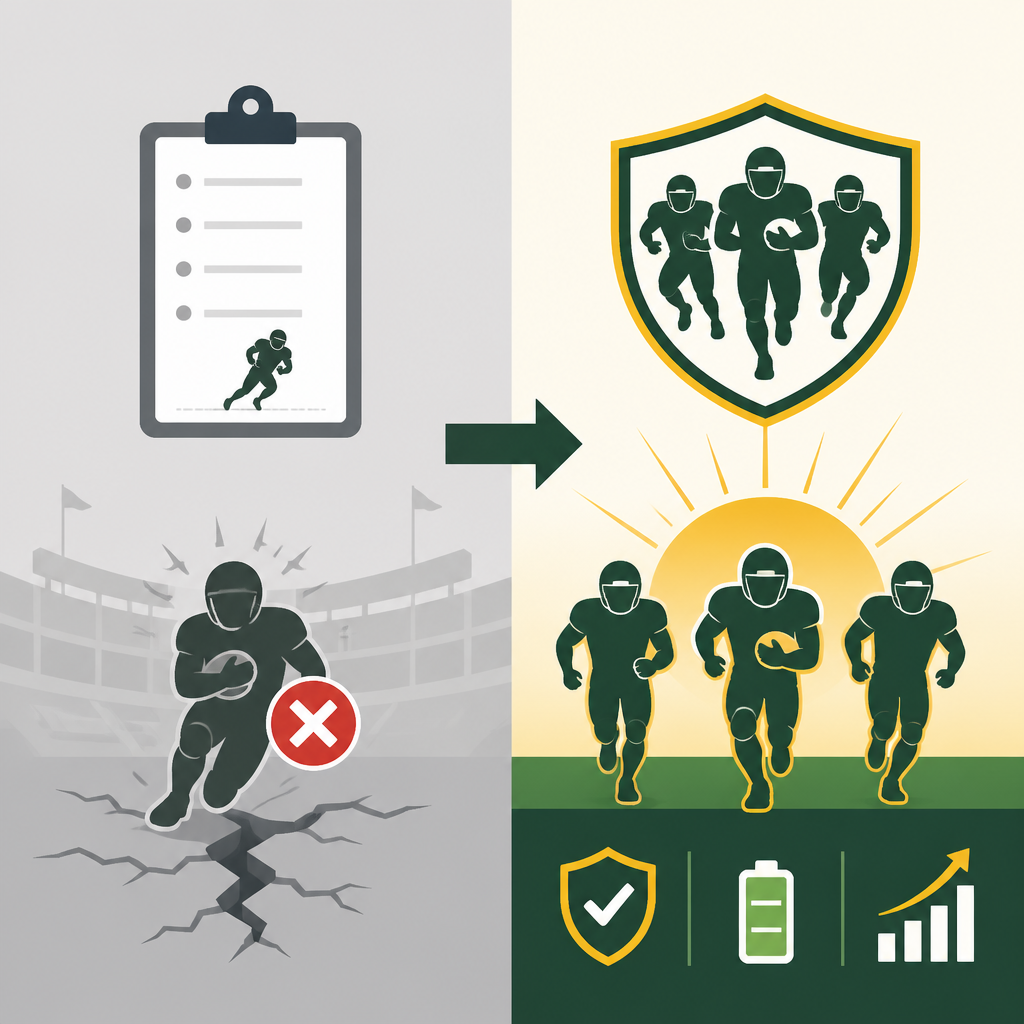
That argument is strong in the abstract, but it fails in Green Bay’s specific case because this is not about paying for a luxury backfield. It is about avoiding a structural weakness behind a clear starter. The Packers do not need to chase a headline name, and they do not need to overspend. They need competence, not a splash. If the current depth chart cannot deliver that, then the team is already underinsured at a position that directly affects game control, pass protection, and offensive rhythm.
What to do with this
The Packers should add a dependable second and third running back option before training camp turns the depth chart into a false comfort. That means prioritizing players who can pass protect, handle 8 to 12 touches without breaking the offense, and survive special-teams duty. For an engineer, the lesson is to build redundancy into systems that must keep running under stress. For a PM, it is to define the failure mode before launch. For a founder, it is to stop confusing a strong lead asset with a resilient business. The Packers need the same discipline: protect the core by making the fallback real.
// Related Articles
- [IND]
AMD and Microsoft push Windows ML on GPU and NPU
- [IND]
OpenAI’s IPO filing turns hype into scrutiny
- [IND]
Skatteetaten proves public sector AI should be judged by outcomes
- [IND]
OpenAI’s IPO filing puts AI’s biggest test on Wall Street
- [IND]
OpenAI’s latest moves now center on pricing, safety, and scale
- [IND]
RISC-V mini PCs are worth buying now, but only as a bet on the future