QwenPaw Rebrands as a Personal AI Assistant
QwenPaw, formerly CoPaw, rebrands with tighter Qwen ties, local deployment, multi-channel chat, and new v1.1.8 features.

QwenPaw is the new name for CoPaw, an open-source personal AI assistant built for local or cloud deployment.
On 2026-04-12, the project formerly known as CoPaw changed its name to QwenPaw. The repo now has 16.9k stars, 2.5k forks, and more than 1,200 commits, which tells you this is not a side project collecting dust.
The rebrand matters because it clarifies what the project is trying to become: a personal assistant that can run on your own machine, in your own cloud, and across chat apps you already use. That is a very different pitch from the usual “AI app” demo that only works inside a single browser tab.
| Metric | Value | Why it matters |
|---|---|---|
| Rebrand date | 2026-04-12 | Marks the shift from CoPaw to QwenPaw |
| Latest release | v1.1.8 | Shows active development and shipping cadence |
| GitHub stars | 16.9k | Signals strong community interest |
| Forks | 2.5k | Suggests real experimentation and downstream use |
| Commits | 1,241 | Indicates a mature, evolving codebase |
What changed in the rebrand
Get the latest AI news in your inbox
Weekly picks of model releases, tools, and deep dives — no spam, unsubscribe anytime.
No spam. Unsubscribe at any time.
The project team says the new name better reflects two things: a deeper connection to the Qwen open-source ecosystem, and the original mission of building a personal assistant users can trust. In plain English, the name now matches the product direction.
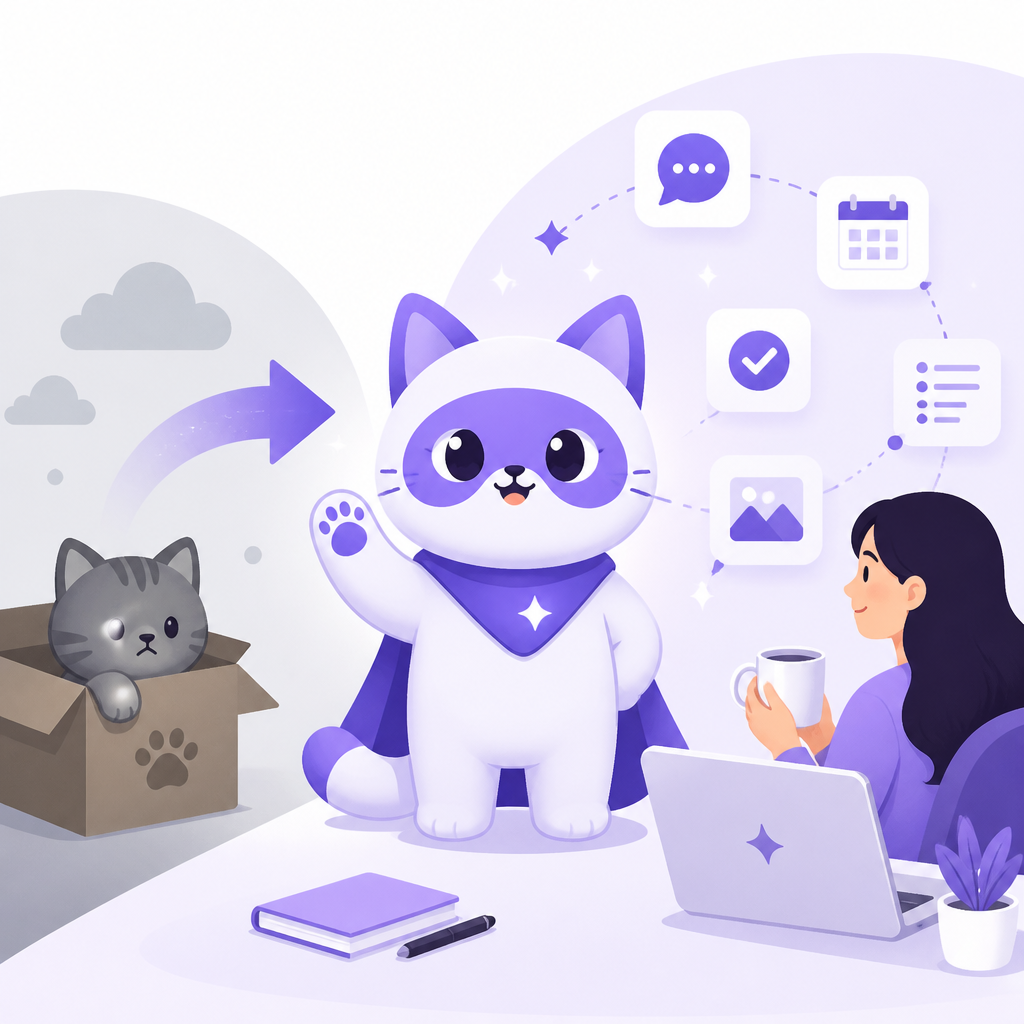
The “Qwen” part points to model-layer integration, including local models and coordination between small and large models. The “Paw” part keeps the assistant identity intact, which matters because this project is trying to feel personal, not like an enterprise workflow engine disguised as a chatbot.
That framing also helps explain the roadmap. QwenPaw is not trying to be everything for everyone. It is aimed at people who want an assistant that can remember context, run scheduled tasks, and connect to the tools they already live in.
- Local deployment keeps data on your machine.
- Cloud deployment lets you choose your own server.
- Multi-channel support covers DingTalk, Feishu, WeChat, Discord, and Telegram.
- Skills can be extended without waiting on the core project.
Why the feature set is more interesting than the name
Most assistant projects stop at chat. QwenPaw goes after the annoying parts people actually want help with: summaries, reminders, file search, email triage, and scheduled automation. The repo lists social media digests, productivity workflows, creative workflows, and research tools as first-class use cases.
That makes it feel closer to an assistant platform than a single app. If you want daily hot post digests from Xiaohongshu, Zhihu, Reddit, or video summaries from Bilibili and YouTube, QwenPaw already has a story for that. If you want it to push newsletter highlights into DingTalk or Feishu, it has a story for that too.
What matters here is the combination of memory, scheduling, and channel support. A lot of open-source assistants can do one of those things. Fewer can do all of them without forcing you into a single vendor’s hosting stack.
“This rebranding marks an important step forward into our next phase of open-source development.”
The team’s own wording makes the direction clear: QwenPaw is meant to keep growing as an open-source assistant, not freeze into a one-off release. That is why the project keeps adding channel fixes, security controls, and plugin resources in each release.
v1.1.8 shows the project is still moving fast
The v1.1.8 release, published on 2026-05-19, adds several practical pieces. The release notes mention official plugin resources, a QwenPaw Pet desktop companion, a CloudPaw Alibaba Cloud deployment plugin, a /make-skill command, custom HTTP headers and auth mode, per-model context configuration, inbox batch operations, and a pinned chat history drawer.
That is a lot of shipping for a single release, but the more important detail is that the team also fixed real operational issues. The notes call out WeCom, WeChat, and QQ channel stability, a per-model rate limiter, and an SSE connection leak. Those are the kinds of bugs that matter once a tool leaves the demo phase and starts handling actual traffic.
- v1.1.8 added plugin resources and a desktop companion.
- Security work included backup trust controls and path traversal prevention.
- Channel reliability fixes targeted WeCom, WeChat, and QQ.
- New plugin paths point to cloud deployment and skill creation.
If you compare that release to the project’s install story, the intent becomes obvious. QwenPaw wants to be easy to try, easy to extend, and hard to outgrow. The project offers uv-based setup, a script installer, and source installation for people who want more control.
That matters because installation friction is where many open-source assistants die. If a project can’t get from clone to usable in a few steps, most users never reach the part where the feature list matters.
How it compares with other assistant projects
QwenPaw’s strongest comparison point is not a single chatbot, but the broader class of personal AI tools that try to sit between your model provider and your daily apps. Its main edge is the mix of local control, multi-channel delivery, and skills-based extension.
Here is the practical comparison:
- QwenPaw: local or cloud deployment, multi-channel chat, skills, memory, and proactive behavior.
- Cloud-only assistants: easier to start, but you give up control over data and hosting.
- Single-app bots: simpler to understand, but they usually stop at one chat surface and a narrow feature set.
- Scripted automation tools: powerful for workflows, but they often lack the conversational layer that makes assistants feel personal.
That mix makes QwenPaw attractive for tinkerers, small teams, and anyone who wants an assistant with a longer memory than a browser session. It also explains why the repo has 602 issues and 220 pull requests open in the public view: this is a project with enough activity to attract both users and contributors.
If you want the closest thing to a product thesis, it is this: QwenPaw is trying to make AI useful inside the channels and habits people already use, while keeping deployment under user control. That is a practical goal, and it is one of the better ways to judge assistant software right now.
What to watch next
The next question is whether the project can keep balancing three things at once: model flexibility, channel reliability, and security. That balance is hard, especially when the assistant is expected to run locally, in the cloud, and inside messaging apps with different failure modes.
For users, the takeaway is simple. If you want a personal assistant that can live on your own hardware, talk in your existing chat apps, and grow through plugins and skills, QwenPaw is worth a look. If you only want a quick chatbot, this is probably more project than you need.
The real test will be adoption outside the GitHub star count. If the next few releases keep improving deployment, permissions, and channel stability, QwenPaw could become one of the more practical open-source assistant stacks to watch this year.
// Related Articles
- [AGENT]
Claude Code 动态工作流:AI 自写 Harness
- [AGENT]
Agent orchestration is the missing layer for enterprise AI
- [AGENT]
AI agents use blockchain as a trust layer
- [AGENT]
8 RAG patterns that turn demos into prod
- [AGENT]
Fine-tuning beats RAG when the goal is style, not facts
- [AGENT]
OpenClaw shows how small businesses use AI staff