Spotify turns AI into more noise, not better discovery
I break down Spotify’s AI push, why it feels cluttered, and the template for building discovery-first product features.
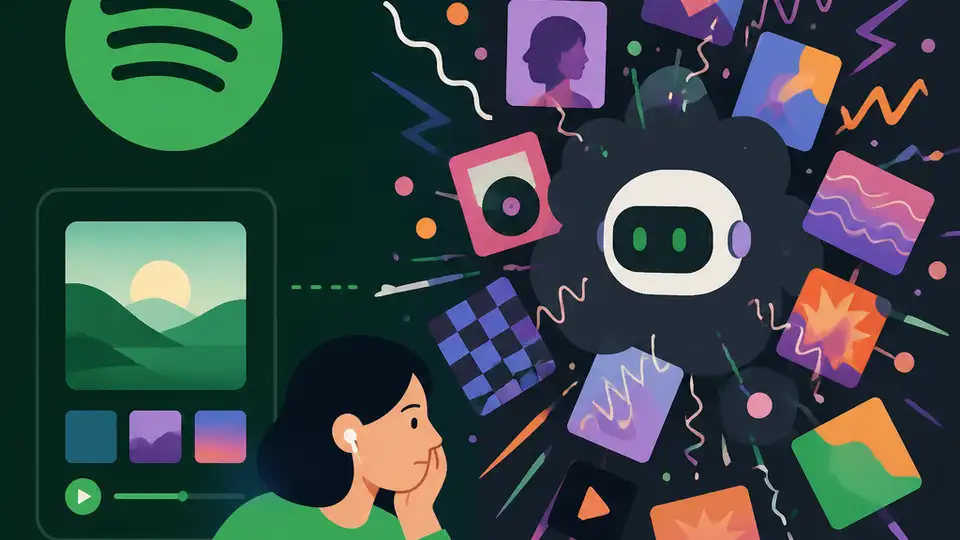
I break down Spotify’s AI push, why it feels cluttered, and the template for building discovery-first product features.
I’ve been using Spotify long enough to watch it drift from a music app into this weird all-audio bucket that keeps swallowing itself. Music first. Then podcasts. Then audiobooks. Now AI everywhere, and I’m not talking about the helpful kind that cleans up a messy queue or surfaces a track I’d actually love. I mean the kind that keeps making the app busier while somehow making it harder to find anything. That’s the part that bugs me.
Every time I open a product like this, I want one thing: less friction, better taste, fewer dead ends. Instead, I keep getting features that look impressive in a demo and feel like clutter in real use. Spotify’s latest AI push reads exactly like that. It’s not just adding AI to help me discover stuff. It’s adding AI to generate more stuff, then adding more AI to help me navigate the mess it just created. That’s not a strategy. That’s a treadmill.
So I dug into Ivan Mehta’s TechCrunch piece, “Spotify’s AI bet: more of everything, less of what you want”, because it captures the tension cleanly: Spotify wants to be the everything-audio app, but the more it expands, the less focused it feels. And honestly, that’s the exact failure mode I keep seeing in product teams that fall in love with AI as a feature bucket instead of a user outcome.
Spotify isn’t adding AI to help you listen better
Get the latest AI news in your inbox
Weekly picks of model releases, tools, and deep dives — no spam, unsubscribe anytime.
No spam. Unsubscribe at any time.
“The latest wave, announced at its investor day, skews heavily toward using AI to generate content rather than using AI to help users find content they actually want.”
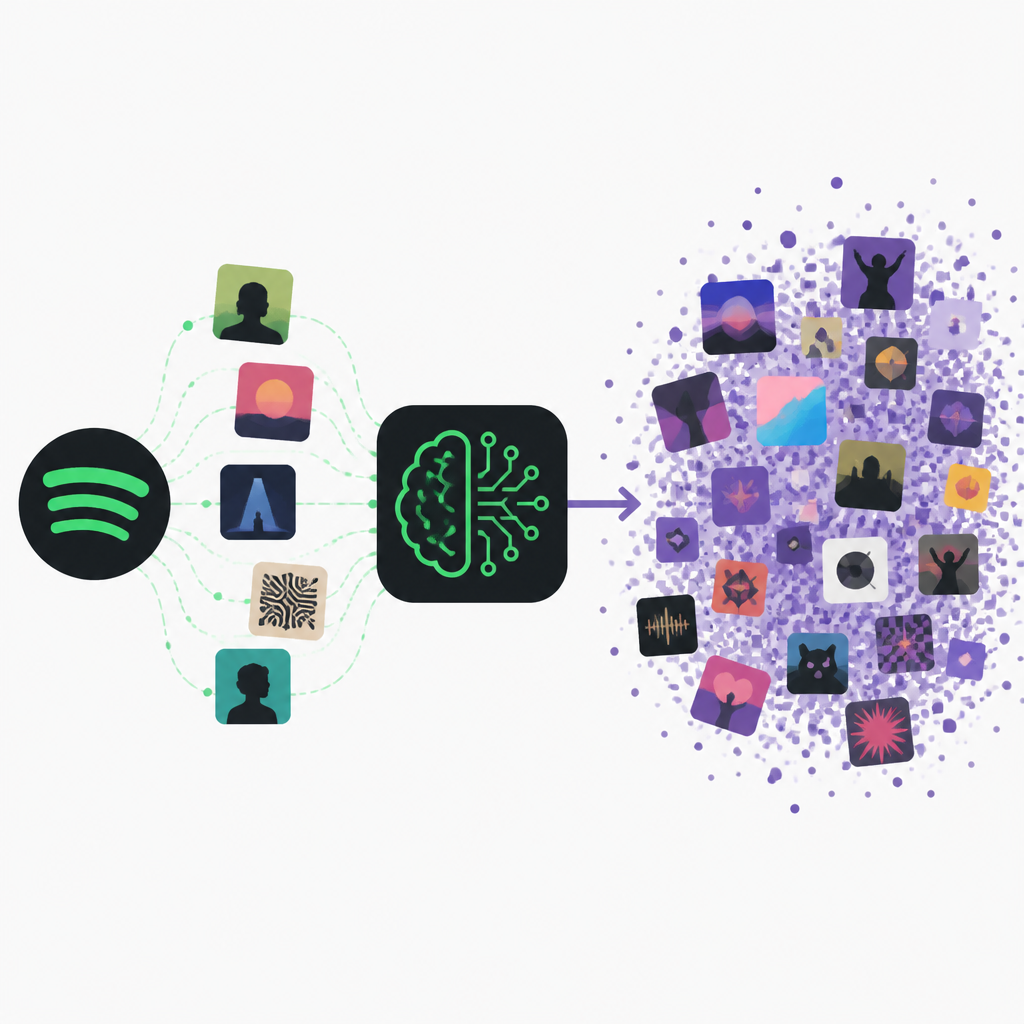
What this actually means is Spotify is treating AI like a content multiplier first and a discovery tool second. That’s a big difference. If the product goal is “help me find the next thing I’ll like,” then AI should reduce search cost, filter noise, and improve recommendations. But if the goal is “make more content inside the app,” you end up with a pile of generated material that needs even more machinery to sort through.
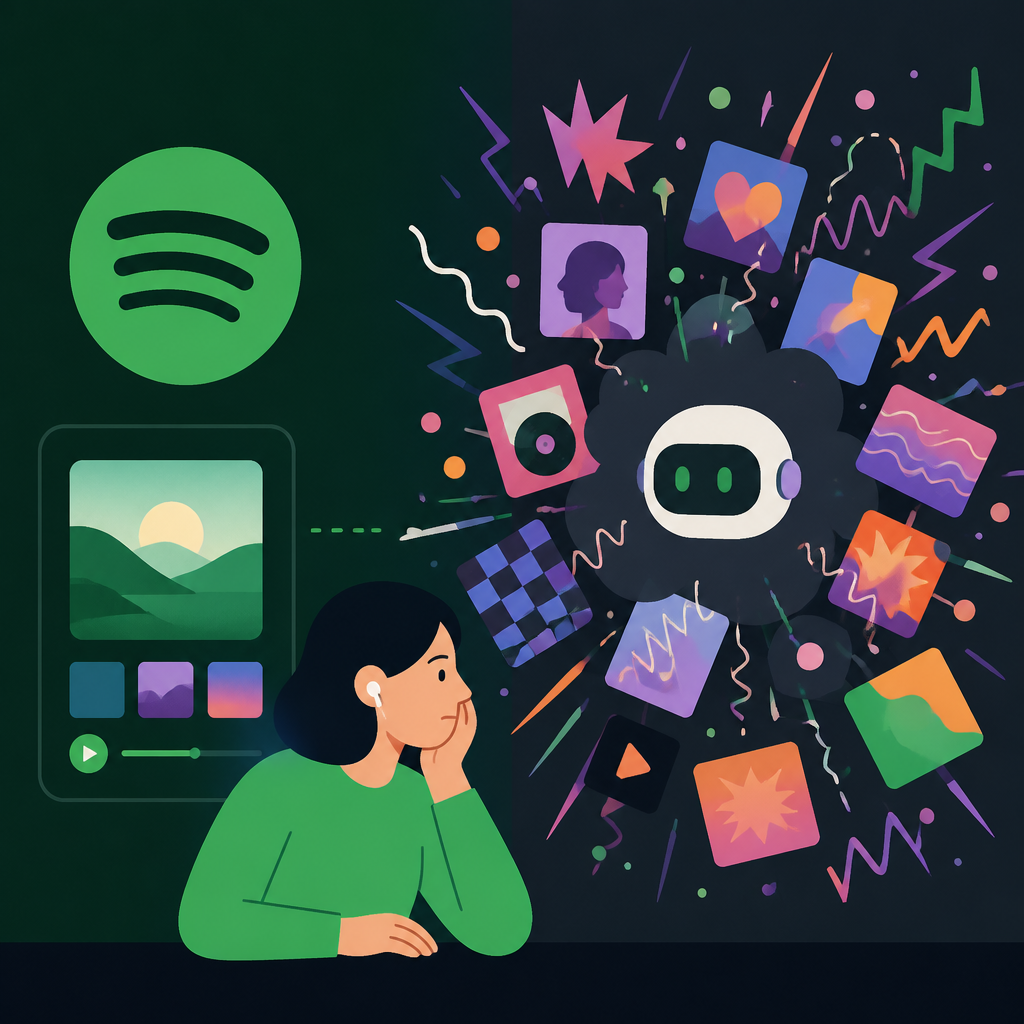
I’ve seen this pattern in internal product reviews over and over. Someone spots AI and immediately imagines volume: more clips, more summaries, more remixes, more audio, more everything. The question that gets skipped is whether the user asked for more supply or better decisions. Usually they asked for better decisions.
Spotify’s move matters because it changes the center of gravity. The app is no longer mostly a place to consume human-made audio. It’s becoming a place where the app itself can generate audio, remix audio, narrate audio, summarize audio, and then try to explain all that audio to you. That’s a lot of motion for not much clarity.
How to apply it: if you’re adding AI to a product, write the user promise in one sentence before you write the feature spec. If the promise sounds like “users can create more,” you’re probably building supply. If it sounds like “users can find what matters faster,” you’re building utility. Those are not the same thing, and your metrics will lie to you if you pretend they are.
- Ask whether AI reduces choice overload or adds to it.
- Measure task completion, not just feature usage.
- Separate “creation” AI from “discovery” AI in your roadmap.
More content is not the same as more value
“Now Spotify has signed a deal with Universal Music Group (UMG) that allows fans to create AI covers and remixes of existing songs.”
This is the classic platform trap: if you can generate more of something, you assume the platform is getting stronger. Sometimes it is. Often it’s just getting louder. Spotify’s UMG deal may compensate artists, which is good, but compensation doesn’t solve discoverability. If the platform gets flooded with AI covers and remixes, a listener still has to wade through the mess to find the original thing, or the genuinely interesting derivative thing, or the human artist trying to get noticed.
I ran into this exact problem years ago when a product I worked on started auto-generating “related” content faster than the editorial system could rank it. Usage went up. Complaints went up too. The interface looked richer on paper, but the actual experience got mushy. Everything felt adjacent to something else, and nothing felt important.
Spotify is flirting with that same mushiness. AI-generated music can be made faster than the company can manage it, the article says, and that should set off alarms. Not because AI music is inherently bad, but because scale without curation turns every feed into a junk drawer. Once that happens, the user stops trusting the surface. And when trust goes, discovery dies.
How to apply it: build a content quality gate before you build a generation feature. If your product can create ten times more output, you need a better ranking system, stronger labeling, and a way to suppress low-signal material. If you don’t have that, you’re not scaling value. You’re scaling cleanup.
- Label generated content clearly and consistently.
- Protect “original” or “human-made” pathways in search and browse.
- Give users a filter for what they do not want to see.
Spotify keeps inventing new problems for AI to solve
“The company is also releasing an experimental desktop app that connects to a user’s email, notes, and calendar, pulls in relevant information, and generates a personalized audio briefing.”
That line is where I started muttering at my screen. Because now we’re not just talking about music or podcasts. We’re talking about an app that reaches into your email, notes, and calendar, then turns your life into audio. That is either very useful or very creepy, depending on execution, permissions, and whether the output is actually better than what you’d get from a normal briefing app.
The article also notes that Spotify’s own description says the app can, with permission, research topics, use a browser, organize information, and help complete tasks. That’s agentic AI language. In plain English, it means the app wants to do things for you, not just say things to you. I’m not allergic to that. I am allergic to vague product positioning that promises autonomy before it proves reliability.
I’ve worked on enough assistant-style features to know the first demo is always flattering. The system finds the right email. It summarizes the right meeting. It sounds smart. Then you ship it and discover that edge cases are the product. Permissions are messy. Context is stale. The wrong note gets pulled in. The user has to babysit the assistant, which defeats the point.
How to apply it: if you’re moving from recommendations to agentic behavior, draw a hard line between “read-only help” and “act on my behalf.” Start with read-only. Make the output auditable. Show sources. Let users correct the model without losing the thread. If your assistant can’t explain itself, it’s not ready to do work for people.
Spotify’s move also hints at something else: product teams often create a separate app when they don’t know where the feature belongs. That can be smart, but it can also be a sign the feature doesn’t fit the main experience. If a personalized briefing is useful, why isn’t it inside the core app? If it needs its own surface, I want a better reason than “because AI.”
Discovery gets worse when the app starts talking to itself
“Spotify is adding natural-language discovery for audiobooks and podcasts, similar to how Google has been pushing people toward conversational search.”
Natural-language search sounds like a fix, but it can also be a bandage over a bloated catalog. If the app has too much content, then asking it questions becomes the new browse page. That sounds convenient until you realize you’re now dependent on the model’s interpretation of your intent, not the structure of the catalog itself.
That’s why this line matters: users might already be doing this in ChatGPT or Gemini, but Spotify doesn’t want them to leave the app. Of course it doesn’t. No product team wants the user to bounce out to another tool. But keeping the conversation inside the app is only useful if the app can answer better than a general-purpose chatbot and then take you straight to the thing you want.
I’m skeptical because Spotify already has an AI DJ, and now it’s layering chat on top of listening on top of search on top of generation. At some point the interface starts feeling like it’s talking to itself. The product stops being a library and starts being a commentary track about the library.
How to apply it: treat conversational search as a shortcut, not the whole navigation system. Keep browse, search, filters, and collections strong. If the only way to find something is to ask a chatbot, your information architecture has already lost.
- Keep direct navigation paths visible.
- Use conversational search for long-tail queries only.
- Test whether users can recover from a bad AI answer without starting over.
When every feature becomes AI, focus disappears
“The company is no longer focused solely on consumption — it’s actively nudging users to create content, too, even if it’s just for themselves.”
This is the part of the article that feels most accurate to me. Spotify is no longer just a place where I go to listen. It wants me to make things, ask things, summarize things, remix things, and maybe soon organize my life through audio while I’m at it. That’s a lot of product ambition packed into one screen.
Ambition is fine. But products get messy when every new capability is justified by the same buzzword. AI becomes the answer to everything, which means it stops being a design choice and turns into a reflex. That’s when users feel the drag. They may not say “this product lacks strategic cohesion,” but they will say “I can’t find anything anymore.”
Spotify’s risk is not that AI features exist. It’s that they stack up without a clear hierarchy. Some features should help me consume. Some should help me create. Some should help me decide. If all of them are fighting for attention at once, the app becomes a maze with a voice assistant in it.
How to apply it: define a primary job for each surface in your product. One screen, one job. If you want to add creation tools, isolate them. If you want to improve discovery, protect the discovery flow from clutter. And if a feature only exists because the company wants to say it has AI, cut it. I mean that literally.
The template you can copy
# AI feature decision template for product teams

## 1) What user problem are we solving?
- [ ] Discovery
- [ ] Creation
- [ ] Summarization
- [ ] Automation
- [ ] Other: __________

## 2) Does AI reduce user effort or increase output?
- User effort decreases: yes / no
- Content volume increases: yes / no
- If volume increases, what is the curation plan?

## 3) What is the primary surface?
- Main app
- Separate workspace
- Experimental view
- Background automation

## 4) What must be true before launch?
- Clear labeling for AI-generated content
- Source attribution where applicable
- Recovery path from wrong answers
- Manual override or filter controls
- Audit trail for actions taken

## 5) What will we measure?
- Time to find the right item
- Task completion rate
- User trust / repeat usage
- Content quality signals
- Complaint rate about clutter or confusion

## 6) What will we not do?
- We will not add AI just to say we have AI.
- We will not hide core navigation behind a chat box.
- We will not ship generation features without ranking and moderation.

## 7) Launch checklist
- [ ] The feature has a single sentence user promise
- [ ] The UI makes the AI role obvious
- [ ] The user can opt out or narrow scope
- [ ] The product still works without the AI layer
- [ ] We can explain why this belongs in the app
That template is the part I’d actually hand to a team. It forces the uncomfortable questions before the demo polish hides them. If your answer to most of these is hand-wavy, you’re probably building feature theater.
Spotify’s AI push, as described by Ivan Mehta at TechCrunch, is original reporting and commentary on Spotify’s product direction. What I’ve added here is my own product critique and a reusable decision template for teams trying not to drown their app in AI noise.
Source: TechCrunch article by Ivan Mehta. The breakdown above is my interpretation of that reporting, not a quote-by-quote rewrite.
// Related Articles
- [TOOLS]
Magenta RealTime 2 lets you score in the DAW
- [TOOLS]
Open-source AI tools beat Claude’s paid tiers on value
- [TOOLS]
500 AI agent projects show where agents work now
- [TOOLS]
Chocolatey’s Go package turns installs into policy
- [TOOLS]
Go support policy turns releases into a checklist
- [TOOLS]
RustDesk self-hosting setup for secure remote access