Why Backrooms proves the next big horror hits will come from the inte…
Backrooms shows that the next major horror franchise can start online, not in Hollywood.
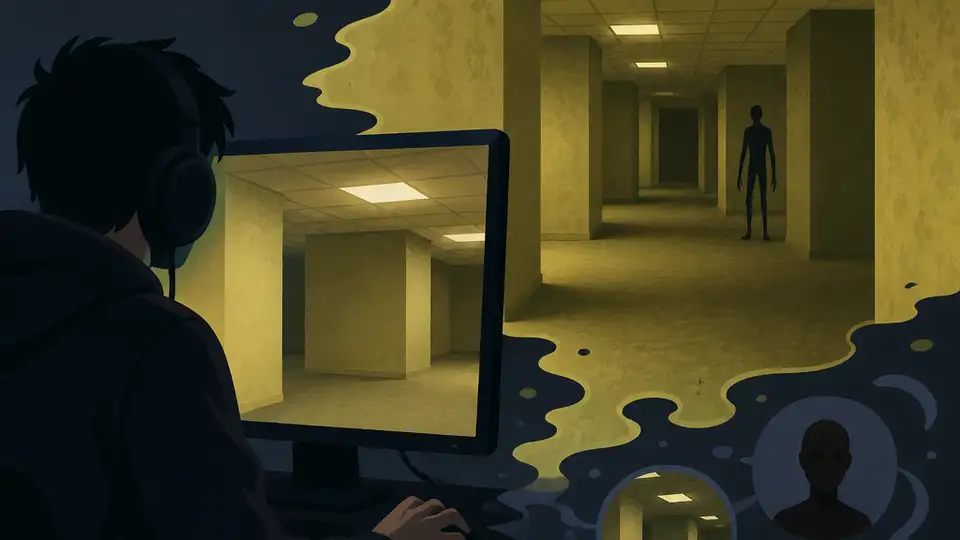
Backrooms shows that the next major horror franchise can start online, not in Hollywood.
Backrooms is not a novelty act or a one-off internet curiosity; it is proof that the most commercially powerful horror ideas now emerge from online culture, then move into film with their identity intact.
The clearest evidence is the chain itself. A 2019 4chan comment turned an eerie empty-room image into a creepypasta, Kane Parsons turned that into a YouTube series with about 200 million collective views, and A24 turned Parsons into its youngest director ever. That is not a quirky origin story. It is a new pipeline for IP, one that starts with a shared online feeling instead of a studio mandate.
The internet is now the best development lab for horror
Get the latest AI news in your inbox
Weekly picks of model releases, tools, and deep dives — no spam, unsubscribe anytime.
No spam. Unsubscribe at any time.
Horror depends on atmosphere, repetition, and a sense that something is wrong before anyone can explain why. Online spaces are unusually good at testing that feeling at scale. The original Backrooms concept worked because people recognized the image instantly: fluorescent lighting, stale carpet, empty rooms, and the unsettling sense of being trapped in an environment that should not exist. That reaction is exactly what horror needs, and the internet can measure it in views, remixes, comments, and fan theories faster than any studio notes meeting.
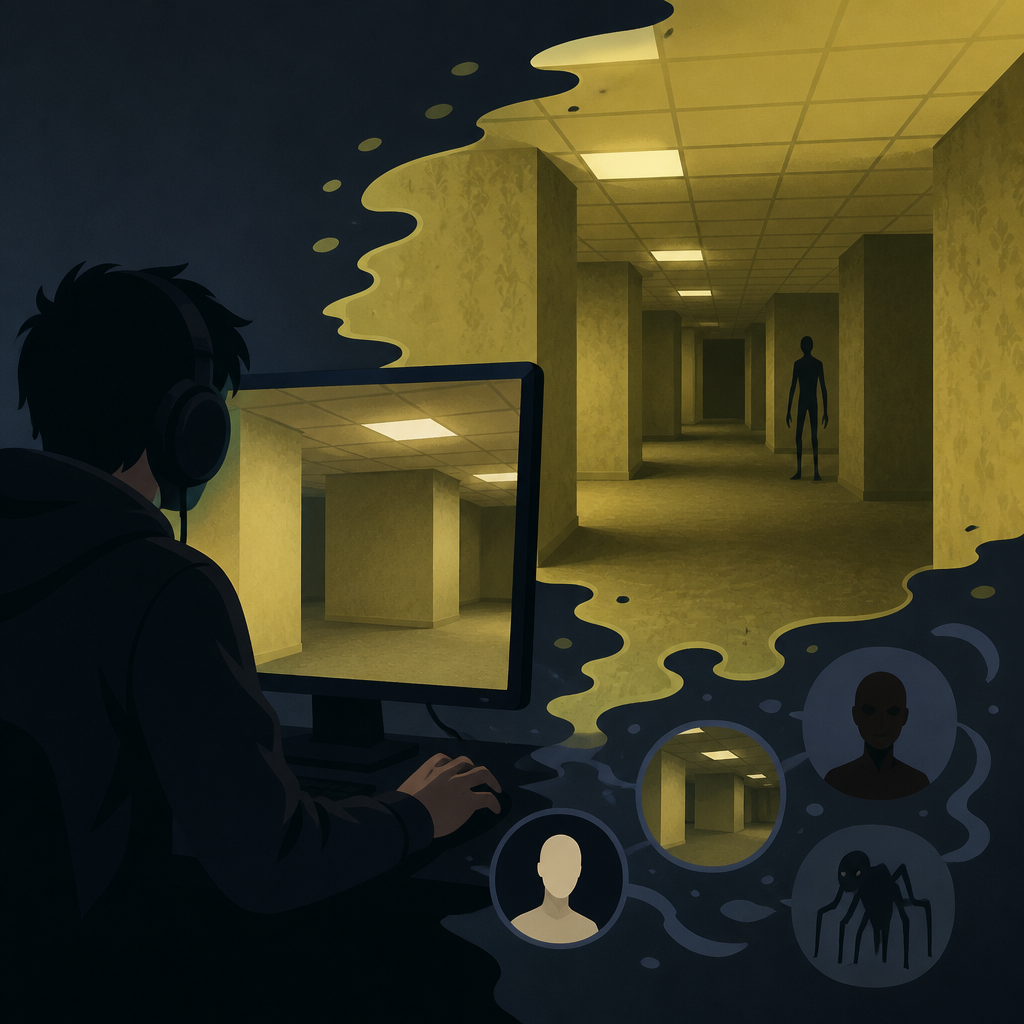
Parsons understood that better than a traditional gatekeeper would. He saw that the idea had a “string to pull on,” then spent years building that string into a mythology. The result was not just a single viral short with 78 million views, but a living world with enough depth to justify a feature film. Studio development often asks whether an idea can sustain audience attention. Backrooms already answered that question in public, before a producer ever called.
Young creators have a real production advantage now
Parsons is 20, self-taught, and came up through YouTube tutorials, Blender, and hand-me-down hardware. That matters because it destroys the old assumption that cinematic ambition requires expensive access first and talent second. He made a convincing found-footage short with free software and a laptop, then scaled that sensibility into a studio film with 30,000 square feet of physical sets. The tools are no longer the bottleneck. Taste, persistence, and a strong point of view are.
This is why the age issue is a distraction. Parsons worried people would treat him like “a child” in Hollywood meetings, but that fear never materialized. What mattered was not his age but the clarity of his vision and the proof that audiences were already invested. In a media economy where a teenager can build a horror universe before finishing high school, the real gatekeeping collapses. The internet does not just distribute finished work; it trains the next generation of filmmakers in public.
Hollywood should stop pretending it owns discovery
The industry still likes to frame online success as a pipeline it somehow “finds” and then legitimizes. That is backwards. Backrooms did not become valuable when a studio noticed it. It became valuable when audiences demonstrated, repeatedly, that they wanted to return to it. The reported $10 million budget and early tracking north of $40 million only confirm the point: studios are now harvesting demand that already exists in internet-native communities.

That has implications beyond horror. If Backrooms hits, the next wave of adaptations will not come from comic books or legacy toy brands alone. They will come from web-born worlds with built-in fandoms, visual signatures, and creators who already understand how to sustain attention. Hollywood is not leading that shift. It is catching up to it, one viral universe at a time.
The counter-argument
The strongest objection is that internet-born IP is often too niche, too fragmented, or too dependent on meme logic to survive the leap to feature length. A creepypasta can thrive as a vibe, but a movie needs structure, character arcs, and enough emotional weight to hold an audience for two hours. Studios also have a point when they worry that online fandom can overvalue lore while underweighting story. Plenty of viral properties burn bright and die fast.
That critique is real, but Backrooms answers it directly. Parsons did not simply inflate a short into a feature. He kept the uncanny core and added a traditional narrative, physical sets, and professional performers. That is the model: preserve the internet-native spark, then build enough cinematic scaffolding to make it durable. The lesson is not that every viral idea should become a movie. The lesson is that the best viral ideas already arrive with audience validation, and the ones worth adapting can be expanded without losing what made them work.
What to do with this
If you are a founder, producer, or engineer building media tools, stop treating online communities as a marketing afterthought and start treating them as the earliest testbed for IP. Watch for repeatable aesthetics, not just view counts. Look for creators who can explain why their work unsettles people, not just how it spread. And if you are in a studio or product role, build systems that let small, weird, highly specific ideas prove themselves in public before you try to standardize them. Backrooms is the blueprint: the internet is where the next franchise is born, and the smartest teams will learn to spot it there first.
// Related Articles
- [IND]
OpenAI is right to keep ads out of sensitive chats
- [IND]
AI bootlegs are already draining streaming royalties
- [IND]
AMD and Microsoft push Windows ML on GPU and NPU
- [IND]
OpenAI’s IPO filing turns hype into scrutiny
- [IND]
Skatteetaten proves public sector AI should be judged by outcomes
- [IND]
OpenAI’s IPO filing puts AI’s biggest test on Wall Street