Why the equities-rates link is still the market's real story
The equities-rates relationship is still the market’s main driver, and investors should treat yield moves as an equity signal, not background noise.

Rising yields are still setting the tone for equity markets.
The market keeps pretending that stocks and rates are separate stories. They are not. Goldman Sachs is right to point out that the surge in yields is already affecting equities, because the old relationship between discount rates, valuation multiples, and risk appetite never stopped mattering. When yields move sharply, equity prices do not just react at the margins; the whole pricing framework shifts.
The first reason is that higher yields hit valuations directly
Get the latest AI news in your inbox
Weekly picks of model releases, tools, and deep dives — no spam, unsubscribe anytime.
No spam. Unsubscribe at any time.
Equity valuation is built on the present value of future cash flows, so a higher risk-free rate mechanically lowers what those cash flows are worth today. That is not a sentiment issue, it is arithmetic. A 10-year Treasury yield moving up by even 50 basis points can compress the multiple investors are willing to pay for long-duration growth stocks, which is why rate spikes often show up first in the most richly priced parts of the market.

We have seen this movie before. In 2022, the sharp rise in yields helped drive a brutal reset in technology and other duration-sensitive sectors, even when many of those companies still had solid operating performance. The message was simple: if rates rise faster than earnings, the market reprices the future, and equities feel it immediately.
The second reason is that rates change the relative appeal of stocks
When bond yields climb, investors no longer have to stretch as far for return. That changes portfolio choice in a very practical way. A higher yield on cash or Treasuries makes equities compete against a less forgiving alternative, which raises the hurdle for stocks and narrows the premium investors are willing to pay for volatility and uncertainty.
This is especially visible in periods when the market is already nervous about growth. If yields rise because inflation is sticky or the central bank is expected to stay tight, equities face a double hit: borrowing costs can stay elevated, and the discount rate rises at the same time. The result is not just sector rotation, but a broader tightening in financial conditions that can drag on indices even when headline earnings look fine.
The counter-argument
The strongest case against focusing on rates is that earnings ultimately drive stocks. Bulls will argue that if corporate profits are strong enough, equities can absorb higher yields, and that the market often overreacts to macro headlines before refocusing on fundamentals. They are right that rates are not the only variable. A company with accelerating revenue, expanding margins, and durable pricing power can outperform even in a higher-yield environment.
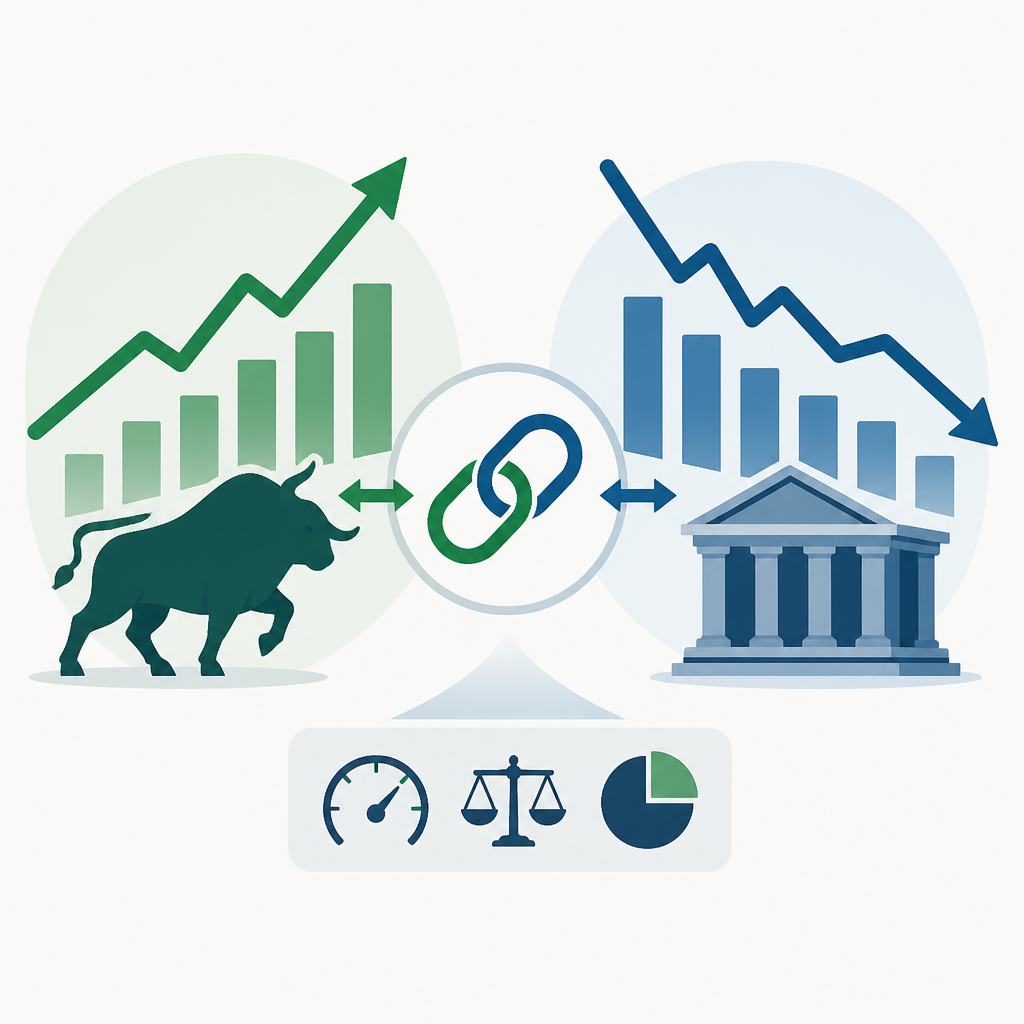
That does not weaken the rates argument, it refines it. The relationship between equities and yields is not a perfect one-to-one law, but it is the market’s first-order pressure point. Earnings decide which stocks win; rates decide how expensive those winners are. When yields rise quickly, valuations reset before earnings can save them, and that is why the Goldman view matters now.
What to do with this
If you are an investor, PM, or founder, stop treating rates as macro wallpaper. Build them into your planning, your pricing assumptions, and your capital allocation. Engineers and product teams should understand that a higher-rate regime changes what the market rewards: profitability, efficiency, and faster payback matter more than growth at any cost. Founders should run financing and hiring plans with a rates-sensitive model, because the cost of capital is not an abstract number, it is part of the equity story.
// Related Articles
- [IND]
AMD and Microsoft push Windows ML on GPU and NPU
- [IND]
OpenAI’s IPO filing turns hype into scrutiny
- [IND]
Skatteetaten proves public sector AI should be judged by outcomes
- [IND]
OpenAI’s IPO filing puts AI’s biggest test on Wall Street
- [IND]
OpenAI’s latest moves now center on pricing, safety, and scale
- [IND]
RISC-V mini PCs are worth buying now, but only as a bet on the future