Zero turns compiler errors into agent-ready JSON
I break down Vercel Zero’s agent-first compiler design and give you a copy-ready template for structured diagnostics.

Vercel Zero shows how to make compiler output readable by AI agents.
I've been around enough compilers and enough “AI coding” demos to know when something feels off. The model writes code, the tool runs it, the compiler yells back in paragraphs, and then the agent starts guessing like a tired junior dev on hour nine. It’s not that the model is dumb. It’s that we keep handing it tools built for humans who can skim prose, spot a caret, and mentally reconstruct the bug. That workflow is already annoying for me, and I’m the one with context. For an agent, it’s worse. It has to parse text, infer intent, and hope the compiler’s suggestion is the right one. That’s a translation problem pretending to be a developer workflow.
So when I saw Vercel Zero, I stopped thinking about “another language” and started thinking about the substrate under agentic coding. The interesting part is not the syntax. It’s the assumption that the compiler’s first customer is an AI agent, not me. That sounds small until you realize how much of today’s agent failure rate comes from human-first tooling. I don’t need a prettier error message. I need a machine-readable one that doesn’t make the model play telephone with the compiler.
What got me to pay attention was the original write-up on AI Automation Global, which framed Zero as a systems language built for AI agents from day one. The post says Vercel Labs released Zero on May 15, 2026, and that the compiler emits structured JSON with stable error codes and typed repair IDs. I’m using that article as the anchor here, but I also cross-checked the ideas against Vercel’s own ecosystem and the broader tooling pattern around structured compiler output.
The part everyone misses: the compiler is now part of the agent loop
Get the latest AI news in your inbox
Weekly picks of model releases, tools, and deep dives — no spam, unsubscribe anytime.
No spam. Unsubscribe at any time.
“The compiler does not print error messages — it emits structured JSON with stable error codes and typed repair IDs that an agent can act on without parsing English.”
What this actually means is simple: the compiler is no longer a human-facing complaint box. It’s an API. And once I started reading Zero that way, the design stopped looking weird and started looking overdue.

In the usual setup, the model writes code, the compiler returns prose, and the model has to interpret prose like a person. That’s already a compromise when I do it. For an agent, it’s a mess. The agent has to decide whether the error is about the line it just edited, a stale dependency, a type mismatch, or a completely unrelated cascade. If the compiler speaks JSON, the agent can stop guessing and start acting.
I ran into this exact problem while wiring agent loops around TypeScript and Rust. The model would receive a long compiler dump, latch onto the first suggestion that sounded plausible, and sometimes “fix” the wrong thing with great confidence. It wasn’t failing because the fix was impossible. It was failing because the interface was noisy. Zero’s bet is that if the compiler emits structured output by default, the agent can operate on the result directly instead of translating terminal poetry back into code edits.
How to apply it: stop treating compiler output as something your agent reads casually. Treat it as a contract. If you’re building internal tooling, define a JSON schema for diagnostics, make error codes stable, and make repair suggestions typed instead of free-form. If you can’t change the compiler, wrap it. Parse the text once in a thin adapter, then feed your agent structured diagnostics, not a wall of stderr.
- Stable error codes beat “best effort” prose every time.
- Typed repair IDs are better than a vague “try this” suggestion.
- Agents work faster when they can branch on fields instead of parsing paragraphs.
Why stable error codes matter more than prettier messages
Zero’s error codes, like NAM003 in the source article, are the real story. If an error code means the same thing across compiler versions, I can build repair logic around it without worrying that the next release will silently break my automation.
That’s the part I wish more tool authors understood. Humans tolerate fuzzy compiler text because we adapt on the fly. Agents don’t adapt in the same way. If the output changes shape, the repair loop gets brittle fast. A stable code gives the model a fixed anchor. It can map NAM003 to “unknown identifier,” look up the matching repair playbook, and patch the source with much less drama.
I’ve seen this go sideways in CI bots that try to auto-fix build failures. A warning gets reworded, the heuristic misses it, and suddenly the bot is editing the wrong file because it matched on a phrase instead of a code. That’s not an AI problem. That’s an interface problem. Zero is basically saying: if you want machines to fix code, stop making them infer meaning from text that was written for a terminal prompt in the 1970s.
How to apply it: if you maintain tooling, version your diagnostics like API endpoints. Don’t just print a message. Emit a code, a severity, a location, and a machine-actionable category. Then keep those codes stable. If you’re consuming third-party tools, build a normalization layer that maps human output into a durable internal schema before the agent sees it.
- Use codes as keys, not messages as keys.
- Keep diagnostic schemas versioned and documented.
- Make your agent repair logic look up fixes by code first, text second.
Typed repair IDs are the difference between guidance and guesswork
The article says Zero attaches a typed repair ID like declare-missing-symbol or add-capability. That matters because it turns compiler help into an enum, not a paragraph.
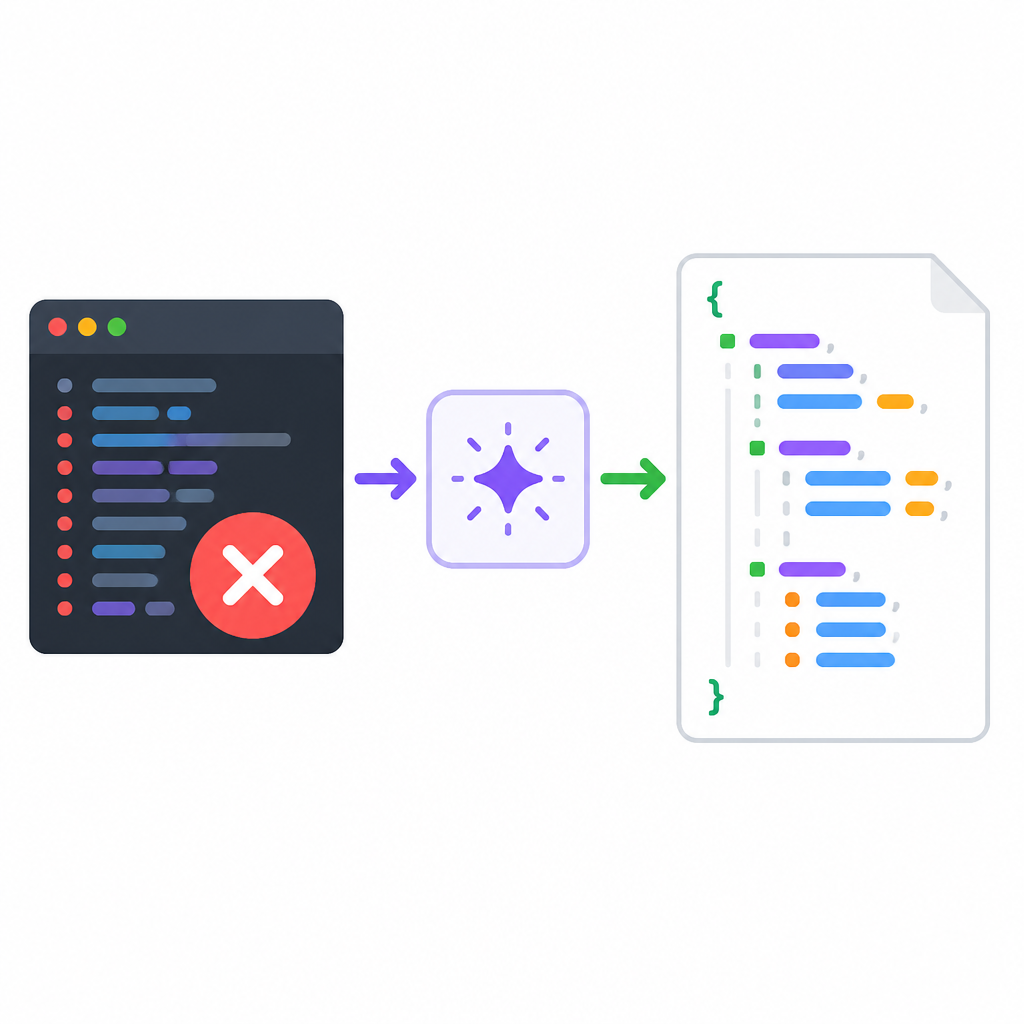
What this actually means is that the compiler isn’t just saying “something is wrong.” It’s telling the agent what class of fix applies. That shrinks the search space. Instead of making the model invent a repair from scratch, you’re giving it a constrained menu of valid actions. That’s a huge deal when the agent is operating in a loop and every extra guess costs time, tokens, and occasionally a broken branch.
I’ve had agents mis-handle plain-language suggestions in Rust and TypeScript because the wording was too open-ended. “Consider adding a type annotation” can mean three different edits depending on context. A typed repair ID doesn’t eliminate reasoning, but it gives the model a much tighter target. It can still inspect the code, but it starts from a known repair class instead of a vague hint.
How to apply it: define repair categories for your own tools. Keep them small and actionable. “missing import,” “wrong arity,” “capability absent,” “type mismatch,” “invalid config key.” Then teach your agent to branch on those categories before it opens the file. This is one of those annoyingly boring things that pays off immediately.
And yes, if you’re thinking this sounds like a lint rule system, you’re not wrong. The difference is that Zero bakes the repair vocabulary into the compiler contract itself. That’s the part I care about.
Capabilities are how Zero makes side effects visible
Zero’s capability-based I/O model is the other piece that makes sense once you think about agents instead of humans. If a function doesn’t receive a capability, it can’t do the effect. No hidden globals. No mystery side effects lurking behind a helper call.
What this actually means is that the signature tells the truth. If I’m an agent reading the code, I don’t have to infer whether a function might touch the network, mutate state, or write to disk. The capability is right there. That reduces one of the nastier failure modes in agentic coding: the model assumes a function is pure when it isn’t, or assumes it mutates state when it doesn’t.
I’ve been burned by this in code review, and I’ve watched agents do the same thing faster. They see a tidy helper function and assume it’s safe. Then the thing opens a socket, writes a file, or calls out to a service with real side effects. In a human workflow, I catch that with context and habit. In an agent workflow, I want the compiler to make the side effect impossible to miss.
How to apply it: if you’re designing internal APIs, make side effects explicit in the type system or in the function signature metadata. If you can’t enforce it in code, enforce it in conventions. Put I/O, network access, and mutation behind named capabilities or capability-like wrappers. Then teach your agent to treat missing capability as a compile-time blocker, not a runtime surprise.
This is also where Zero feels less like a language novelty and more like a design memo for everyone else. Rust, Go, and TypeScript all have pieces of this story, but Zero is pushing the idea that explicit effects aren’t just nice for humans. They’re essential for machines that need to reason from the source itself.
Structured output beats human-first toolchains in agent loops
The source article compares Zero to today’s stack, where agents call compilers like rustc or tsc and then parse terminal text. That’s the part I keep coming back to, because it’s the hidden tax in almost every agentic coding product I’ve used.
What this actually means is that the agent loop is doing translation work at every step. Read source. Call compiler. Parse prose. Infer repair. Edit source. Repeat. Each translation layer is a chance to drift. Zero removes one of the biggest layers by making the compiler output directly consumable by a machine.
I’m not pretending this is magic. A structured diagnostic doesn’t solve logic bugs, missing tests, or bad architecture. It just stops the agent from stumbling over the compiler’s wording. And honestly, that’s a worthwhile fix on its own. I’d rather have a boring, predictable repair loop than a clever one that occasionally invents nonsense because it misread a suggestion.
How to apply it: if you’re building agent workflows around existing tools, make the toolchain as machine-readable as possible. Use JSON output where available. Normalize logs. Turn free-form suggestions into structured fields. If you own the compiler or linter, expose a stable machine interface first and a pretty terminal interface second. That order matters more than people admit.
- Machine-readable output reduces repair ambiguity.
- Pretty terminal output is fine, but it should be a view, not the source of truth.
- Every parsing step you remove is one less place for the agent to hallucinate a fix.
Why I don’t think Zero is the point, but the pressure it creates is
I don’t think Zero itself is going to replace Rust, Go, or TypeScript. The article is honest about that too: it’s experimental, versioned 0.1.2, and not production-ready. I wouldn’t put payments, auth, or core infra on it this quarter. That would be silly.
But the interesting bit is that Zero makes the design pressure visible. Once a language ships with structured diagnostics, stable repair IDs, and explicit capabilities by default, the older toolchains start looking a little lazy. Not bad. Just dated. Rust already has JSON error output, but it’s still opt-in. TypeScript has compiler options and stable error codes, but not typed repair IDs. Go’s tooling is structured in places, but it doesn’t center the agent as the consumer. Zero is basically a reminder that the “who is this for?” question has changed.
How to apply it: don’t wait for a new language to fix your workflow. Add the same ideas to the stack you already have. Structured diagnostics. Stable codes. Explicit effects. Repair categories. If you’re running Claude Code, Cursor, or your own agent loop, make the compiler output easier for the model to consume than it is for a human to skim.
That’s the real takeaway. Zero is interesting because it says the compiler is now part of the agent API. Once you accept that, a bunch of weird little tooling choices suddenly stop being weird.
The template you can copy
# Agent-first compiler contract template

## 1) Diagnostic schema
{
  "ok": false,
  "diagnostics": [
    {
      "code": "NAM003",
      "severity": "error",
      "message": "unknown identifier",
      "line": 3,
      "column": 12,
      "repair": {
        "id": "declare-missing-symbol",
        "confidence": 0.94,
        "candidates": ["import-symbol", "declare-local", "rename-reference"]
      }
    }
  ]
}

## 2) Stable repair taxonomy
- declare-missing-symbol
- import-symbol
- add-capability
- narrow-type
- fix-arity
- remove-invalid-effect
- update-config-key

## 3) Agent loop rules
1. Call compiler with machine-readable output only.
2. Branch on diagnostic.code first.
3. Use diagnostic.repair.id as the primary fix class.
4. Never infer a repair from free-form prose if a structured field exists.
5. Re-run compile after each edit and stop on the first clean pass.

## 4) Capability-style API pattern
// bad: hidden side effect
fn write_report(data) {
  save_to_disk(data)
}

// better: explicit capability
fn write_report(data, io: FileIO) {
  io.save_to_disk(data)
}

## 5) Wrapper for existing tools
# Example: normalize human compiler output into JSON
compiler --format json 2>/dev/null | agent-normalizer

## 6) What to store in your playbook
- compiler version
- stable error codes
- repair categories
- known false positives
- safe auto-fix rules
- human escalation rules

## 7) Copy-paste policy for teams
If the tool can emit structured output, the agent must consume structured output.
If the tool cannot emit structured output, add a parser layer before the agent sees it.
If the repair is not backed by a code or typed category, do not auto-apply it.
That block is the part I’d actually hand to a team trying to make agentic coding less flaky. It’s not Zero, and it doesn’t pretend to be. It’s the pattern Zero is pointing at: make the compiler speak in fields, not just sentences.
Source attribution: the core idea comes from AI Automation Global’s article on Vercel Zero, which is a derivative explainer of the May 15, 2026 launch. The template above is my own practical adaptation of that idea, not copied from Vercel or the article.
For more context, I’d also look at Vercel, Vercel’s GitHub org, Rust’s JSON diagnostics, and the TypeScript docs. Those are the closest reference points I’d use before betting real production code on any agent-first compiler story.
// Related Articles
- [AGENT]
Claude Code 动态工作流:AI 自写 Harness
- [AGENT]
Agent orchestration is the missing layer for enterprise AI
- [AGENT]
AI agents use blockchain as a trust layer
- [AGENT]
8 RAG patterns that turn demos into prod
- [AGENT]
Fine-tuning beats RAG when the goal is style, not facts
- [AGENT]
OpenClaw shows how small businesses use AI staff