MUSE-Autoskill makes agent skills reusable
MUSE-Autoskill turns agent skills into reusable, testable assets that can improve over time.

MUSE-Autoskill turns agent skills into reusable, testable assets that can improve over time.
- Research org: Unspecified in arXiv abstract
- Core data: No benchmark numbers in abstract
- Breakthrough: Unified lifecycle for skill creation, memory, management, evaluation, and refinement
Most LLM agents still treat skills like one-off snippets: useful in the moment, but easy to lose, hard to organize, and even harder to improve systematically. This paper argues that if agents are going to handle complex tasks over time, their skills need to behave more like long-lived software assets than disposable prompts.
That is the core idea behind MUSE-Autoskill: Self-Evolving Agents via Skill Creation, Memory, Management, and Evaluation. Instead of creating isolated skills and hoping they generalize, the framework tries to give skills a full lifecycle so they can be created on demand, stored, reused, tested, and refined with feedback.
What problem the paper is trying to fix
Get the latest AI news in your inbox
Weekly picks of model releases, tools, and deep dives — no spam, unsubscribe anytime.
No spam. Unsubscribe at any time.
The abstract says existing skill creation methods treat skills as isolated and static artifacts. In practice, that means a skill may work once, but the system does not have a strong way to remember what happened, decide when to reuse it, or improve it after failure.
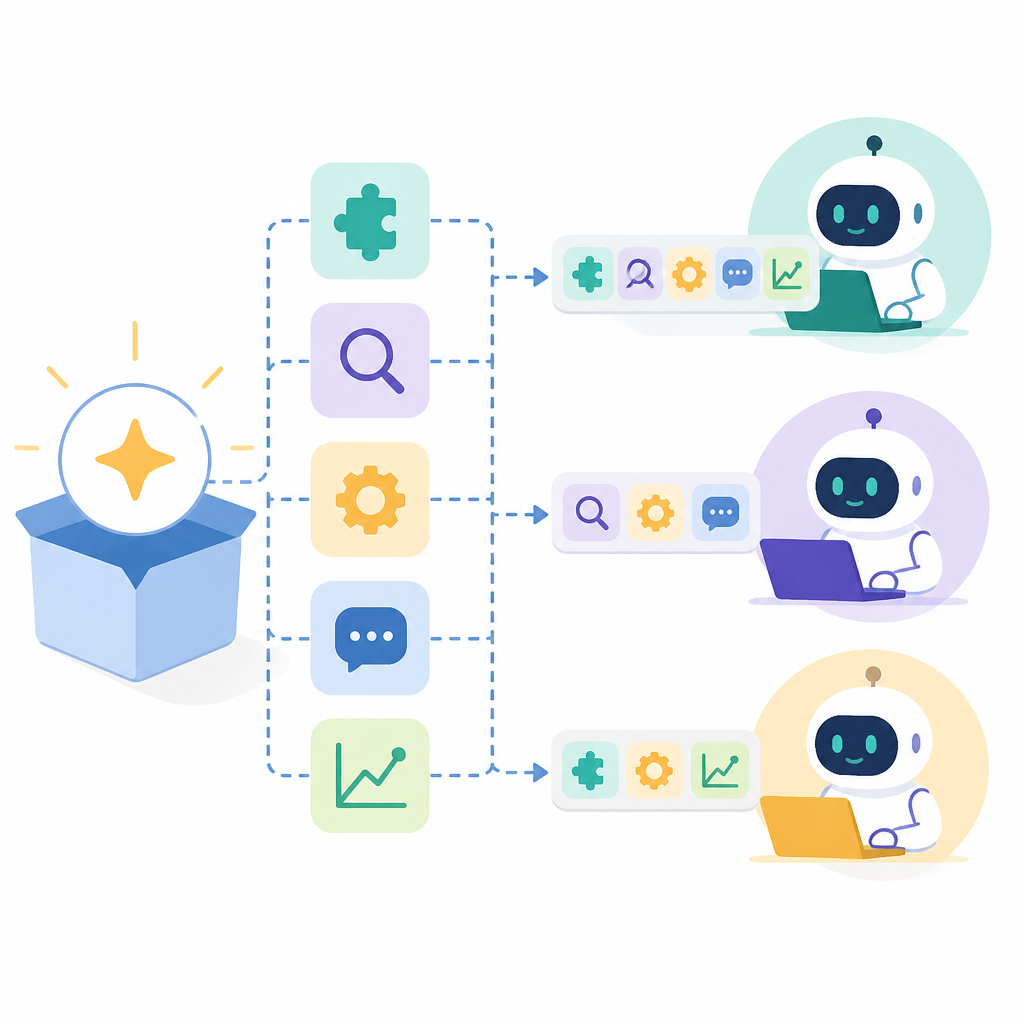
For developers building agents, that is a real bottleneck. Once a system starts handling many tasks, you need more than raw model capability. You need a way to manage the agent’s accumulated know-how so it does not relearn the same behavior over and over.
The paper’s framing is simple: agent performance should improve not only through better models, but through better skill infrastructure. Skills should be reusable, reliable, and able to evolve with experience.
How MUSE-Autoskill works in plain English
MUSE stands for Memory-Utilizing Skill Evolution. The framework centers the agent around a skill lifecycle with five parts: creation, memory, management, evaluation, and refinement.
In the paper’s description, the agent can create skills on demand when a task needs them. Those skills are then stored and reused across tasks instead of being thrown away after a single run.
The management layer organizes skills and helps select them efficiently. That matters because a growing skill library can become a liability if the agent cannot quickly figure out which skill fits the current task.
The evaluation step is also important. The abstract says skills are evaluated through unit tests and runtime feedback, which gives the system a way to judge whether a skill still works and whether it needs refinement.
Finally, the paper introduces skill-level memory. That means each skill can accumulate experience across tasks, making reuse and adaptation more effective over time. In other words, the skill itself remembers how it has behaved before, not just the agent as a whole.
What the paper actually shows
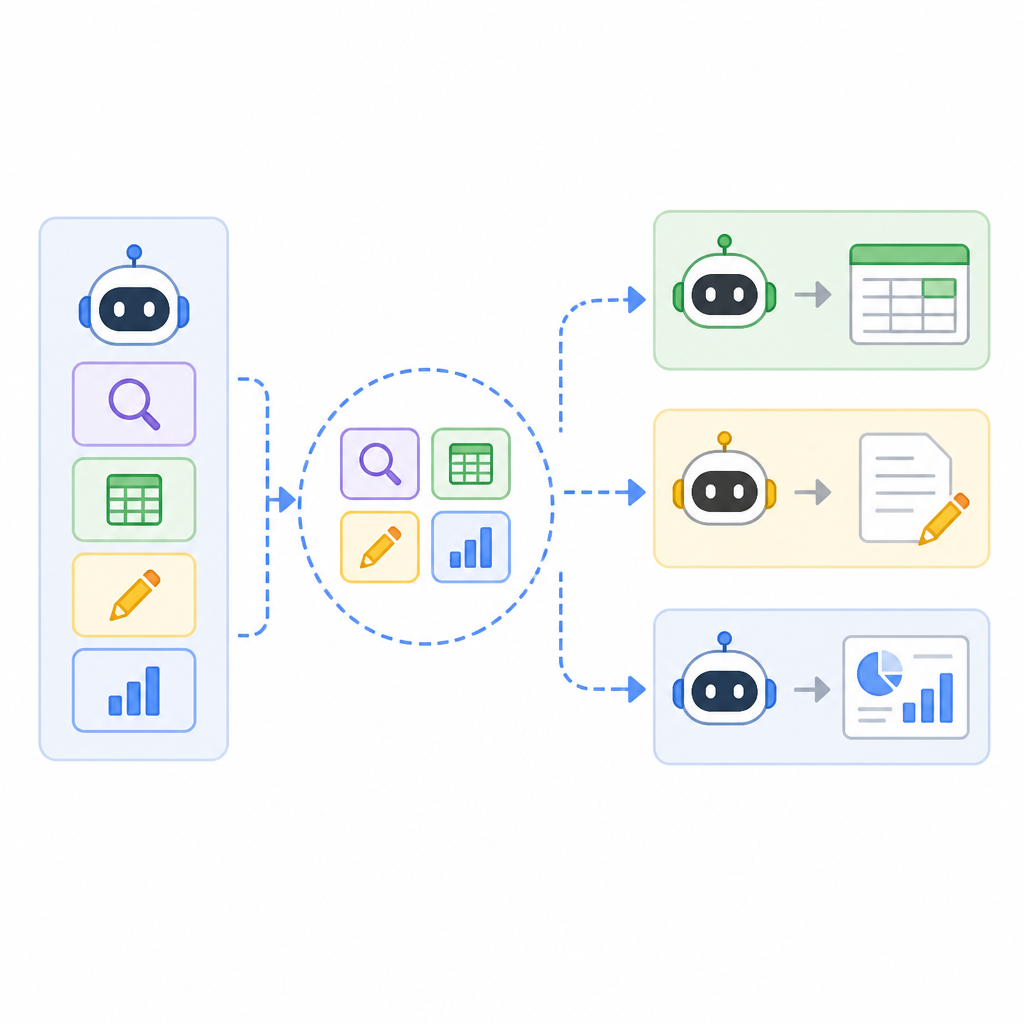
The abstract says experiments on SkillsBench provide initial evidence that lifecycle-managed skills can improve task success, efficiency, reuse, and cross-agent transfer. That is the main empirical claim available from the source.
There are no concrete benchmark numbers in the abstract, so we should not pretend there are. The paper does not give exact scores, deltas, or ablation results in the provided text.
Even without numbers, the direction of the result matters. The authors are not just claiming that more skills help; they are claiming that how skills are managed is part of the performance story.
That is a useful distinction for anyone working on agent frameworks. A skill library that is searchable, testable, and experience-aware should be more durable than a pile of prompt templates or tool wrappers.
Why developers should care
If you are building agents for workflows that repeat over time, this paper points toward a more maintainable architecture. The idea is to treat skills like versioned assets with memory and tests, not as ad hoc instructions embedded in prompts.
That could make agent systems easier to debug as well. If a skill can be evaluated with unit tests and runtime feedback, then failures become more visible and more actionable than a vague “the agent got it wrong.”
It also suggests a path toward transfer across agents. The abstract says the approach improves cross-agent transfer, which implies skills may be portable rather than trapped inside one agent instance.
What is still missing
The source material is still thin on implementation details. We do not get the exact architecture, the skill representation format, the selection algorithm, or the mechanics of how runtime feedback is turned into refinement.
We also do not get benchmark numbers in the abstract, so the strength of the evidence is limited to the paper’s own summary. The phrase “initial evidence” is doing a lot of work here, and that is worth keeping in mind.
So the honest read is: this is a promising framework for long-lived agent skills, but the abstract alone does not prove it is the best approach or tell us how expensive it is to run.
The practical takeaway
The big idea is that agent skills should be managed like evolving software components. If the method holds up, it could help teams build agents that get better with experience instead of resetting after every task.
For practitioners, that means thinking beyond prompt quality and model choice. Skill memory, skill evaluation, and skill lifecycle management may become just as important if agents are expected to operate reliably over time.
- Skills are treated as long-lived assets, not one-off artifacts.
- Unit tests and runtime feedback are used to evaluate and refine skills.
- Skill-level memory is the key mechanism for reuse and adaptation.
In short, MUSE-Autoskill is trying to make agent systems accumulate useful experience instead of just repeating work. That is a practical direction for anyone building agents that need to scale beyond a single demo.
// Related Articles
- [RSCH]
Persona-Pruner trims models for role-playing
- [RSCH]
ClinHallu maps where medical MLLMs hallucinate
- [RSCH]
Gaze Heads: Steering VLMs by Redirecting Attention
- [RSCH]
AI Benchmarks 2026: Top Evaluations and Limits
- [RSCH]
ART fine-tunes multimodal LLMs via pixels
- [RSCH]
A Practical Taxonomy for RWA Tokenization