Two-Stage Adaptation for Multilingual Coreference
This paper proposes two-stage adaptation for LLM-based multilingual coreference resolution.

This paper proposes two-stage adaptation for LLM-based multilingual coreference resolution.
- Research org: Unspecified in arXiv abstract
- Core data: No benchmark numbers in abstract
- Breakthrough: Two-stage adaptation for LLM-based multilingual coreference resolution
Coreference resolution sounds narrow, but it sits inside a lot of real NLP systems: document understanding, search, summarization, translation workflows, and anything that needs to know what “it,” “they,” or “this company” refers to. When that problem crosses languages, things get harder fast, because pronouns, gender, grammar, and discourse structure do not line up cleanly across languages.
This paper is about closing that gap for LLM-based multilingual coreference resolution. The title tells us the method is a two-stage adaptation approach, which suggests the authors are not just prompting a model once and hoping for the best. Instead, they are adapting the model in two steps to better handle multilingual coreference. The abstract page provided here does not include the full technical details or benchmark results, so the safest reading is that the paper introduces a method, not a documented production-ready system.
What problem this paper is trying to fix
Get the latest AI news in your inbox
Weekly picks of model releases, tools, and deep dives — no spam, unsubscribe anytime.
No spam. Unsubscribe at any time.
Multilingual coreference resolution is one of those tasks that looks simple until you try to ship it. A model has to identify which mentions in a text point to the same entity, and it has to do that across languages with different morphologies and discourse conventions. For developers, that means a single English-centric setup often breaks as soon as you move to lower-resource languages or mixed-language corpora.
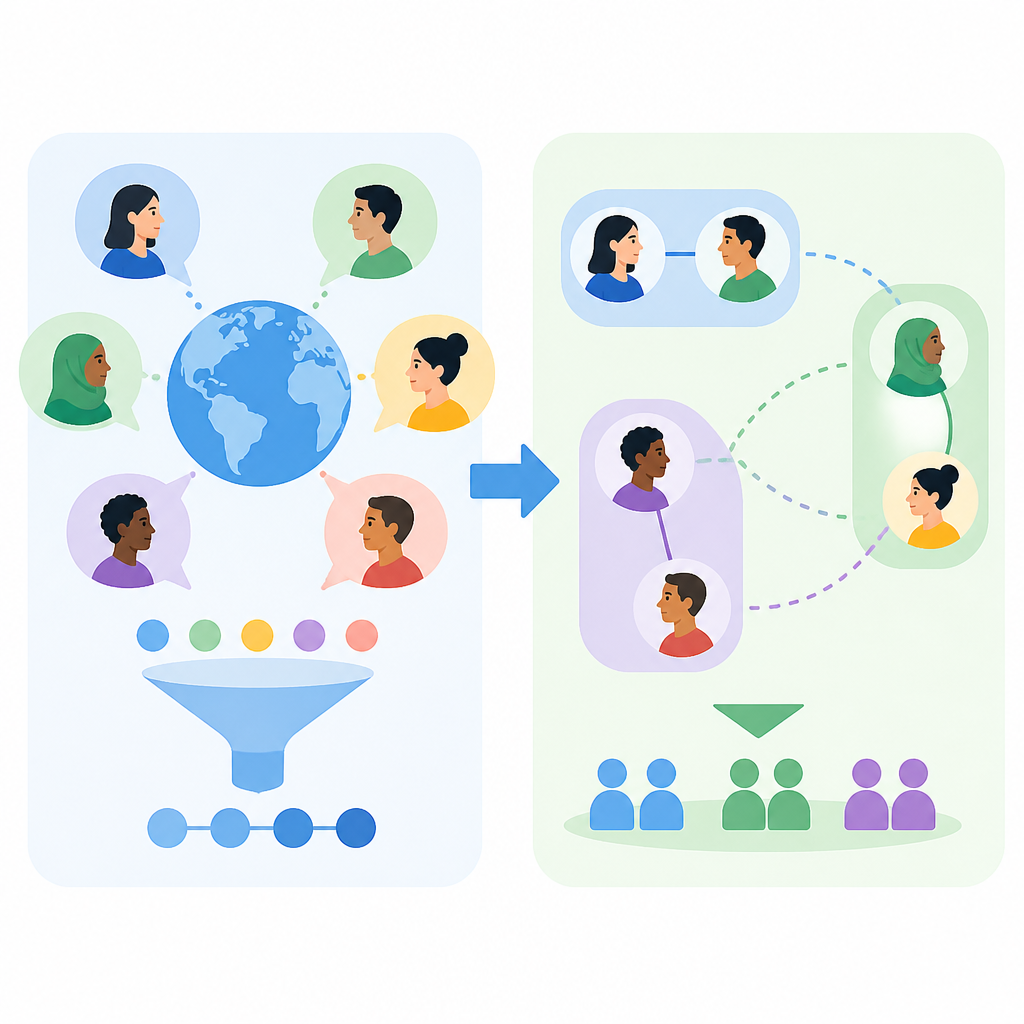
LLMs can help because they already encode a lot of language knowledge, but raw capability is not the same as task performance. A model may understand language broadly and still miss coreference links, especially when the task depends on subtle local context. That is the gap this paper is trying to close.
The title’s emphasis on “closing the gap” also signals a practical concern: bringing LLM-based systems closer to whatever stronger multilingual coreference setup the authors are targeting. The source we have does not state the baseline, the dataset, or the exact target metric, so we should not overread the claim. What we can say is that the paper is focused on adaptation, not from-scratch model training.
How the method works in plain English
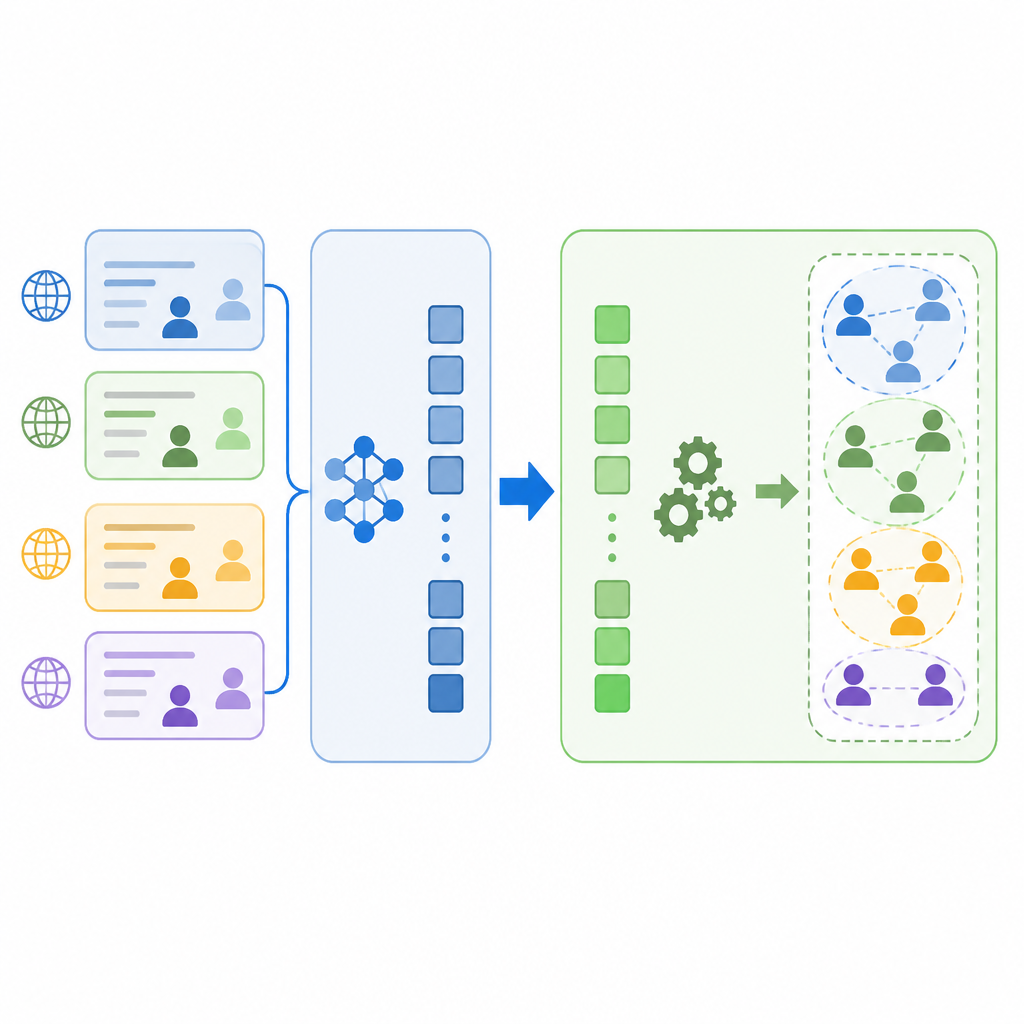
The key idea is in the phrase “two-stage adaptation.” In plain English, that means the model is adjusted in two separate phases rather than one. In research terms, that kind of design often helps because the first stage can teach general task behavior while the second stage can specialize the model for the exact multilingual setting.
That matters for coreference because the model needs both broad reasoning and language-specific sensitivity. A single adaptation pass may not be enough to align those two requirements. Two-stage adaptation suggests the authors are trying to separate those concerns instead of forcing one training or prompting recipe to do everything at once.
Because the abstract text provided here does not spell out the stages, we cannot say whether this involves fine-tuning, instruction tuning, data filtering, prompt adaptation, or some other mechanism. The only safe statement is that the method uses two phases of adaptation for LLM-based multilingual coreference resolution.
For engineers, that is still useful information. It points to a design pattern: if a multilingual NLP task feels too brittle with one-shot prompting or one-pass tuning, a staged adaptation pipeline may be a better fit. The paper appears to explore exactly that kind of approach.
What the paper actually shows
The source material available here does not include benchmark numbers, dataset names, or a results table. So there are no concrete scores to report, and it would be misleading to invent them. If you are looking for the exact improvement over a baseline, the abstract page alone does not provide it.
What the title does establish is that the paper is tied to CRAC 2026, which places it in the coreference-resolution research track. That gives the method a clear evaluation context, even though the abstract snippet we have does not expose the actual experiments.
In other words: the paper claims a methodological contribution, but this raw source does not let us verify the strength of the gains. That is an important limitation for readers who want to judge whether the approach is worth reproducing or integrating.
Why developers should care
If you build multilingual assistants, document pipelines, or analytics tools, coreference errors are one of the easiest ways to make a system look “smart” in one sentence and confused in the next. A model that cannot track entities reliably will produce summaries that lose referents, retrieval systems that miss context, and assistants that answer with the wrong subject.
Two-stage adaptation is interesting because it hints at a more controlled way to improve those failures. Even without benchmark numbers in the abstract, the method suggests a practical engineering lesson: multilingual language understanding may benefit from staged specialization rather than a single generic adaptation step.
That does not mean this paper is ready to drop into production. We do not know from the provided abstract how much data it needs, how expensive the adaptation is, which languages it covers, or whether the method generalizes beyond the paper’s evaluation setup. Those are the questions a practitioner would need answered before adopting it.
Limitations and open questions
The biggest limitation here is the source itself: the abstract page does not expose the details that matter most for implementation. There are no benchmark numbers, no dataset list, no explicit description of the two stages, and no evidence about runtime or cost.
That means the paper is best read as a research signal rather than a deployment recipe. It tells us where the field is heading: using LLM adaptation to make multilingual coreference more reliable. But it does not yet tell us enough to estimate engineering effort, failure modes, or operational tradeoffs.
For teams working on multilingual NLP, the practical takeaway is to watch for staged adaptation methods when a task feels too language-sensitive for a single training pass. This paper is clearly in that design space, even though the abstract-only view leaves the exact mechanics and gains unspecified.
- Two-stage adaptation is the central method, but the abstract does not reveal the exact stages.
- No benchmark numbers are available in the provided source, so performance claims cannot be quantified here.
- The paper is relevant to any system that needs reliable entity tracking across languages.
As with many arXiv abstracts, the title gives the direction and the abstract page gives only a thin slice of the evidence. The real value here is the idea: multilingual coreference may need more than a generic LLM prompt or a single fine-tuning pass.
// Related Articles
- [RSCH]
CRDTs keep replicas in sync without locks
- [RSCH]
Post-Deterministic Systems for Autonomous Infra
- [RSCH]
Causal methods for measuring task learnability
- [RSCH]
RL Training That Hands Off Control Gradually
- [RSCH]
OmniGameArena benchmarks VLM game agents better
- [RSCH]
TurboQuant cuts KV cache memory 6x in Google tests