Five inequalities, one Grok-assisted math note
A short math note reports five Grok-assisted discoveries, each later verified by the authors.

This note reports five Grok-assisted mathematical discoveries later verified by the authors.
Grokability in five inequalities is a compact research note about using Grok as a collaborator in pure mathematics. The practical angle is not that it ships a tool, but that it shows an AI-assisted workflow can surface new inequalities that the authors then check and formalize themselves.
For developers, that matters because it hints at a broader pattern: language models are not just for code generation or chat. They may also help with hypothesis generation in technical domains where the hard part is spotting the right inequality, bound, or structural relationship before proving it rigorously.
What problem this paper is trying to fix
Get the latest AI news in your inbox
Weekly picks of model releases, tools, and deep dives — no spam, unsubscribe anytime.
No spam. Unsubscribe at any time.
The paper is not solving a software engineering problem directly. It is trying to improve the discovery process in mathematics, where finding a stronger bound or a cleaner inequality can take a lot of manual exploration. In that sense, the “problem” is search: how to reach new results faster, and how to use an AI system as part of that search without treating it as the final authority.
The authors frame the work as five mathematical discoveries made in collaboration with Grok, with the authors later verifying them. That verification step is important. It separates idea generation from proof checking, which is exactly the kind of division of labor many engineers will recognize from AI-assisted coding: the model proposes, the human validates.
The abstract does not describe the full prompting setup, iteration loop, or proof workflow in detail. So while the note clearly demonstrates an AI-assisted research process, it does not give enough information to turn this into a benchmarked methodology for others to copy step by step.
How the method works in plain English
The method, as far as the abstract tells us, is straightforward: collaborate with Grok on mathematical questions, identify candidate improvements, and then verify the resulting statements carefully. The paper does not claim Grok proved the results on its own. Instead, it says the discoveries were made in collaboration with Grok and subsequently verified by the authors.
That distinction matters. In practice, this sounds less like automated theorem proving and more like AI-assisted mathematical exploration. The model likely helps generate conjectures, suggest sharper forms, or point toward known structures worth testing. The human authors then do the rigorous part: checking the inequalities and confirming that the statements hold.
Because the abstract is brief, there are no implementation details such as model settings, compute, or iteration counts. There are also no benchmark numbers in the usual ML sense. So this paper is best read as a proof-of-concept for AI-assisted math discovery, not as a performance report.
What the paper actually shows
The paper says it contains five discoveries. Those are:
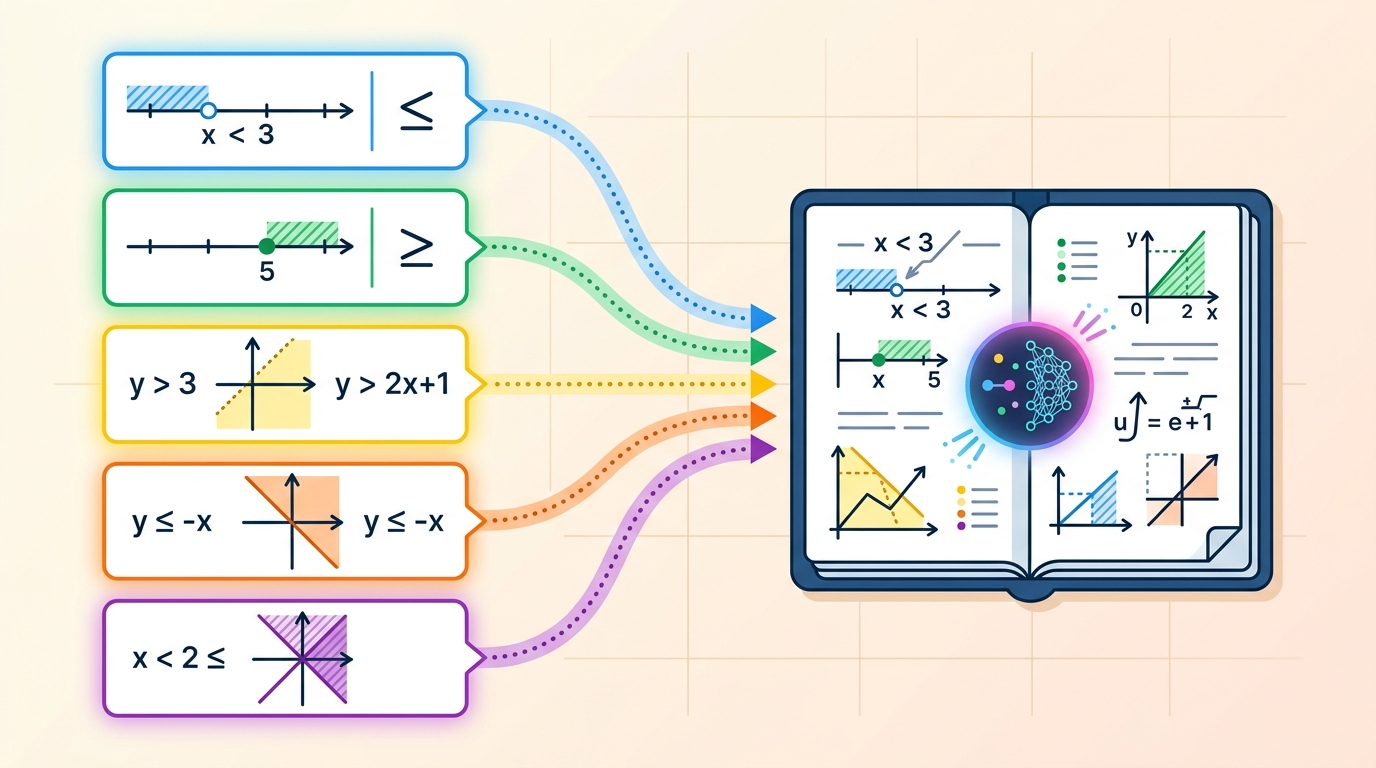
- an improved lower bound on the maximal Gaussian perimeter of convex sets in
R^n - sharper
L_2-L_1moment comparison inequalities on the Hamming cube{-1,1}^n - a strengthened autoconvolution inequality
- improved asymptotic bounds on the size of the largest
g-Sidon sets in{1,...,n} - an optimal balanced Szarek's inequality
That is already a meaningful result set, even without benchmark tables. These are all the kind of technical statements that matter in analysis, combinatorics, and probability: they tighten constants, improve asymptotic bounds, or sharpen comparison inequalities. The abstract does not provide the exact formulas, the previous best bounds, or the size of the improvement, so those details are not available here.
What we can say with confidence is that the note claims each result is both new and verified by the authors. It does not say that the improvements are small or large, only that they are sharper, strengthened, improved, or optimal in the specific cases named.
Why engineers should care
Even if you never work on convex geometry or additive combinatorics, this paper is useful because it shows a realistic role for AI in technical work: not as an oracle, but as a discovery partner. That is a better mental model for teams building AI tools for code review, formal methods, symbolic math, or research support.
The paper also highlights a workflow constraint engineers should take seriously: AI can help generate candidate truths, but verification still has to happen elsewhere. In software, that might mean tests, type systems, static analysis, property checks, or human review. In mathematics, it means proof and verification.
There is also a product lesson here. If you are building AI systems for expert users, the value may come from helping them explore a search space more effectively, not from replacing their judgment. A tool that suggests stronger inequalities, cleaner invariants, or promising reformulations can be useful even if it never produces the final proof.
Limitations and open questions
The biggest limitation is that the abstract is short, so we do not get the mechanics of the collaboration. We do not know how many candidate ideas Grok produced, how often they failed, what the authors had to repair, or whether the process generalizes beyond these five examples.
We also do not get comparative evidence. There are no runtime numbers, no success rates, and no head-to-head comparison against other methods or human-only workflows. So this is evidence that AI-assisted mathematical discovery can work, but not evidence about how often it works or how it scales.
Finally, the paper is a note, not a broad systems paper. That means its main contribution is the results themselves and the fact that they were discovered in collaboration with Grok. For practitioners, the open question is whether this style of AI-assisted exploration can be turned into a repeatable workflow for other domains with similarly hard search problems.
Still, the core message is clear: AI is starting to contribute not just to generating explanations, but to generating new technical statements worth proving. For developers, that is a signal to think beyond autocomplete and toward AI as a structured discovery engine.
// Related Articles
- [RSCH]
How VLMs Learned Complex Scene Descriptions
- [RSCH]
Visual Pretraining Beats Text-Only in Language Models
- [RSCH]
PHINN-EEG brings topology to dream-state EEG
- [RSCH]
Google’s Android Bench update exposes Gemini’s gap
- [RSCH]
Benchmarks should not pick your LLM in 2026
- [RSCH]
Rust Breaks Into TIOBE’s Top 10