OpenClaw’s 1,299 Repos: What the Data Shows
OpenClaw hit 1,299 repos in eight weeks. The repo mix shows fast adoption, Chinese tooling, and a clear build order.
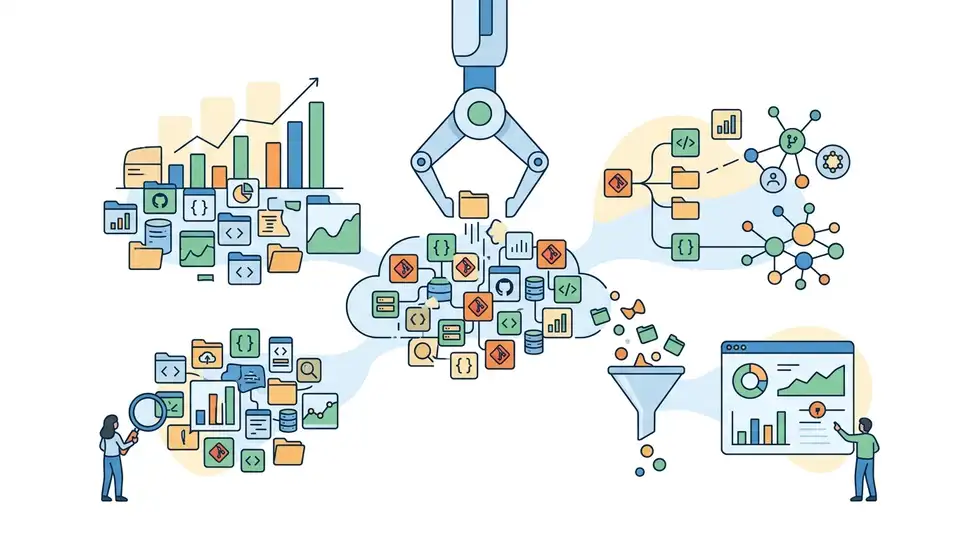
OpenClaw launched in late January 2026, and eight weeks later PT-Edge was tracking 1,299 repositories across 13 categories built around it. That is a fast enough rise to make you pause, because the number is not just big, it is structured.
What makes this interesting is the shape of the growth. The earliest projects focused on localization and deployment, then came clients and middleware, and after that the ecosystem filled in with tutorials, orchestration tools, and domain-specific agents. That order says a lot about how developers adopt new AI platforms when they move from curiosity to daily use.
The first signal was adaptation, not invention
Get the latest AI news in your inbox
Weekly picks of model releases, tools, and deep dives — no spam, unsubscribe anytime.
No spam. Unsubscribe at any time.
The most telling projects in the OpenClaw ecosystem were not built from scratch for OpenClaw at all. They were existing products that added support after launch, which is a stronger adoption signal than a pile of brand-new hobby repos.
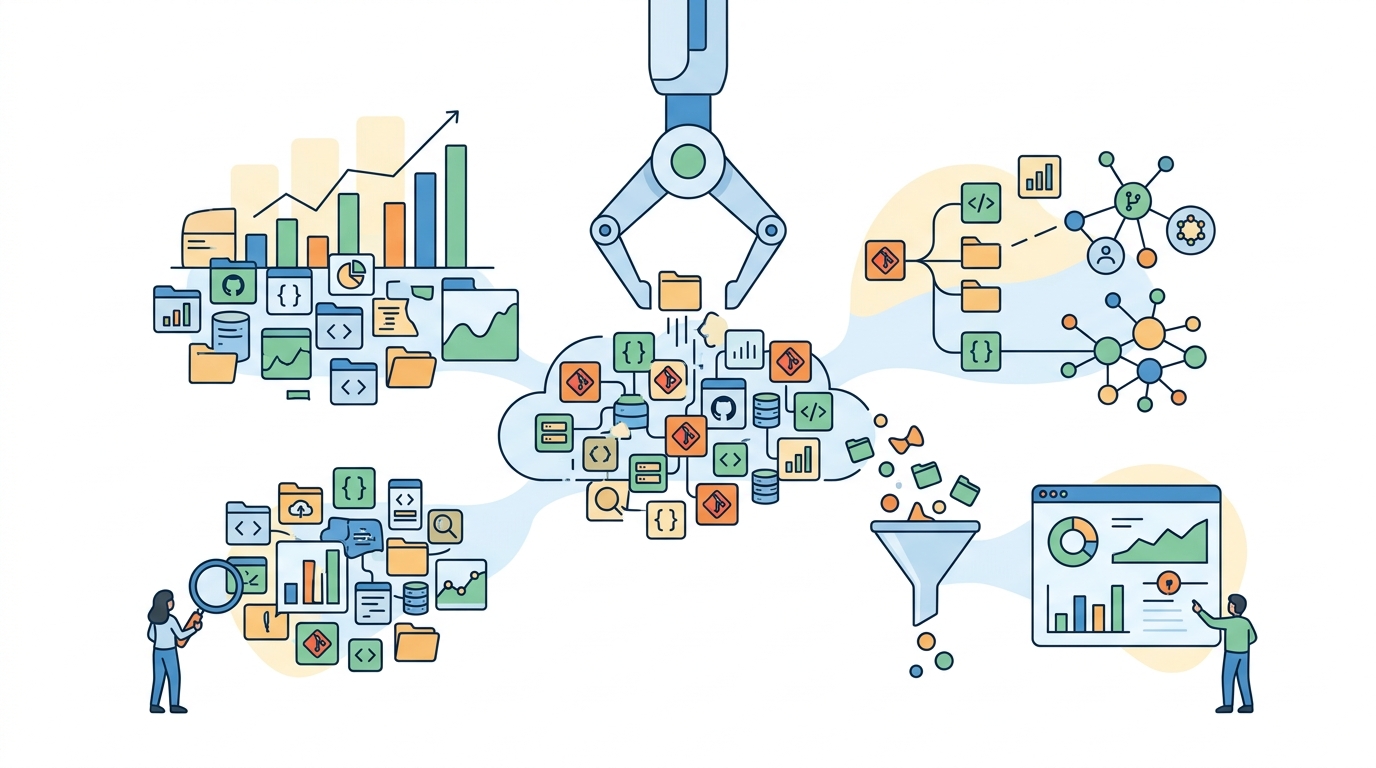
Super Agent Party, with 1,854 stars, began as an all-in-one AI companion in March 2025. AionUi already had 18,636 stars and 1,291 commits in 30 days as a desktop cowork app before OpenClaw arrived. n8n-skills had 3,414 stars as an n8n workflow toolkit from October 2025. All three later added OpenClaw support.
That matters because mature projects do not pivot for every shiny new thing. They add support when users ask for it, or when maintainers see a real pull from the market. In this case, OpenClaw did enough in its first weeks to get other teams to rewrite parts of their stack around it.
- Super Agent Party: 1,854 stars, pre-existing AI companion project
- AionUi: 18,636 stars, 1,291 commits in 30 days
- n8n-skills: 3,414 stars, workflow toolkit that later integrated OpenClaw
- Signal: established projects adapted instead of waiting on the sidelines
The first two weeks were about making it usable
Within days of launch, the ecosystem split into three immediate needs: language access, deployment, and hands-free interaction. That sequence is predictable if you have watched developer tools spread, but the speed here was striking.
OpenClawChineseTranslation appeared on January 30, just three days after launch, and it synced hourly with the main repo. openclaw-coolify became a deployment template, and its 80% fork rate shows how many people wanted their own instance. openclaw-assistant added voice activation on Android, which is the sort of feature that often signals a tool has moved from demo to habit.
This first wave tells you what people need when a new AI system catches fire: they want it in their language, on their device, and in a form they can run themselves. Nobody is waiting for a polished official bundle if the community can patch the gaps in a day or two.
- OpenClawChineseTranslation: launched January 30, three days after OpenClaw
- openclaw-coolify: 80% fork rate, strong sign of self-hosting demand
- openclaw-assistant: Android voice activation support
- Pattern: localization first, deployment second, interface polish third
February was the month the stack filled in
By February, OpenClaw had stopped being something people tried and started being something they built around. Fifteen of the top 25 projects were created in a single four-week window, which is a strong sign that the platform had crossed from novelty into utility.
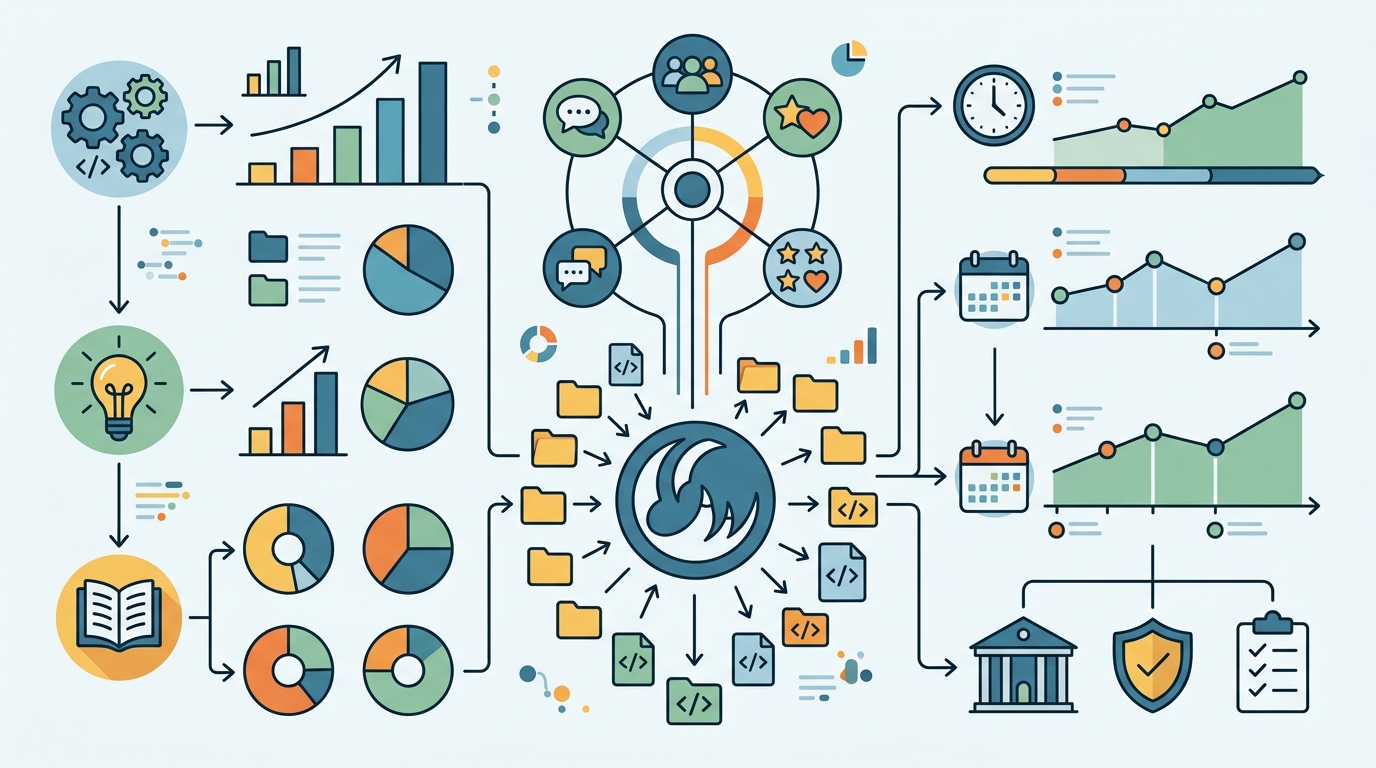
openclaw-android arrived on February 11 and promised Android use with a single command. Nexu, launched on February 25, bridged WeChat, Feishu, Slack, and Discord from one app. ClawPanel added a visual dashboard with a built-in AI assistant, while openclaw-feishu connected the project to Feishu, the workplace platform used heavily in China.
Infrastructure got serious too. ClawRouter launched on February 3 as an LLM router with support for 41+ models and sub-millisecond routing. AlphaClaw solved the deployment pain point and now shows 11,234 downloads per month. That package is the clearest sign that people wanted something installable, not just something to clone.
Domain-specific work also started to appear. ClawBio focused on bioinformatics-native skills, and HyperLiquid-Claw aimed at crypto trading. Those projects are early, but they show the platform is already moving into specialized workflows rather than staying trapped in general-purpose chat.
- 15 of top 25 repos were created in February
- ClawRouter: 41+ models, sub-millisecond routing
- AlphaClaw: 11,234 npm downloads/month
- ClawBio and HyperLiquid-Claw: signs of domain-specific adoption
March added education, orchestration, and staying power
March is where a project stops looking like a burst of enthusiasm and starts looking like a platform. The new work shifted toward tutorials, skill libraries, and multi-agent coordination, which are the layers that help users stick around after the first week of experimentation.
hello-claw, built by Datawhale China, became the first systematic tutorial for people who wanted to “adopt from scratch and build your first claw.” openclaw-master-skills curated 339+ skills and updated weekly. There is also a full book about OpenClaw, which is a pretty good sign that the ecosystem has already moved beyond casual experimentation.
“The future of AI is not in building one model to rule them all, but in building systems that can use models well.” - Satya Nadella, Microsoft Build 2023
That quote fits OpenClaw because the ecosystem is not centered on one model release. It is centered on routing, skills, clients, deployment, and education. The projects that are sticking are the ones that reduce friction and let teams mix tools instead of betting everything on one interface.
Orchestration followed naturally. ClawTeam-OpenClaw brought swarm coordination, while MetaClaw introduced a self-evolving agent that learns from conversation. Those are the kinds of projects that appear after the basics are solved, when users start asking how to coordinate multiple agents instead of just launching one.
- hello-claw: systematic onboarding from Datawhale China
- openclaw-master-skills: 339+ skills, updated weekly
- ClawTeam-OpenClaw: multi-agent coordination
- MetaClaw: self-evolving agent with 169 commits in 30 days
China built the onboarding layer
One of the strongest patterns in the data is that Chinese-language projects did more than translate the original work. They built the adoption layer. That is a different kind of contribution, and it often decides whether a tool stays niche or becomes broadly useful.
awesome-openclaw-usecases-zh documents 40 real-world use cases for office automation, content creation, server operations, personal assistants, and knowledge management. It also includes workflows for Feishu, WeChat, and Weibo, which are not just translations of English ideas. They are original, local workflows for a specific developer base.
That kind of work is easy to miss if you only count stars. But if you want to know whether a tool is becoming part of daily practice, look for localized docs, platform-specific integrations, and community guides that solve real setup problems. Those are the artifacts that show up when a developer ecosystem starts teaching itself.
- awesome-openclaw-usecases-zh: 40 use cases
- Integrations: Feishu, WeChat, Weibo
- Focus: office automation, content creation, server ops, knowledge management
- Meaning: local communities built original onboarding material
What the numbers say about OpenClaw adoption
The repo count alone is impressive, but the mix of metrics is where the story gets interesting. Most OpenClaw projects are applications or configurations, not classic libraries. Only 15 repos have package downloads at all, which means the ecosystem is built around cloning, forking, and customizing rather than installing a dependency and moving on.
The fork rates back that up. n8n-skills has an 18% fork rate, openclaw-master-skills has a 22% fork rate, and openclaw-coolify has an 80% fork rate. Those are not vanity stats. They show people are taking these repos, changing them, and running them for their own needs.
AlphaClaw is the odd one out, and that is useful. With 11,234 npm downloads per month, it is the clearest example of a project that solved a practical problem well enough to become part of a repeatable workflow. If the rest of the ecosystem is about customization, AlphaClaw is about reliability.
Here is the comparison that matters: most OpenClaw repos are being cloned, forked, and adapted; AlphaClaw is being installed. That split suggests the ecosystem is still early, but the people inside it already know which problems are worth packaging and which problems are worth leaving open for local modification.
- Only 15 repos have package downloads
- n8n-skills: 18% fork rate
- openclaw-master-skills: 22% fork rate
- openclaw-coolify: 80% fork rate, highest self-hosting signal
- AlphaClaw: 11,234 npm downloads/month, strongest install signal
OpenClaw’s real test starts after the first rush
OpenClaw’s first eight weeks show a very specific adoption pattern: existing projects integrate first, localization and deployment arrive next, then clients and middleware, and finally education plus orchestration. That sequence is useful because it gives us a template for reading the next wave of AI ecosystems as they form.
My read is simple: if OpenClaw keeps growing, the next metric to watch is not star count. It is whether the ecosystem keeps producing reusable infrastructure and serious onboarding material in more than one language. If that continues, the 1,299-repo figure will look less like a spike and more like the opening chapter of a durable developer stack.
For now, the actionable takeaway is this: when a new AI platform appears, count the projects that make it usable, not the ones that merely announce it. The former tells you where adoption is happening. The latter just tells you who is paying attention.
// Related Articles
- [RSCH]
How VLMs Learned Complex Scene Descriptions
- [RSCH]
Visual Pretraining Beats Text-Only in Language Models
- [RSCH]
PHINN-EEG brings topology to dream-state EEG
- [RSCH]
Google’s Android Bench update exposes Gemini’s gap
- [RSCH]
Benchmarks should not pick your LLM in 2026
- [RSCH]
Rust Breaks Into TIOBE’s Top 10