Trump's AI Legislative Framework: What's Inside?
Trump's AI framework aims to secure national AI dominance, protect intellectual property, and enhance grid reliability via on-site power.

In a move aimed at positioning the United States as a leader in artificial intelligence, President Donald J. Trump has unveiled a comprehensive national AI legislative framework. This initiative is designed to bolster economic competitiveness, ensure national security, and address public concerns surrounding AI technologies. The framework outlines a series of measures to support innovation while safeguarding American values and interests.
Key Objectives of the AI Framework
Get the latest AI news in your inbox
Weekly picks of model releases, tools, and deep dives — no spam, unsubscribe anytime.
No spam. Unsubscribe at any time.
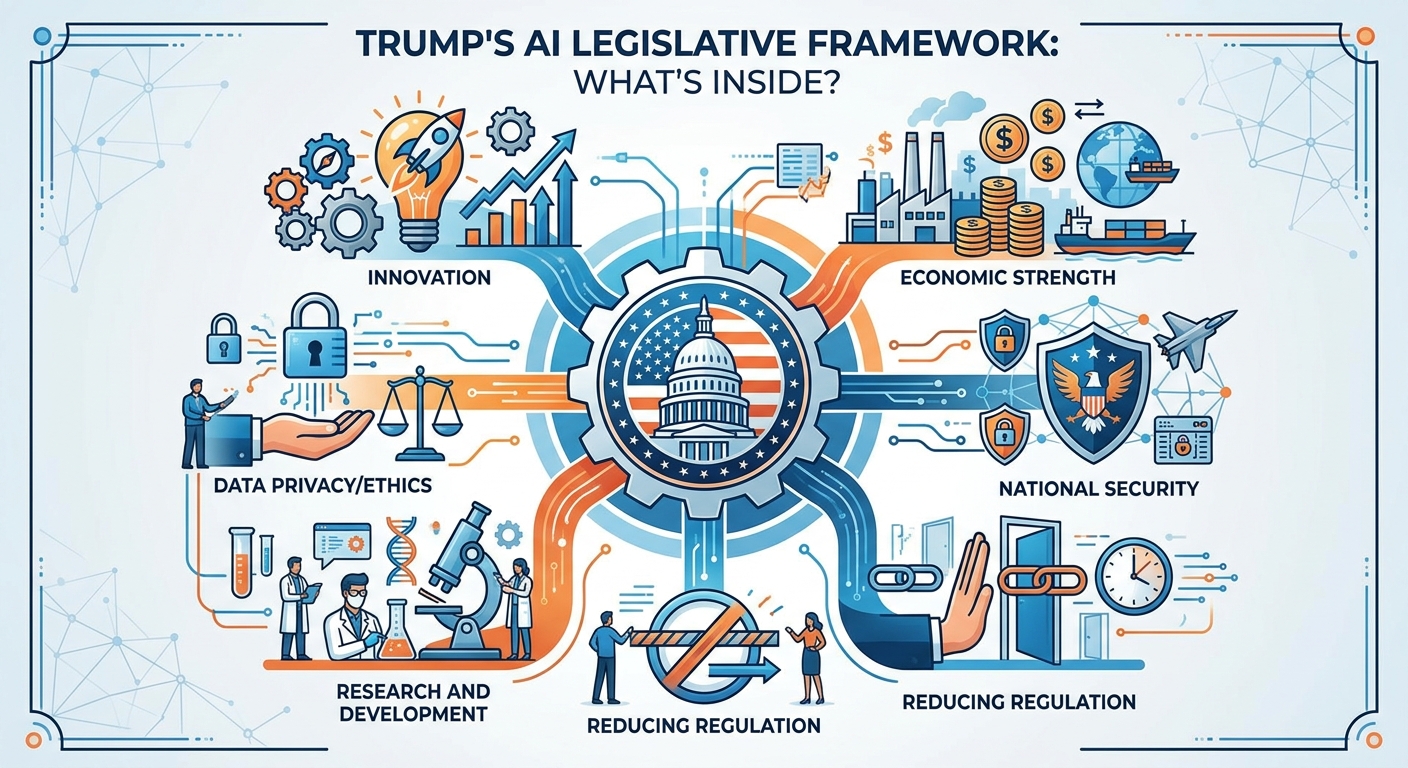
The framework focuses on six key objectives, each targeting a specific area of concern or opportunity in the AI landscape.
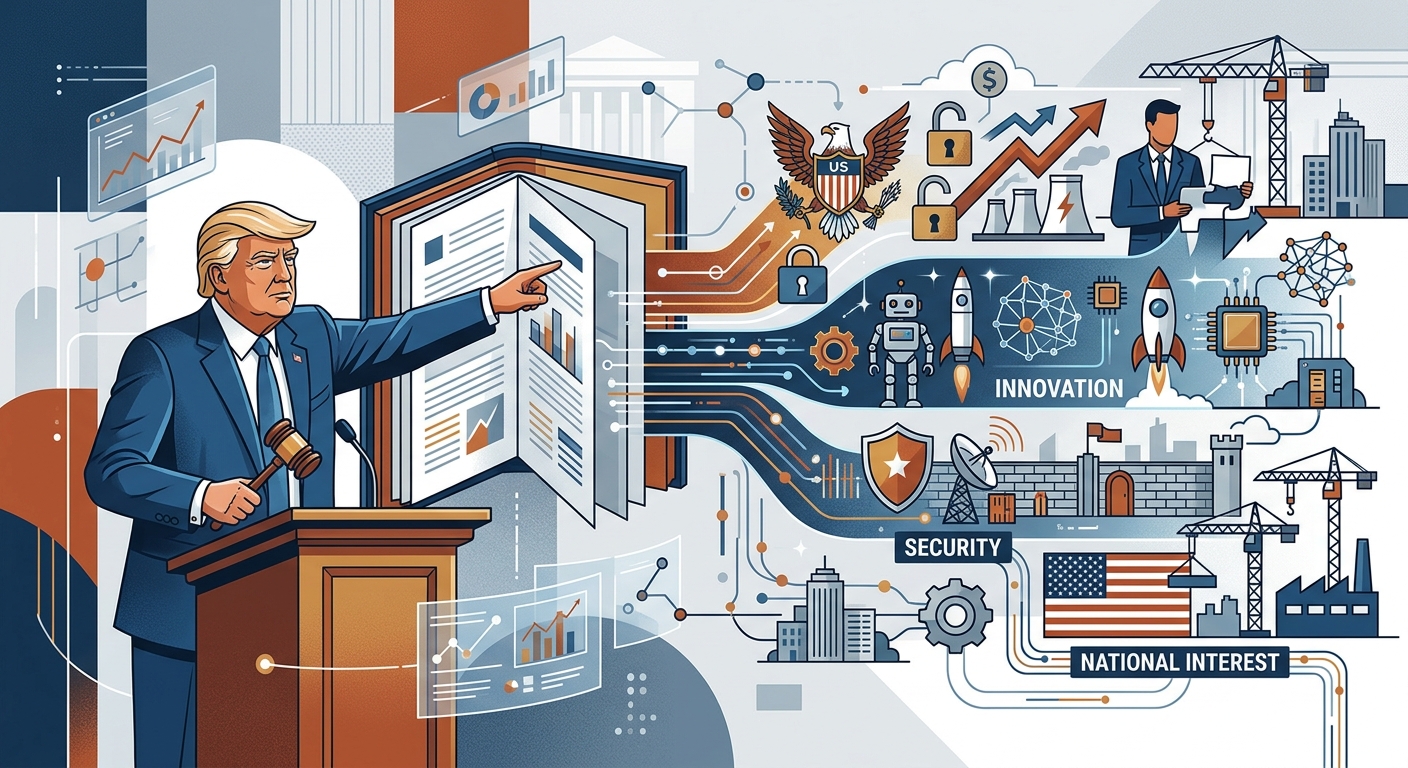
- Protecting Children and Empowering Parents: The administration is advocating for parental tools to manage children's digital environments, including privacy controls and usage management features. AI platforms accessed by minors are encouraged to adopt protective features against exploitation and self-harm.
- Strengthening American Communities: By streamlining permitting processes, data centers can generate their own power, enhancing grid reliability. The framework also urges Congress to bolster federal capabilities to tackle AI-enabled scams and national security threats.
- Respecting Intellectual Property Rights: Balancing the need for AI to learn from existing works with protecting creators' rights, the framework proposes a fair use approach that supports both innovation and creative integrity.
- Preventing Censorship: Ensuring AI systems do not suppress lawful expression, the framework suggests implementing guardrails to protect free speech while promoting truth and accuracy.
- Enabling Innovation: Outdated barriers to AI development should be removed to accelerate deployment across industries, with increased access to testing environments for world-class AI systems.
- Developing an AI-Ready Workforce: The administration calls for expanded workforce development programs to prepare American workers for AI-driven economic growth, creating new job opportunities across sectors.
The Role of Federal Leadership
Federal leadership is emphasized as crucial for the framework's success. A consistent national policy is seen as essential to avoid a patchwork of state laws that could hinder innovation and competitiveness. The administration's approach seeks to unify the country's AI efforts and ensure that the benefits of AI are distributed evenly.
"The United States must establish a cohesive AI policy that allows us to lead globally while ensuring that Americans enjoy the benefits of these advancements," said a spokesperson from the Office of Science and Technology Policy.
Comparison with Global AI Policies
When looking at other countries, the U.S. faces stiff competition. For instance, China's AI strategy aims for global dominance by 2030, with significant investments in AI research and development. The European Union has also been proactive, implementing regulatory frameworks that emphasize ethical AI usage.
- China: Targeting AI industry value of $150 billion by 2030 with state-backed initiatives.
- European Union: Focuses on ethical AI guidelines and strong data protection measures.
- United States: The new framework emphasizes innovation, security, and free speech, aligning with America's competitive strengths.
What Lies Ahead?
The Trump administration's AI legislative framework sets the stage for a national strategy that supports innovation while safeguarding American values. As Congress works to translate this framework into law, the coming months will reveal how these policies shape the future of AI in the U.S. The focus will be on balancing rapid technological advancement with ethical considerations and public trust.
// Related Articles
- [IND]
WebX 2026 turns speaker hype into a conference brief
- [IND]
AI Weekly: 2026-07-06 ~ 2026-07-13
- [IND]
The AI Act should be treated as Europe’s operating system for AI
- [IND]
Booz Allen’s OpenAI Deal Is Real Advantage, Not Hype
- [IND]
OpenSearch’s vector search benchmark in 5 parts
- [IND]
Vector Databases That Work in Production