AI's Impact in 2026: Key Developments and Market Shifts
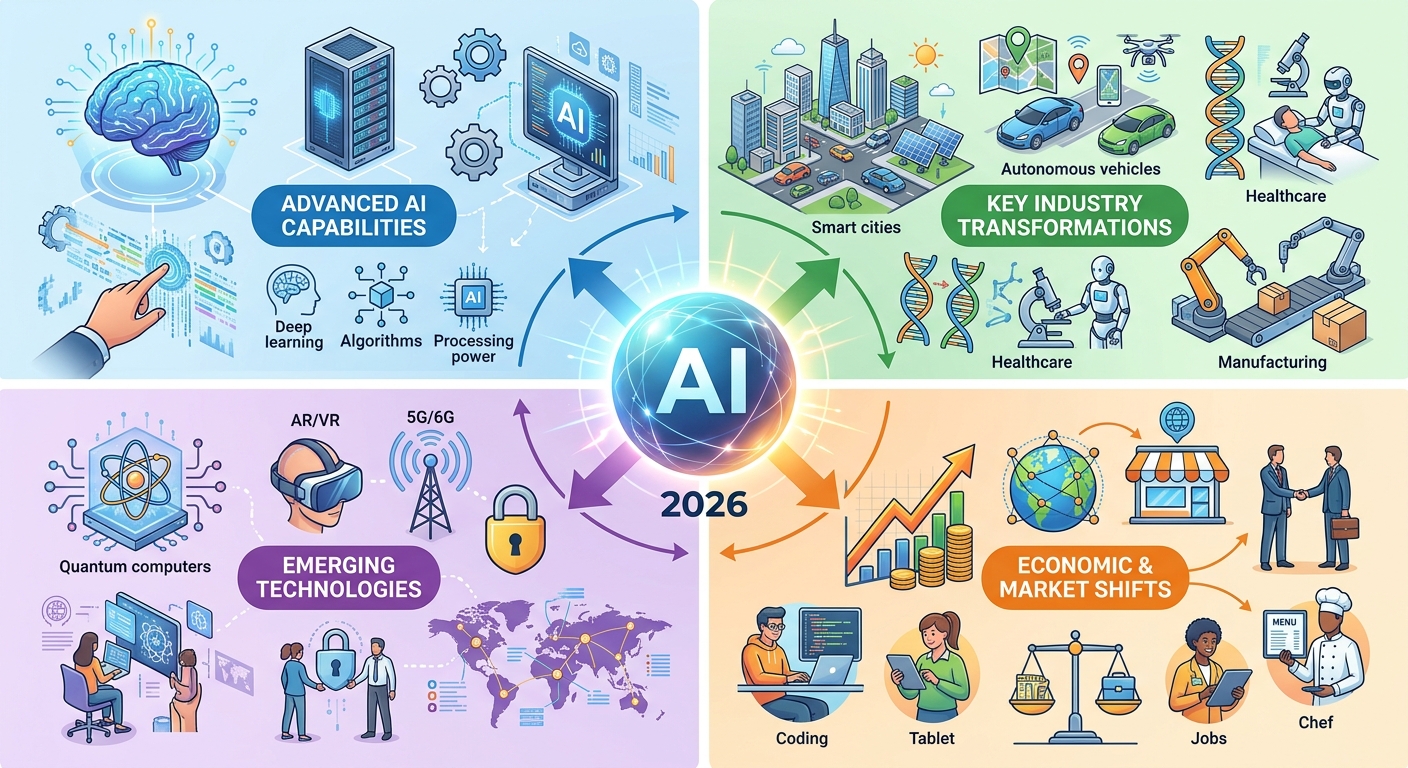
AI is reshaping industries in 2026, with companies like Meta and Ford launching innovative solutions that promise efficiency and cost savings.

2026 is shaping up to be a transformative year for artificial intelligence, with companies across sectors making significant strides. Samsung Electronics has announced a substantial expansion that will bring advanced AI features to a broader range of devices, including mid-tier and budget smartphones and tablets. This move democratizes access to high-end technology, previously reserved for flagship models.
Major Shifts in AI Investments
Get the latest AI news in your inbox
Weekly picks of model releases, tools, and deep dives — no spam, unsubscribe anytime.
No spam. Unsubscribe at any time.
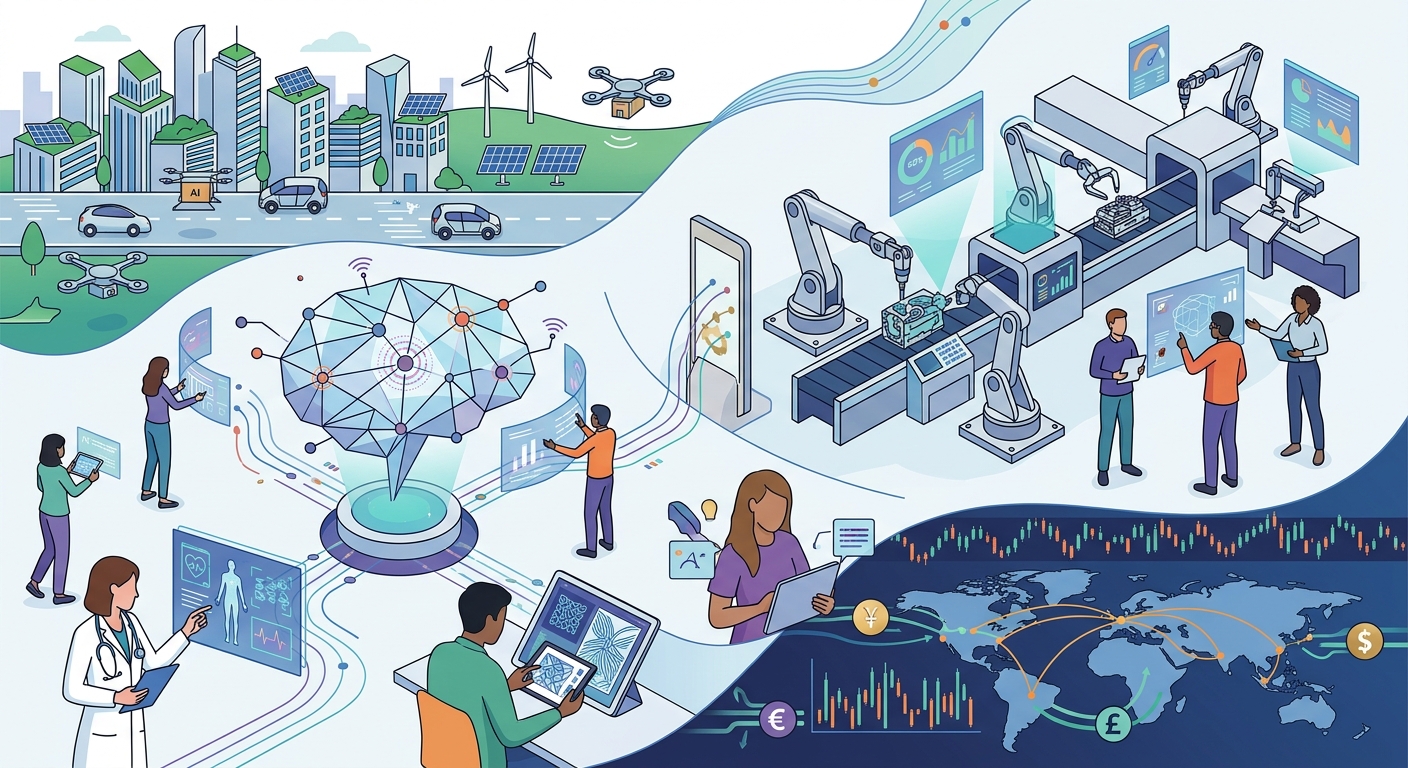
Several major corporations are pivoting their strategies to focus on AI development. Atlassian, the Australian software company, recently announced a 10% reduction in its workforce to reallocate resources toward AI initiatives. This restructuring is expected to cost up to $236 million but is deemed necessary as AI changes the skill sets required within the company.
- Atlassian is replacing its CTO with two AI-focused executives.
- The pivot reflects a broader industry trend towards integrating AI in enterprise solutions.
Meta's AI Chip Development
Meta has entered the AI hardware race with the introduction of four new AI chips aimed at reducing dependency on Nvidia. These chips, the MTIA 300, 400, 450, and 500, are expected to power various AI applications within Meta's data centers by 2027.
"Our new chips are designed to deliver performance that matches or exceeds current market leaders, ensuring Meta remains competitive in AI-driven innovations," said a spokesperson from Meta, as reported by Yahoo Finance.
Ford's AI-Driven Innovations
Ford has launched "Ford Pro AI," an AI assistant for managing commercial fleets. This system analyzes over 1 billion data points daily, providing fleet managers with actionable insights to optimize operations and reduce costs. Built on Google Cloud, this tool aims to significantly cut down the time spent on fleet management.
- Ford Pro AI is available to 840,000 paid subscribers at no additional cost.
- The system is expected to reduce administrative tasks by over 23 hours per week.
- It can draft emails and suggest cost-cutting strategies based on data analysis.
Comparisons and Industry Implications
As these companies adapt to the AI era, they face both opportunities and challenges. For instance, the race to develop cost-efficient AI models is intensifying. Google's Gemini 3.1 Flash-Lite offers 2.5× faster response times at a reduced cost, reflecting this trend.
- Google's model is priced at $0.25 per million input tokens, highlighting the push to make AI accessible to more businesses.
- OpenAI's GPT-5.4 has surpassed human performance on desktop task benchmarks, marking a shift towards AI as a digital coworker.
Looking Forward
The AI landscape in 2026 is marked by rapid technological advancements and strategic pivots by major corporations. As these developments unfold, companies that effectively integrate AI will likely gain a competitive edge. The question remains: how will smaller players adapt and thrive in this AI-driven world?
// Related Articles
- [IND]
WebX 2026 turns speaker hype into a conference brief
- [IND]
AI Weekly: 2026-07-06 ~ 2026-07-13
- [IND]
The AI Act should be treated as Europe’s operating system for AI
- [IND]
Booz Allen’s OpenAI Deal Is Real Advantage, Not Hype
- [IND]
OpenSearch’s vector search benchmark in 5 parts
- [IND]
Vector Databases That Work in Production