Data centers are pushing homeowners to solar
Data center demand is raising power costs and pushing homeowners toward solar-plus-storage as a basic backup plan.

Data center growth is pushing up power costs and driving homeowners toward solar-plus-storage.
A Nevada utility has told 49,000 Lake Tahoe residents that it is redirecting 75% of their electricity supply to data centers, and they have less than a year to replace it. That one decision captures a much bigger shift: AI infrastructure is no longer an abstract grid story, it is changing what homeowners pay and how they protect themselves.
What makes this more than a local utility dispute is the scale. Data centers used 22% of Nevada’s electricity in 2024, could reach 35% by 2030, and in Virginia they already consume more than one in four kilowatt-hours generated in the state.
| Metric | Value | Why it matters |
|---|---|---|
| Lake Tahoe residents affected | 49,000 | Shows how many homes are caught in one utility decision |
| Power redirected to data centers | 75% | Illustrates the size of the supply shift |
| Nevada data center electricity share, 2024 | 22% | Shows current grid pressure |
| Projected Nevada share by 2030 | 35% | Signals the pressure is still rising |
| National residential rate, Jan. 2026 | 17.45 cents/kWh | Gives the current cost baseline for homeowners |
| Year-over-year rate increase | 9.5% | Shows how fast bills are climbing |
Data centers are taking a bigger slice of the grid
Get the latest AI news in your inbox
Weekly picks of model releases, tools, and deep dives — no spam, unsubscribe anytime.
No spam. Unsubscribe at any time.
The Lake Tahoe case is the sharpest example in the story, but it is not an outlier. NV Energy told Liberty Utilities it will stop supplying power after May 2027 because it needs capacity for data centers near the Tahoe-Reno Industrial Center, where companies such as Google, Apple, and Microsoft are building more compute-heavy infrastructure.
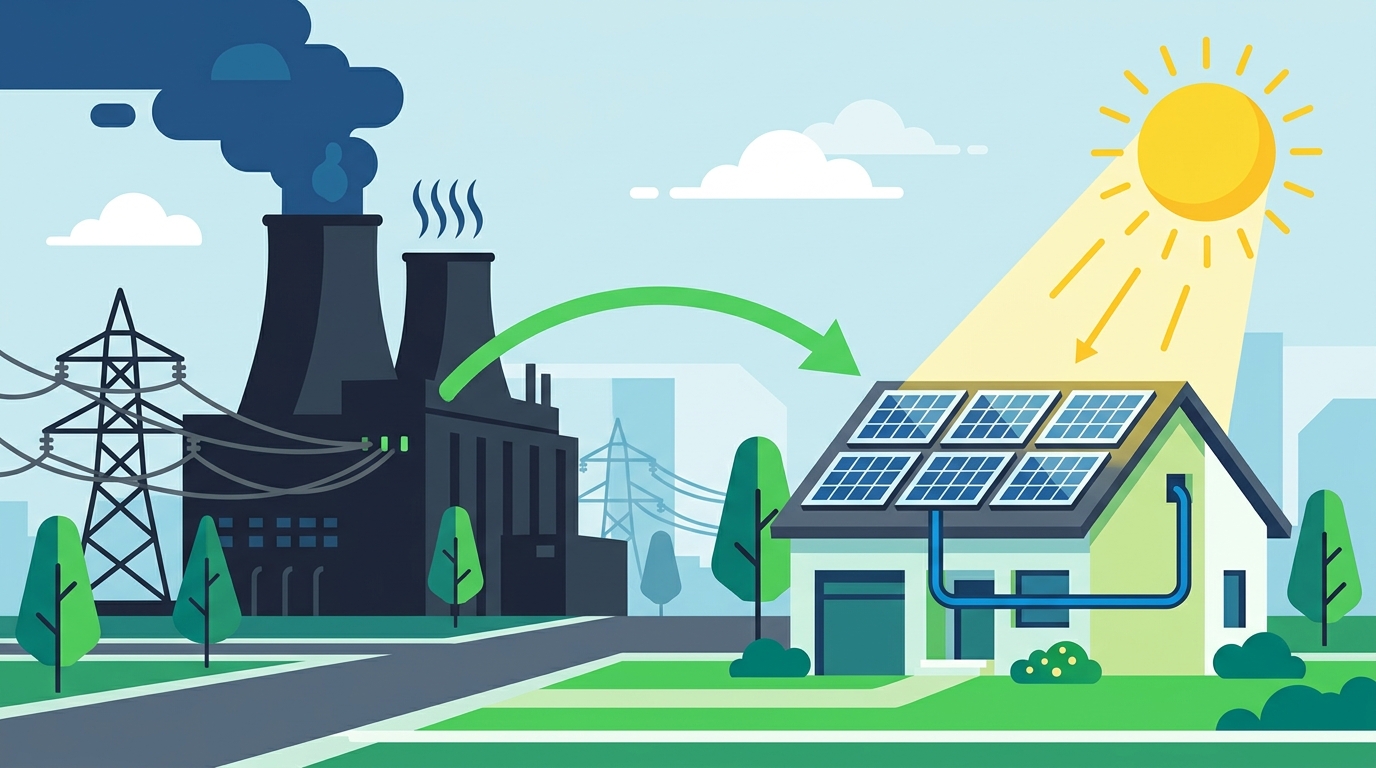
The numbers explain why utilities are feeling squeezed. A Desert Research Institute analysis of NV Energy’s resource plan found that 12 data center projects in Northern Nevada could add 5,900 megawatts of demand by 2033. In NV Energy’s own 2024 filing, about 75% of major-project load growth came from data centers.
That is a huge reordering of priorities for a grid that was built to serve homes, businesses, and factories. When a utility has to choose between serving a cluster of AI facilities and a neighborhood of homeowners, the customer with the bigger load usually wins.
- AI data centers are expected to triple their share of US electricity consumption, from 4.4% in 2023 to 12% by 2028.
- Data centers drove half of all US electricity demand growth last year.
- Dominion Energy proposed its first base-rate increase since 1992, adding about $8.51 per month in 2026.
- The average US residential electricity rate reached 17.45 cents per kWh in January 2026.
Homeowners are changing how they think about solar
The residential solar market has taken a hit after Congress ended the 30% federal tax credit for customer-owned systems at the end of 2025. The Solar Energy Industries Association SEIA expects installations to fall 18% in 2026.
Even so, the reason people buy solar is changing. It used to be mostly about tax breaks and monthly savings. Now it is also about keeping the lights on when rates rise and the grid gets tighter. That is especially true in Texas, Arizona, and parts of the Southeast, where solar-plus-storage demand is climbing because people want backup power during outages and extreme weather.
“We are not in a situation where we can just say no to this project,” said Dominion Energy Virginia CEO Robert M. Blue in a 2024 earnings call, referring to the company’s data center load growth and the need to build more infrastructure.
Batteries matter because they turn rooftop solar into something closer to a home power system. Solar panels make cheap electricity during the day, while a battery stores it for evening use, peak pricing windows, or outages. As more utilities move to time-of-use pricing and net metering rules become less generous, the battery becomes the part that makes the system useful after sunset.
California is already showing what that looks like at scale. Utility customers there are adding roughly 8,000 home batteries per month, which equals about 100 MW of new storage capacity. That is a meaningful amount of distributed storage for a single state, and it keeps growing even as incentives change.
- California is adding about 8,000 home batteries per month.
- That monthly pace equals roughly 100 MW of storage capacity.
- Ann Arbor, Michigan, deployed solar and battery systems on 150 homes through its city-owned utility.
- Vermont’s Green Mountain Power is offering home batteries at little to no upfront cost.
The Lake Tahoe case shows who has power and who does not
The Lake Tahoe situation is especially messy because of the geography and the regulators involved. Liberty Utilities is a California-regulated company, but its grid sits inside NV Energy’s balancing authority. That means California regulators cannot simply order Nevada to keep serving the area.
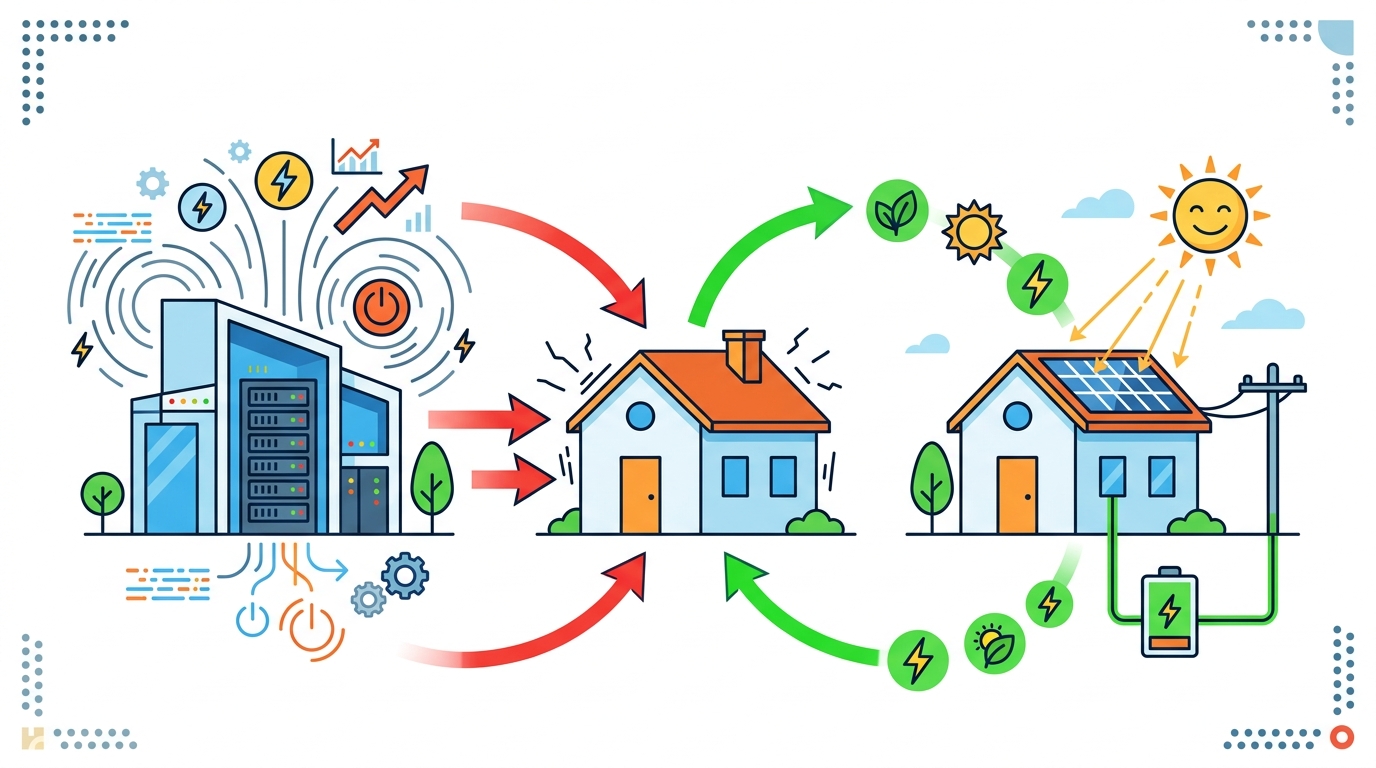
Building a direct connection to California’s grid would cost hundreds of millions of dollars, so Liberty has asked California regulators to approve emergency replacement power before the May 2027 deadline. That is a very expensive fix for a problem created by a much larger industrial load moving into the region.
The deeper lesson is simple: 49,000 residential customers cannot compete on equal footing with Google-scale electricity buyers in the Western market. Once that reality sinks in, rooftop solar and a home battery stop looking like a nice upgrade and start looking like a hedge against being last in line for grid capacity.
That is why this story matters beyond Nevada. It shows how data center growth, rate increases, and grid congestion are pushing homeowners toward distributed power even after the federal tax credit disappeared. The next question is whether more utilities will start treating home batteries as part of the answer before ratepayers are forced to do it themselves.
Related reading: how home batteries change the economics of backup power.
// Related Articles
- [IND]
WebX 2026 turns speaker hype into a conference brief
- [IND]
AI Weekly: 2026-07-06 ~ 2026-07-13
- [IND]
The AI Act should be treated as Europe’s operating system for AI
- [IND]
Booz Allen’s OpenAI Deal Is Real Advantage, Not Hype
- [IND]
OpenSearch’s vector search benchmark in 5 parts
- [IND]
Vector Databases That Work in Production