How VLMs Learned Complex Scene Descriptions
A decade of VLMs closed the gap on complex scene descriptions, but spatial dependence errors still linger.
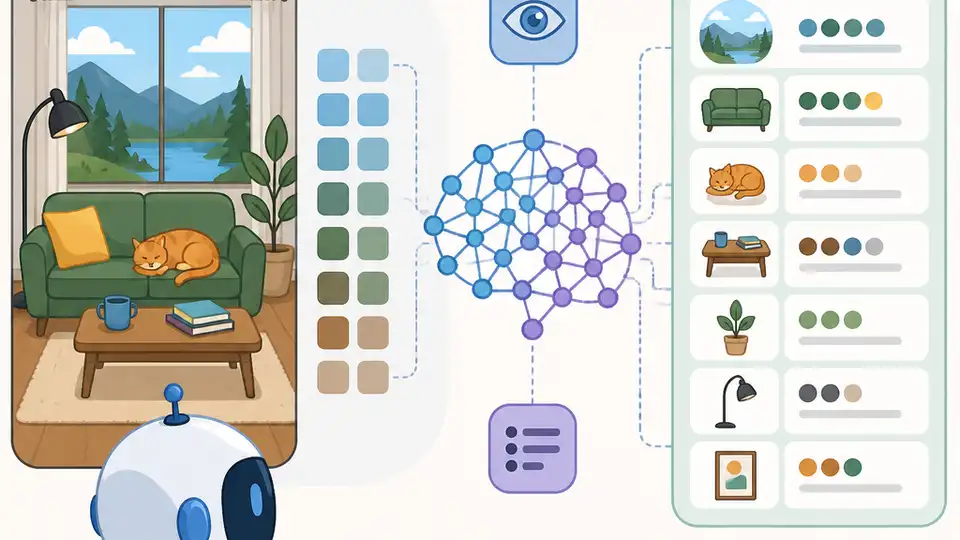
A decade of VLMs closed the gap on complex scene descriptions, but spatial dependence errors still linger.
- Research org: Unspecified in arXiv abstract
- Core data: 100 images
- Breakthrough: Introduces CSB dataset for complex social behavior descriptions
How much better have vision-language models really gotten at describing what is happening in an image? This paper argues that the answer depends on the scene. It looks beyond the usual simple benchmarks and asks whether models can handle complex social interactions, where the difference between “seeing objects” and “understanding behavior” actually matters.
The authors’ practical move is to test a decade of models against a new dataset built for that harder setting. They compare older pre-MLLM systems, newer multimodal large language models, and 20 human descriptions against a gold standard, then break the errors down into categories that are useful for engineers who care about failure modes, not just aggregate scores.
What problem this paper is trying to fix
Get the latest AI news in your inbox
Weekly picks of model releases, tools, and deep dives — no spam, unsubscribe anytime.
No spam. Unsubscribe at any time.
Most VLM evaluations have leaned on simple scenes like MS-COCO. That is useful for broad comparison, but it does not stress the model in the way real-world social scenes do. A picture of people interacting, cooperating, arguing, or moving through a shared space demands more than object listing. It requires the model to connect objects, actions, and spatial relationships into a coherent description.
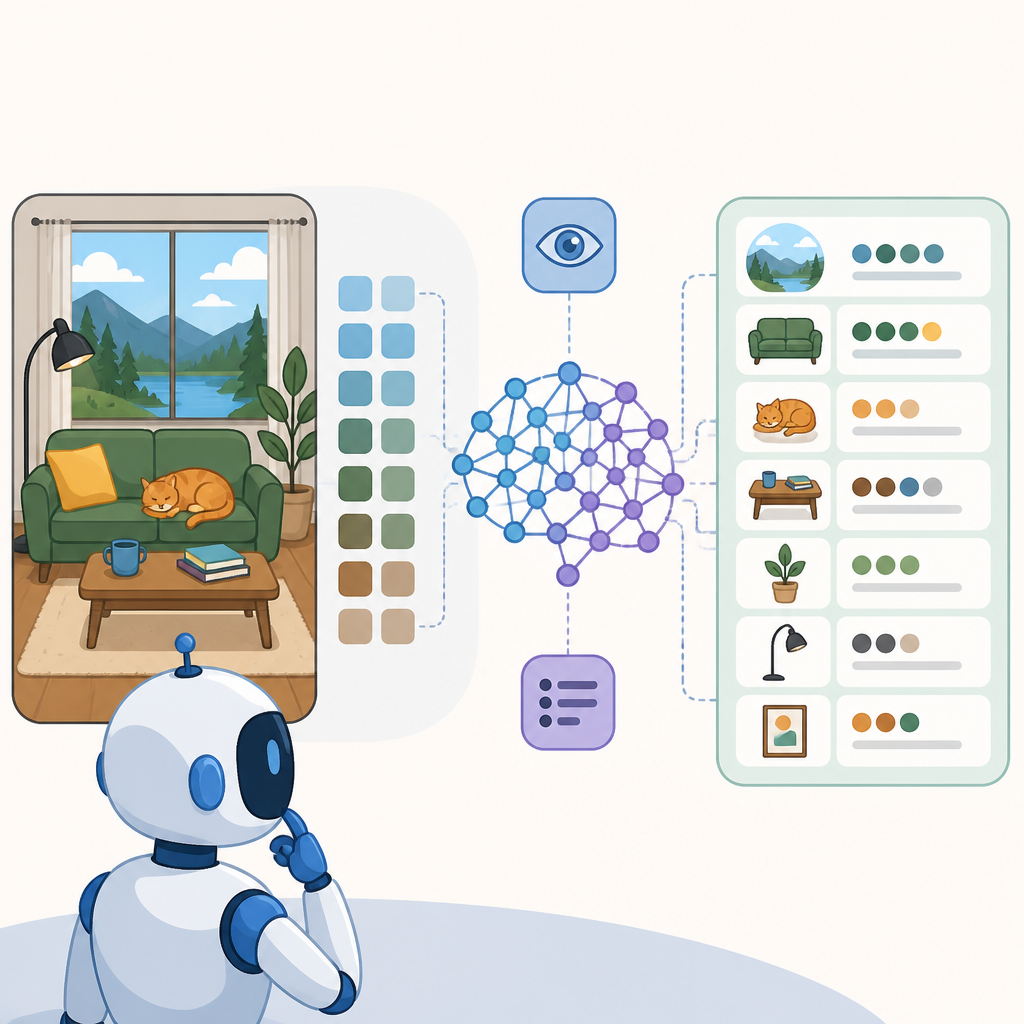
The paper says existing evaluations also miss another important layer: error analysis. If a model gets a caption wrong, that failure could come from missing an object, misidentifying it, hallucinating something that is not there, misunderstanding the scene, or attending to the wrong region of the image. Those are very different bugs, and they do not point to the same fix.
That is why the authors introduce the Complex Social Behavior, or CSB, dataset. It contains 100 images depicting complex social interactions and behaviors. In other words, it is designed to be a tougher test than the standard “what objects are in this image?” style benchmark.
How the method works in plain English
The setup is straightforward: use the CSB dataset as the harder test bed, then compare scene descriptions from models and humans against a gold standard. The paper examines a decade of vision-language systems spanning 2017 to 2025, including four pre-MLLMs and five MLLMs.
It also compares model descriptions with 20 human descriptions. That matters because it gives the authors a reference point for what people themselves say about the same images, not just how models stack up against a single labeled answer.
Instead of treating “accuracy” as one blob of a metric, the paper analyzes five visual-cognitive error types: object detection, recognition, hallucination, scene understanding, and spatial dependence. That breakdown is the most operationally useful part of the work. If you are building or evaluating a VLM, knowing which category is failing helps you decide whether you need better grounding, better training data, or better attention behavior.
The paper does not provide benchmark numbers in the abstract. So the safest summary is qualitative: it reports relative improvements across model generations and across datasets, but the exact values are not included in the source text provided here.
What the paper actually shows
The main result is that CSB shows a more pronounced improvement over time than MS-COCO in scene description accuracy. Older pre-MLLMs performed much worse than the bottom-ranked human descriptions on CSB. Newer MLLMs, by contrast, reached accuracies similar to the top-ranked human descriptions.
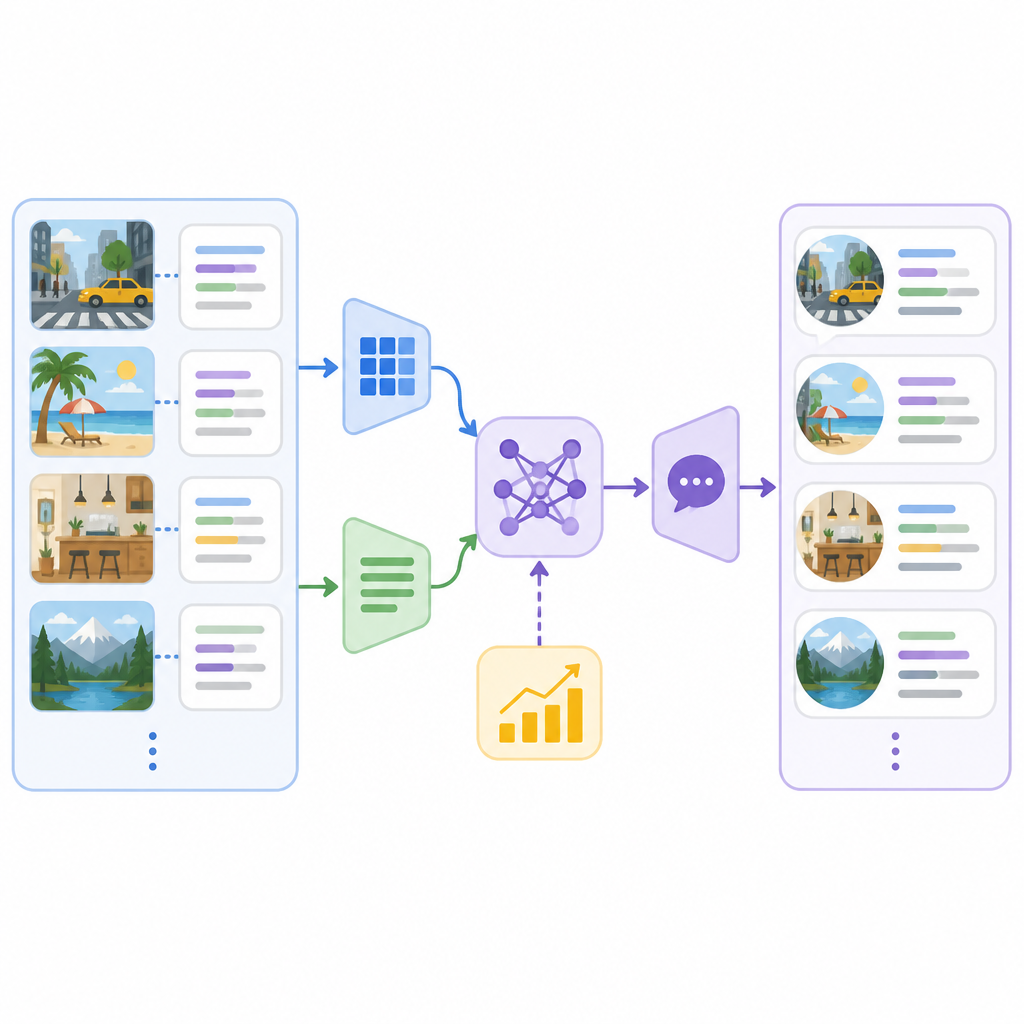
That is a strong claim about progress. It suggests the newer generation of multimodal models is no longer just good at naming visible objects; it can now describe complex social scenes at a level that approaches strong human descriptions, at least on the test set used here.
The authors also say MLLMs have eliminated the gap in scene description accuracy between simpler MS-COCO scenes and the more complex CSB scenes. For practitioners, that means the newer models are no longer disproportionately penalized when the scene stops being visually simple. The improvement is not just on easy benchmark images.
On the error-analysis side, the paper reports that MLLMs have almost eliminated all tested error types except one: spatial dependence. In plain terms, models can still rely on different image regions than humans do when generating descriptions. That may not always hurt the final caption, but it signals that the model’s internal “where to look” behavior can still differ from human attention patterns.
The paper also identifies which mistakes matter most for accuracy. Detection, recognition, and hallucination errors have the highest impact on scene description accuracy. That is a useful prioritization signal: if you are improving a VLM pipeline, those are the failures most worth chasing first.
Why developers should care
If you build apps on top of VLMs, this paper is a reminder that benchmark choice shapes your conclusions. A model that looks strong on simple image-caption data may still be less reliable when the scene contains multiple people and nontrivial interactions. That is exactly the kind of gap that shows up in user-facing products.
The CSB dataset is also a reminder that evaluation should match deployment reality. If your use case involves social scenes, safety review, accessibility tools, retail analytics, robotics, or media understanding, a benchmark built around isolated objects can miss the failures that matter most.
The error taxonomy is the part engineers can actually use. Detection, recognition, hallucination, scene understanding, and spatial dependence are not just academic labels; they map to different debugging paths. A hallucination problem suggests one kind of mitigation. A spatial dependence issue suggests another. That makes the paper more actionable than a single accuracy score.
At the same time, the abstract leaves some important questions open. The dataset is relatively small at 100 images, so it is best read as a focused probe rather than a complete replacement for broader evaluation suites. The source also does not provide exact benchmark numbers in the abstract, so you cannot infer the size of the gains from the text alone.
What this does and does not prove
This paper shows that VLMs have improved substantially over the last decade on a harder kind of scene description task, and that newer MLLMs are much closer to human performance than older systems were. It also shows that error analysis still matters, because not all mistakes are equally important.
What it does not show is that the problem is solved. The remaining spatial dependence issue means models may still “look” at images differently from people. And because the abstract does not include benchmark numbers, readers should treat the result as directional rather than fully quantified from the provided source alone.
Still, the practical message is clear: if you care about real-world visual understanding, you need tests that go beyond easy scenes and you need error categories that tell you why a model failed. This paper moves both of those needles.
Bottom line
For developers, the takeaway is simple: modern VLMs are much better at complex scene descriptions than older systems, but evaluation quality still determines whether you see that progress clearly. CSB is the kind of benchmark that exposes the difference between “can name objects” and “can describe behavior.”
And if you are choosing or fine-tuning a multimodal model, the paper gives you a practical checklist: test on complex social scenes, inspect error types, and do not assume a strong score on simple benchmarks transfers to richer visual reasoning tasks.
// Related Articles
- [RSCH]
Visual Pretraining Beats Text-Only in Language Models
- [RSCH]
PHINN-EEG brings topology to dream-state EEG
- [RSCH]
Google’s Android Bench update exposes Gemini’s gap
- [RSCH]
Benchmarks should not pick your LLM in 2026
- [RSCH]
Rust Breaks Into TIOBE’s Top 10
- [RSCH]
AI ransomware still needs a human bottleneck