Why fine-tuning LLMs for domain tasks is the right default
Fine-tuning is the best default when an LLM must be accurate in a narrow domain.

Fine-tuning is the best default when an LLM must be accurate in a narrow domain.
Fine-tuning LLMs for domain-specific tasks is the right default because generic models are broad, while real products need precision, consistent formats, and domain language that general-purpose prompting does not reliably deliver.
First argument: domain data beats generic breadth
Get the latest AI news in your inbox
Weekly picks of model releases, tools, and deep dives — no spam, unsubscribe anytime.
No spam. Unsubscribe at any time.
A general LLM can sound fluent and still miss the point in a specialized setting. In healthcare, legal review, finance, or support workflows, the difference between “close enough” and correct is not cosmetic. A model that has seen the right labels, terms, and examples learns the patterns that matter: how a contract clause is classified, how a ticket is routed, or how a clinical note is summarized.

This is why fine-tuned models routinely outperform generic ones on narrow tasks like sentiment analysis, text classification, and information retrieval. The article’s core claim is not hype; it reflects a basic machine learning truth. If your target task has stable inputs and clear outputs, training on domain examples produces a model that maps those inputs to outputs with less variance and fewer mistakes than a one-size-fits-all assistant.
Second argument: fine-tuning is cheaper than brute force adaptation
Training from scratch is the wrong move for most teams. Fine-tuning starts with a pretrained model, so you inherit language competence and only pay to specialize it. That matters for smaller teams, because the cost is not just compute. It is also time, labeling effort, iteration speed, and the ability to test changes without rebuilding the whole system.
The article’s examples point to the practical upside: a team can adapt one base model for customer support, another for document classification, and another for retrieval without burning months on foundation-model training. In real deployment, that efficiency translates into faster product cycles and lower infrastructure spend. For most builders, the choice is not fine-tuning versus perfection. It is fine-tuning versus shipping a generic model that underperforms where it counts.
The counter-argument
The strongest case against fine-tuning is that it can be wasteful and brittle. If your use case changes often, if labels are scarce, or if the task is mostly conversational rather than domain-bound, prompt engineering and retrieval can be enough. Fine-tuning also introduces risks: overfitting on a small dataset, inheriting label noise, and creating a model that is harder to debug than a clean prompt-plus-tooling setup.
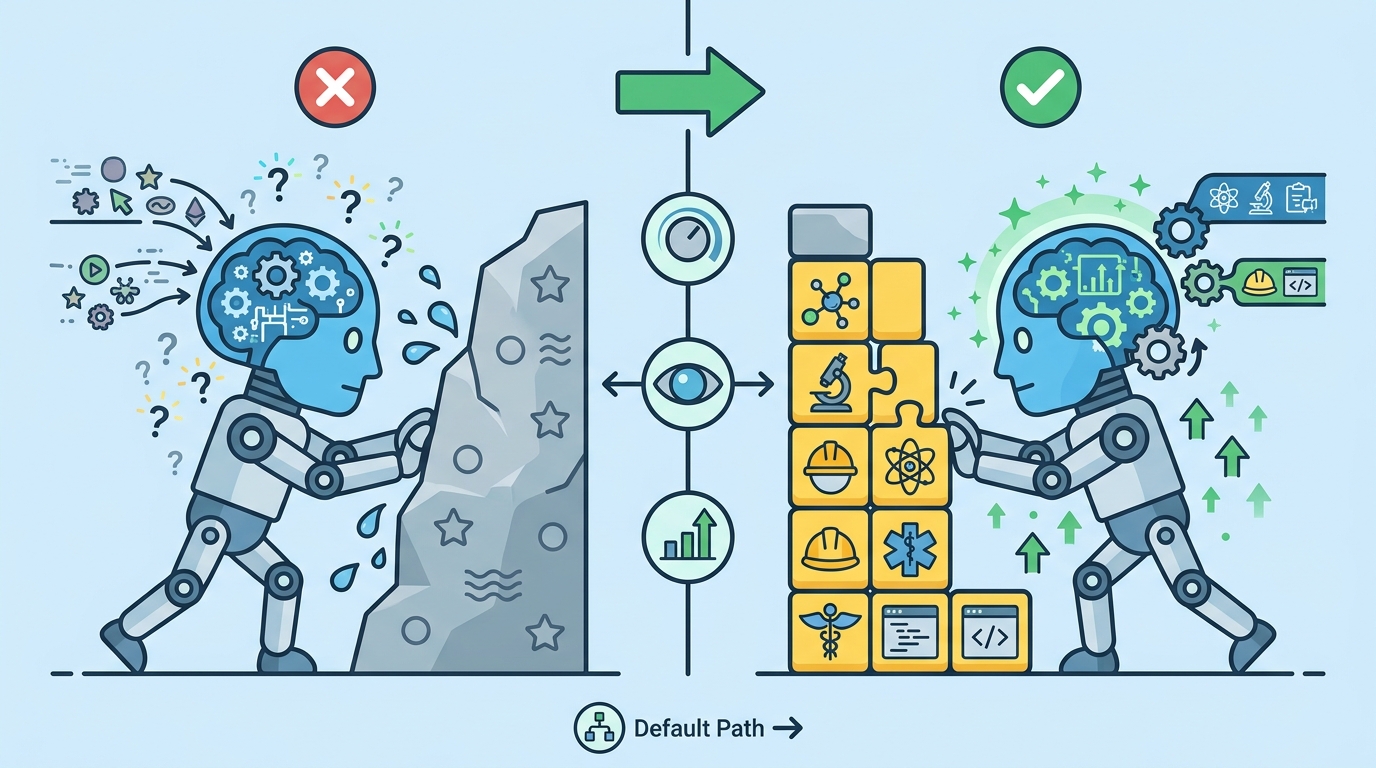
That critique is valid, but it does not overturn the case for fine-tuning. It only defines the boundary. If the task has repeatable patterns and measurable success criteria, fine-tuning is the more reliable path. If the task is open-ended or highly fluid, do not fine-tune first. The mistake is treating fine-tuning as universal. The real rule is narrower: use it when accuracy in a defined domain matters more than flexibility.
What to do with this
If you are an engineer, start with a baseline model, then fine-tune only after you can prove the task is stable and the failure modes are data-driven. If you are a PM, demand a labeled evaluation set before approving model work. If you are a founder, budget for data quality before compute. The winning sequence is simple: define the task, collect the right examples, measure the gap, then fine-tune to close it. That is how you turn an LLM from a generalist into a product asset.
// Related Articles
- [RSCH]
How VLMs Learned Complex Scene Descriptions
- [RSCH]
Visual Pretraining Beats Text-Only in Language Models
- [RSCH]
PHINN-EEG brings topology to dream-state EEG
- [RSCH]
Google’s Android Bench update exposes Gemini’s gap
- [RSCH]
Benchmarks should not pick your LLM in 2026
- [RSCH]
Rust Breaks Into TIOBE’s Top 10