Why fine-tuning still beats prompt-only AI
Fine-tuning remains the best way to make foundation models reliable for specific tasks.
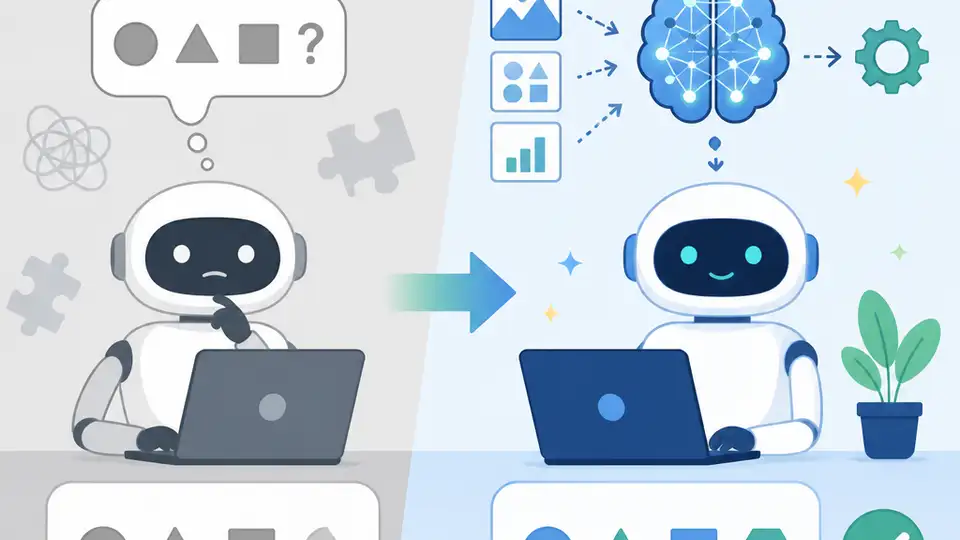
Fine-tuning is the most reliable way to adapt foundation models to specific tasks.
Fine-tuning wins because it changes the model, not just the instructions around it. When a pre-trained network is adapted on downstream data, it stops guessing from generic patterns and starts behaving like a specialist. That matters in production, where a model has to answer the same way on the same class of inputs, not merely sound plausible. The evidence is already baked into the field: full-model fine-tuning often outperforms lighter tricks, and even parameter-efficient methods like LoRA exist because teams want the control that comes from training, not just prompting.
Fine-tuning is the only path to durable task fit
Get the latest AI news in your inbox
Weekly picks of model releases, tools, and deep dives — no spam, unsubscribe anytime.
No spam. Unsubscribe at any time.
Prompting can steer a model for a single interaction, but it does not rewrite the model’s internal preference for one task over another. Fine-tuning does. In natural language processing, large language models such as GPT variants are routinely fine-tuned on downstream datasets to improve performance over the base model. That is not cosmetic. It is the difference between a model that can imitate an answer and one that has actually learned the task distribution.
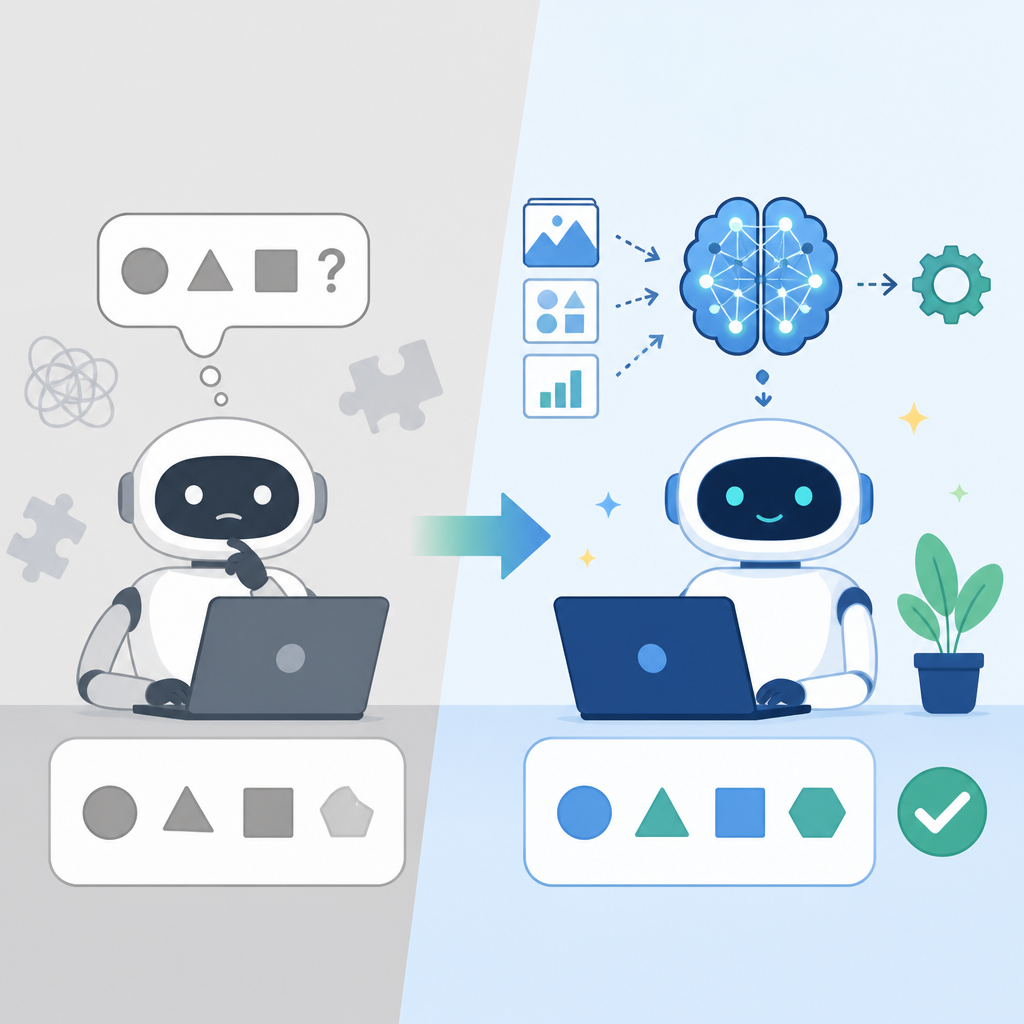
The strongest proof is practical, not theoretical. ChatGPT itself is a fine-tuned GPT model, and alignment systems such as Sparrow also rely on post-training. These products are not built on prompt cleverness alone because prompts are brittle. Fine-tuning gives teams a repeatable way to bake in behavior, style, and domain knowledge so the model does not need a perfect prompt every time it is used.
Efficiency techniques prove the value of training, not the weakness of it
The rise of LoRA is often framed as a victory for lighter-weight adaptation, but it actually strengthens the case for fine-tuning. LoRA lets a language model with billions of parameters be adapted with only several million trainable parameters, and it has become popular enough to be integrated into Hugging Face tooling and the Stable Diffusion ecosystem. That popularity shows where the real demand is: teams want the benefits of fine-tuning without paying the full cost of retraining everything.
Representation fine-tuning pushes the same logic even further. Stanford researchers describe ReFT as modifying less than 1% of a model’s representations, while operating on a frozen base model and learning task-specific interventions at inference time. That is not a rejection of fine-tuning; it is a more surgical version of it. The lesson is clear: the market keeps inventing narrower ways to train because training works better than static prompting when the task matters.
The robustness cost is real, but it is not a reason to avoid fine-tuning
Critics have a serious point: fine-tuning can damage robustness under distribution shift. Research has shown that a model adapted to one dataset can underperform out of distribution, and that fine-tuned weights may distort pretrained features. In other words, the model gets sharper on the target task and duller elsewhere. For general-purpose assistants, that is a real failure mode, not a footnote.
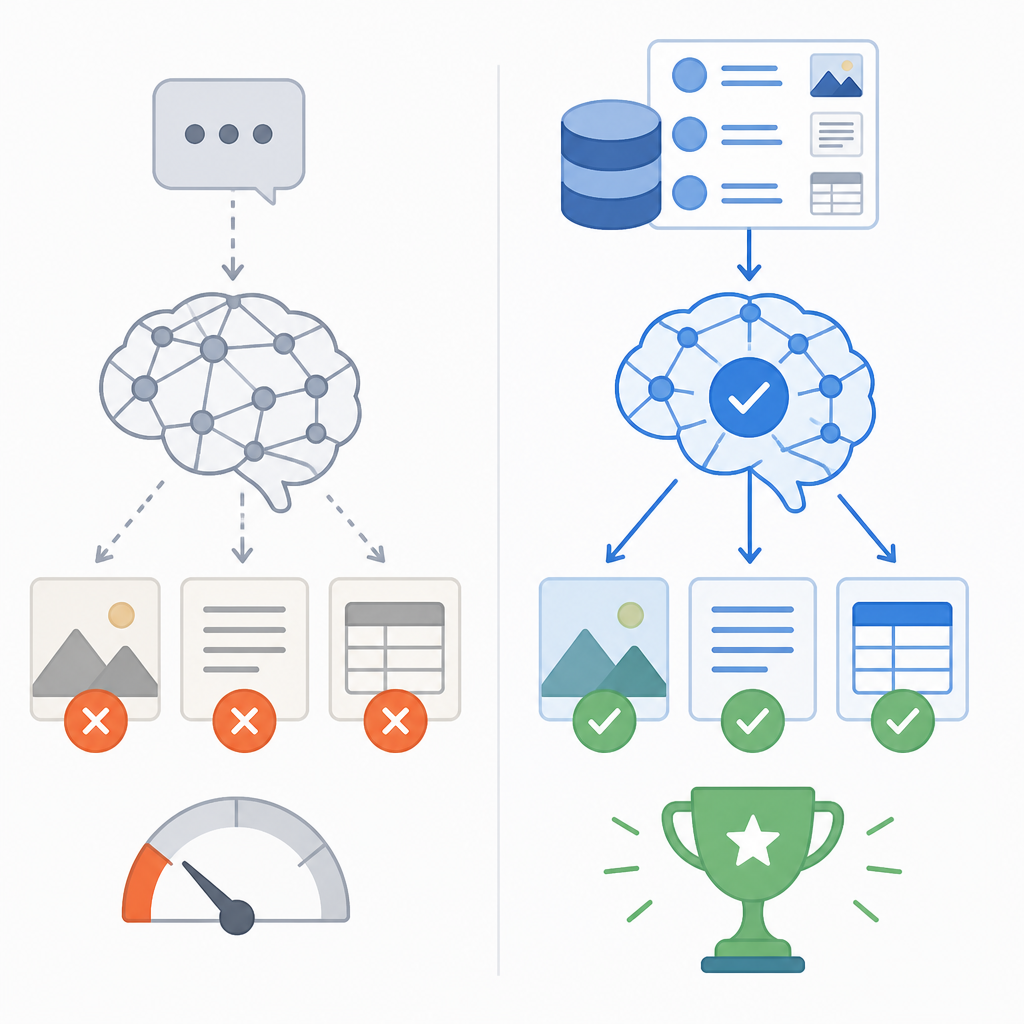
But the counter-argument overstates the conclusion. The answer to robustness loss is not to avoid fine-tuning; it is to use it with discipline. The same literature points to weight interpolation with the original model as a mitigation that can preserve in-distribution gains while improving out-of-distribution behavior. That is the right tradeoff: accept that specialization narrows the model, then recover generality with explicit safeguards instead of pretending a prompt-only system will stay stable under real workloads.
Prompting is useful, but it is not a substitute for adaptation
Prompting is cheap, fast, and good for exploration. It is also the wrong tool when the output must be dependable, auditable, and tuned to a domain. A prompt can ask a model to behave like a medical triage assistant, a contract reviewer, or a brand-safe support agent. Fine-tuning makes those behaviors part of the model’s baseline response pattern, which is what production systems need when latency, consistency, and evaluation all matter.
There is also a commercial reality behind the technical one. Major providers now expose fine-tuning APIs for selected models, including OpenAI, Azure OpenAI Service, and Google Cloud Platform for some PaLM models. Vendors would not keep building these pipelines if prompts alone were enough. The existence of these APIs is evidence that the industry understands the same thing researchers do: if you want a model to perform a specific job well, you train it for that job.
What to do with this
If you are an engineer or PM, stop treating prompting as the default solution and use fine-tuning when the task is stable, measurable, and repeated at scale. Start with the smallest adaptation that can meet your target: full fine-tuning if you need maximum quality, LoRA if you need efficiency, or a representation-based method if you are experimenting with highly constrained updates. Build an eval set first, measure robustness before and after adaptation, and keep the base model around so you can interpolate or roll back when specialization goes too far.
// Related Articles
- [RSCH]
CRDTs keep replicas in sync without locks
- [RSCH]
Post-Deterministic Systems for Autonomous Infra
- [RSCH]
Causal methods for measuring task learnability
- [RSCH]
RL Training That Hands Off Control Gradually
- [RSCH]
OmniGameArena benchmarks VLM game agents better
- [RSCH]
TurboQuant cuts KV cache memory 6x in Google tests